Empower
Educators
All schemes of work

·Key stage 3 · Science

Key stage 3 science, sequenced

Year 7 · Year 8 · Year 9 · 18 units in all

Six half-termly units an academic year, one row per lesson rather than a page per lesson. Each year is written backwards from what the next one states it assumes on entry, so Year 7 ends where Year 8 needs it to start and nothing is taught twice by accident. Every unit maps to the statutory programme of study.

Year 7 6 units

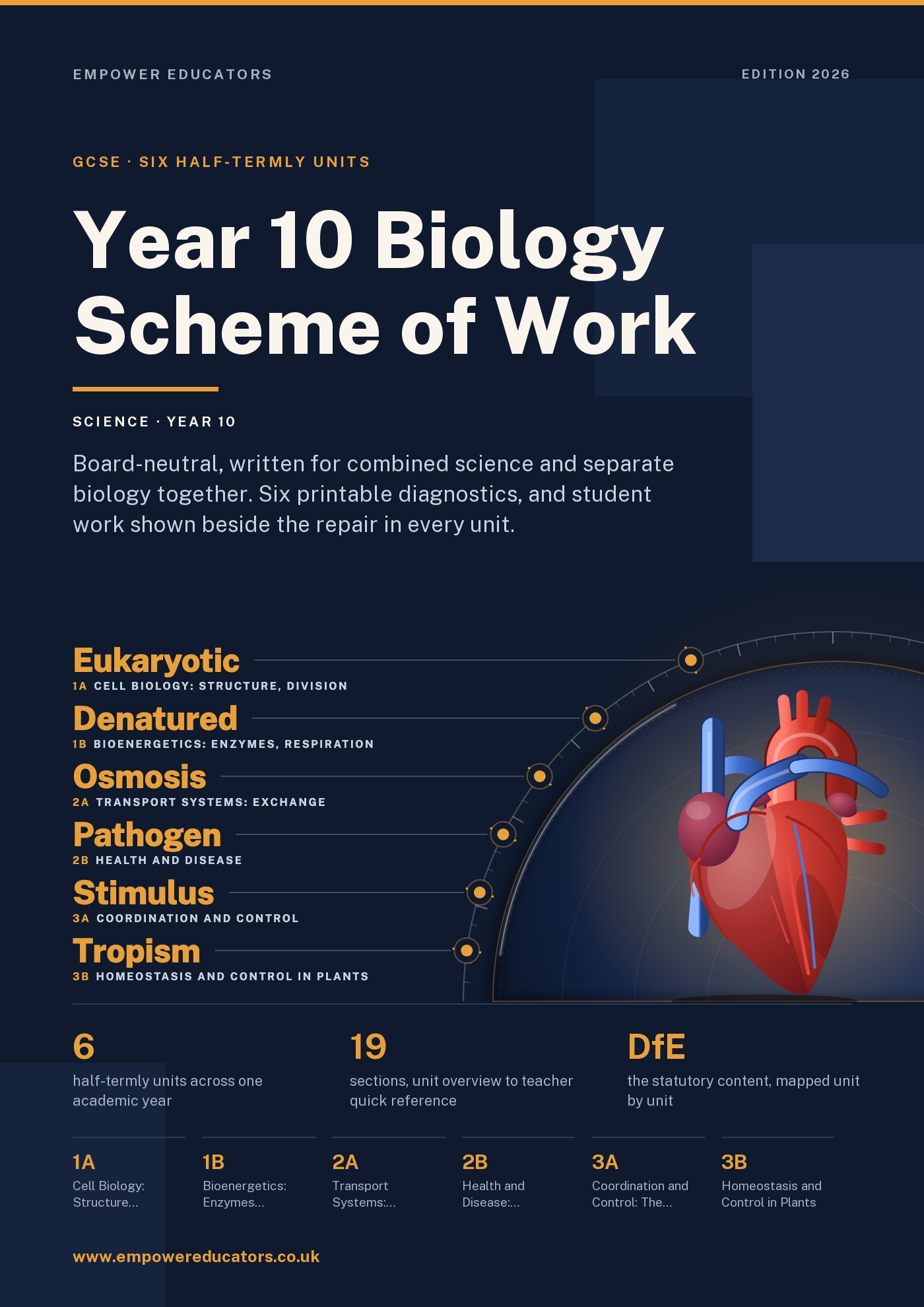
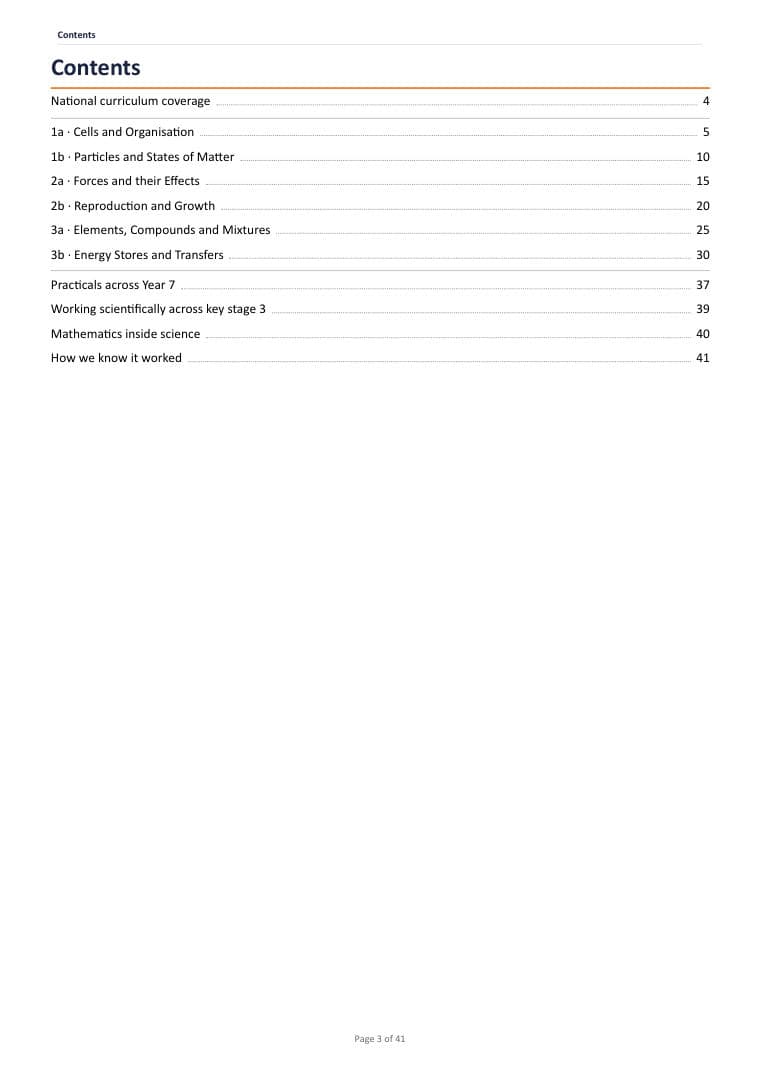
  1. 1a Cells and Organisation
  2. 1b Particles and States of Matter
  3. 2a Forces and their Effects
  4. 2b Reproduction and Growth
  5. 3a Elements, Compounds and Mixtures
  6. 3b Energy Stores and Transfers

Year 8 6 units

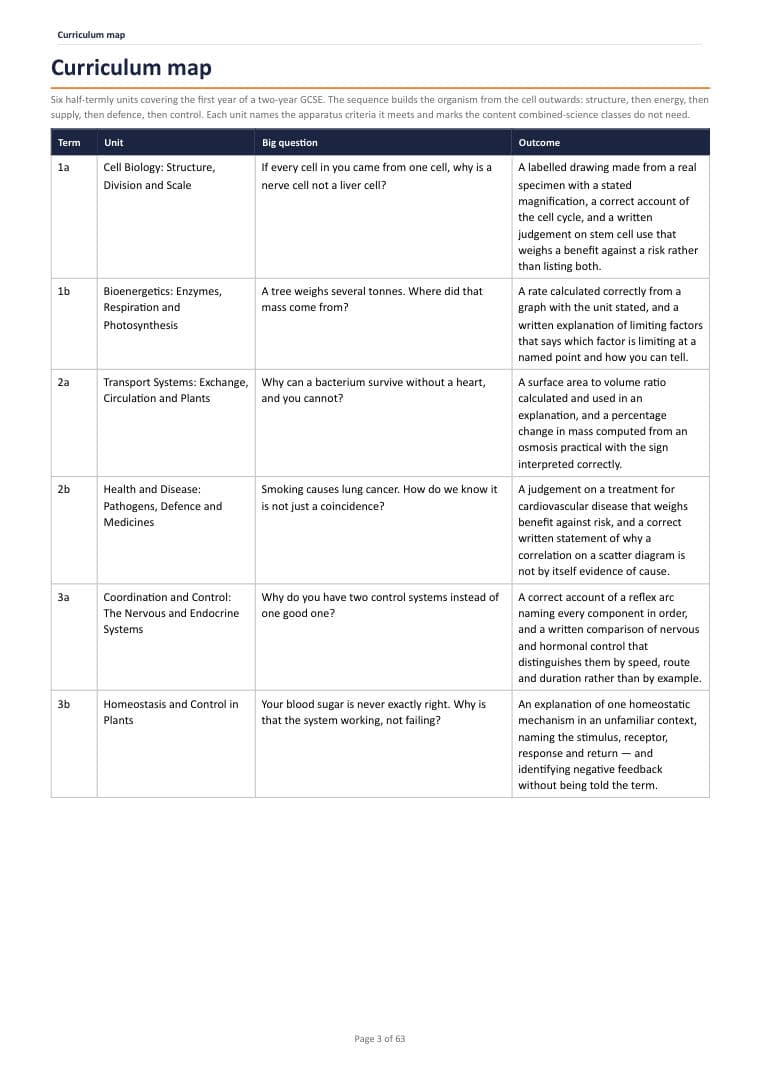
  1. 1a Nutrition, Digestion and Respiration
  2. 1b Chemical Reactions
  3. 2a Electricity and Magnetism
  4. 2b Photosynthesis and Ecosystems
  5. 3a Acids, Alkalis and the Reactivity Series
  6. 3b Waves: Light and Sound

Year 9 6 units

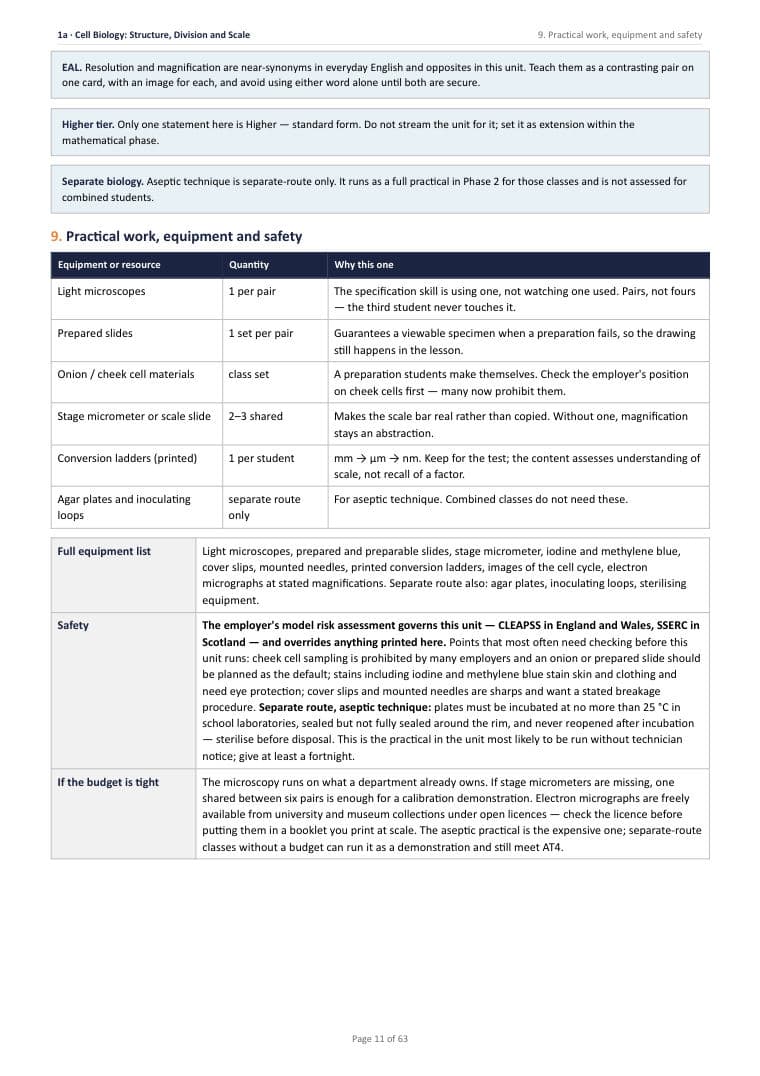
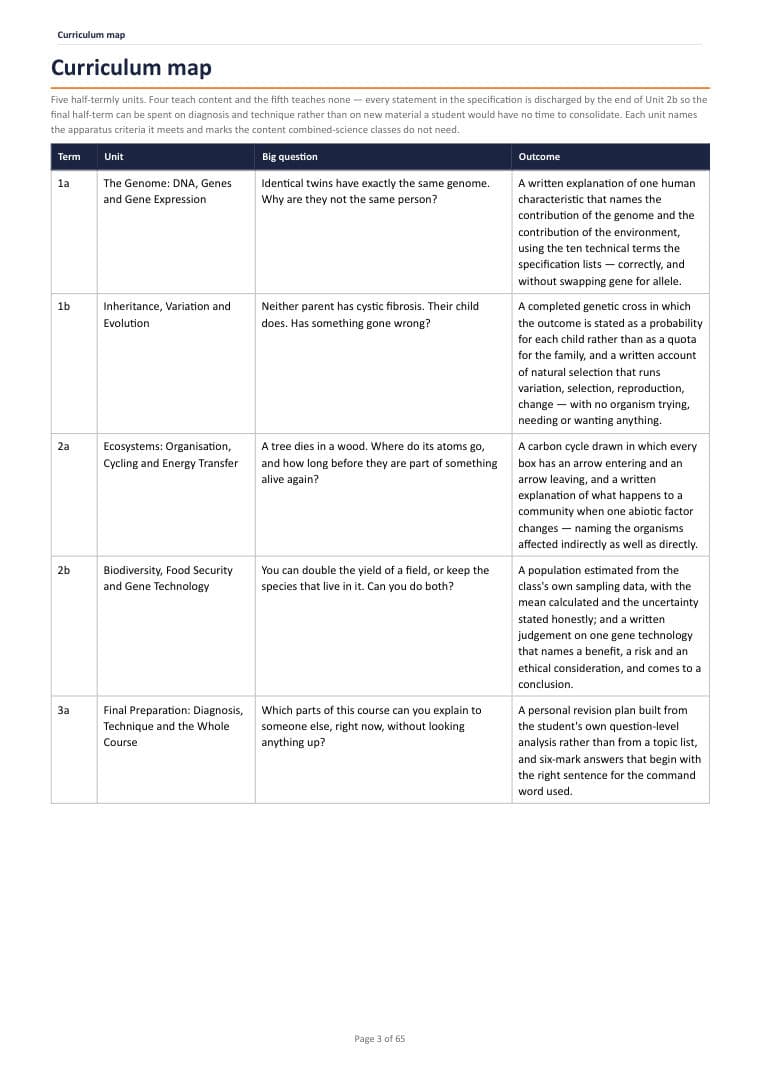
  1. 1a Atomic Structure and the Periodic Table
  2. 1b Inheritance, Variation and Evolution
  3. 2a Motion, Speed and Pressure
  4. 2b Earth, Atmosphere and Climate
  5. 3a Space Physics and Energy Resources
  6. 3b Health, Disease and the Immune System

3 years, sold separately

Key stage 3 · first 8 pages of each open here

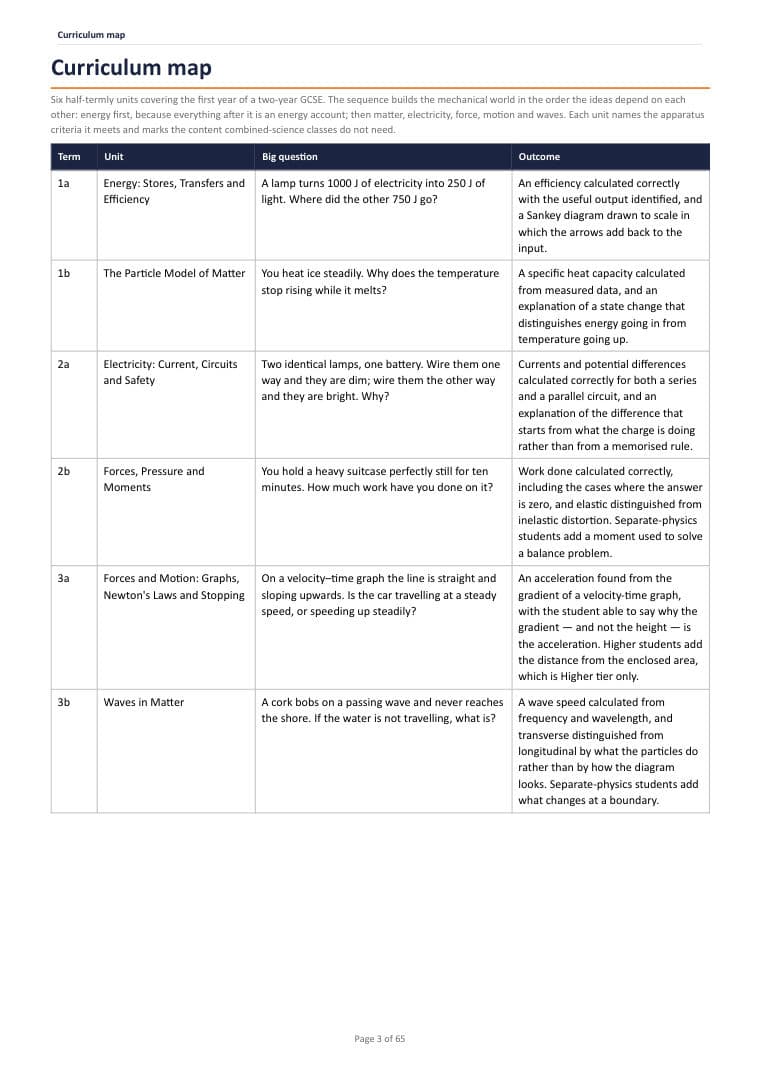
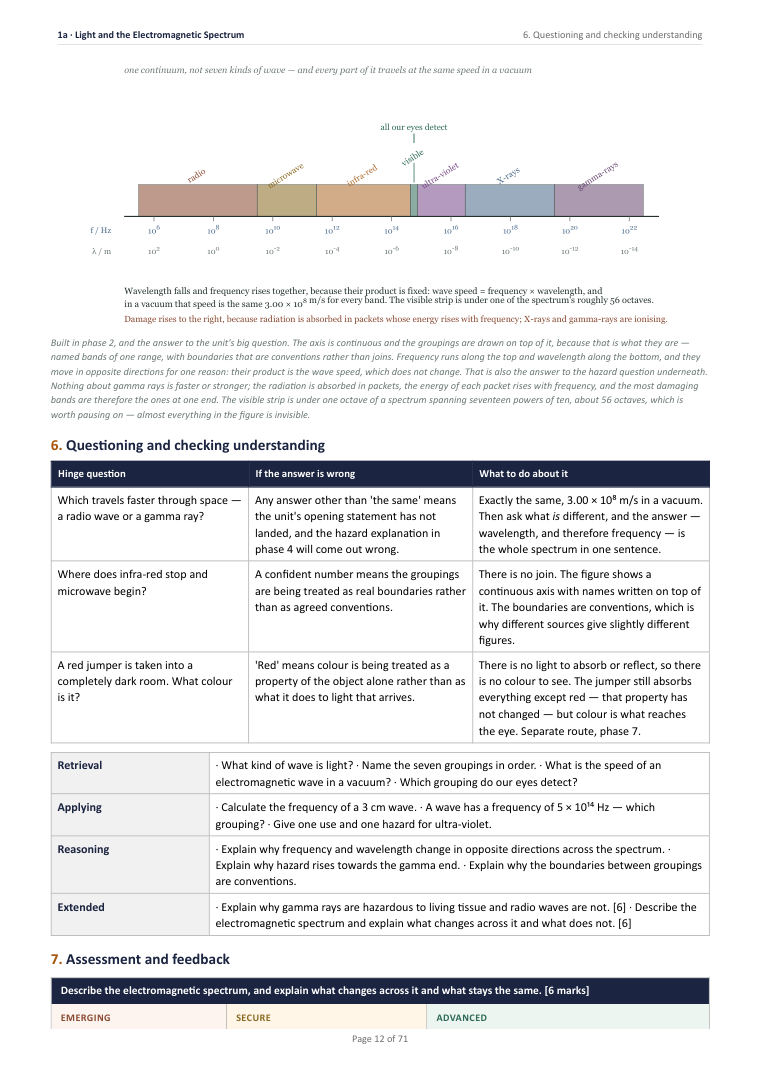
Cover of Year 7 Science

Science · Key Stage 3 £3.99

Year 7 Science

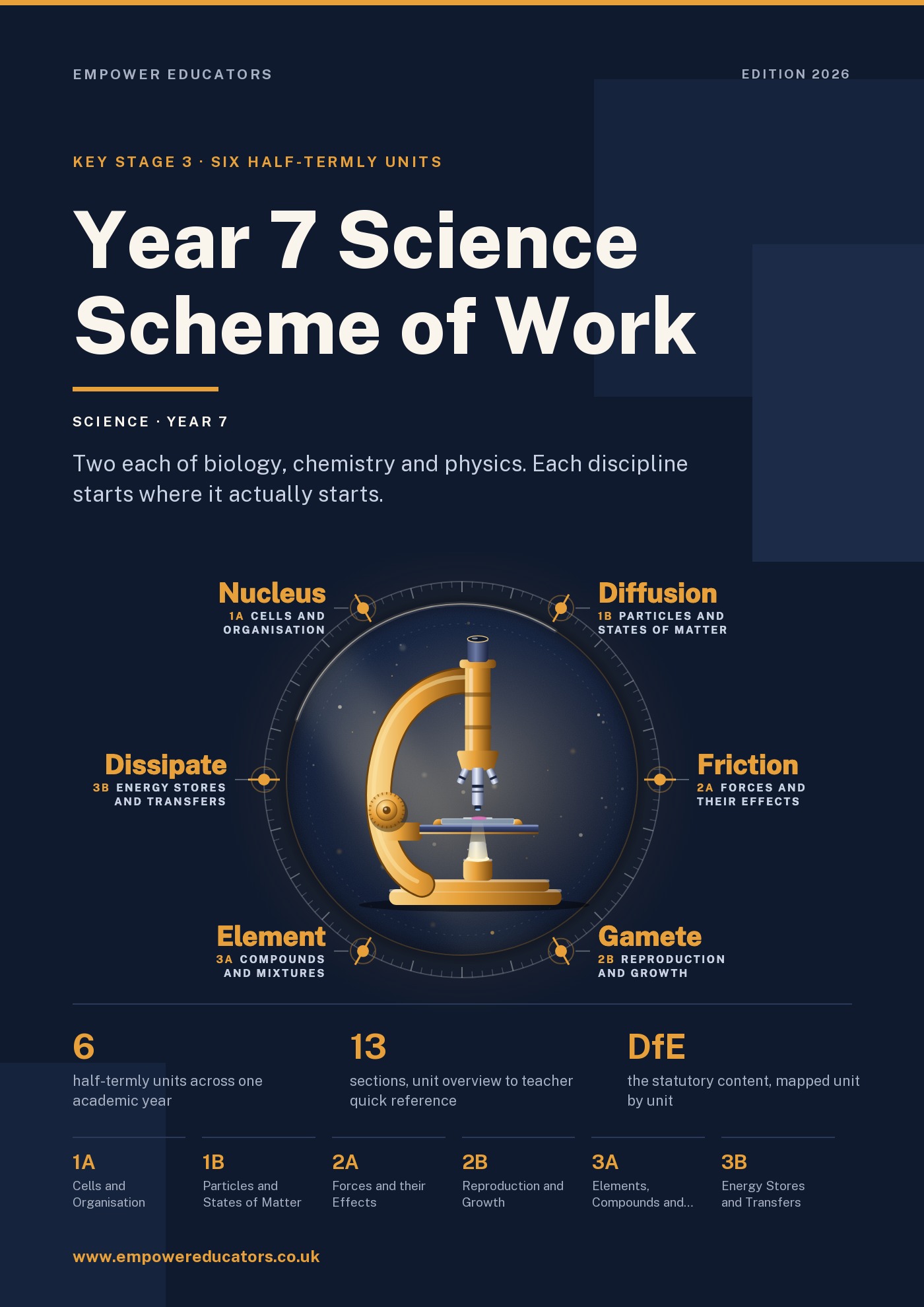
Six half-termly units across one academic year, two each of biology, chemistry and physics. Each discipline starts where it actually starts — biology at the cell, chemistry at the particle model, physics at forces — because nothing else in the key stage works if those three are shaky.

  1. 1a Cells and Organisation
  2. 1b Particles and States of Matter
  3. 2a Forces and their Effects
  4. 2b Reproduction and Growth
  5. 3a Elements, Compounds and Mixtures
  6. 3b Energy Stores and Transfers

The statutory programme of study for key stage 3 science (DfE, 2013) · 40 pages, 8 sections · For heads of science, subject leaders, technicians and every teacher who has to deliver it
Preview — first 8 pages

Checkout opens shortly — read the preview meanwhile

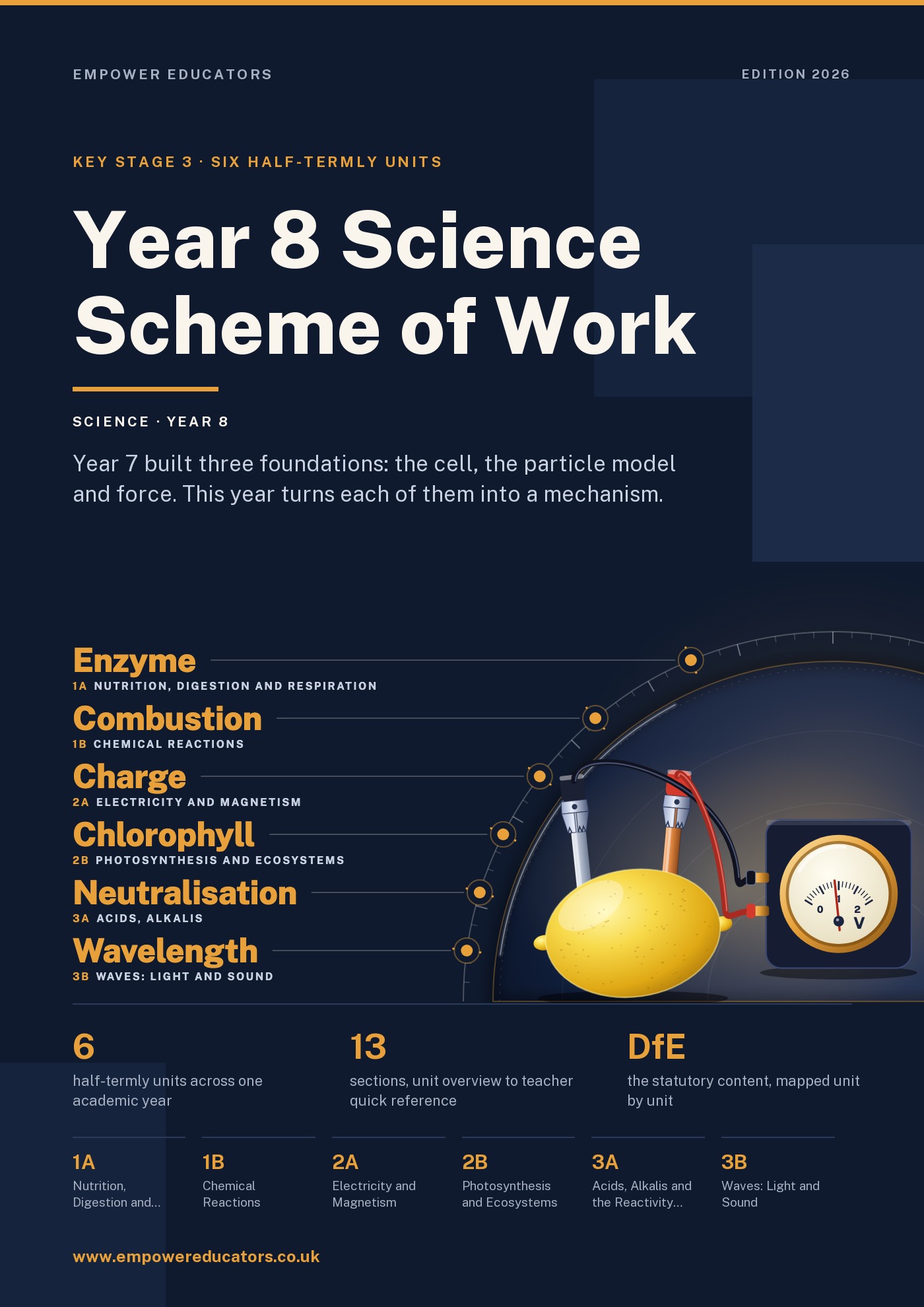
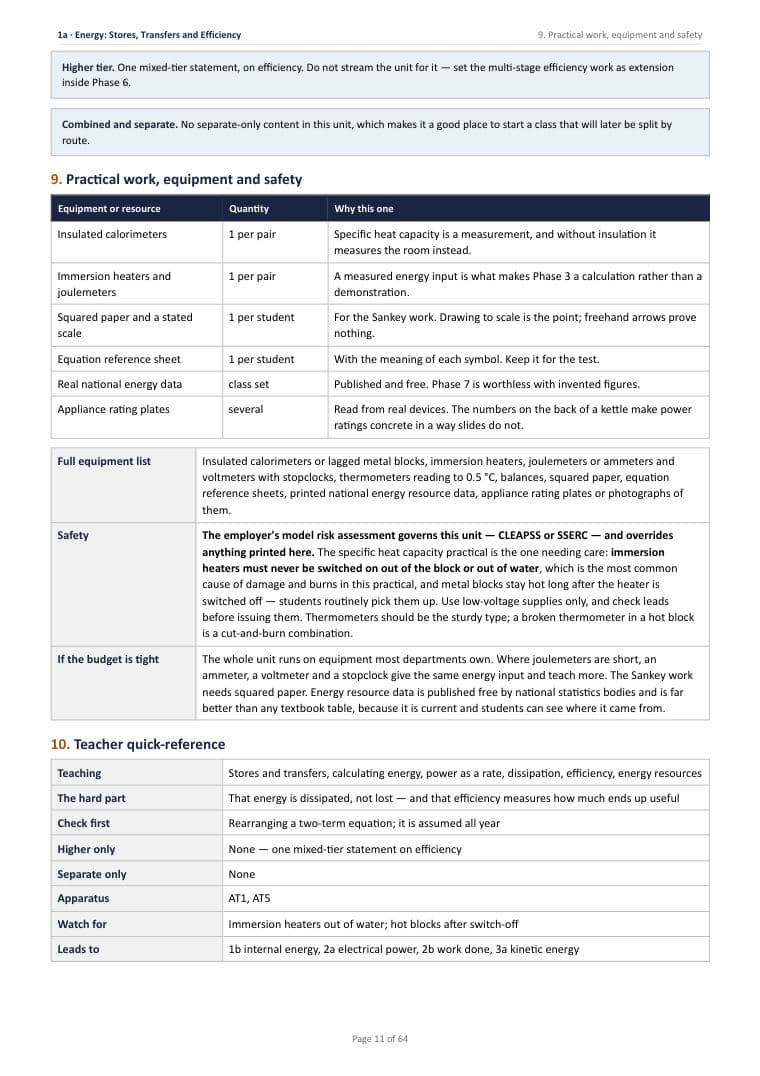
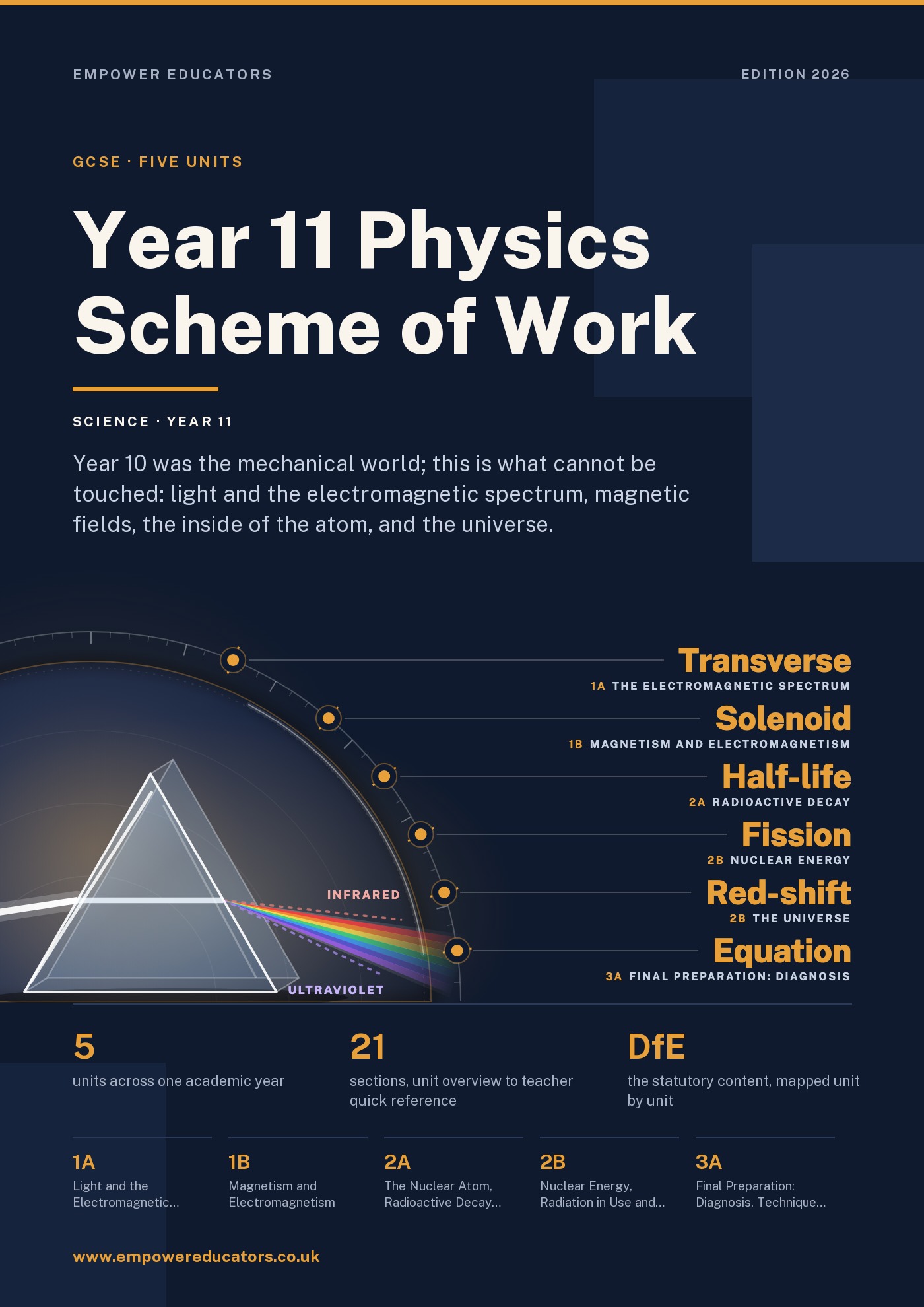
Cover of Year 8 Science

Science · Key Stage 3 £3.99

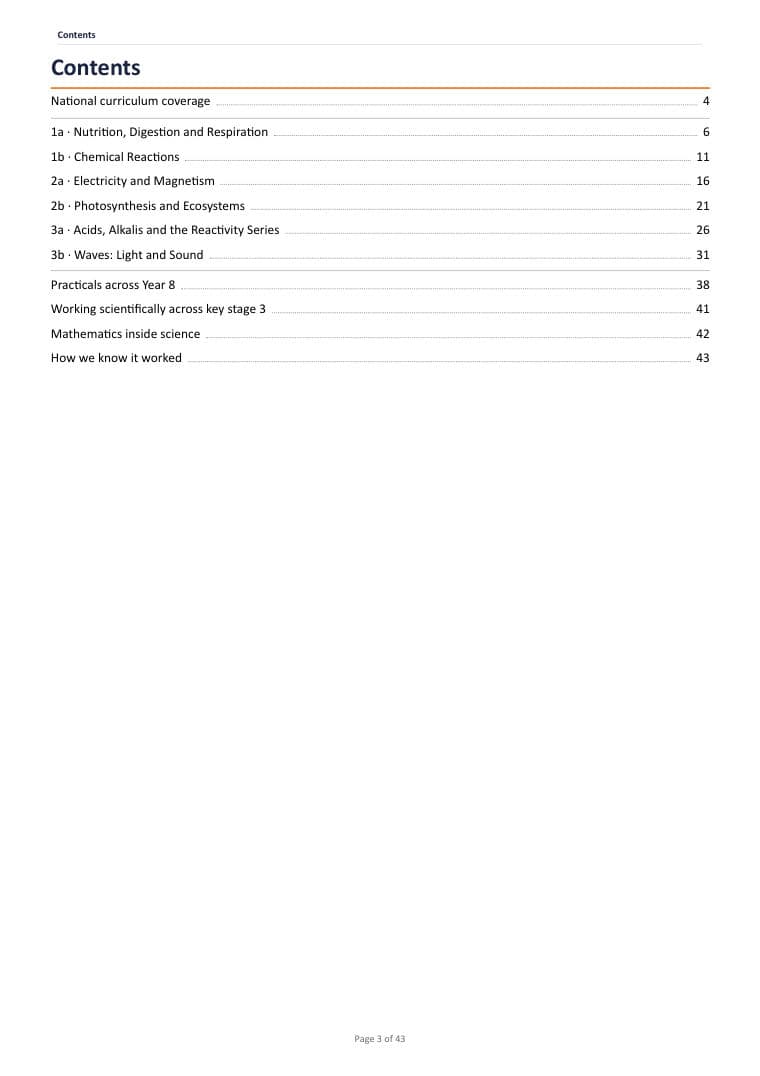
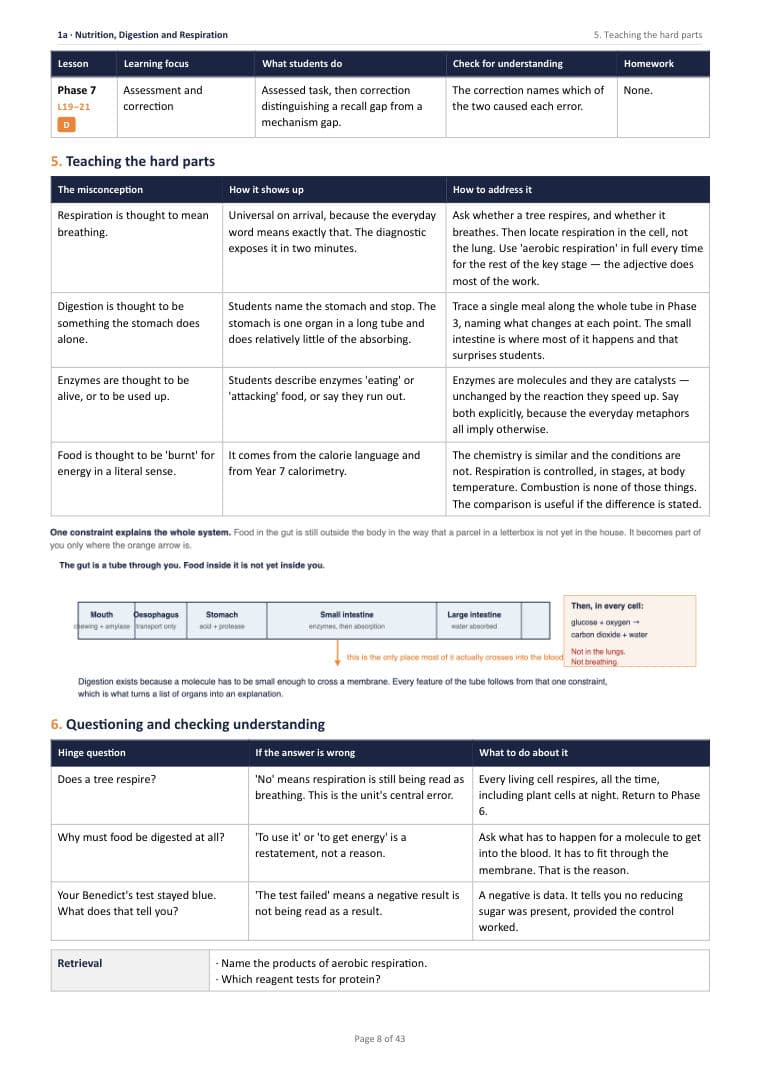
Year 8 Science

Six half-termly units across one academic year. Year 7 built three foundations — the cell, the particle model and force. This year turns each of them into a mechanism, and photosynthesis is taught as respiration's complement rather than as a second equation to memorise backwards.

  1. 1a Nutrition, Digestion and Respiration
  2. 1b Chemical Reactions
  3. 2a Electricity and Magnetism
  4. 2b Photosynthesis and Ecosystems
  5. 3a Acids, Alkalis and the Reactivity Series
  6. 3b Waves: Light and Sound

The statutory programme of study for key stage 3 science (DfE, 2013) · 41 pages, 8 sections · For heads of science, subject leaders, technicians and every teacher who has to deliver it
Preview — first 8 pages

Checkout opens shortly — read the preview meanwhile

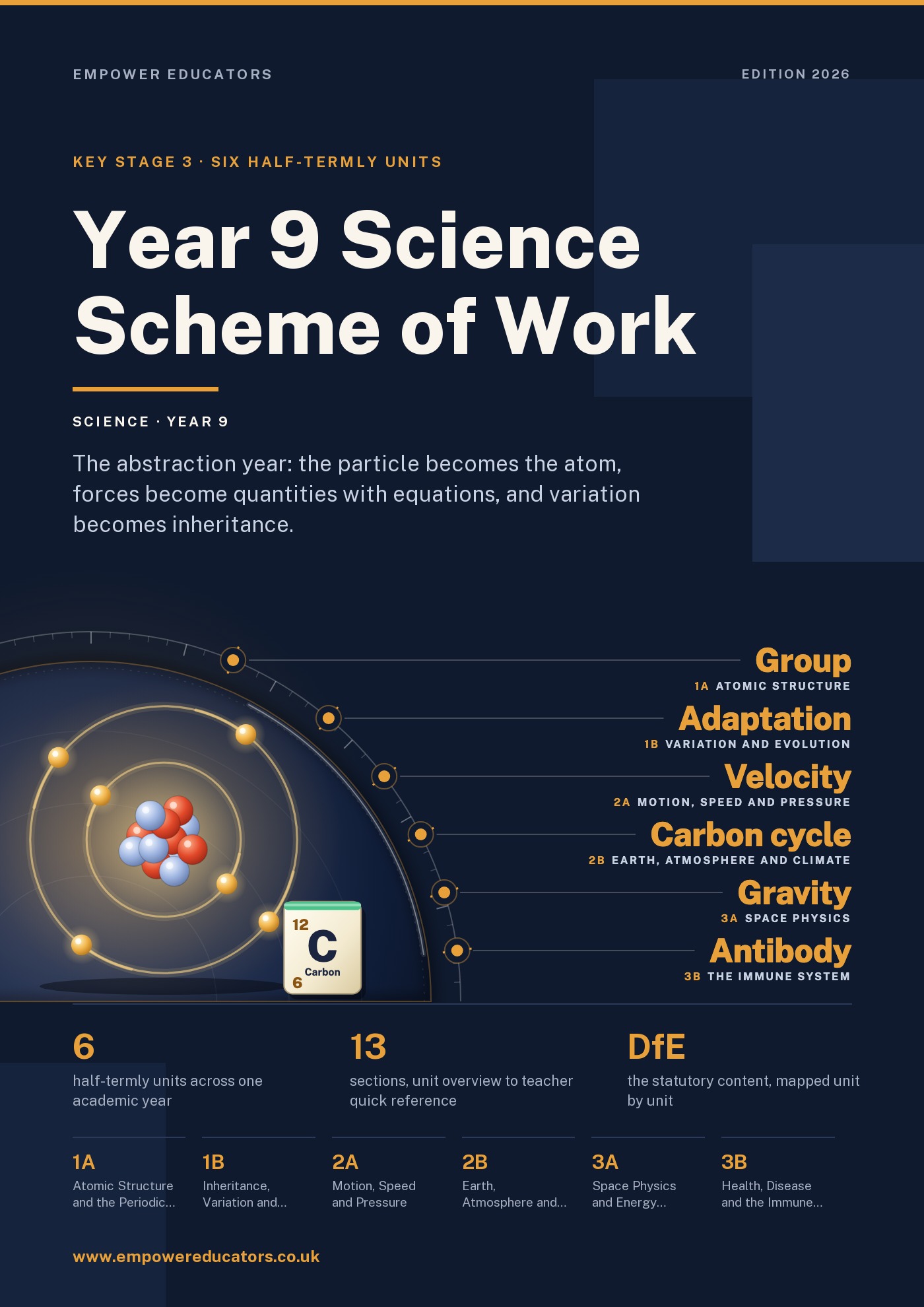
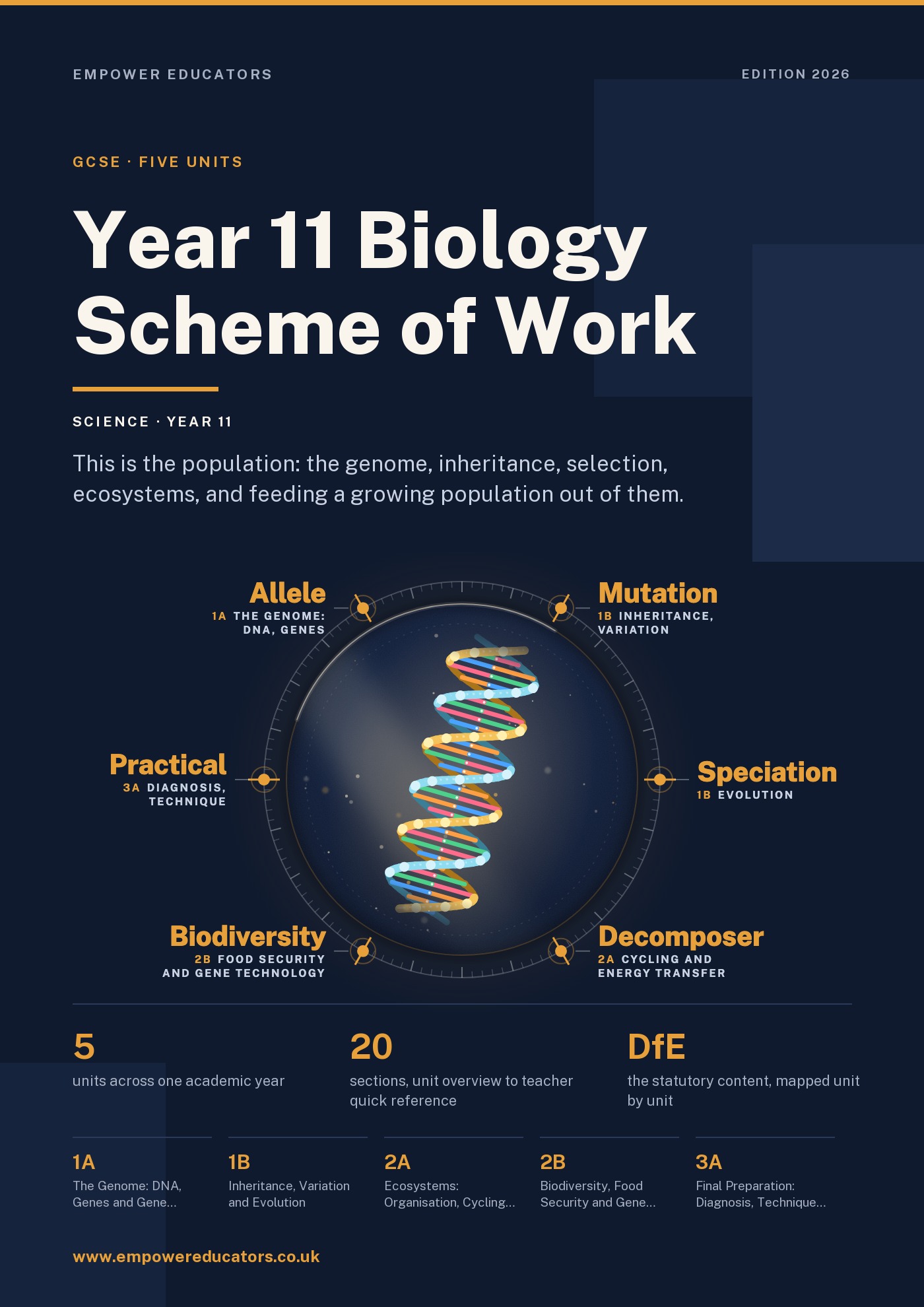
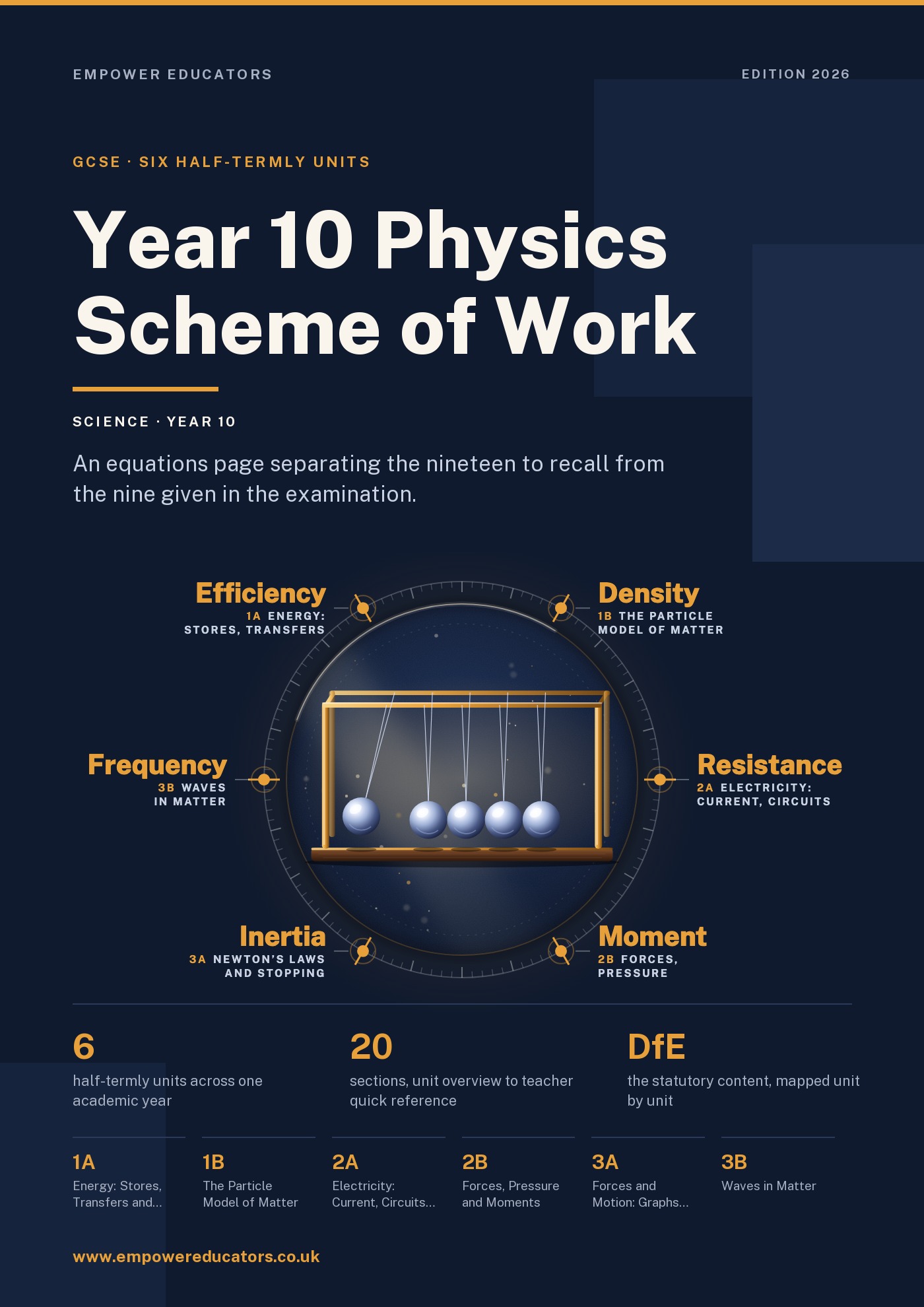
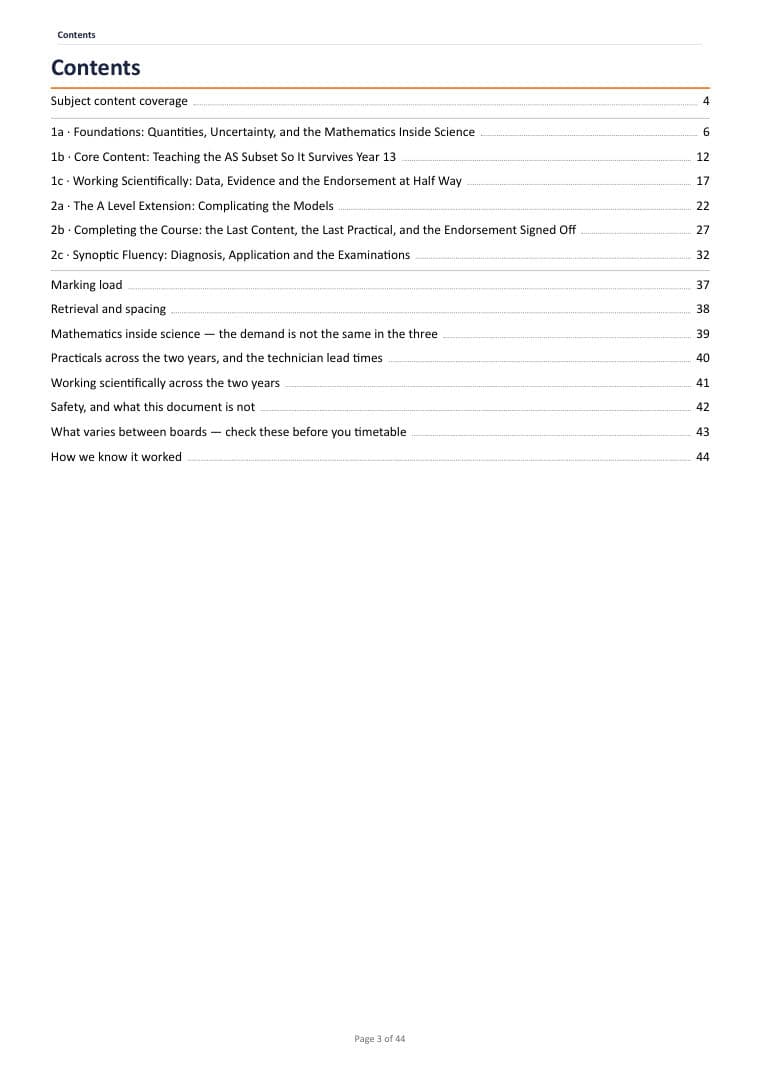
Cover of Year 9 Science

Science · Key Stage 3 £3.99

Year 9 Science

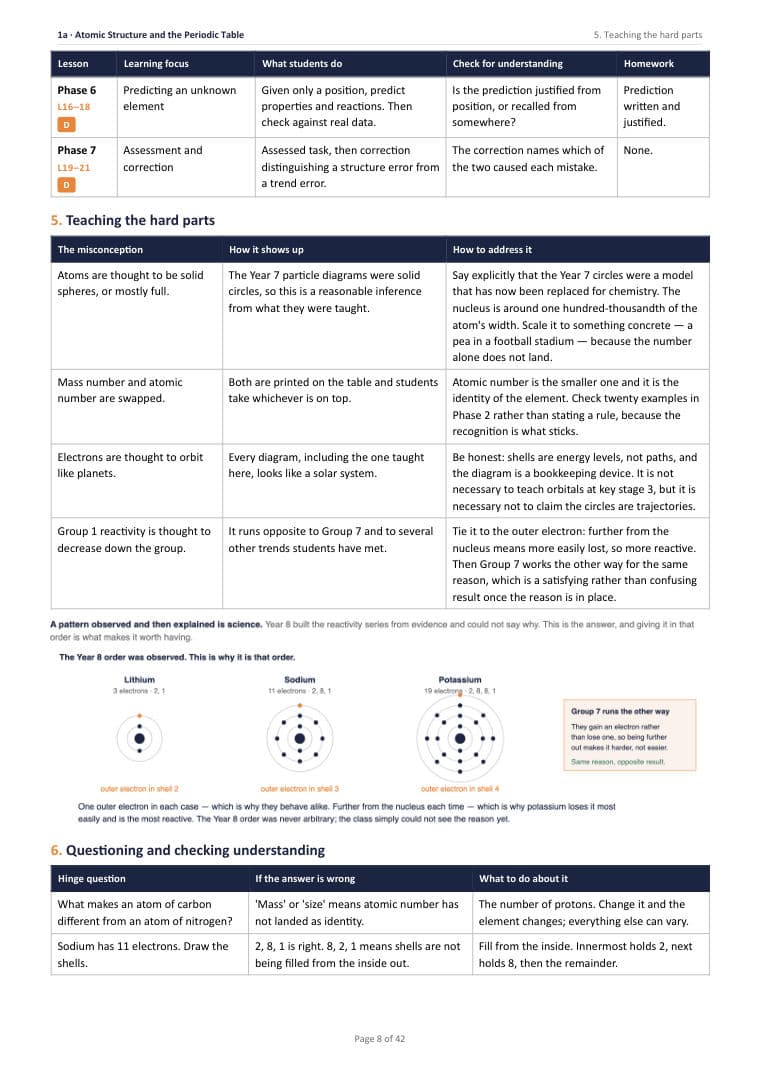
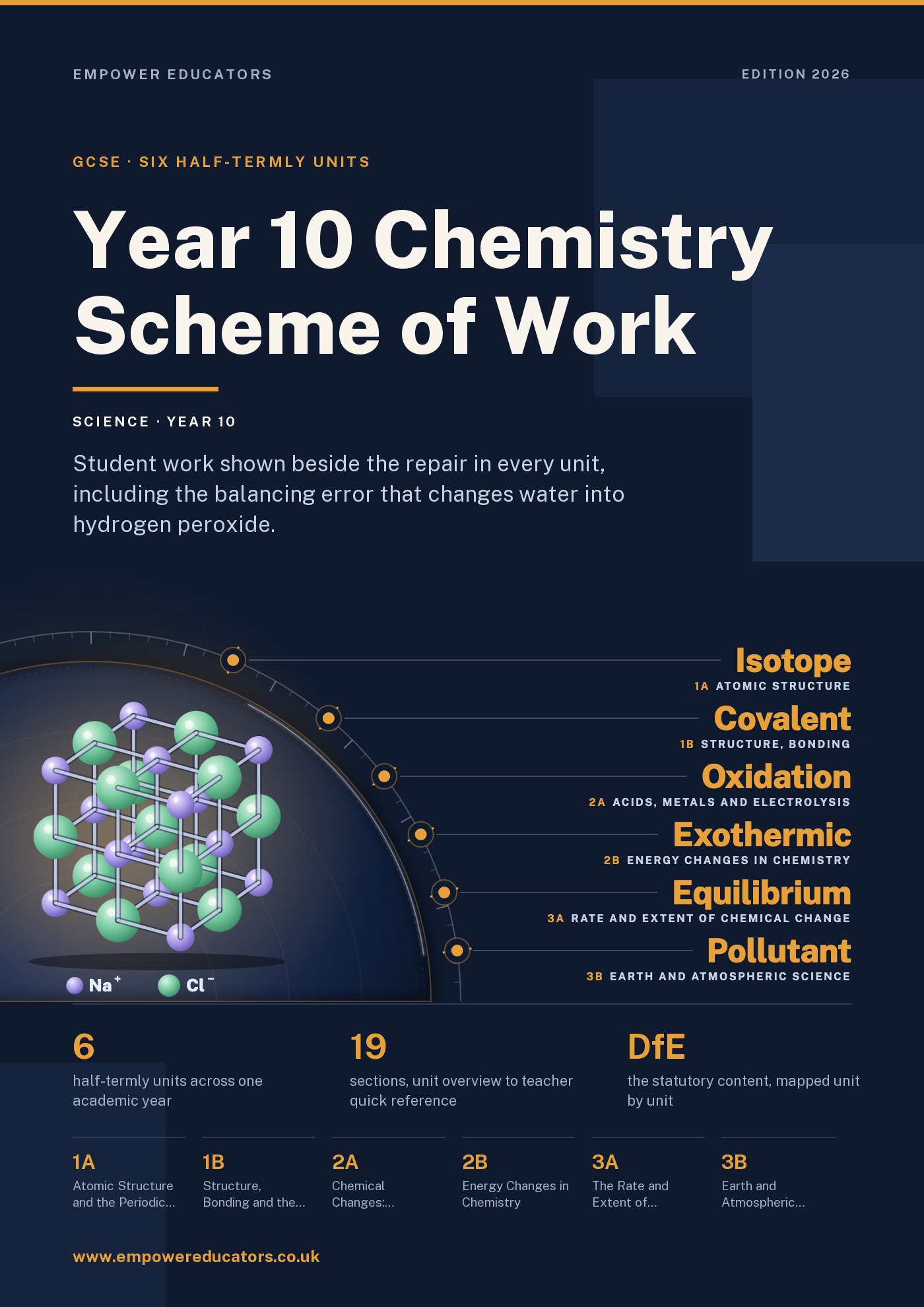
Six half-termly units across one academic year, forming the bridge to GCSE. The abstraction year: the particle becomes the atom, forces become quantities with equations, and variation becomes inheritance. Unit 1a explains the reactivity series Year 8 built from evidence.

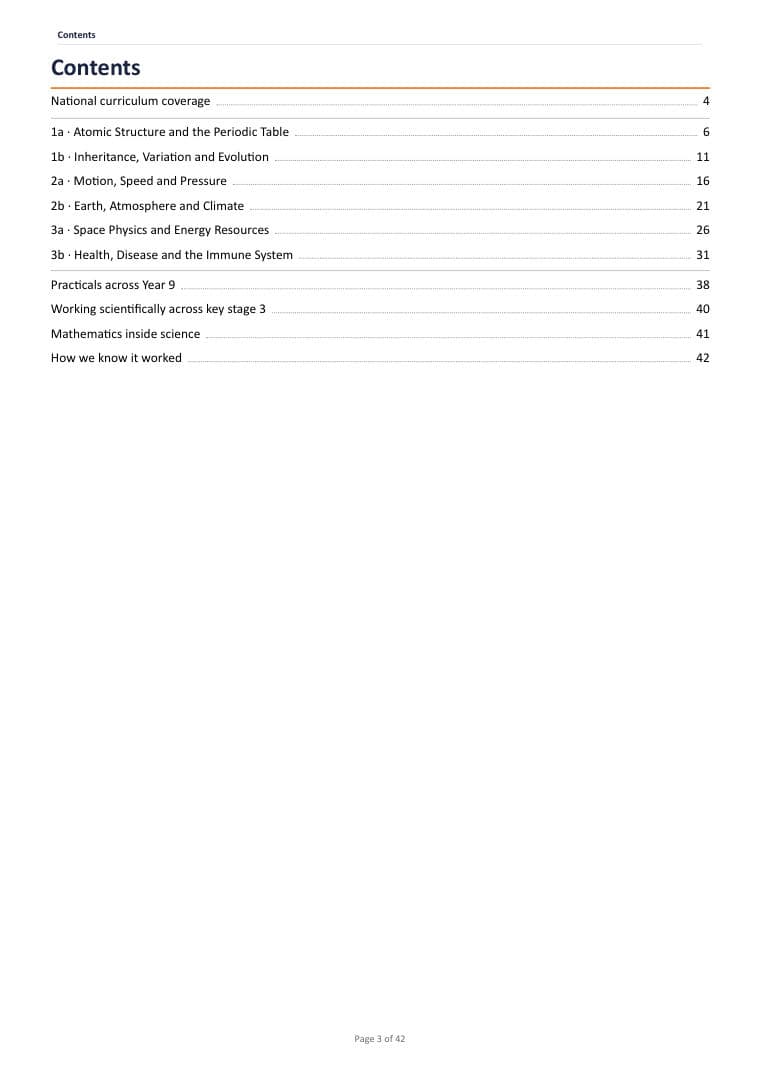
  1. 1a Atomic Structure and the Periodic Table
  2. 1b Inheritance, Variation and Evolution
  3. 2a Motion, Speed and Pressure
  4. 2b Earth, Atmosphere and Climate
  5. 3a Space Physics and Energy Resources
  6. 3b Health, Disease and the Immune System

The statutory programme of study for key stage 3 science (DfE, 2013) · 41 pages, 8 sections · For heads of science, subject leaders, technicians and every teacher who has to deliver it

Preview — first 8 pages

Checkout opens shortly — read the preview meanwhile