Science · GCSE Chemistry (Key Stage 4) · £5.99
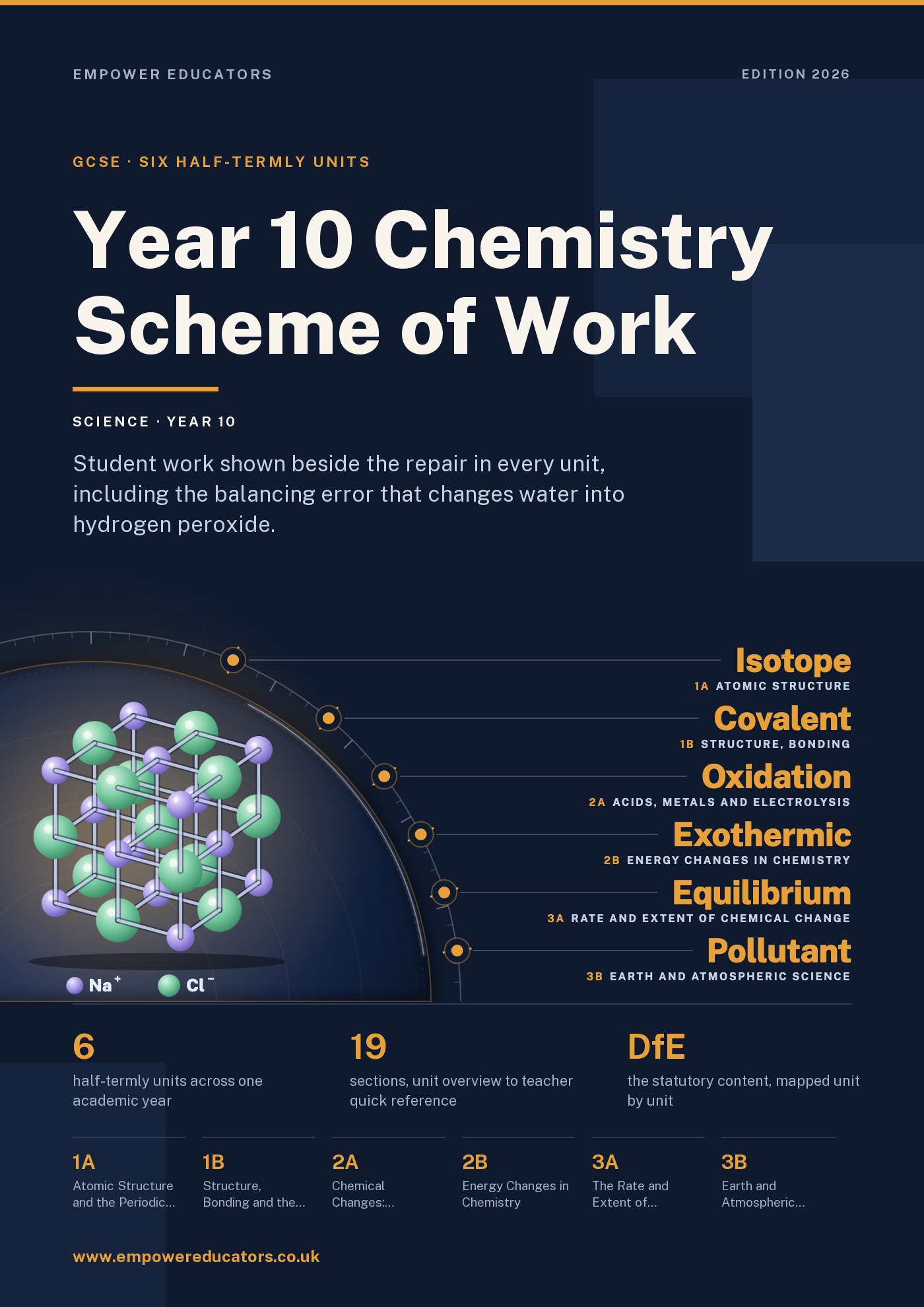
Year 10 Chemistry
Scheme of Work
GCSE Chemistry Scheme of Work (SOW) — KS4 Year 10 PDF
Sixty pages, board-neutral, written for combined science and separate chemistry together. The eleven statements combined classes do not need are marked, so one book serves both routes. Ninety-six of the subject content’s one hundred and sixty-one statements are taught here; the rest are Year 11. Six figures, six printable diagnostics, and student work shown beside the repair in every unit, including the balancing error that changes water into hydrogen peroxide.
£5.99The Year 10 scheme: 6 half-termly units, 60 pages
- A4 PDF
- first 8 pages free to read
- instant download
Teaching all of the GCSE course? Year 10 and Year 11 as one set: £9.99, saving £1.99.
One purchase covers the school that buys it. Print it, copy it, hand it round your department. Not for passing to other schools or uploading anywhere.
PDF download, ready straight after payment. Downloading it ends the 14-day right to cancel; a file that is faulty or not as described is always refunded. Refunds
Read before publication by the serving head of that department and by senior leaders, in school.
5.0 from 24+ reviews on Google
Schools that have bought from Empower Educators include Nottingham High School, Northampton High School GDST and Sutton Valence School.
Complete your Chemistry

Board-neutral, written for AQA, OCR and Pearson Edexcel. All GCSE schemes of work
Both years: GCSE Chemistry scheme of work
Everything else this site has for Science: Science teaching resources
- 1aAtomic Structure and the Periodic Table
- 1bStructure, Bonding and the Properties of Matter
- 2aChemical Changes: Equations, Acids, Metals and Electrolysis
- 2bEnergy Changes in Chemistry
- 3aThe Rate and Extent of Chemical Change
- 3bEarth and Atmospheric Science
Ten sections per unit, in the same order every time. Phases rather than single lessons, because science is timetabled at around three hours a week.
Year 10 is the substance — what things are made of, how they are held together, and how they change. Year 11 takes the application: organic chemistry, analysis and industry. That division is why the periodic table opens the book and crude oil does not appear in it at all.
Unit 2a meets five of the eight national apparatus criteria on its own, and carries the largest concentration of Higher-tier content in the year. Unit 3b is the shortest, and is placed last on purpose: the summer term is the least reliable teaching time in Year 10.
- Written to
- The GCSE subject content for chemistry (DfE, DFE-00352-2014) and for combined science (DFE-00351-2014)
- Intended for
- heads of science, chemistry leads and every teacher who has to deliver it
- Extent
- 60 pages · 19 sections
The sequence
What this scheme of work covers, unit by unit
The 6 units of the Year 10 Chemistry Scheme of Work, in teaching order, with the term each one runs in and the question it is built to answer.
1a
Atomic Structure and the Periodic Table
Autumn 1 · approx. 7 weeks · September – October
Why does the periodic table have that shape, and not some other shape?
1b
Structure, Bonding and the Properties of Matter
Autumn 2 · approx. 7 weeks · November – December
Salt melts at 801 °C and candle wax at about 60 °C. Both are solids. Why the difference?
2a
Chemical Changes: Equations, Acids, Metals and Electrolysis
Spring 1 · approx. 6 weeks · January – February
Vinegar and battery acid are both acids. Why can you put one on your chips?
2b
Energy Changes in Chemistry
Spring 2 · approx. 6 weeks · February – April
Burning petrol releases energy. So why do you have to set fire to it first?
3a
The Rate and Extent of Chemical Change
Summer 1 · approx. 6 weeks · April – May
Two reactions make the same amount of gas. One takes a minute, one takes an hour. What is different?
3b
Earth and Atmospheric Science
Summer 2 · approx. 6 weeks · June – July
The atmosphere used to be mostly carbon dioxide. Where did it all go?
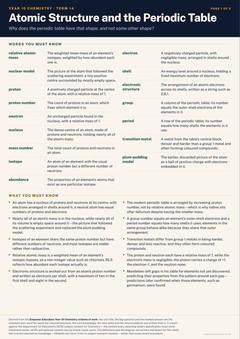
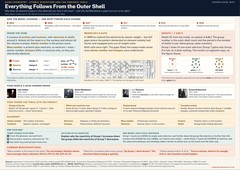
Look inside
Real pages, straight from the PDF
Click any page to see it full size.
Contents
All 19 sections
Taken from the book’s own contents page, so the page numbers are the real ones.