Physics · GCSE · £6.99
GCSE Physics
Questions
& Answers
Of the equations in GCSE physics, some must be recalled and the rest are given to you in the exam. No revision guide tells a student which is which. Every calculation page here opens with the equation set large and a chip saying which side it falls on, read out of the subject content rather than typed on the page. Below six marks the schemes carry the allow and do not accept lines a real scheme has; on every calculation they are step marked, each step saying what it still earns when the number coming into it is wrong.
£6.99100 questions, each answered three times (weak, middling, strong), 107 pages
- A4 PDF
- first 14 pages free to read
- instant download
One purchase covers the school that buys it. Print it, copy it, hand it round your department. Not for passing to other schools or uploading anywhere.
PDF download, ready straight after payment. Downloading it ends the 14-day right to cancel; a file that is faulty or not as described is always refunded. Refunds
Read before publication by the serving head of that department and by senior leaders, in school.
5.0 from 24+ reviews on Google
Schools that have bought from Empower Educators include Nottingham High School, Northampton High School GDST and Sutton Valence School.
Complete your Physics

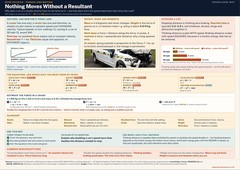
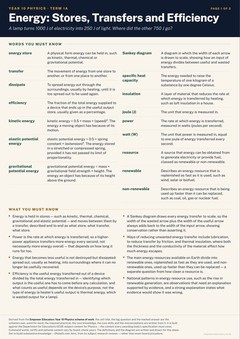
Everything else this site has for Physics: Physics teaching resources
Also teaching physics lower down the school, or the exam itself? Physics scheme of work · GCSE Physics assessment objectives
- 1Energy and power
- 2Forces
- 3Motion
- 4Waves and the electromagnetic spectrum
- 5Electricity
- 6Magnetism and electromagnetism
- 7Particle model of matter
- 8Atomic structure, radioactivity and space
- 9Apparatus and working scientifically
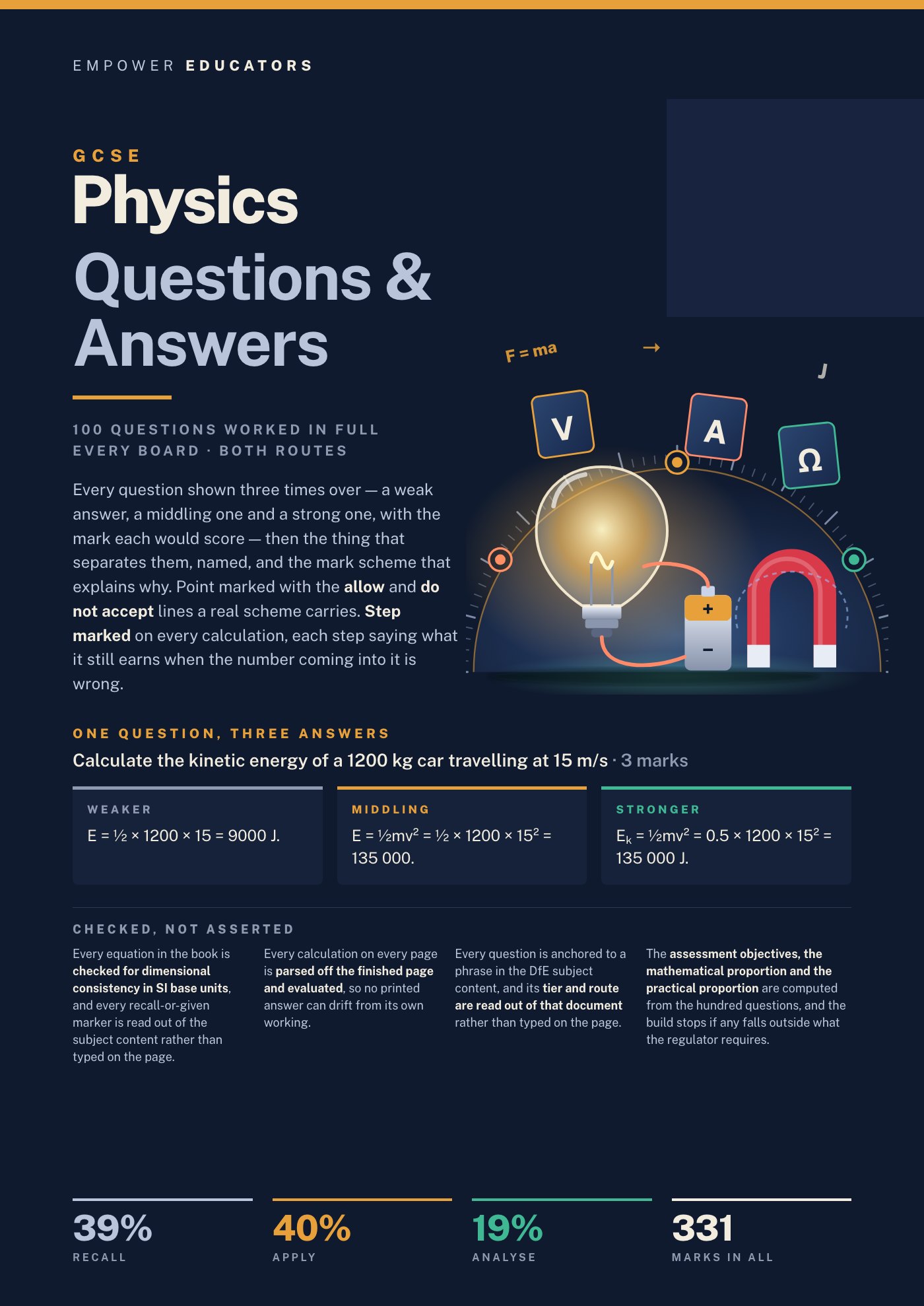
Not a bank of questions with the answers printed underneath. The three banded responses are the starting point, not the output: what follows each one is the discriminator, named out loud, then the questions you actually ask to move a student from the first answer to the last, then the mark scheme that shows what each line was worth. That combination is the part no mark scheme contains on its own.
Physics is the subject where the equation sheet is half the battle, so every calculation page opens with the equation itself. It is set large, with the relationship in words beneath it, and a chip says whether it is one of the twenty-one a student must recall or one of the nine they are given in the exam. The subject content divides them in exactly those words, and which side an equation falls on changes how it is revised. That marker is read out of the document on every build rather than typed on the page.
Every calculation is step marked, and each step says what it still earns when the value coming into it is wrong. One rule governs all of them, and it is stated plainly: error carried forward carries a wrong value, never a wrong method. A misread reading carried correctly through the steps that follow keeps those marks; an equation written upside down keeps none. Below six marks the schemes are point marked with the allow and do not accept lines that decide most borderline answers; at six they become level descriptors, with one sentence on what actually lifts a response a band.
Physics also carries the highest mathematical demand of the three sciences (the regulator sets it at 30% of marks, against 20% for chemistry and 10% for biology), and this book is built to that shape rather than decorated with it. Every equation in it is checked for dimensional consistency in SI base units, every calculation is parsed off the finished page and evaluated, and the assessment objectives, the mathematical proportion and the practical proportion are computed from the hundred questions each time the book is built. No board is named anywhere. Nothing is copied from a past paper, a mark scheme or an examiner report, and every figure is drawn in code.
Tier and route are marked on the page rather than split into separate books. Sixteen questions are Higher tier and fourteen are required only by the separate physics GCSE; combined science is a subset of separate and Higher includes all of Foundation, so one book serves every class. The last four pages work through a single experiment — a spring loaded in steps — so the repeats, the mean, the significant figures, the errors and the question of whether the relationship is really proportional are all asked of the same set of results.
- Written to
- The GCSE subject content for physics published by the Department for Education, which every board builds its specification on, and the assessment objectives and mathematical requirements set by Ofqual
- Intended for
- physics and science teachers and heads of department. Used with a class, not a student revision guide
- Extent
- 107 pages · 9 sections
Sample questions
Sample GCSE Physics questions and answers
Eight questions from the book, printed exactly as they appear in it: the question, the answers it works through, and the mark each one scores. All of them are in the free preview.
Question 1·Energy and power·1 mark
State the unit of energy.
Weaker0 marks
Watts.
Middling1 mark
The joule.
Stronger1 mark
The joule, J.
What separates them
Energy and power are measured in different units because they are different quantities, and the watt is the one for power. A joule is an amount of energy; a watt is a joule every second, so it says how fast energy is being transferred rather than how much there is. The distinction is worth fixing here, on a one-mark question, because it decides whether the next four pages make sense: every energy calculation in the book ends in joules and every power calculation ends in watts.
The full-mark answer1 mark
The joule, J.
Question 2·Energy and power·2 marks
Describe what is meant by the power of an appliance.
Weaker0 marks
How much energy the appliance uses.
Middling2 marks
The rate at which the appliance transfers energy.
Stronger2 marks
The rate at which the appliance transfers energy — the energy transferred each second, measured in watts.
What separates them
One word decides this page, and it is rate. The first answer describes an amount, which is energy, not power; a kettle and a phone charger both use energy, and what separates them is how fast. Two marks want the rate and the quantity being transferred, and an answer that says ‘energy per second’ has both without needing the word rate at all.
The full-mark answer2 marks
Power is the rate at which energy is transferred — the energy transferred each second. It is measured in watts, where one watt is one joule per second.
Question 3·Energy and power·3 marks
Calculate the kinetic energy of a 1200 kg car travelling at 15 m/s.
Weaker1 mark
E = ½ × 1200 × 15 = 9000 J.
Middling2 marks
E = ½ × 1200 × 15² = ½ × 1200 × 225 = 135 000.
Stronger3 marks
Ek = ½mv² = 0.5 × 1200 × 15² = 0.5 × 1200 × 225 = 135 000 J, or 135 kJ.
What separates them
The square is the whole question, and the first answer does not apply it. It is the speed that is squared, never the mass, and without it the answer is out by a factor of fifteen. What that square means is worth having before the arithmetic starts: doubling a car’s speed does not double its kinetic energy, it quadruples it, which is why stopping distances grow the way they do. The middling answer squares correctly and still drops a mark, because it stops before the unit.
The full-mark answer3 marks
Ek = ½mv² = 0.5 × 1200 × 15² = 0.5 × 1200 × 225 = 135 000 J. This may be written as 135 kJ.
Question 4·Energy and power·3 marks
Calculate the gravitational potential energy gained by a 60 kg climber who rises 25 m.
Weaker1 mark
E = 60 × 25 = 1500 J.
Middling2 marks
E = 60 × 9.8 × 25 = 14 700.
Stronger3 marks
Ep = mgh = 60 × 9.8 × 25 = 14 700 J, or 14.7 kJ.
What separates them
Three quantities are multiplied and the first answer uses two of them. Leaving out g is the standard slip here, and it happens because g is not printed in the question the way the mass and the height are — a student reads the numbers off the page and multiplies what they find. Writing the equation before touching the numbers is what catches it: three symbols on the right means three numbers, and one of them has to be fetched. The middling answer fetches g and then loses the last mark to a missing joule.
The full-mark answer3 marks
Ep = mgh = 60 × 9.8 × 25 = 14 700 J, which may be written as 14.7 kJ.
Question 5·Energy and power·3 marks
Calculate the power of a motor that transfers 9000 J in 30 s.
Weaker0 marks
P = 9000 × 30 = 270 000 W.
Middling2 marks
P = 9000 ÷ 30 = 300.
Stronger3 marks
P = W / t = 9000 / 30 = 300 W.
What separates them
Multiplying rather than dividing is the whole of the first answer, and the way to stop it is to think about the unit rather than the equation. A watt is a joule per second, and per is a division, so the joules go on top. The middling answer divides correctly and still drops a mark, because it stops before the unit — and 300 on its own is not a power.
The full-mark answer3 marks
P = W / t = 9000 / 30 = 300 W.
Question 6·Energy and power·3 marks
Explain what is meant by dissipation, and give one example.
Weaker1 mark
Energy is lost, for example as heat from a machine.
Middling2 marks
Energy is transferred to the surroundings in a way that is not useful. For example, friction in a machine heats the bearings and the air around them.
Stronger3 marks
Energy is transferred to a store where it is no longer useful, usually the thermal store of the surroundings. It has not been destroyed — the total is unchanged — but it is spread out so thinly that it cannot be used again. For example, friction in a machine raises the temperature of the bearings and the air around them.
What separates them
‘Lost’ is the word that costs the mark, and it is worth being strict about it: energy is never lost. The first answer says something that is not true and gives an example that is, which is one mark of three. The third mark here is the one that stops the misconception forming: the energy is still there, still counted in the total, and useless only because it has been spread out over the surroundings rather than concentrated where it could do something.
The full-mark answer3 marks
Dissipation is the transfer of energy to a store where it is no longer useful, most often the thermal store of the surroundings. The energy is not destroyed and the total is unchanged; it has been spread out so thinly that it cannot be usefully recovered. Friction in a machine is an example: it raises the temperature of the bearings and of the air around them.
Question 7·Energy and power·3 marks
Calculate the efficiency of a motor that transfers 240 J usefully from an input of 800 J.
Weaker0 marks
800 ÷ 240 = 3.3, so the efficiency is 3.3.
Middling2 marks
240 ÷ 800 = 0.3.
Stronger3 marks
efficiency = useful output ÷ total input = 240 / 800 = 0.30, or 30%. It has no unit, because it is one energy divided by another.
What separates them
An efficiency above one would mean a machine giving out more than it takes in, so that is the check to run first: if the answer exceeds 1, the division went the wrong way. The third answer adds what costs marks elsewhere — efficiency carries no unit, because a joule divided by a joule leaves nothing behind.
The full-mark answer3 marks
efficiency = useful output ÷ total input = 240 / 800 = 0.30, or 30%. Efficiency has no unit, since it is one energy divided by another.
Question 78·Particle model of matter·4 marks
Calculate the energy needed to raise 2.0 kg of water by 30°C, given c = 4200 J/kg°C.
Weaker1 mark
ΔE = 2.0 × 4200 = 8400 J.
Middling3 marks
ΔE = 2.0 × 4200 × 30 = 252 000.
Stronger4 marks
ΔE = mcΔθ = 2.0 × 4200 × 30 = 252 000 J, or 252 kJ.
What separates them
Three quantities multiply and the first answer uses two, leaving out the temperature change — which is the one written with a Δ and the one most easily overlooked when reading the numbers off the question. This equation is given in the exam, so no credit is at stake for recalling it; the marks are for substituting into it completely and for noticing that Δθ is a change rather than a final temperature — and, in the middling answer, for the joule that never arrives.
The full-mark answer4 marks
ΔE = mcΔθ = 2.0 × 4200 × 30 = 252 000 J, which may be written as 252 kJ.
Look inside
Real pages, straight from the PDF
Click any page to see it full size.
Contents
All 9 sections
Taken from the book’s own contents page, so the page numbers are the real ones.