Knowledge organisers
Knowledge Organisers
For subject teachers and heads of department
Printable knowledge organisers for every unit across Key Stage 3 and GCSE — the same five sections, in the same places, at both stages, so nothing a pupil has learned to read at Year 7 has to be relearned by Year 10. Sold by key stage, because the progression within it is the point.
Choose a key stage
Each opens that stage’s subjects. One purchase covers every year of one subject at that stage.
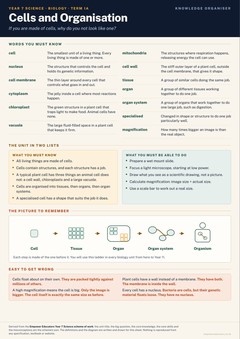
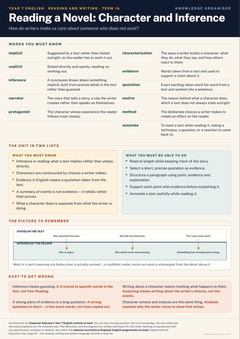
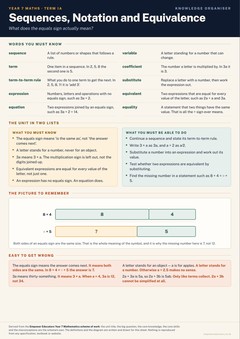
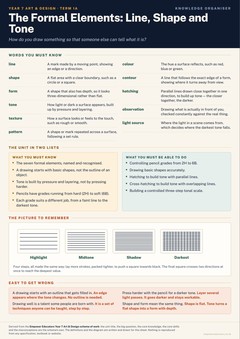
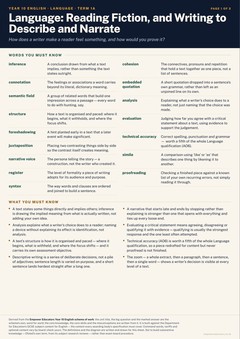
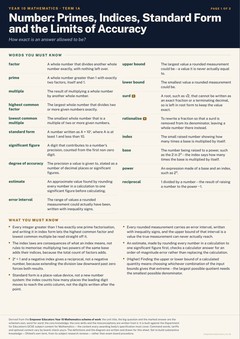
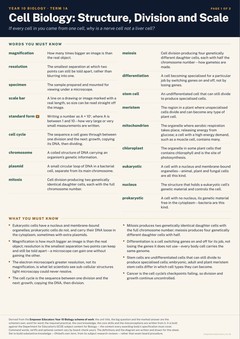
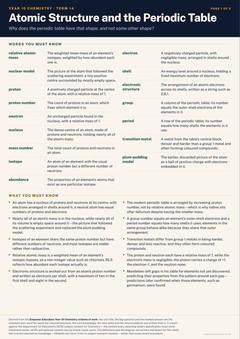
Every sheet has the same five sections
The vocabulary for the unit, set as a two-column table so a pupil can cover the meanings with a ruler and self-quiz. Every definition is written to stay true at GCSE, so nothing has to be unlearned in Year 10.
The concepts, models, relationships and equations for the unit — the things a pupil has to be able to state before they can be asked to use them.
Kept in its own list, because it is not the same thing. Calculate, plan an investigation, read a graph, judge a claim — the doing, not the knowing.
One diagram a unit, drawn in code rather than licensed, and chosen because it is the thing worth carrying into the exam room rather than because the page needed an illustration.
The misconceptions that actually cost marks, each as a wrong idea and the correction beside it. Taken from the scheme of work’s own diagnostic list, not invented for the sheet.
14 collections so far, 288 A4 sheets in total, each purchase covering every year of one subject at that stage. If you want a particular subject sooner, say which and it moves up the list.
Questions
Which exam board are these written for?
All of them. No sheet is written to one board’s specification. The content traces to the Department for Education’s own subject content, which every awarding body has to cover whatever order it teaches it in, so a department can use these whichever board they teach.
What is on a sheet?
The same five sections every time, in the same places: the vocabulary a pupil must be able to define, set as a two-column table they can cover and self-quiz; what they must know; what they must be able to do, kept in its own list because it is not the same thing; one diagram worth carrying into the exam room; and the misconceptions that actually cost marks, each with the correction beside it.
What is different about the GCSE sheets?
Two A4 pages a unit rather than one, because a GCSE unit carries more than a Key Stage 3 half-term does. The five sections are the same and sit in the same places, so nothing a pupil learned to read at Year 7 has to be relearned at Year 10.
What format do I get?
A PDF, typeset for A4 and ready to print. It downloads immediately after payment, and the link stays valid so you can come back to it.
Can I share it with my department?
Yes. Every resource is free to reproduce inside the school that buys it. Print it, copy it, hand it round a department. The licence covers one school.
Can I see it before I buy?
Yes. The opening pages of every paid title are readable in the browser, free and without signing up. The behaviour playbook is free in full for a name and an email.
Is it a subscription?
No. One payment, and the file is yours. There is nothing to cancel.
What if it is not what I expected?
If the file is broken, wrong, or never arrived, you get a refund. Email info@empowereducators.co.uk with the receipt number.