Science · Key Stage 3 · £4.99
Year 7 Science
Scheme of Work
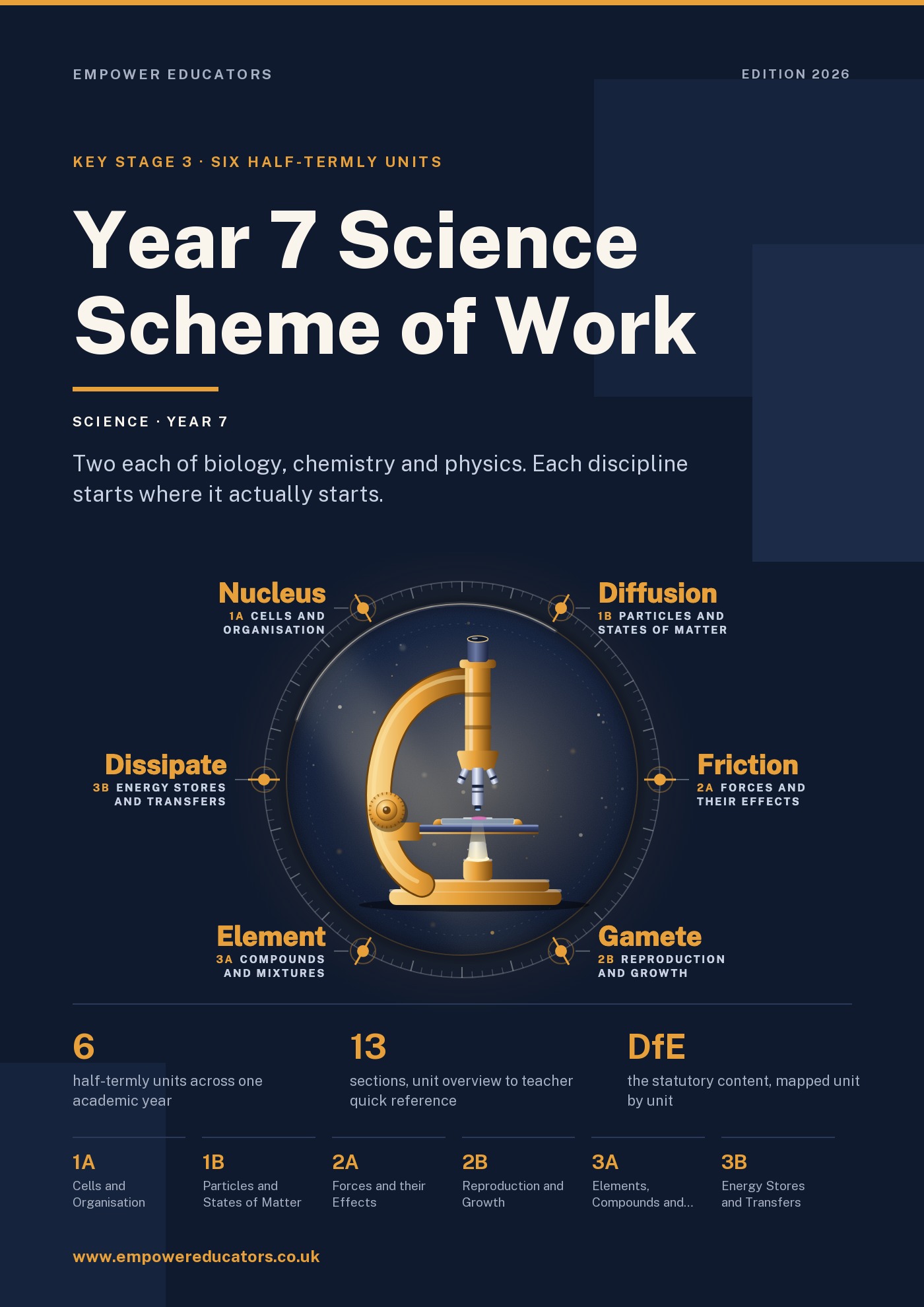
Six half-termly units across one academic year, two each of biology, chemistry and physics. Each discipline starts where it actually starts — biology at the cell, chemistry at the particle model, physics at forces — because nothing else in the key stage works if those three are shaky.
£4.99The Year 7 scheme: 6 half-termly units, 41 pages
- A4 PDF
- first 8 pages free to read
- instant download
Teaching all of Key Stage 3? Year 7, Year 8 and Year 9 as one set: £11.99, saving £2.98.
One purchase covers the school that buys it. Print it, copy it, hand it round your department. Not for passing to other schools or uploading anywhere.
PDF download, ready straight after payment. Downloading it ends the 14-day right to cancel; a file that is faulty or not as described is always refunded. Refunds
Read before publication by the serving head of that department and by senior leaders, in school.
5.0 from 24+ reviews on Google
Schools that have bought from Empower Educators include Nottingham High School, Northampton High School GDST and Sutton Valence School.
Complete your Science
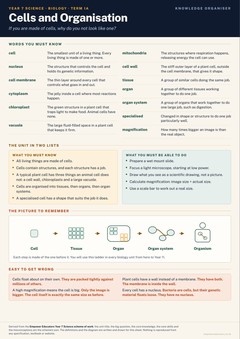
The whole key stage: KS3 Science scheme of work
Everything else this site has for Science: Science teaching resources
- 1aCells and Organisation
- 1bParticles and States of Matter
- 2aForces and their Effects
- 2bReproduction and Growth
- 3aElements, Compounds and Mixtures
- 3bEnergy Stores and Transfers
Ten sections per unit, in the same order every time. Phases rather than single lessons, because science is timetabled at about three hours a week.
Three pages a head of science looks for and rarely finds. Every practical in the year, in order, with the significant hazard named and the technician’s lead time. This is the page you hand a technician in July. A working scientifically progression across all three years, because the strand is statutory and is the one most often claimed and least often sequenced. And a mathematics inside science page naming where each skill is first needed and where the maths scheme teaches it, so two departments can align instead of each assuming the other has done it.
Written for schools here and abroad. The practicals page states plainly that it is not a risk assessment and that your employer’s model risk assessments are what count.
Every duration, context and assessment word is a strong default rather than a fixed rule. Year 7 means ages 11–12, or S1 in Scotland.
- Written to
- The statutory programme of study for key stage 3 science (DfE, 2013)
- Intended for
- heads of science, subject leaders, technicians and every teacher who has to deliver it
- Extent
- 41 pages · 13 sections
The sequence
What this scheme of work covers, unit by unit
The 6 units of the Year 7 Science Scheme of Work, in teaching order, with the term each one runs in and the question it is built to answer.
1a
Cells and Organisation
Autumn 1 · approx. 7 weeks · September – October
If you are made of cells, why do you not look like one?
1b
Particles and States of Matter
Autumn 2 · approx. 7 weeks · November – December
If nothing is added, why does a puddle disappear?
2a
Forces and their Effects
Spring 1 · approx. 7 weeks · January – February
If nothing is pushing it, why does a rolling ball stop?
2b
Reproduction and Growth
Spring 2 · approx. 7 weeks · March – April
Why does a seed need a flower, and why do humans not?
3a
Elements, Compounds and Mixtures
Summer 1 · approx. 7 weeks · April – May
Salt is made of a metal that explodes in water and a poisonous gas. Why can you eat it?
3b
Energy Stores and Transfers
Summer 2 · approx. 7 weeks · June – July
If energy cannot be destroyed, why does your phone go flat?
Look inside
Real pages, straight from the PDF
Click any page to see it full size.
Contents
All 13 sections
Taken from the book’s own contents page, so the page numbers are the real ones.