Articles
Writing from the same sources as the books
Longer pieces on what statutory guidance actually asks of a school, and what changes in a classroom on Monday. Every figure is traced to a named publication, and every source is linked rather than summarised.
-
 Art & Design · GCSE art annotation: what earns marks, and the three-clause stem that fixes it Weak annotation is rarely careless. It describes what a moderator can already see. This is the difference, shown on one experiment annotated four ways.
Read the article → 5 min
Art & Design · GCSE art annotation: what earns marks, and the three-clause stem that fixes it Weak annotation is rarely careless. It describes what a moderator can already see. This is the difference, shown on one experiment annotated four ways.
Read the article → 5 min -
 Art & Design · GCSE art assessment objectives, AO1 to AO4, explained for teachers Four objectives, a quarter each, in the same words on every board. What differs is the mark scheme, and the plain question each objective is really asking.
Read the article → 6 min
Art & Design · GCSE art assessment objectives, AO1 to AO4, explained for teachers Four objectives, a quarter each, in the same words on every board. What differs is the mark scheme, and the plain question each objective is really asking.
Read the article → 6 min -
 Art & Design · Art moderation and standardisation: four dates and a 45-minute meeting Moderation rarely finds that a department marked badly. It finds that it marked inconsistently, and the adjustment then applies to every student.
Read the article → 6 min
Art & Design · Art moderation and standardisation: four dates and a 45-minute meeting Moderation rarely finds that a department marked badly. It finds that it marked inconsistently, and the adjustment then applies to every student.
Read the article → 6 min -
 Art & Design · A KS3 art curriculum map: what to teach in Years 7, 8 and 9, and why in that order Three years of half-termly units. The order is the argument: each unit builds what the next one assumes.
Read the article → 7 min
Art & Design · A KS3 art curriculum map: what to teach in Years 7, 8 and 9, and why in that order Three years of half-termly units. The order is the argument: each unit builds what the next one assumes.
Read the article → 7 min -
 Science · Someone counted every Ofsted comment on science. The complaints are short and familiar. A language model scored 31,748 inspection reports going back to 1999. Praise outnumbers criticism, and the criticism lands on sequencing, teaching time and pathways.
Read the article → 8 min
Science · Someone counted every Ofsted comment on science. The complaints are short and familiar. A language model scored 31,748 inspection reports going back to 1999. Praise outnumbers criticism, and the criticism lands on sequencing, teaching time and pathways.
Read the article → 8 min -
 Exam Boards · Every GCSE PE board delivers exactly 60% exam, 40% non-exam assessment. Ofqual decided that, not the boards. AQA, Pearson Edexcel, OCR and WJEC Eduqas all publish the same split, tier for tier, because a regulatory condition fixes it. What differs is how each board delivers the 40%, and for one board, what the second task even is.
Read the article → 6 min
Exam Boards · Every GCSE PE board delivers exactly 60% exam, 40% non-exam assessment. Ofqual decided that, not the boards. AQA, Pearson Edexcel, OCR and WJEC Eduqas all publish the same split, tier for tier, because a regulatory condition fixes it. What differs is how each board delivers the 40%, and for one board, what the second task even is.
Read the article → 6 min -
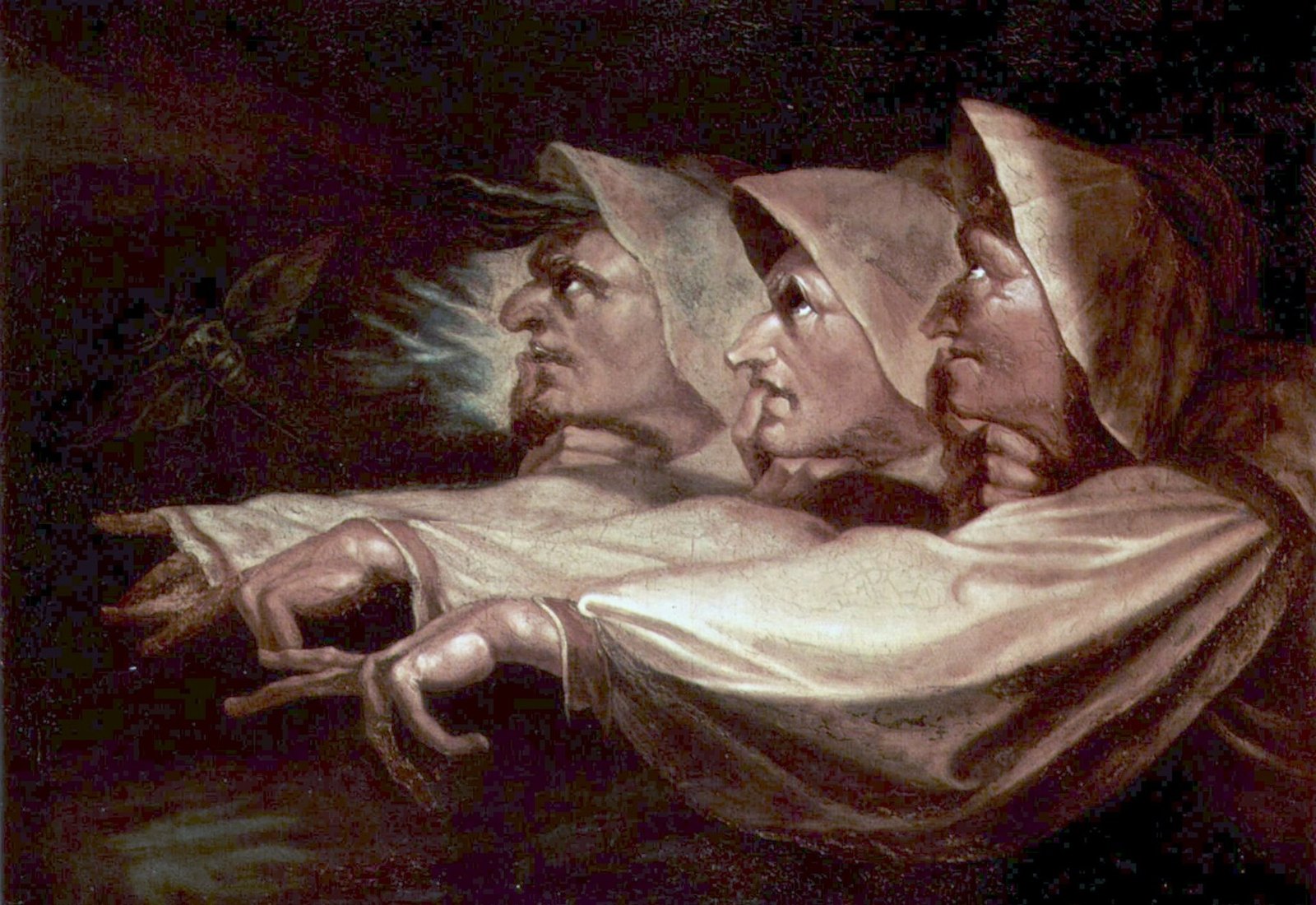 Exam Boards · Four exam boards set Macbeth. They do not set the same exam, and the differences are big enough to change what you teach in March. Context is worth six marks on AQA and nothing at all on Eduqas. Edexcel gives no marks for accuracy in this section. Only OCR offers a choice of question.
Read the article → 5 min
Exam Boards · Four exam boards set Macbeth. They do not set the same exam, and the differences are big enough to change what you teach in March. Context is worth six marks on AQA and nothing at all on Eduqas. Edexcel gives no marks for accuracy in this section. Only OCR offers a choice of question.
Read the article → 5 min - Physical Education · A PE scheme of work does not run one unit at a time, because the department does not have one hall, one gym and one field to spare. Six strands a year, and a curriculum map that pretends they run in sequence falls apart the first week a wet Wednesday moves gymnastics into the hall booked for something else.
Read the article → 6 min
-
 Exam Boards · The assessment objectives for GCSE maths are set nationally. The three papers that test them are not the same shape at all. AQA and Pearson Edexcel both open with the non-calculator paper and mark the qualification out of 240. OCR marks it out of 300, and puts the non-calculator paper second.
Read the article → 6 min
Exam Boards · The assessment objectives for GCSE maths are set nationally. The three papers that test them are not the same shape at all. AQA and Pearson Edexcel both open with the non-calculator paper and mark the qualification out of 240. OCR marks it out of 300, and puts the non-calculator paper second.
Read the article → 6 min -
 Exam Boards · AQA and OCR split GCSE English Language marks down the middle. Pearson Edexcel does not. Two papers, 100% of the GCSE, and a department that assumes an even split finds out otherwise mid-timetable. Edexcel weights Paper 2 at 60% against AQA and OCR’s even 50/50, and gives it twenty minutes longer to match.
Read the article → 6 min
Exam Boards · AQA and OCR split GCSE English Language marks down the middle. Pearson Edexcel does not. Two papers, 100% of the GCSE, and a department that assumes an even split finds out otherwise mid-timetable. Edexcel weights Paper 2 at 60% against AQA and OCR’s even 50/50, and gives it twenty minutes longer to match.
Read the article → 6 min -
 Geography · Geography has the smallest disadvantage gap of any subject at GCSE. At A Level, that pattern reverses. Tes analysed Ofqual’s subject entries by deprivation for the first time, the exam regulator’s first year publishing results at local authority level. Behind geography’s reversal sits a supply number nobody connected to it: trainee teachers for the subject, nearly halved in a single year.
Read the article → 6 min
Geography · Geography has the smallest disadvantage gap of any subject at GCSE. At A Level, that pattern reverses. Tes analysed Ofqual’s subject entries by deprivation for the first time, the exam regulator’s first year publishing results at local authority level. Behind geography’s reversal sits a supply number nobody connected to it: trainee teachers for the subject, nearly halved in a single year.
Read the article → 6 min -
 Attendance & Persistent Absence · Nearly a million young people are out of work and education. The earliest reliable sign of it is a register mark in Year 8. Not in education, employment or training, or NEET, is a statistic about twenty-two-year-olds, and every response announced with this morning’s figure starts at twenty-two. The Department for Education has measured how much earlier a school can see it coming.
Read the article → 7 min
Attendance & Persistent Absence · Nearly a million young people are out of work and education. The earliest reliable sign of it is a register mark in Year 8. Not in education, employment or training, or NEET, is a statistic about twenty-two-year-olds, and every response announced with this morning’s figure starts at twenty-two. The Department for Education has measured how much earlier a school can see it coming.
Read the article → 7 min - Curriculum & Planning · Most schemes of work are either too thin to teach from or too heavy to keep updated. Ofsted asks whether a curriculum is planned and sequenced clearly, and whether it is implemented in line with leaders’ intentions. The scheme of work is where those two meet, or fail to.
Read the article → 6 min
-
 Behaviour & Culture · Most behaviour policies describe one fifth of the system, and the least powerful fifth. Ofsted’s inspection toolkit names the factors that matter most for behaviour. Routines, culture and consistent application are on the list. Most policies describe only the consequences.
Read the article → 7 min
Behaviour & Culture · Most behaviour policies describe one fifth of the system, and the least powerful fifth. Ofsted’s inspection toolkit names the factors that matter most for behaviour. Routines, culture and consistent application are on the list. Most policies describe only the consequences.
Read the article → 7 min -
 School Leadership · The regional divide is the widest since 2010. It is not the biggest gap in these results. London took 32.7% top grades, the North East 23.1%. Independent schools took 48.6% against the state sector’s 25.4%, a gap nearly two and a half times wider.
Read the article → 6 min
School Leadership · The regional divide is the widest since 2010. It is not the biggest gap in these results. London took 32.7% top grades, the North East 23.1%. Independent schools took 48.6% against the state sector’s 25.4%, a gap nearly two and a half times wider.
Read the article → 6 min -
 Mathematics · Almost one in four boys took a top grade in maths. The grade that decides a life is a 4. Twenty-three grades in every hundred were a 7 or above this morning. Twenty-nine were below a 4. Only one of those numbers made the headlines.
Read the article → 6 min
Mathematics · Almost one in four boys took a top grade in maths. The grade that decides a life is a 4. Twenty-three grades in every hundred were a 7 or above this morning. Twenty-nine were below a 4. Only one of those numbers made the headlines.
Read the article → 6 min - Physical Education · PE is the most cancelled subject in school. More time is only half the answer. Only 57% of teachers say their school manages the recommended two hours a week. Winning that time back is the easier half of the problem.
Read the article → 5 min
- Art & Design · Arts education is getting its money back. What reaches the art room? A National Centre is due to open this term and the EBacc is on its way out. Neither of them changes what is in a Year 9 sketchbook.
Read the article → 5 min
- SEND & Inclusion · SEND numbers are rising. Are schools getting better at meeting need? The figures matter. But for a school, the harder question is what changes in the classroom once a pupil has been identified.
Read the article → 4 min
More to come. If there is a piece of guidance you want read properly and written up, say which and it moves up the list.