Science
A KS3 science curriculum map: what to teach in Years 7, 8 and 9, and where biology, chemistry and physics are taught
Two units of each discipline every year. Each starts where it actually starts: biology at the cell, chemistry at the particle model, physics at forces.
Built from the Year 7, Year 8 and Year 9 Science schemes of work on this site, which are written against the statutory programme of study for key stage 3 science (Department for Education, 2013).
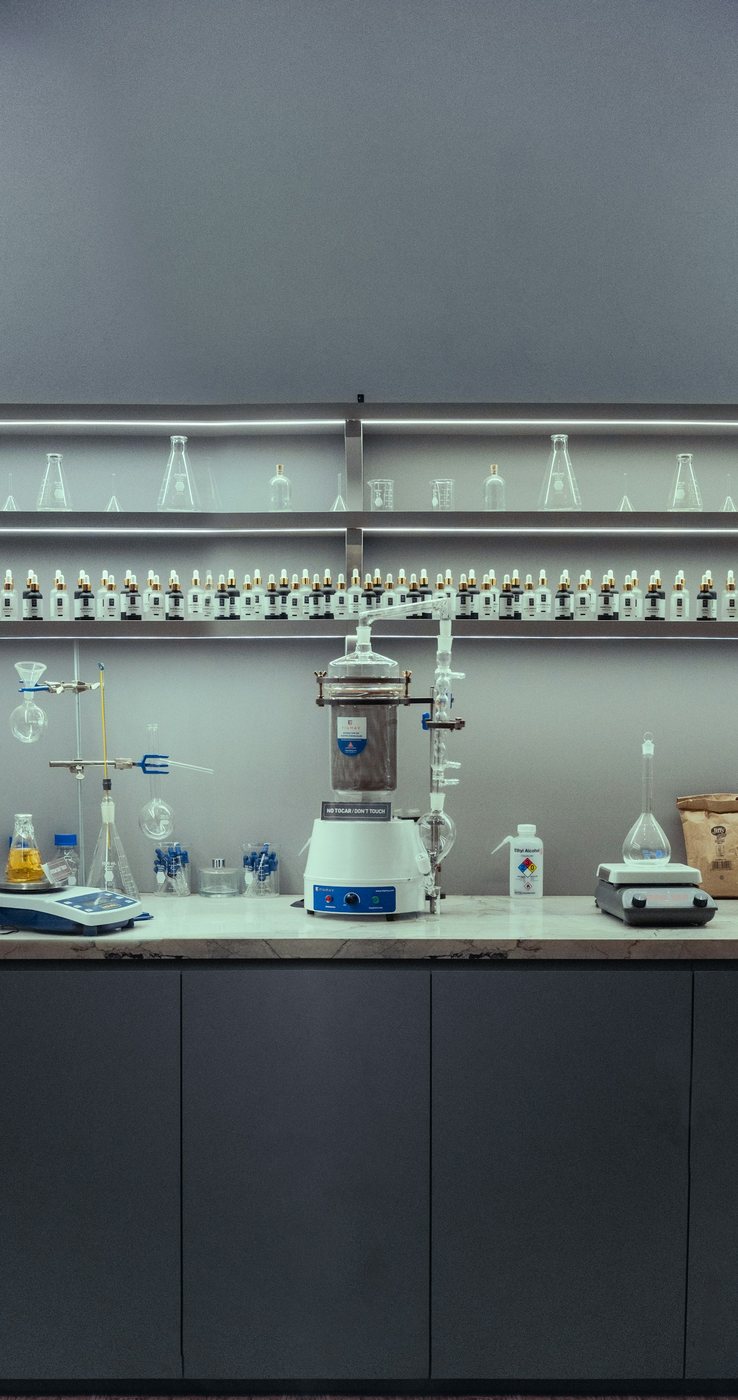
A curriculum map says what is taught and when. This one is for science at Key Stage 3: three years, 18 half-term units, two each of biology, chemistry and physics every year. It is read straight from the schemes of work, so it says what they say, including what each year holds back until its prerequisite is in place.
This map is free to read, with no sign-up. The schemes of work it is read from are paid products, and the list at the end links to each of them.
The map at a glance
Every unit in teaching order, with what students produce at the end of it.
| Unit | What students produce at the end |
|---|---|
| Year 7 1a Cells and Organisation | An annotated microscope drawing from the student's own slide, with a written account of how the cell's structures relate to its job. |
| Year 7 1b Particles and States of Matter | A written explanation of three everyday changes of state in terms of particle arrangement, spacing and energy, with a cooling curve drawn from the class's own data. |
| Year 7 2a Forces and their Effects | An investigation report on one factor affecting friction, with a results table, a graph, and a conclusion that states what the evidence does not show. |
| Year 7 2b Reproduction and Growth | A comparison of human and flowering-plant reproduction, structured around the same four stages, with the adaptations of each explained rather than listed. |
| Year 7 3a Elements, Compounds and Mixtures | A separation of a supplied mixture into its components, with each technique chosen and justified from the properties of what is being separated. |
| Year 7 3b Energy Stores and Transfers | An energy transfer diagram for three everyday devices, each accounting for where the energy started, where it went, and why none of it was lost. |
| Year 8 1a Nutrition, Digestion and Respiration | A traced account of one meal from mouth to muscle, naming the organ, the change and the reason at every step. |
| Year 8 1b Chemical Reactions | A set of word equations for reactions the class has carried out, each with a measurement or observation showing that mass was conserved. |
| Year 8 2a Electricity and Magnetism | A set of circuits built, measured and explained, with a written account of why current is the same all the way round a series circuit and energy is not. |
| Year 8 2b Photosynthesis and Ecosystems | An account of where the mass of a tree comes from, supported by the class's own evidence that a plant makes starch only in light. |
| Year 8 3a Acids, Alkalis and the Reactivity Series | A reactivity series built from the class's own observations, used to predict the outcome of a displacement reaction the class has not carried out. |
| Year 8 3b Waves: Light and Sound | Ray diagrams for reflection and refraction drawn to scale from the class's own measurements, with the difference between light and sound explained. |
| Year 9 1a Atomic Structure and the Periodic Table | A prediction of the properties and reactions of an element the class has never met, justified entirely from its position in the periodic table. |
| Year 9 1b Inheritance, Variation and Evolution | An explanation of one real example of evolution by natural selection, in which every step is stated in terms of variation, selection and inheritance rather than intent. |
| Year 9 2a Motion, Speed and Pressure | A distance–time graph produced from the class's own measurements, interpreted in writing, with speeds calculated and quoted to a justified precision. |
| Year 9 2b Earth, Atmosphere and Climate | An evidence-based account of how the atmosphere has changed, distinguishing what is measured, what is inferred, and what is projected. |
| Year 9 3a Space Physics and Energy Resources | A comparison of three energy resources against stated criteria, with a recommendation that names its own trade-offs rather than concealing them. |
| Year 9 3b Health, Disease and the Immune System | An explanation of how one named disease is caught, fought and prevented, using the same three-stage structure for each part. |
Biology, chemistry and physics across the three years
The programme of study for key stage 3 science (Department for Education, 2013) sets out the subject content in three disciplines. Each scheme prints where it teaches each one. Read along a row to see a discipline build from year to year.
| Discipline | Year 7 | Year 8 | Year 9 |
|---|---|---|---|
| Biology structure and function of living organisms · material cycles and energy · interactions and interdependencies · genetics and evolution | 1a cells, specialisation and organisation · 2b reproduction in humans and flowering plants | 1a nutrition, digestion and aerobic respiration · 2b photosynthesis, ecosystems and interdependence | 1b genetics, variation and evolution · 3b health, disease and the immune system |
| Chemistry the particulate nature of matter · atoms, elements and compounds · pure and impure substances · chemical reactions · energetics · the periodic table · materials · Earth and atmosphere | 1b the particulate nature of matter · 3a atoms, elements, compounds, pure and impure substances | 1b chemical reactions, conservation of mass, energetics · 3a acids, alkalis, the reactivity series | 1a atoms, the periodic table and the structure behind reactivity · 2b Earth and atmosphere |
| Physics energy · motion and forces · waves · electricity and electromagnetism · matter · space physics | 2a motion and forces · 3b energy stores, transfers and dissipation | 2a electricity and electromagnetism · 3b waves, light and sound | 2a motion, forces, matter and pressure · 3a space physics and energy resources |
Working scientifically, year by year
The programme of study also sets four strands of working scientifically, taught through the content rather than as units of their own. This is where each scheme puts them.
| Strand | Year 7 | Year 8 | Year 9 |
|---|---|---|---|
| scientific attitudes | Objectivity and accuracy established in 2a (variables and control) and 1b (measuring at intervals) | 3a builds a classification from evidence and then tests it · 1b requires measurement to overturn an expectation | 2a precision and significant figures · 2b measured, inferred and projected · 3b evaluating health claims |
| experimental skills and investigations | 2a is the first full investigation · 3a chooses the method from properties · practicals in every unit | 2b destarching as a control step · 2a prediction before every measurement · 3a predict-then-test in Phase 5 | 1a predicting an untaught element · 3a comparing against stated criteria · risk assessment written by students in 2a |
| analysis and evaluation | 1b cooling curves · 2a lines of best fit and anomalies · 3b efficiency as a proportion | 1b atom counts on both sides · 2a currents added at a junction · 3b angle measurement and its precision | 2a rearranging equations and gradients · 3a standard form · 1b probability in Punnett squares |
| measurement | SI units from 1a onward, insisted on in 2a · chemical symbols and formulae in 3a | Amps and volts in 2a · word equations and salt naming in 1b and 3a | SI units and precision throughout 2a · IUPAC naming and the periodic table in 1a |
The question each unit opens with
Every unit is built around one question the science answers. They are a quick way to see what a year is for.
Year 7
- 1a Cells and Organisation. If you are made of cells, why do you not look like one?
- 1b Particles and States of Matter. If nothing is added, why does a puddle disappear?
- 2a Forces and their Effects. If nothing is pushing it, why does a rolling ball stop?
- 2b Reproduction and Growth. Why does a seed need a flower, and why do humans not?
- 3a Elements, Compounds and Mixtures. Salt is made of a metal that explodes in water and a poisonous gas. Why can you eat it?
- 3b Energy Stores and Transfers. If energy cannot be destroyed, why does your phone go flat?
Year 8
- 1a Nutrition, Digestion and Respiration. You eat a sandwich. How does any of it end up powering your legs?
- 1b Chemical Reactions. Wood burns away to almost nothing. Where did the rest of it go?
- 2a Electricity and Magnetism. If current is not used up in a bulb, why does the battery go flat?
- 2b Photosynthesis and Ecosystems. A tree weighs several tonnes. Where did all that mass come from?
- 3a Acids, Alkalis and the Reactivity Series. Why can you put copper in water but not sodium?
- 3b Waves: Light and Sound. Why can you hear round a corner but not see round one?
Year 9
- 1a Atomic Structure and the Periodic Table. Why does the reactivity series look the way it does?
- 1b Inheritance, Variation and Evolution. Why are you like your parents but not identical to them?
- 2a Motion, Speed and Pressure. Two cars pass the same sign at the same speed. Is anything about them the same?
- 2b Earth, Atmosphere and Climate. The atmosphere is 0.04% carbon dioxide. How can that possibly matter?
- 3a Space Physics and Energy Resources. Coal, wind and hydroelectricity are all stored sunlight. Which resources are not, and why?
- 3b Health, Disease and the Immune System. You meet thousands of pathogens a day and are almost never ill. Why not?
What each year holds back, and why
The programme of study is complete by the end of Year 9, but not every topic is in every year. Each scheme says what it leaves out and where that topic is taught instead. Where a note refers to “this book” or to a map at the back, that is the scheme of work itself, which is not reproduced here.
Year 7. This year deliberately does not cover chemical reactions, electricity, waves, photosynthesis, respiration or space. Each has a prerequisite that Year 7 is building: reactions need elements and compounds, electricity needs energy, photosynthesis needs both cells and reactions. All appear in Years 8 and 9, and the sequence is the reason they are not here. Earth and atmosphere is the one genuine gap in Year 7 and it is covered in Year 9 Unit 2b; if your department teaches it earlier, take it from Year 9 rather than adding it to an already full year.
Year 8. Space physics, atomic structure and the periodic table as a pattern are not covered this year, and all three are in Year 9. Each needs something Year 8 is building: space needs waves and energy resources, and the periodic table only explains anything once reactivity has been observed in Unit 3a. Earth and atmosphere remains the genuine gap across Years 7 and 8; it is covered in Year 9 Unit 2b, and if your department wants it earlier, move it rather than adding it.
Year 9. The key stage 3 programme of study is complete across the three years by the end of this book. What this year does not do is start GCSE content, and that is a deliberate choice rather than an omission — several schools begin GCSE in Year 9, and a department doing that should treat these six units as the last chance to secure key stage 3 rather than as time to be reclaimed. The units that most repay being taught in full are 1a, which explains reactivity, and 2a, which installs the calculation habits the whole of GCSE physics assumes.
After Year 9
GCSE science picks up from here. The Year 10 and 11 schemes are written for both Combined Science and the separate sciences: biology, chemistry and physics. Alongside them are the GCSE Combined Science knowledge organisers and, for how each exam board sets and marks the papers, GCSE science assessment objectives.
The schemes behind this map
- Year 7 Science Scheme of Work
- Year 8 Science Scheme of Work
- Year 9 Science Scheme of Work
- Science schemes of work: Key Stage 3, GCSE and A Level
- Each year on one page: Year 7 Science · Year 8 Science · Year 9 Science, with the six units and their outcomes
- KS3 science knowledge organisers, printable A4 notes, one per unit
- KS3 knowledge organisers for every subject, printable A4 notes, one per unit