Art & Design scheme of work: Key Stage 3, GCSE and A Level
Year 7 · Year 8 · Year 9 · Year 10 · Year 11 · A Level · 35 units in all
Six half-termly units an academic year (five in Year 11, where study leave takes the last one), set out as one sequence table instead of a page per
lesson.
The A Level scheme keeps the same shape over a longer span: six units across
the two years, to the personal investigation, the coursework or the examinations.
Each year is written backwards from what the next one states it assumes on
entry, so Year 7 ends where Year 8 needs it to start and nothing is taught twice by
accident.
Every unit maps to the statutory content.
The GCSE books run to 61 to 65 pages each against 33 to 38 pages at Key Stage 3.
Most departments just call it a SOW.
In the staffroom it is “GCSE Art”.
Board-neutral by construction. No board’s specification is followed. The units map to the Department for
Education’s own subject content, which AQA, OCR and Pearson Edexcel each have to cover however
they order or label it. A department teaches this sequence whichever board
they sit. A change of board does not mean a change of scheme.
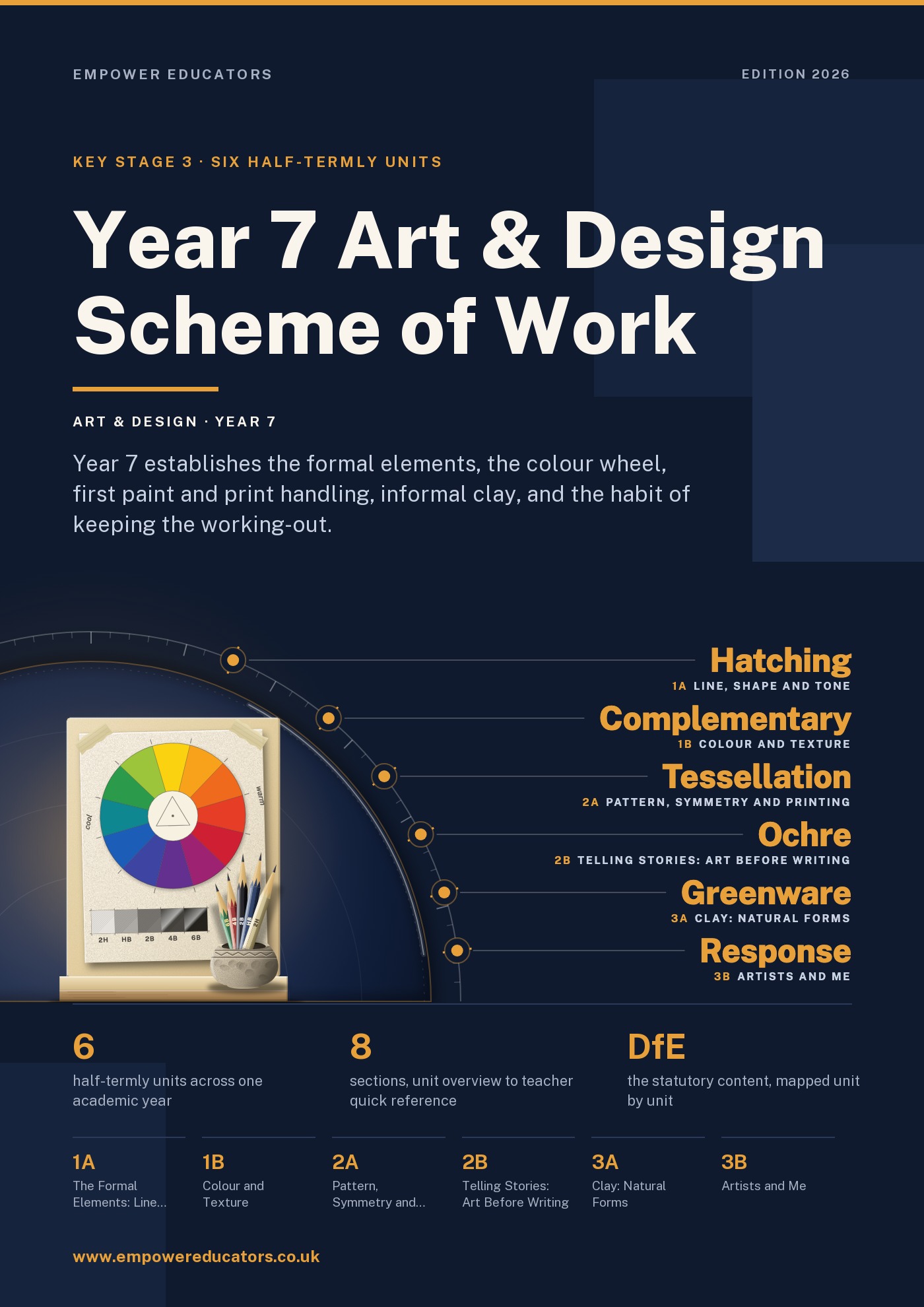
Six half-termly units across one academic year, written backwards from what Year 8 states it assumes on entry. Year 7 establishes the formal elements, the colour wheel, first paint and print handling, informal clay, and the habit of keeping the working-out.
1a The Formal Elements: Line, Shape and Tone
1b Colour and Texture
2a Pattern, Symmetry and Printing
2b Telling Stories: Art Before Writing
3a Clay: Natural Forms
3b Artists and Me
The statutory programme of study for key stage 3 art and design (DfE, 2013)· 33 pages, 8 sections ·For heads of art, subject leaders and every teacher who has to deliver it
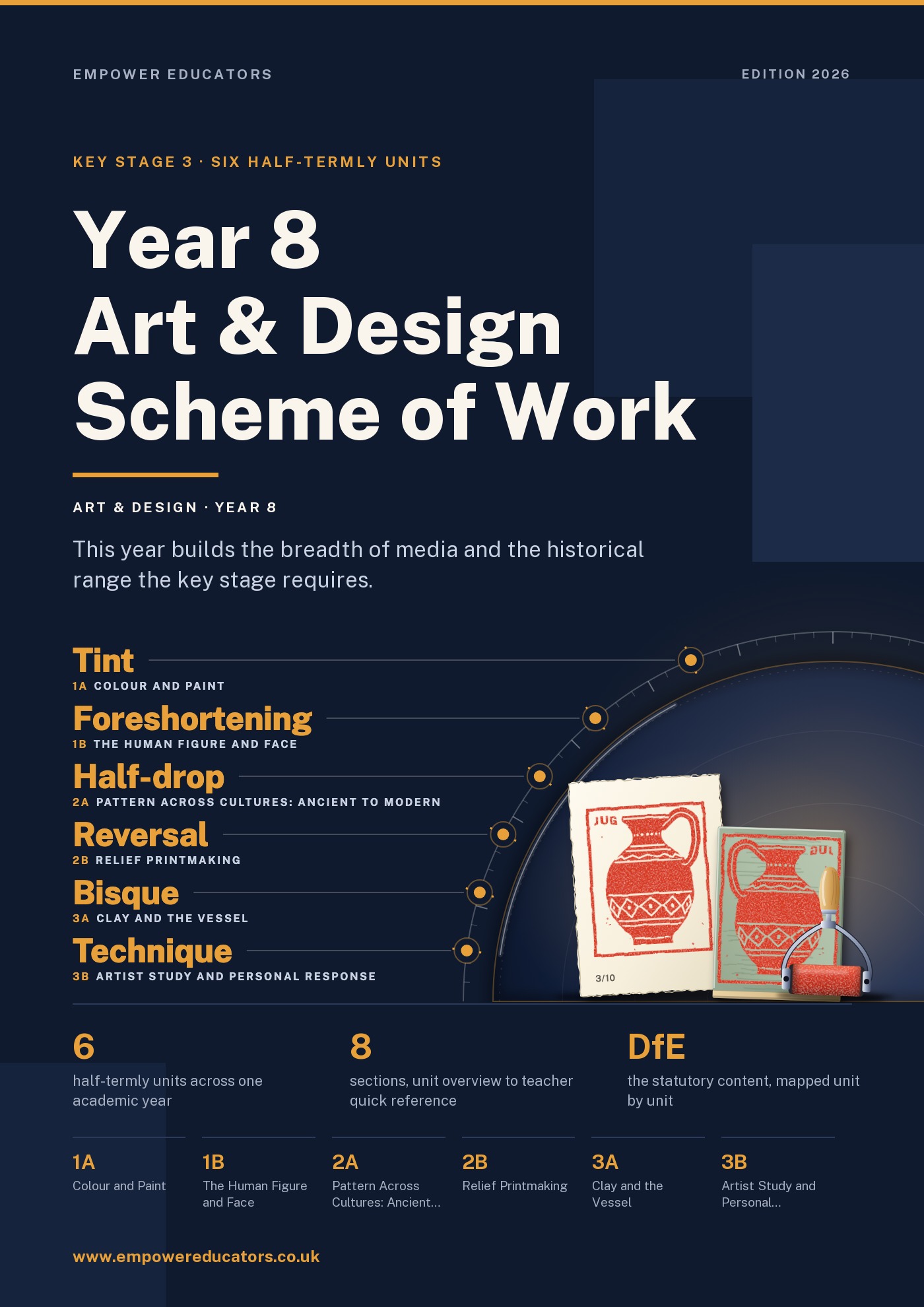
Six half-termly units across one academic year, sequenced so each builds what the next assumes. Year 7 establishes the formal elements; this year builds the breadth of media and the historical range the key stage requires.
1a Colour and Paint
1b The Human Figure and Face
2a Pattern Across Cultures: Ancient to Modern
2b Relief Printmaking
3a Clay and the Vessel
3b Artist Study and Personal Response
The statutory programme of study for key stage 3 art and design (DfE, 2013)· 35 pages, 8 sections ·For heads of art, subject leaders and every teacher who has to deliver it
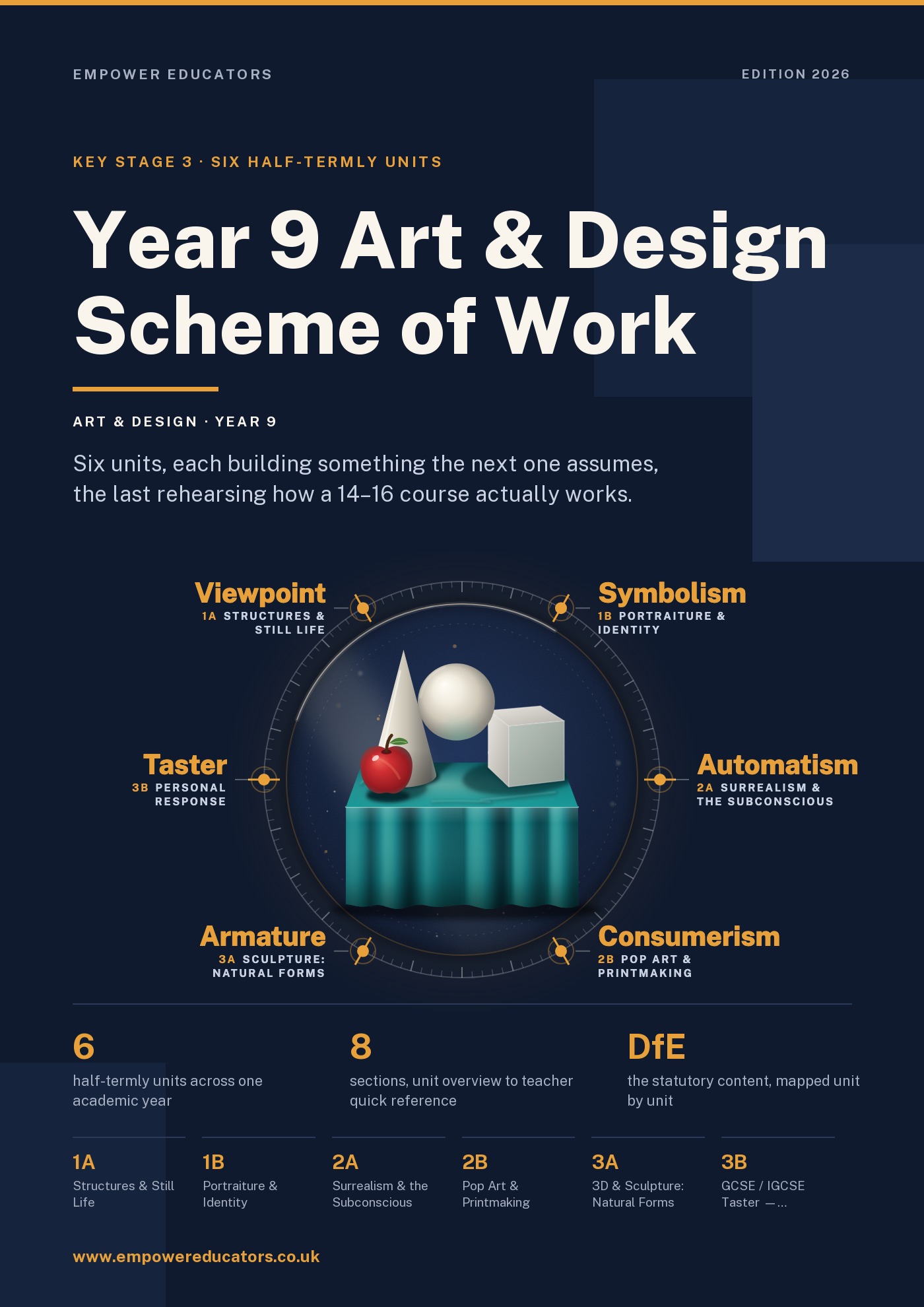
Six half-termly units across one academic year, each building something the next one assumes. It ends with an independent personal response that rehearses how a 14–16 course actually works.
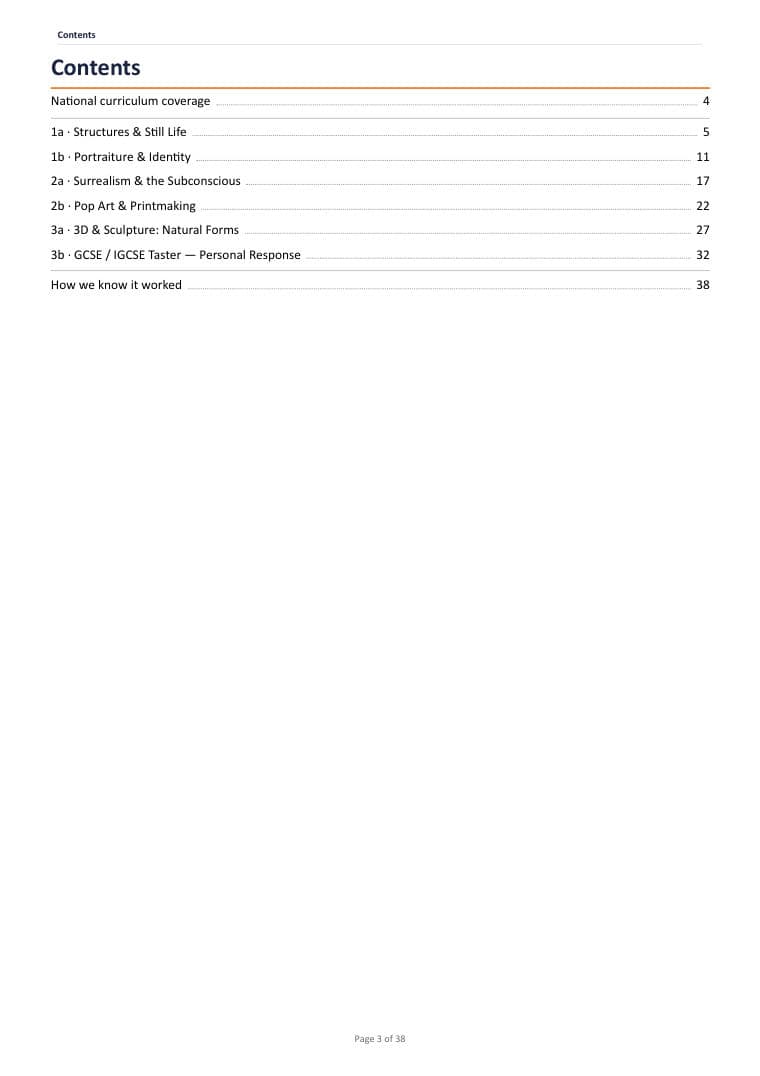
1a Structures & Still Life
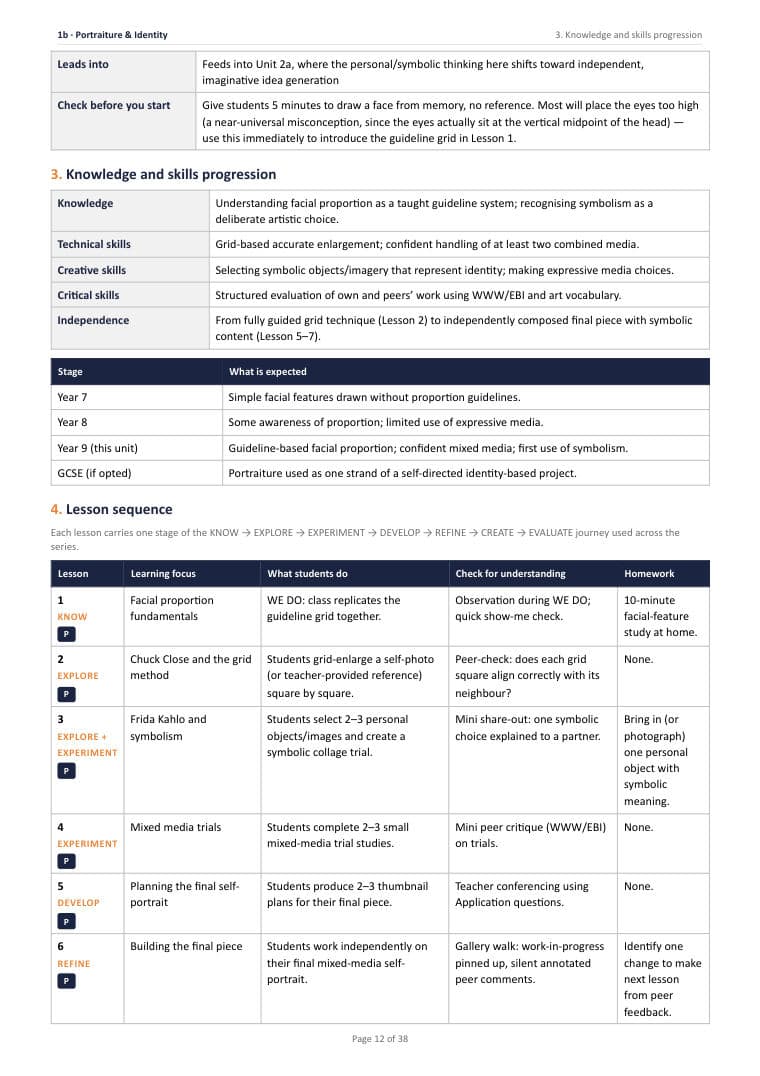
1b Portraiture & Identity
2a Surrealism & the Subconscious
2b Pop Art & Printmaking
3a 3D & Sculpture: Natural Forms
3b GCSE / IGCSE Taster — Personal Response
The statutory programme of study for key stage 3 art and design (DfE, 2013)· 38 pages, 8 sections ·For heads of art, subject leaders and every teacher who has to deliver it
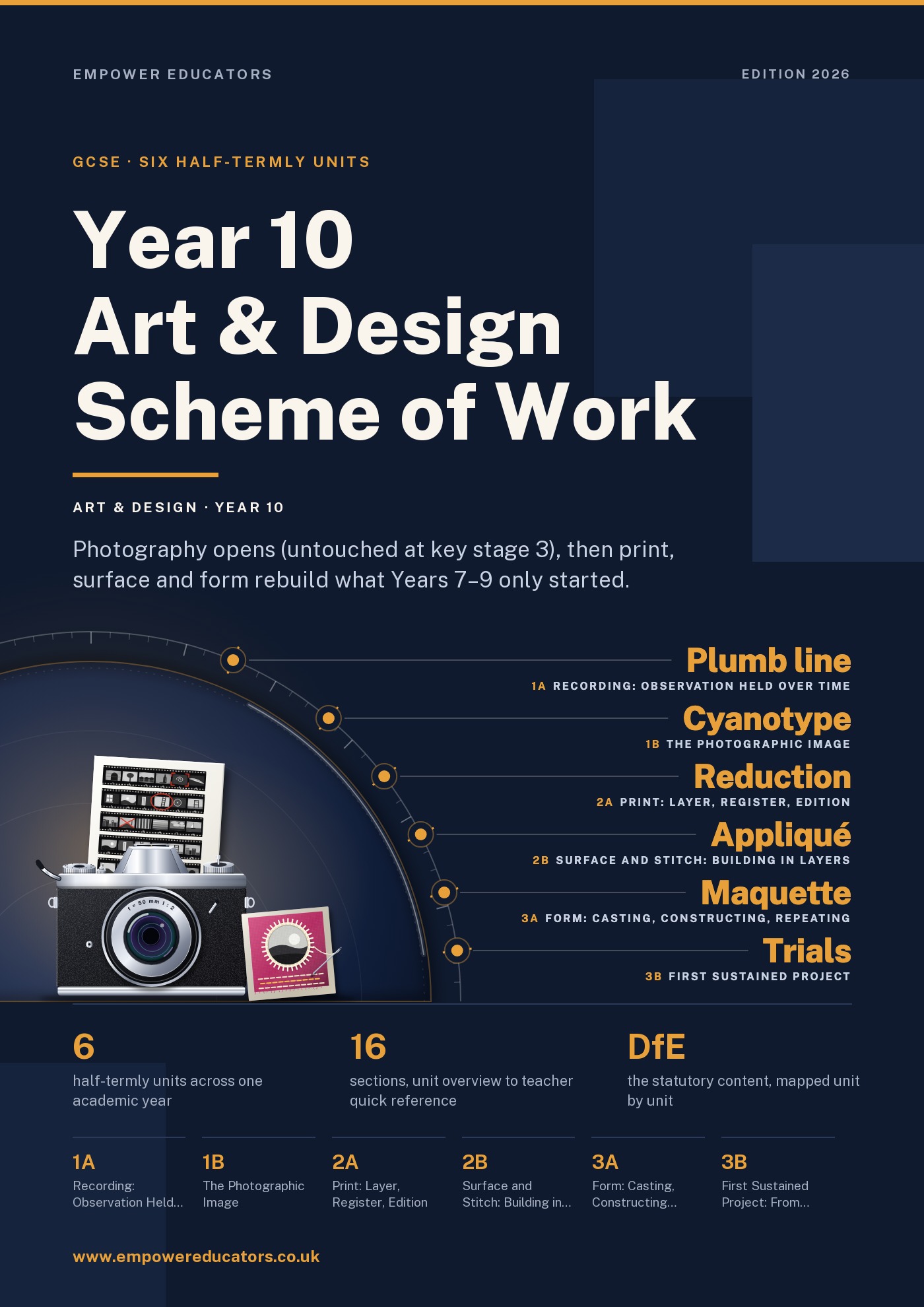
3b First Sustained Project: From Question to Outcome
The GCSE subject content for art and design (DfE, 2015) and the four assessment objectives set by Ofqual (Ofqual/15/5643)· 65 pages, 16 sections ·For heads of art, subject leaders and every teacher who has to deliver it
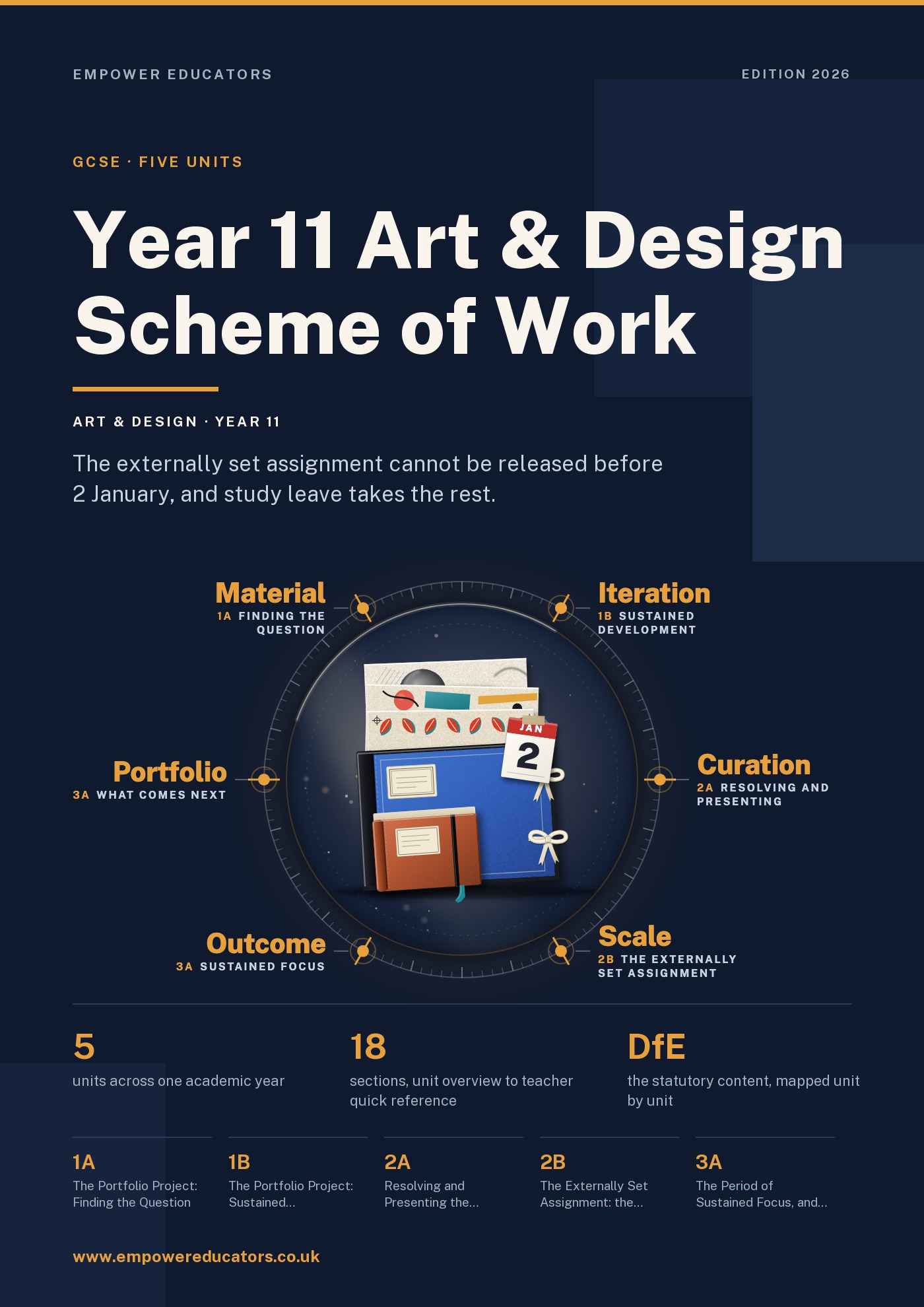
2b The Externally Set Assignment: the Preparatory Period
3a The Period of Sustained Focus, and What Comes Next
The GCSE subject content for art and design (DfE, 2015) and the four assessment objectives set by Ofqual (Ofqual/15/5643)· 61 pages, 18 sections ·For heads of art, subject leaders and every teacher who has to deliver it
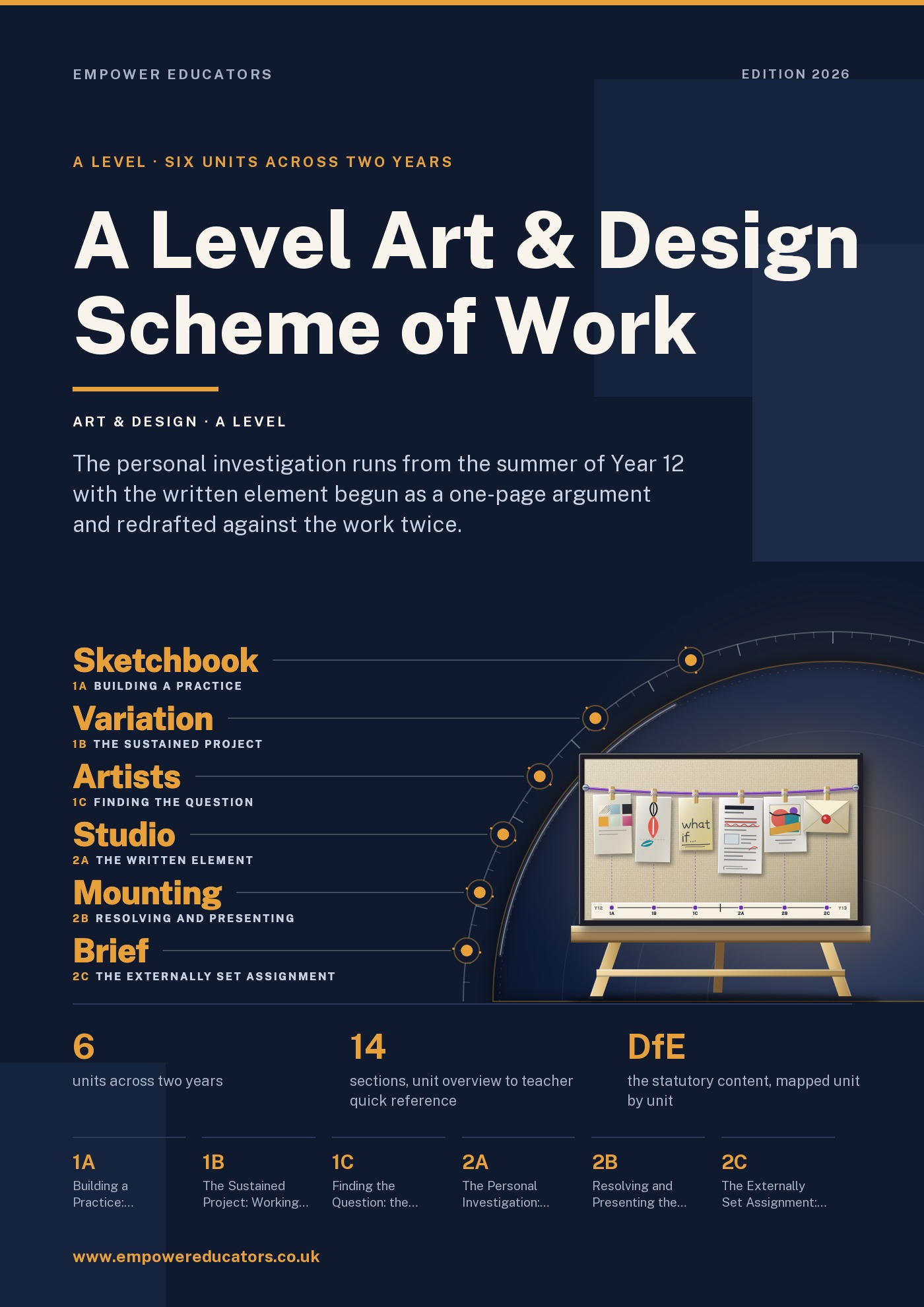
Forty-eight pages across two years, board-neutral by construction: every requirement comes from the DfE subject content for art and design or from Ofqual’s subject level conditions, and no specification is reproduced anywhere. The personal investigation runs from the summer of Year 12 with the written element begun as a one-page argument and redrafted against the work twice. Boards genuinely differ on the objective weightings inside Ofqual’s 20–30 per cent ranges, the preparatory period, and whether a word count is set. Those differences are collected in one table rather than guessed at.
1a Building a Practice: Recording, Media and the Habit of Enquiry
1b The Sustained Project: Working From a Theme
1c Finding the Question: the Personal Investigation Begins
2a The Personal Investigation: Sustained Development and the Written Element
2b Resolving and Presenting the Personal Investigation
2c The Externally Set Assignment: the Preparatory Period and the Supervised Period
The DfE subject content for GCE AS and A level art and design, and Ofqual’s GCE subject level conditions· 48 pages, 14 sections ·For heads of department, subject leaders and every teacher who has to deliver it
One purchase covers the school that buys it · PDF straight after payment · Refunds
Cookies
This site works the same either way. Measurement — Google Analytics and Microsoft
Clarity — only runs if you say yes, and it is used to see which resources people
actually reach.Measurement only runs if you say yes.What is collected.