Empower
Educators
Search

Key Stage 3 and GCSE · Drama

Key Stage 3 and GCSE Drama, sequenced

Year 7 · Year 8 · Year 9 · Year 10 · Year 11 · 29 units in all

Six half-termly units an academic year (five in Year 11, where study leave takes the last one), set out as one sequence table instead of a page per lesson. Each year is written backwards from what the next one states it assumes on entry, so Year 7 ends where Year 8 needs it to start and nothing is taught twice by accident. Every unit maps to the statutory content. The GCSE books run to 63 to 73 pages each against 63 to 66 pages at Key Stage 3, with printable diagnostics at the back of each. Most departments just call it a SOW.

Board-neutral by construction. No board’s specification is followed. The units map to the Department for Education’s own subject content, which AQA each have to cover however they order or label it. A department teaches this sequence whichever board they sit. A change of board does not mean a change of scheme.

Also need exam support? GCSE assessment objectives

Want the whole department covered, not just the year groups? The Theatre Maker’s Craft, Confident Schools

Writing one from scratch? How to write a KS3 scheme of work

3 years, together or one at a time

Key Stage 3 · first 8 pages of each open here

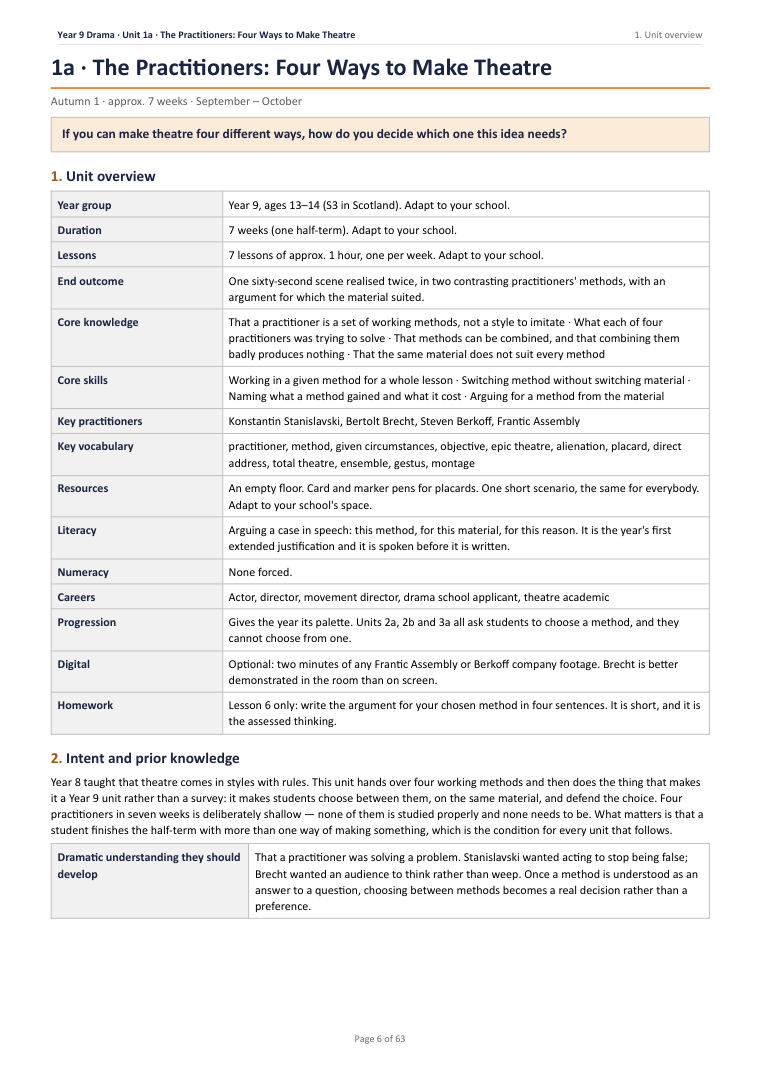
Cover of Year 7 Drama Scheme of Work

Drama · Key Stage 3 £4.99

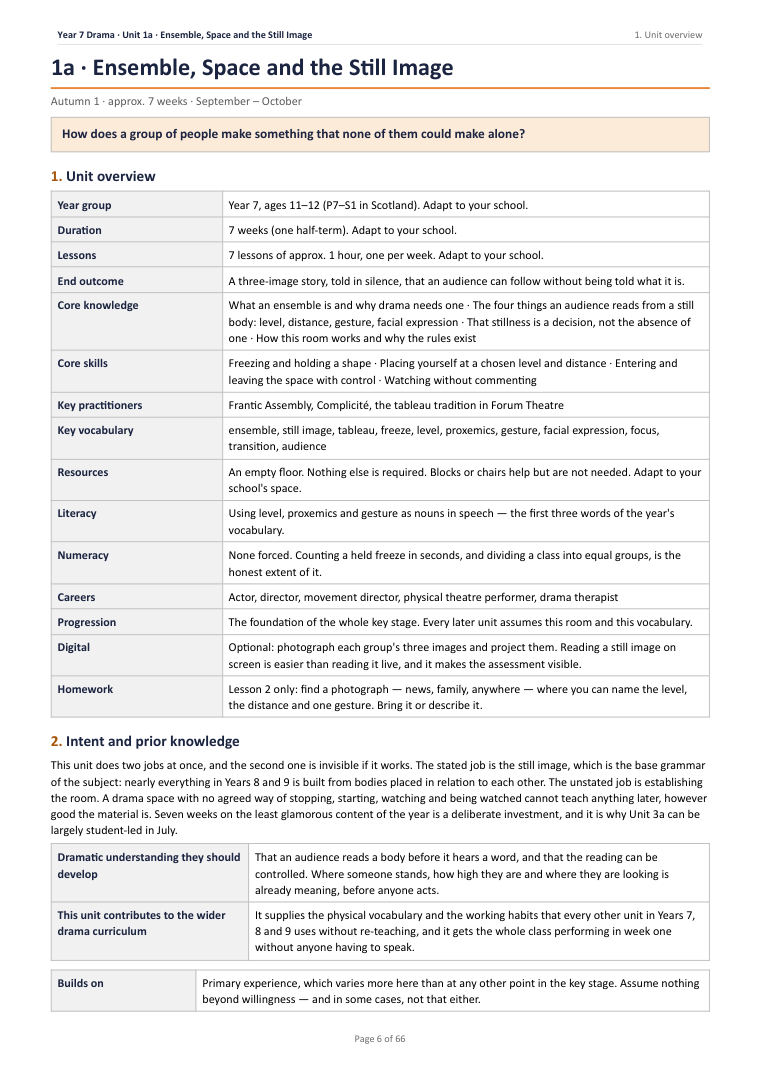
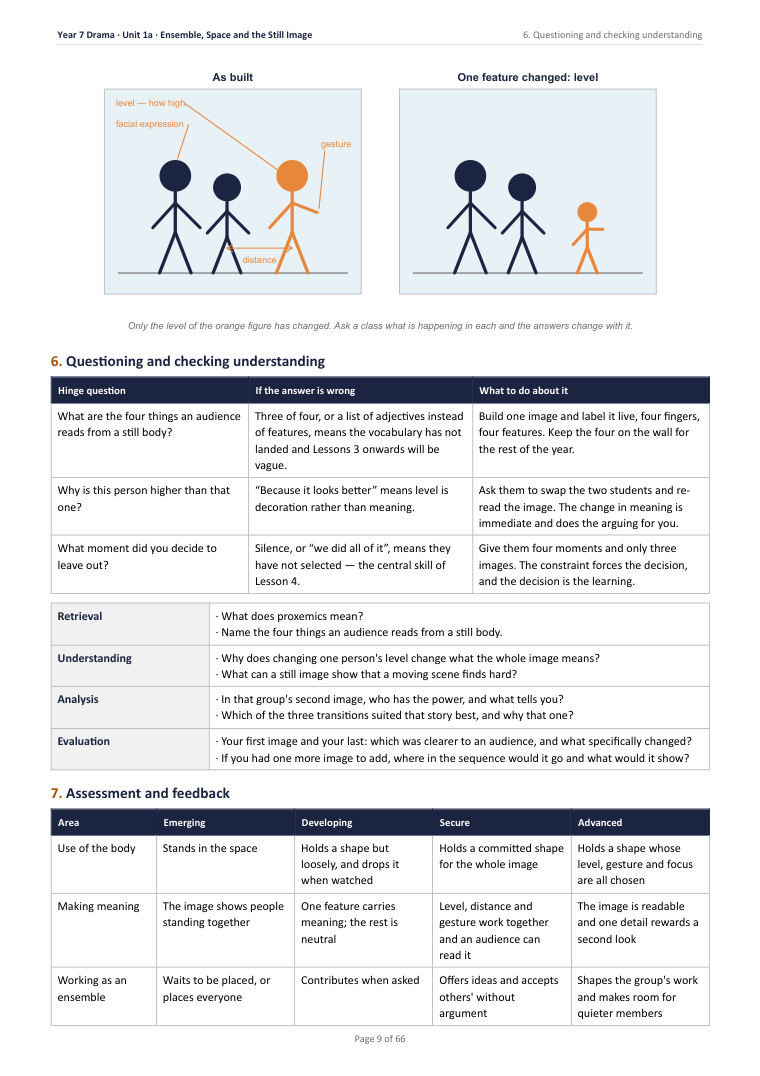
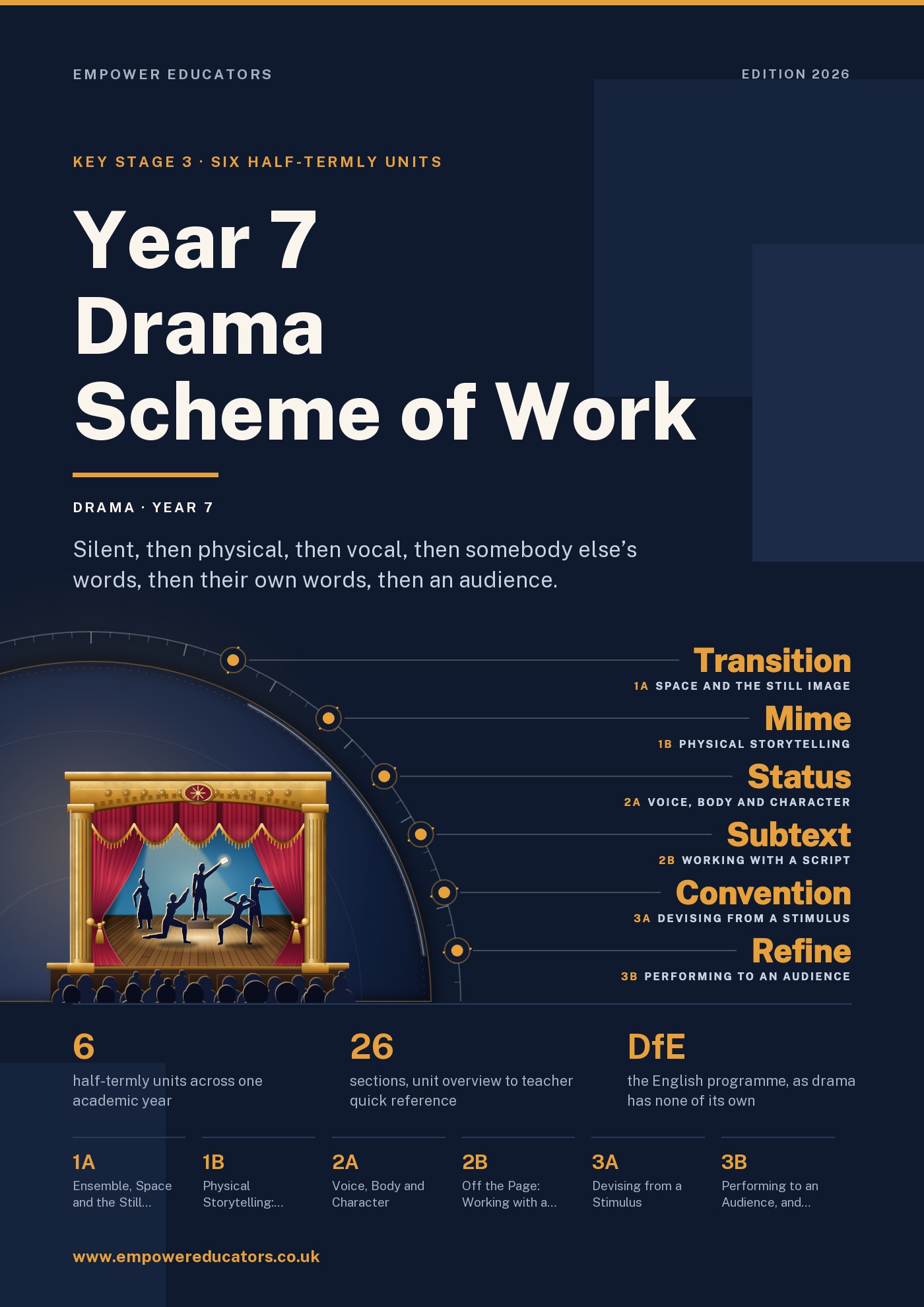
Year 7 Drama Scheme of Work

Six half-termly units across one academic year, written backwards from what Year 8 assumes on entry. The year runs silent, then physical, then vocal, then somebody else’s words, then their own words, then an audience. Two units in which nobody has to speak: that is the load-bearing decision of the year and the single best thing you can do for a class arriving from twelve different primary schools.

  1. 1a Ensemble, Space and the Still Image
  2. 1b Physical Storytelling: Mime, Movement and Narration
  3. 2a Voice, Body and Character
  4. 2b Off the Page: Working with a Script
  5. 3a Devising from a Stimulus
  6. 3b Performing to an Audience, and Saying Why

The statutory key stage 3 English programme of study (DfE, 2014) — drama has no programme of study of its own · 66 pages, 26 sections ·For heads of drama, subject leaders and every teacher who has to deliver it, specialist or not
Preview · first 8 pages

🔒 58 more pages unlock on purchase

One purchase covers the school that buys it · PDF straight after payment · Refunds

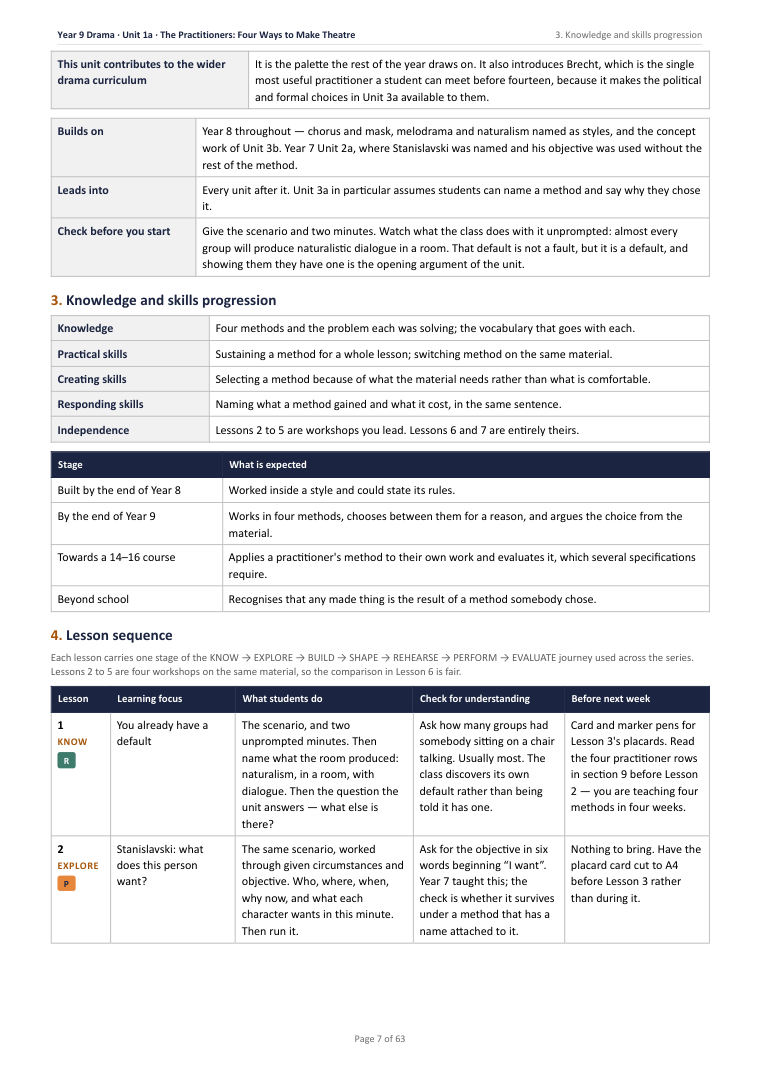
Cover of Year 8 Drama Scheme of Work

Drama · Key Stage 3 £4.99

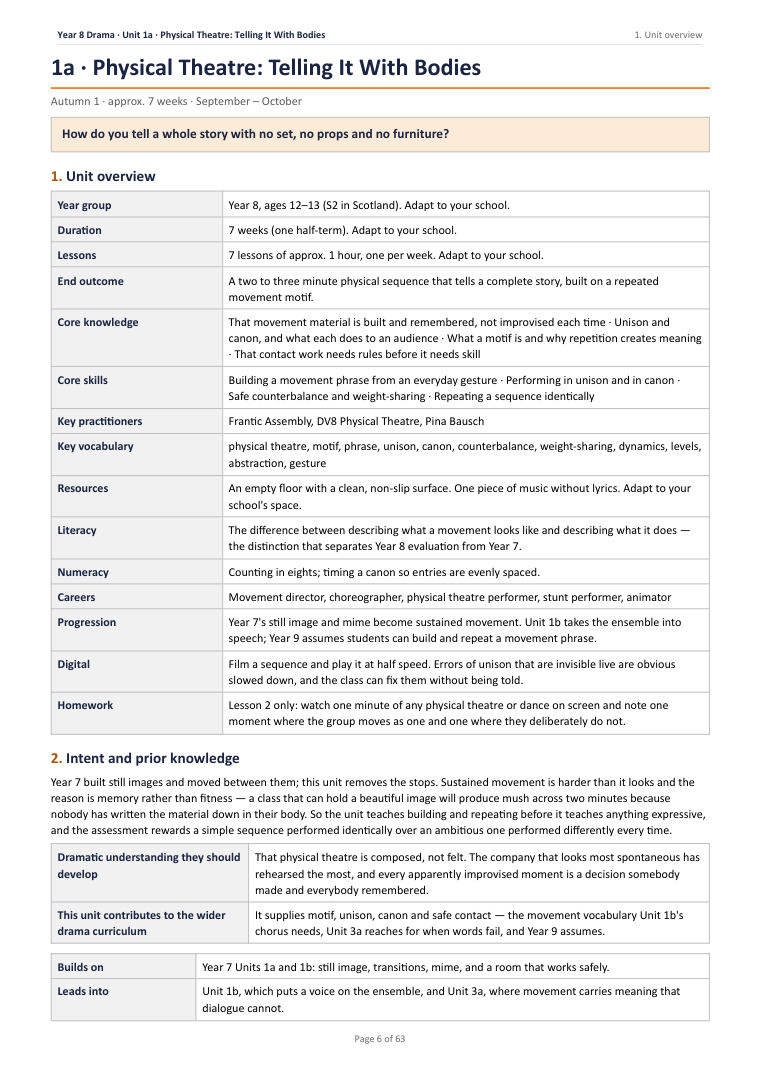
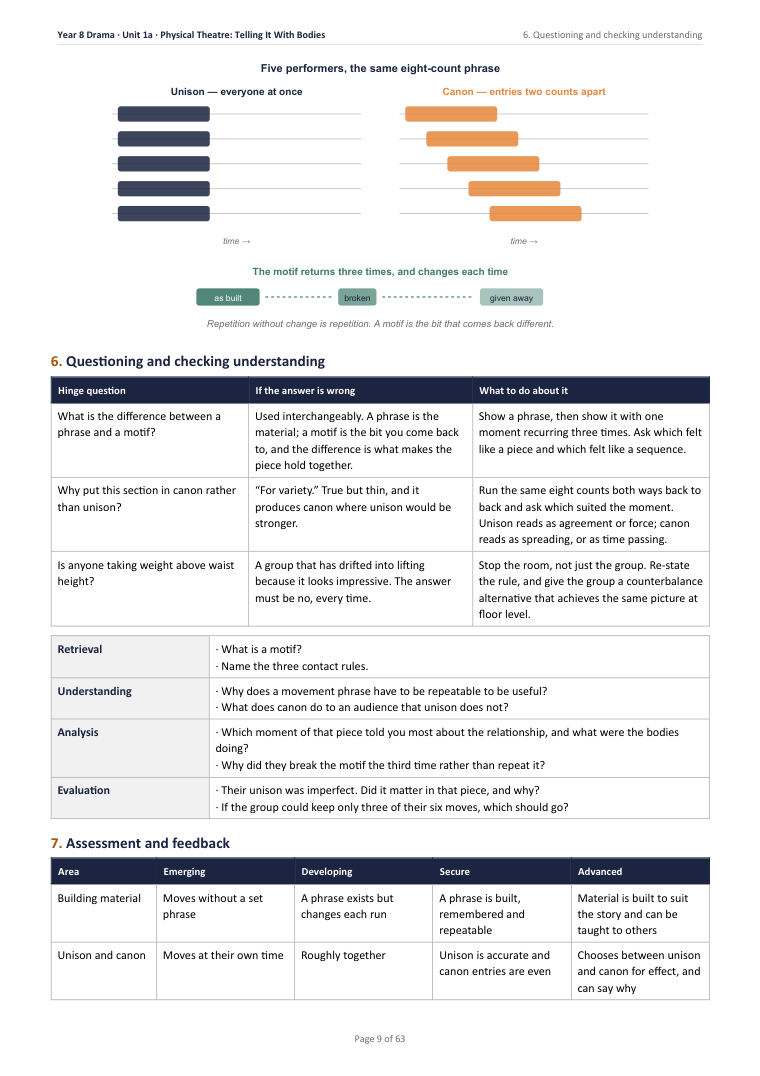
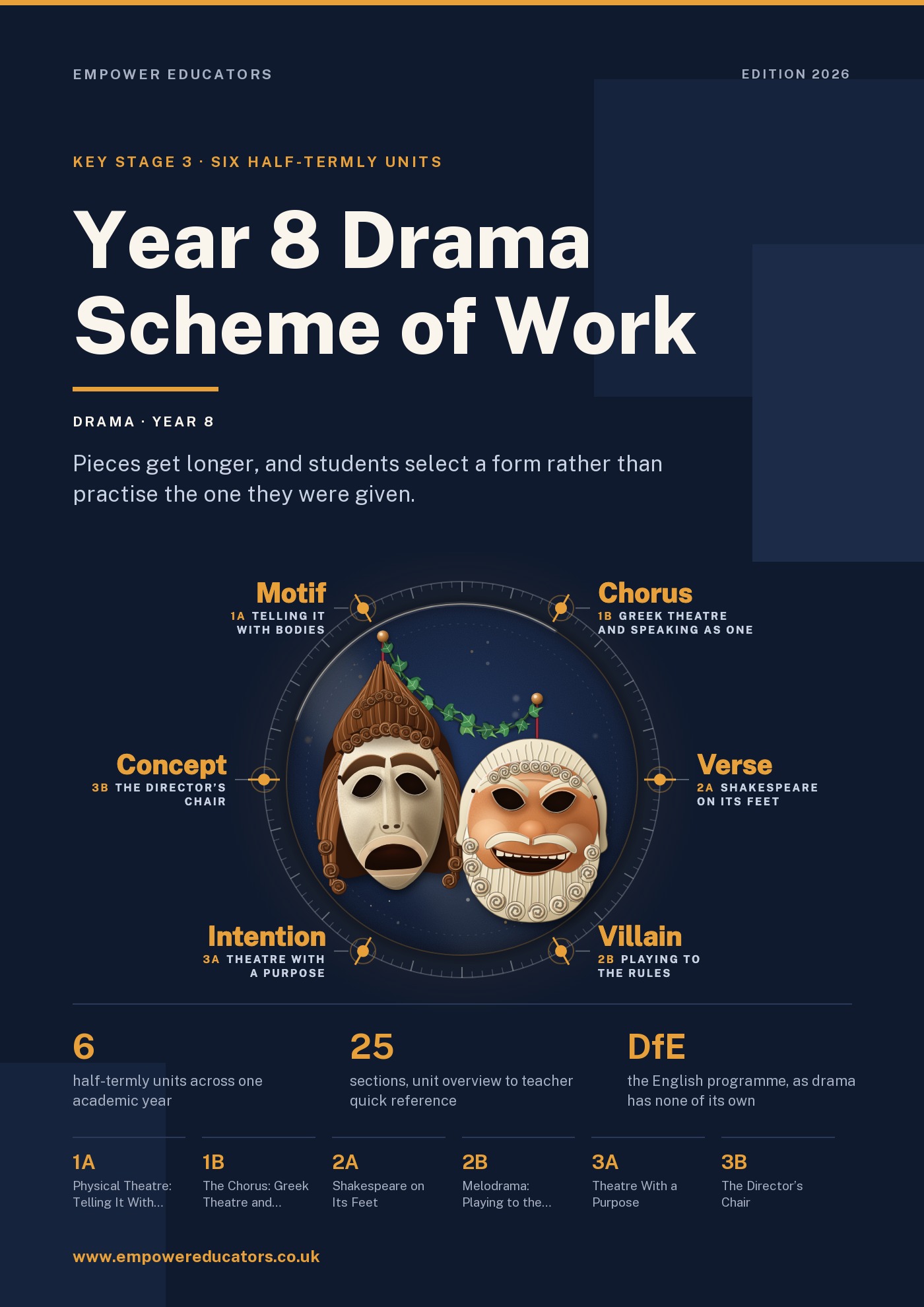
Year 8 Drama Scheme of Work

Six half-termly units built on what Year 7's own progression rows promise: pieces get longer, and students select a form rather than practise the one they were given. Physical theatre, the Greek chorus and mask, Shakespeare, melodrama, theatre made for a named audience, and directing. A Midsummer Night’s Dream is printed in full and photocopies without limit.

  1. 1a Physical Theatre: Telling It With Bodies
  2. 1b The Chorus: Greek Theatre and Speaking as One
  3. 2a Shakespeare on Its Feet
  4. 2b Melodrama: Playing to the Rules
  5. 3a Theatre With a Purpose
  6. 3b The Director’s Chair

The statutory key stage 3 English programme of study (DfE, 2014) — drama has no programme of study of its own · 63 pages, 25 sections ·For heads of drama, subject leaders and every teacher who has to deliver it, specialist or not

Preview · first 8 pages

🔒 55 more pages unlock on purchase

One purchase covers the school that buys it · PDF straight after payment · Refunds

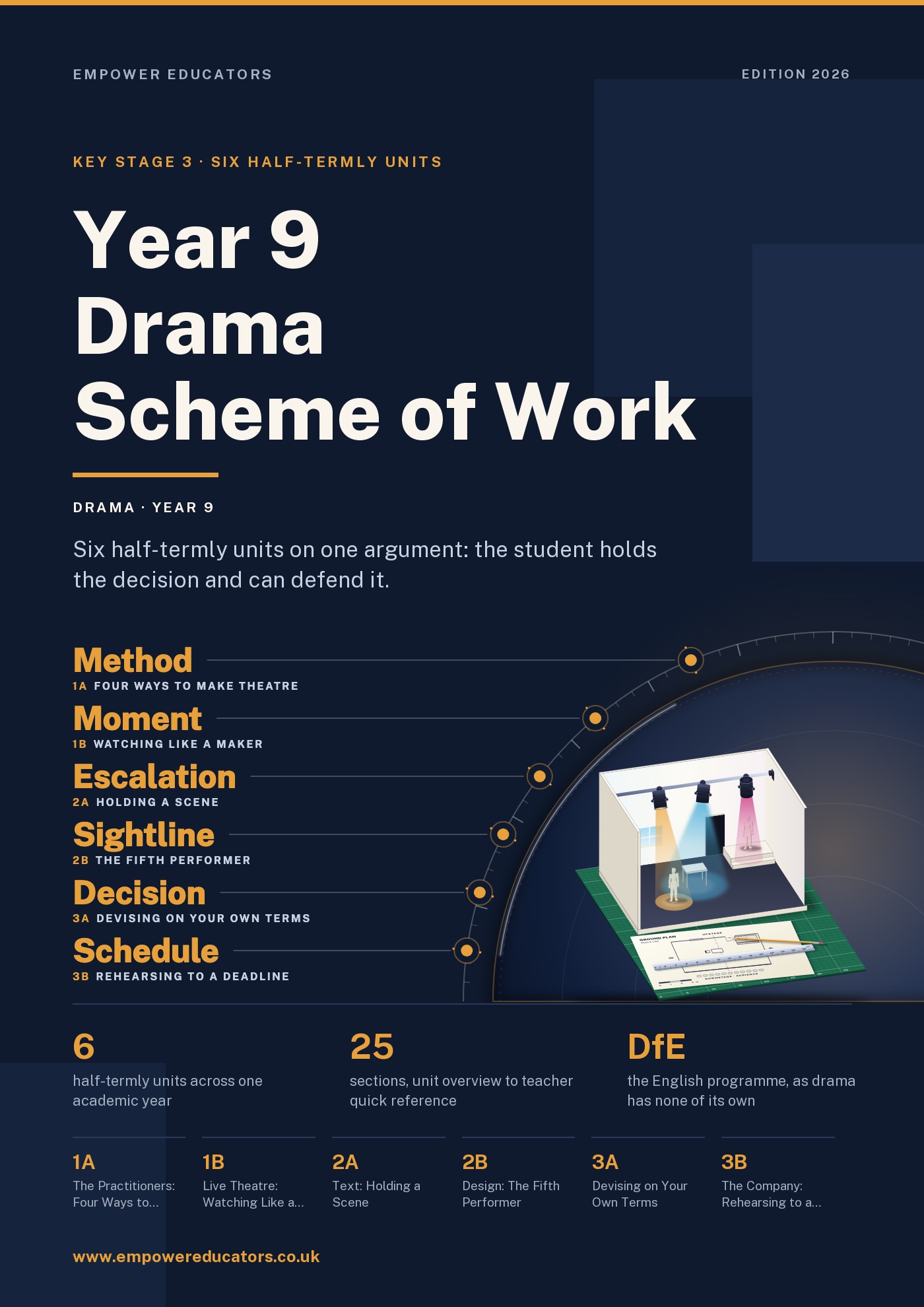
Cover of Year 9 Drama Scheme of Work

Drama · Key Stage 3 £4.99

Year 9 Drama Scheme of Work

Six half-termly units on one argument: the student holds the decision and can defend it. Four practitioners' methods, a half term given entirely to watching live theatre, a sustained seven-minute Shakespeare scene, design as a discipline with a real ground plan, fully independent devising, and a company delivering on a fixed date. Romeo and Juliet is printed in full, completing the two Shakespeare plays the English programme of study requires across the key stage.

  1. 1a The Practitioners: Four Ways to Make Theatre
  2. 1b Live Theatre: Watching Like a Maker
  3. 2a Text: Holding a Scene
  4. 2b Design: The Fifth Performer
  5. 3a Devising on Your Own Terms
  6. 3b The Company: Rehearsing to a Deadline

The statutory key stage 3 English programme of study (DfE, 2014) — drama has no programme of study of its own · 63 pages, 25 sections ·For heads of drama, subject leaders and every teacher who has to deliver it, specialist or not
Preview · first 8 pages

🔒 55 more pages unlock on purchase

One purchase covers the school that buys it · PDF straight after payment · Refunds

Save £2.98

KS3 Drama set

Year 7, Year 8, Year 9 — the whole key stage, sequenced as one curriculum rather than three separate years.

£11.99 £14.97 bought separately

GCSE, Year 10 and Year 11

63 to 73 pages each · both tiers where the subject is tiered · first 8 pages open here · all GCSE schemes of work

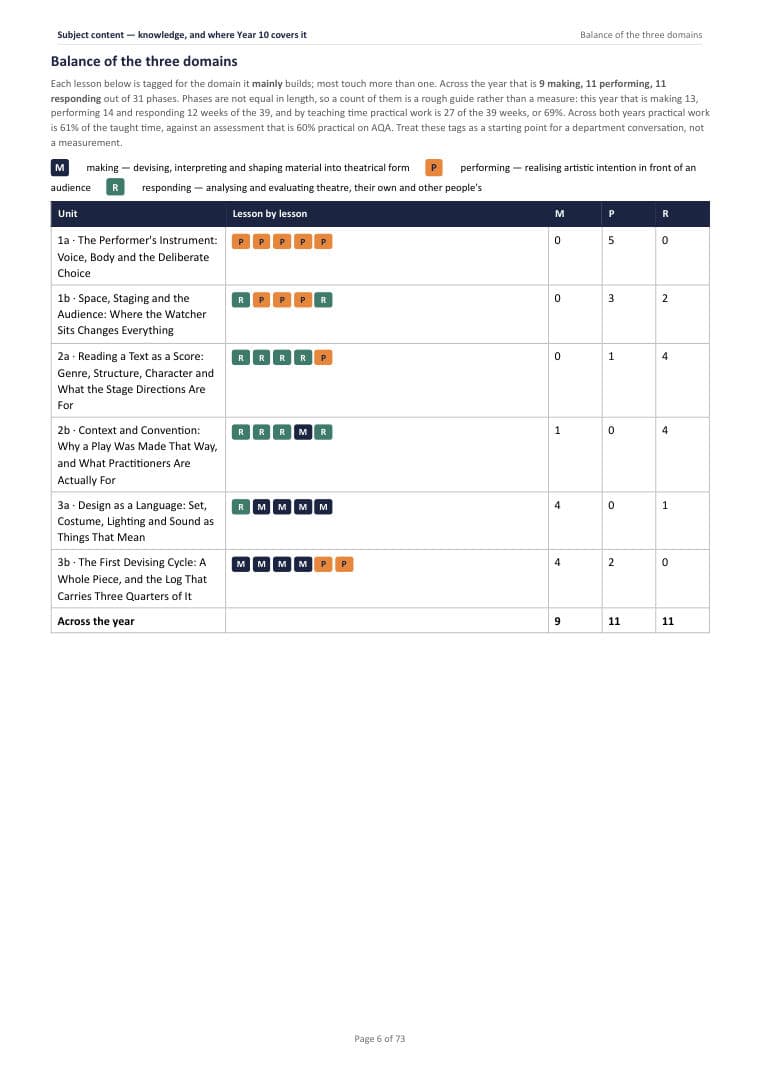
Cover of Year 10 Drama Scheme of Work

Drama · GCSE (Key Stage 4) £5.99

Year 10 Drama Scheme of Work

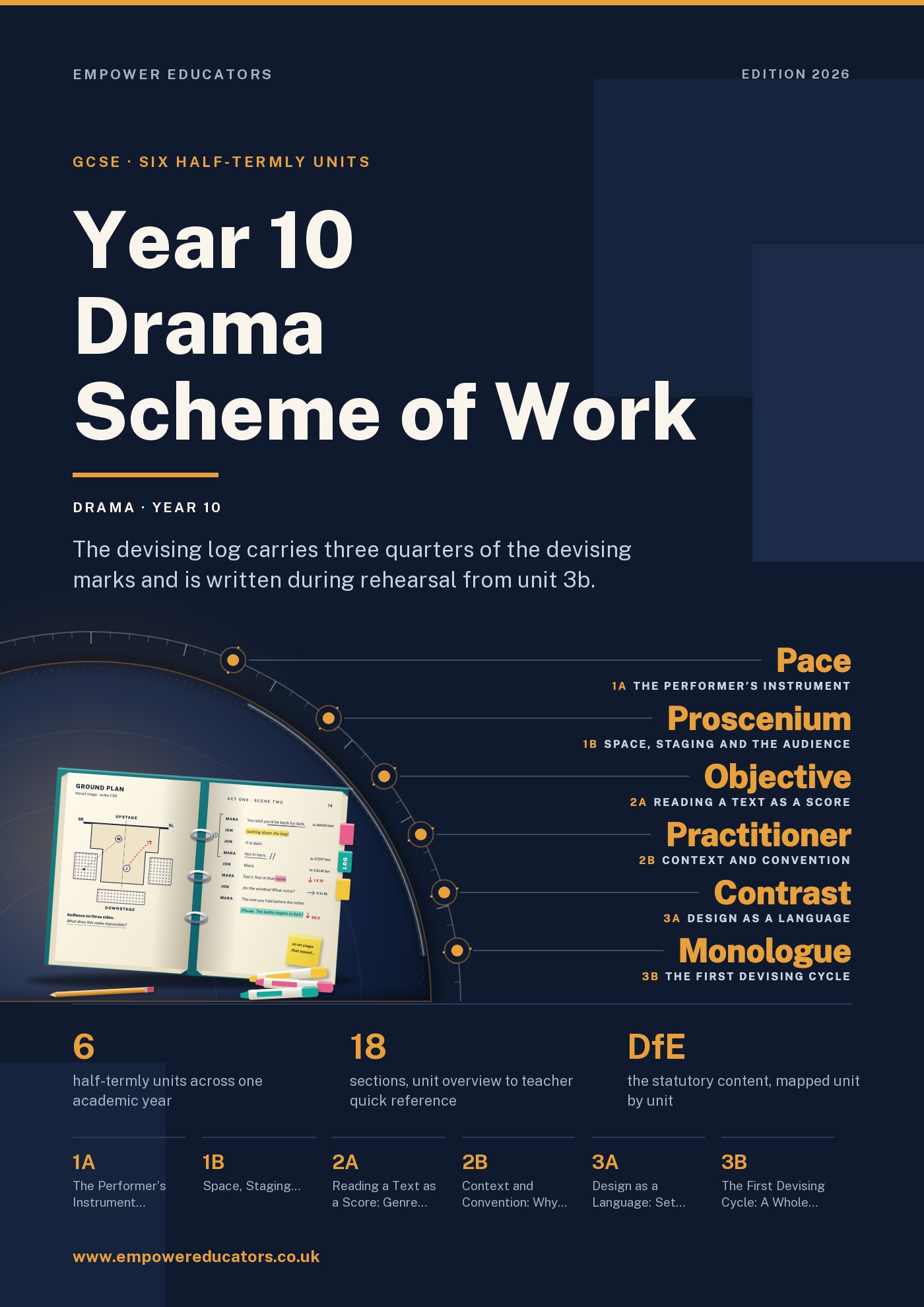
Seventy-three pages, board-neutral by construction: every unit is mapped to the DfE subject content for GCSE drama and to Ofqual’s four assessment objectives, identical on every board because the regulator sets them. Six units, thirty-one phases, six purpose-drawn diagrams, eight back-matter tables. Two things are planned a year before the assessment needs them: the devising log, which carries three quarters of the devising marks and is written during rehearsal from unit 3b, and the rule that a student cannot perform a monologue in both assessed pieces, a casting decision made a year ahead.

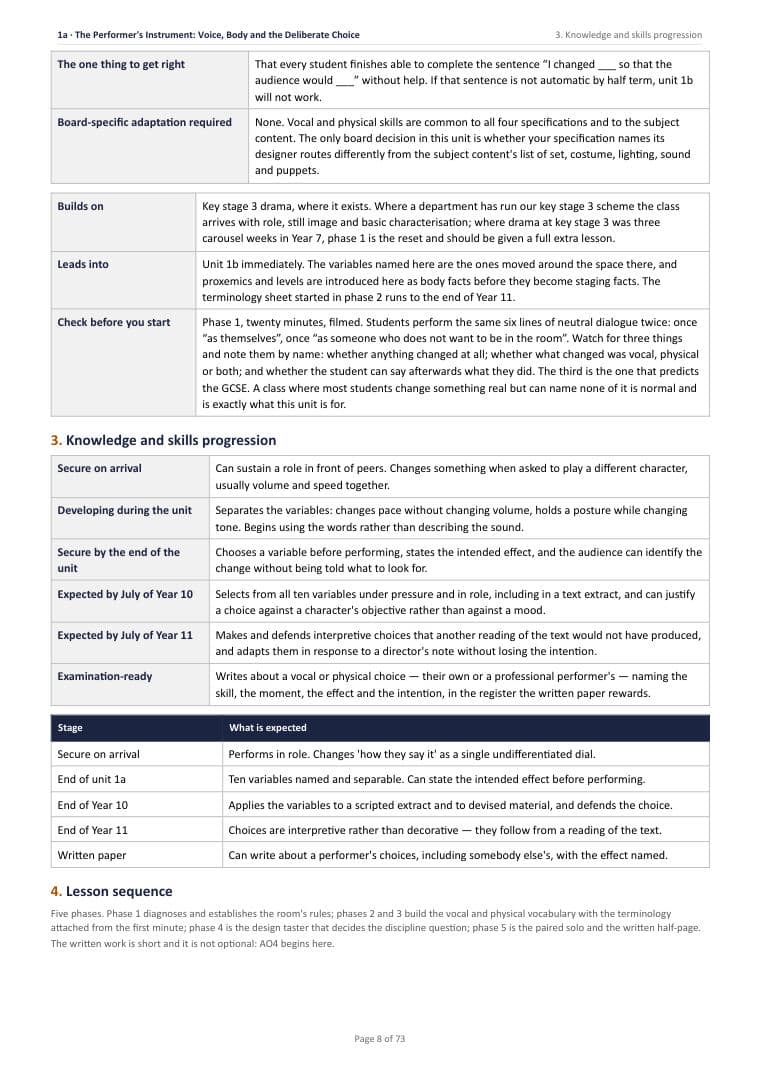
  1. 1a The Performer’s Instrument: Voice, Body and the Deliberate Choice
  2. 1b Space, Staging and the Audience: Where the Watcher Sits Changes Everything
  3. 2a Reading a Text as a Score: Genre, Structure, Character and Stage Directions
  4. 2b Context and Convention: Why a Play Was Made That Way, and What Practitioners Are For
  5. 3a Design as a Language: Set, Costume, Lighting and Sound as Things That Mean
  6. 3b The First Devising Cycle: A Whole Piece, and the Log That Carries Three Quarters of It

GCSE subject content: drama (DfE, DFE-00039-2015) and Ofqual’s assessment objectives · 73 pages, 18 sections ·For heads of drama, subject leaders and every teacher who has to deliver it

Preview · first 8 pages

🔒 65 more pages unlock on purchase

One purchase covers the school that buys it · PDF straight after payment · Refunds

Cover of Year 11 Drama Scheme of Work

Drama · GCSE (Key Stage 4) £5.99

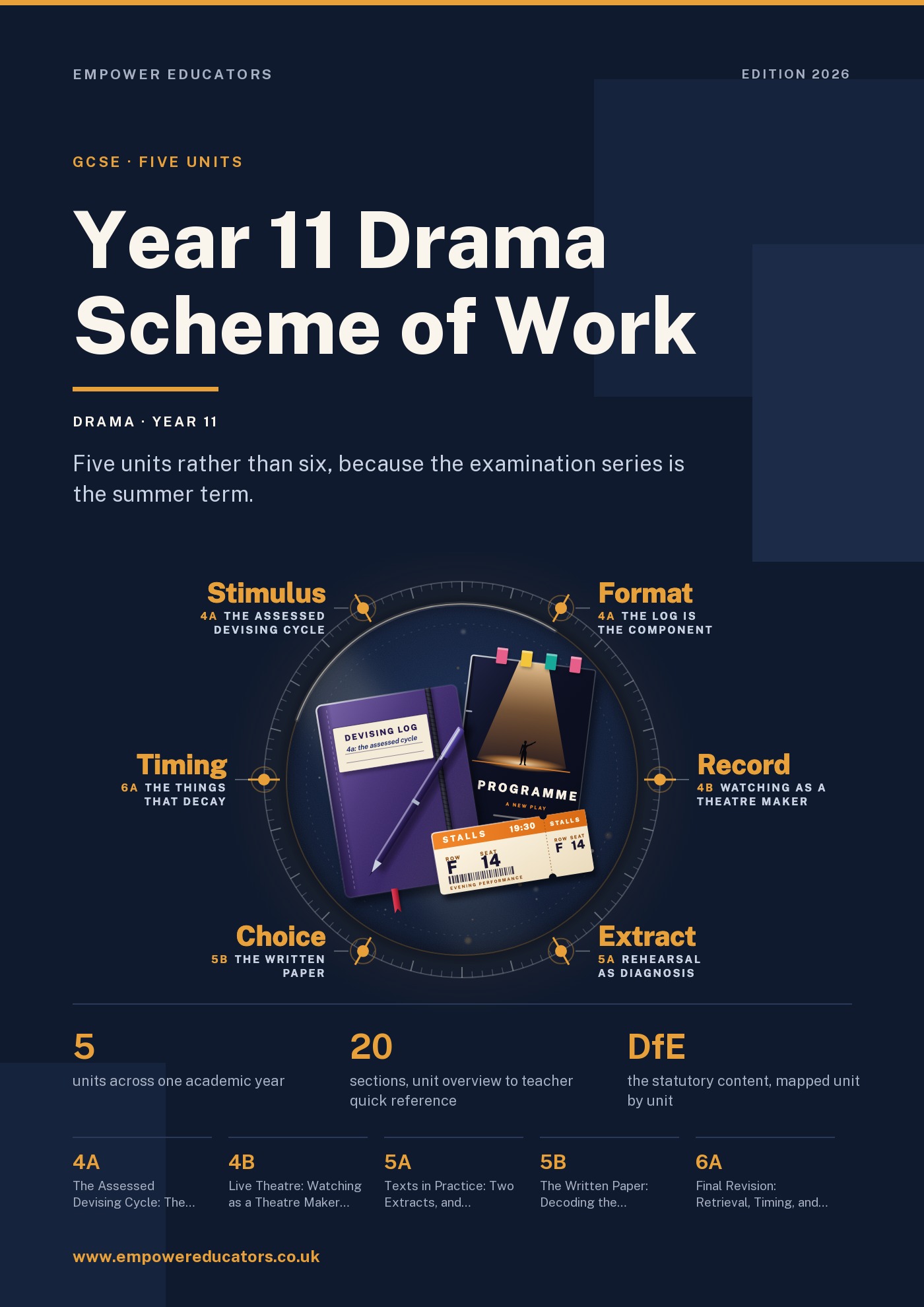
Year 11 Drama Scheme of Work

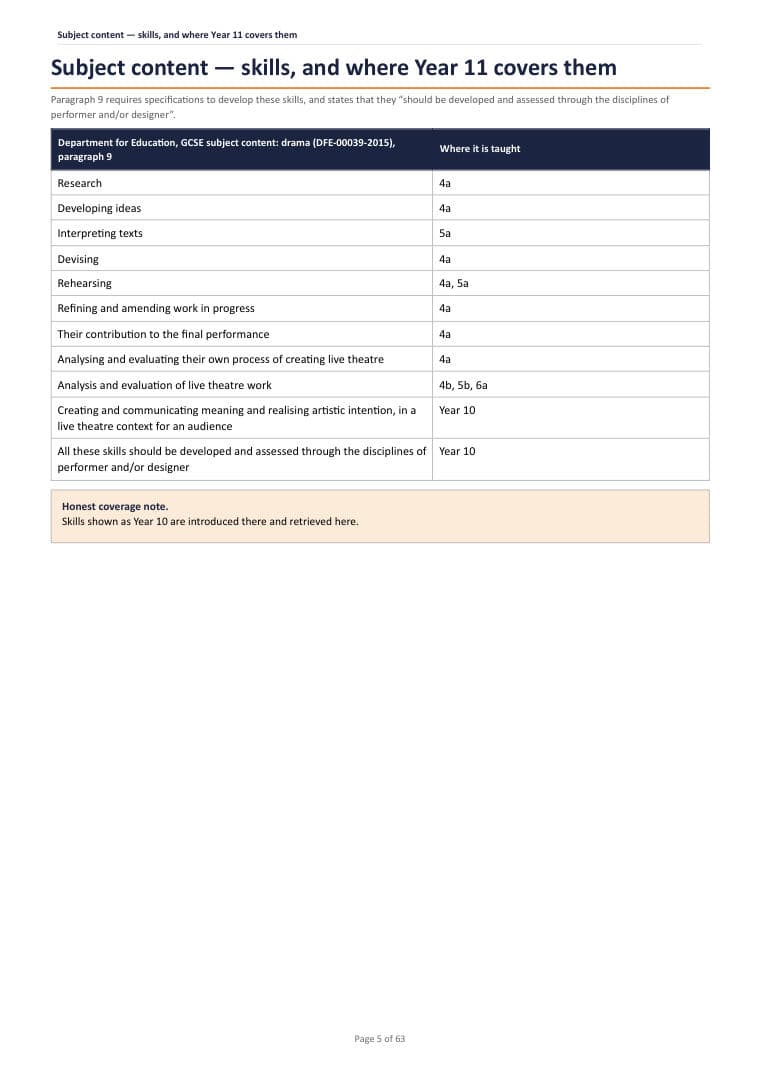
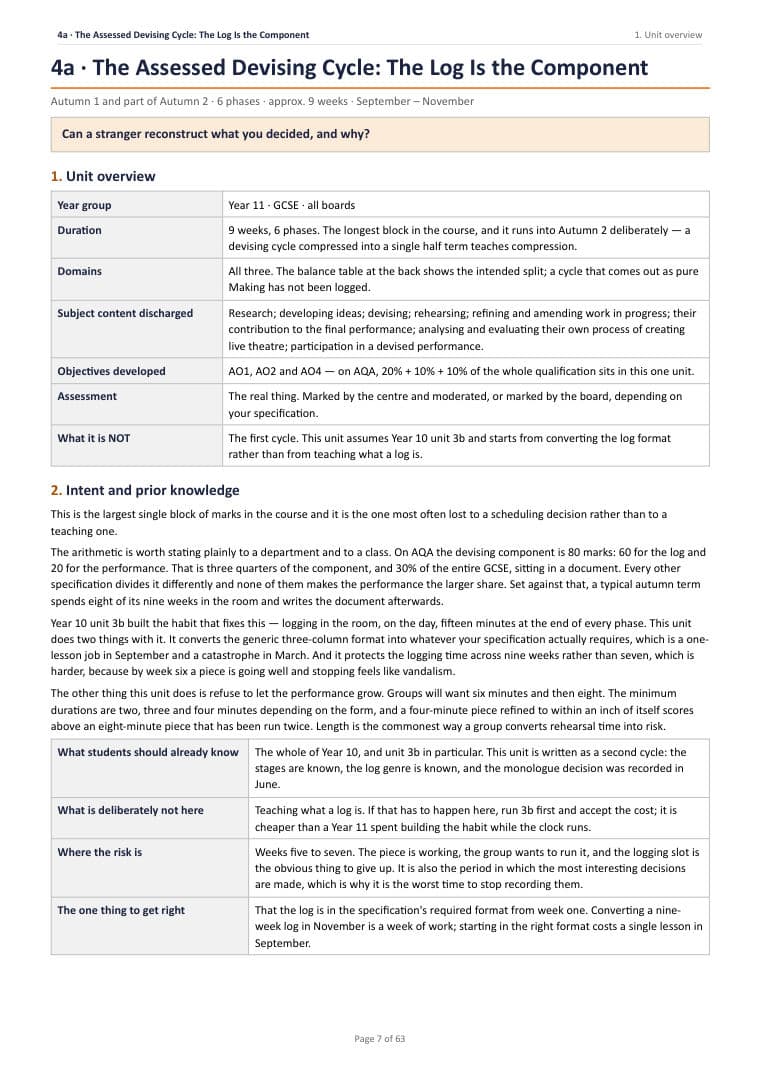
Sixty-three pages completing the course. Five units rather than six, because the examination series is the summer term and two components must be moderated before it. A scheme that plans six half-terms of Year 11 teaching is planning a year that does not exist. The devised cycle runs nine weeks and finishes in November; the text-based performance finishes in February, so the written paper gets the spring it needs. Twenty-four phases, five purpose-drawn diagrams and thirteen back-matter tables, including a readiness tracker whose descriptors describe what a student does rather than what level they are at.

  1. 4a The Assessed Devising Cycle: The Log Is the Component
  2. 4b Live Theatre: Watching as a Theatre Maker Rather Than as an Audience
  3. 5a Texts in Practice: Two Extracts, and Rehearsal as Diagnosis
  4. 5b The Written Paper: Decoding the Question, and Writing About Theatre Not in the Room
  5. 6a Final Revision: Retrieval, Timing, and the Things That Decay

GCSE subject content: drama (DfE, DFE-00039-2015) and Ofqual’s assessment objectives · 63 pages, 20 sections ·For heads of drama, subject leaders and every teacher who has to deliver it

Preview · first 8 pages

🔒 55 more pages unlock on purchase

One purchase covers the school that buys it · PDF straight after payment · Refunds

Save £1.99

GCSE Drama set

Year 10, Year 11 — the whole key stage, sequenced as one curriculum rather than two separate years.

£9.99 £11.98 bought separately

Your basket

Nothing in it yet.

Total £0.00

Checkout

Your download is ready straight after payment. Downloading it ends the 14-day right to cancel; a file that is faulty or not as described is always refunded. Refunds