Drama · GCSE (Key Stage 4) · £5.99
Year 10 Drama
Scheme of Work
GCSE Drama Scheme of Work (SOW) — KS4 Year 10 PDF
Seventy-three pages, board-neutral by construction: every unit is mapped to the DfE subject content for GCSE drama and to Ofqual’s four assessment objectives, identical on every board because the regulator sets them. Six units, thirty-one phases, six purpose-drawn diagrams, eight back-matter tables. Two things are planned a year before the assessment needs them: the devising log, which carries three quarters of the devising marks and is written during rehearsal from unit 3b, and the rule that a student cannot perform a monologue in both assessed pieces, a casting decision made a year ahead.
£5.99The Year 10 scheme: 6 half-termly units, 73 pages
- A4 PDF
- first 8 pages free to read
- instant download
Teaching all of the GCSE course? Year 10 and Year 11 as one set: £9.99, saving £1.99.
One purchase covers the school that buys it. Print it, copy it, hand it round your department. Not for passing to other schools or uploading anywhere.
PDF download, ready straight after payment. Downloading it ends the 14-day right to cancel; a file that is faulty or not as described is always refunded. Refunds
Read before publication by serving senior leaders, in school.
5.0 from 24+ reviews on Google
Schools that have bought from Empower Educators include Nottingham High School, Northampton High School GDST and Sutton Valence School.
Complete your Drama
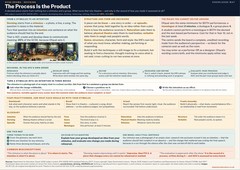
Board-neutral, mapped to the DfE subject content. All GCSE schemes of work
The whole course: GCSE Drama scheme of work
Everything else this site has for Drama: Drama teaching resources
- 1aThe Performer’s Instrument: Voice, Body and the Deliberate Choice
- 1bSpace, Staging and the Audience: Where the Watcher Sits Changes Everything
- 2aReading a Text as a Score: Genre, Structure, Character and Stage Directions
- 2bContext and Convention: Why a Play Was Made That Way, and What Practitioners Are For
- 3aDesign as a Language: Set, Costume, Lighting and Sound as Things That Mean
- 3bThe First Devising Cycle: A Whole Piece, and the Log That Carries Three Quarters of It
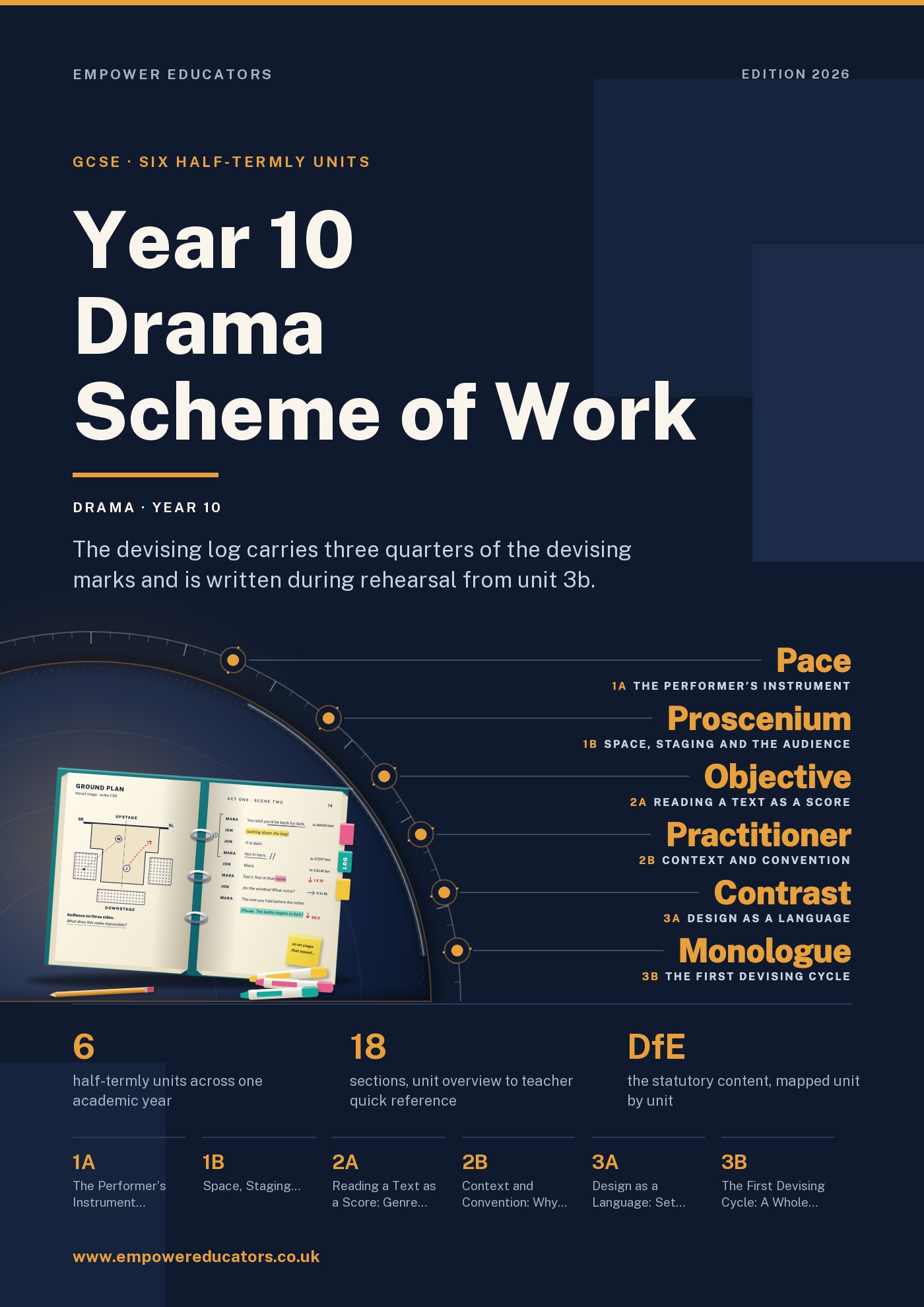
Ten sections per unit, in the same order every time, so a teacher who learns the shape once knows all six. Phases rather than single lessons, because departments do not agree on how much time GCSE drama gets. The planning assumption is stated rather than hidden.
Every lesson is tagged making, performing or responding, which are not categories invented here: they are the Department’s own, from the sentence that opens the subject content’s knowledge list. The balance table is therefore a count rather than a claim, and a scheme that is two thirds rehearsal shows up as one.
Board-neutral is a construction rather than a disclaimer, and in this subject it currently matters more than usual. Cambridge OCR is withdrawing GCSE Drama — its own specification gives a final first teach date of September 2026 and a final assessment in Summer 2028. WJEC Eduqas states its qualification is not available to maintained schools in Wales. What does not move is the statutory floor, and that is what this book is built on. Where boards genuinely differ, the page says so and names the difference rather than averaging four specifications into a fifth that nobody sets.
Six printable diagnostics, exemplar student work with the error beside the repair in every unit, and a seventeen-strand progression map that runs across both years.
- Written to
- GCSE subject content: drama (DfE, DFE-00039-2015) and Ofqual’s assessment objectives
- Intended for
- heads of drama, subject leaders and every teacher who has to deliver it
- Extent
- 73 pages · 18 sections
The sequence
What this scheme of work covers, unit by unit
The 6 units of the Year 10 Drama Scheme of Work, in teaching order, with the term each one runs in and the question it is built to answer.
1a
The Performer's Instrument: Voice, Body and the Deliberate Choice
Autumn 1 · 5 phases · approx. 7 weeks · September – October
What did you change, and what did it do to the audience?
1b
Space, Staging and the Audience: Where the Watcher Sits Changes Everything
Autumn 2 · 5 phases · approx. 7 weeks · November – December
Who is watching, from where, and what does that make possible?
2a
Reading a Text as a Score: Genre, Structure, Character and What the Stage Directions Are For
Spring 1 · 5 phases · approx. 6 weeks · January – February
What does this text make possible that another text would not?
2b
Context and Convention: Why a Play Was Made That Way, and What Practitioners Are Actually For
Spring 2 · 5 phases · approx. 6 weeks · February – March
Why was this made this way, and what would it look like made differently?
3a
Design as a Language: Set, Costume, Lighting and Sound as Things That Mean
Summer 1 · 5 phases · approx. 6 weeks · April – May
What is the design saying that nobody has to say out loud?
3b
The First Devising Cycle: A Whole Piece, and the Log That Carries Three Quarters of It
Summer 2 · 6 phases · approx. 7 weeks · June – July
Where did this come from, and can you prove it?
Look inside
Real pages, straight from the PDF
Click any page to see it full size.
Contents
All 18 sections
Taken from the book’s own contents page, so the page numbers are the real ones.