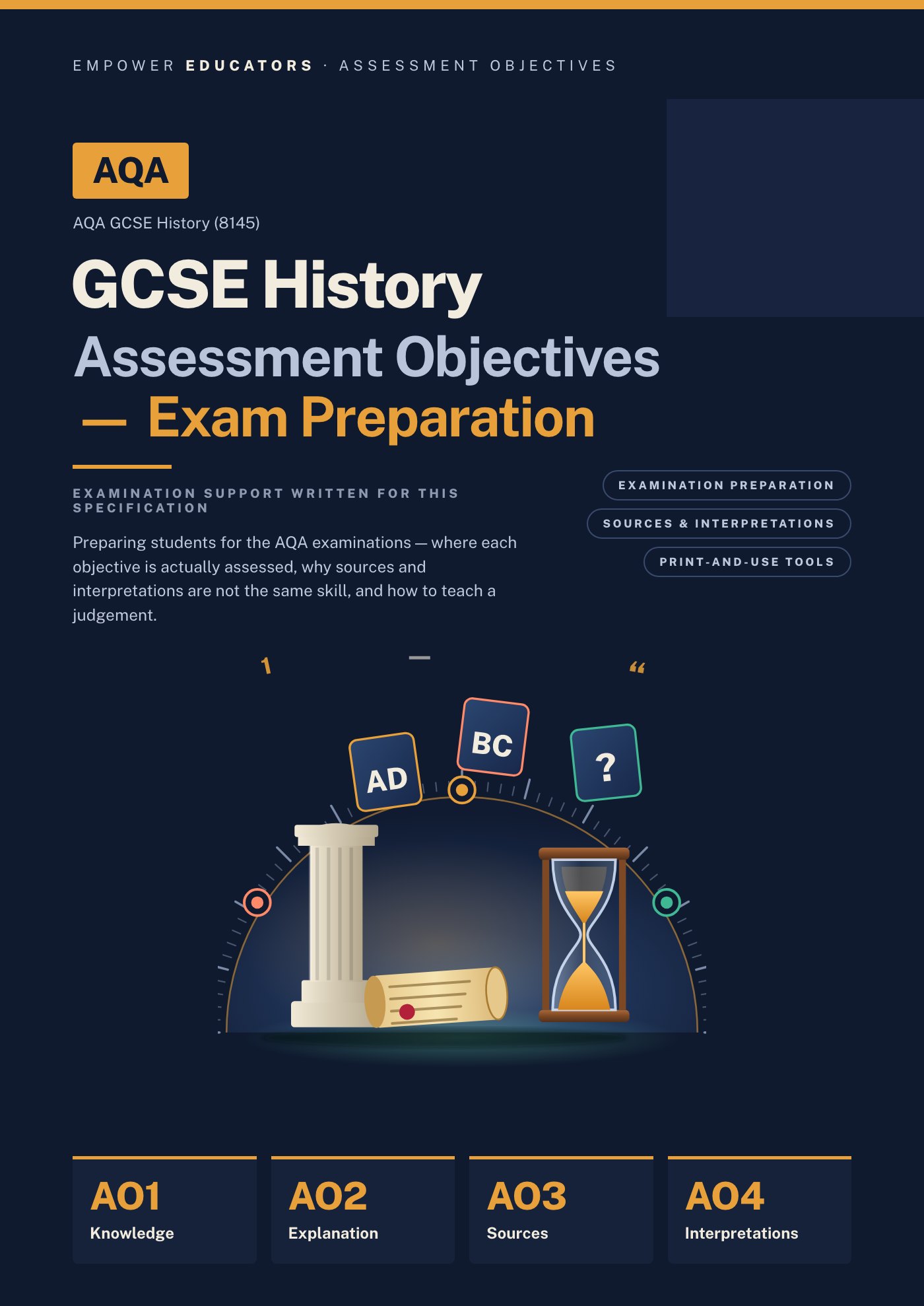
AQA 8145. Two papers, two hours each, 84 marks each, four sections of 40 marks. AQA is the only one of the three that spreads interpretations across both papers, 10% on Paper 1 and 5% on Paper 2. That means no paper can be taught without source and interpretation work, which is a different curriculum problem from the one the other two boards set.
AO1 Knowledge
AO2 Explanation
AO3 Sources
AO4 Interpretations
AQA GCSE History (8145) specification, with the assessment objective weighting table reconciled against it· 31 pages, 24 sections ·For teachers, heads of department and SLT. Not a student revision guide
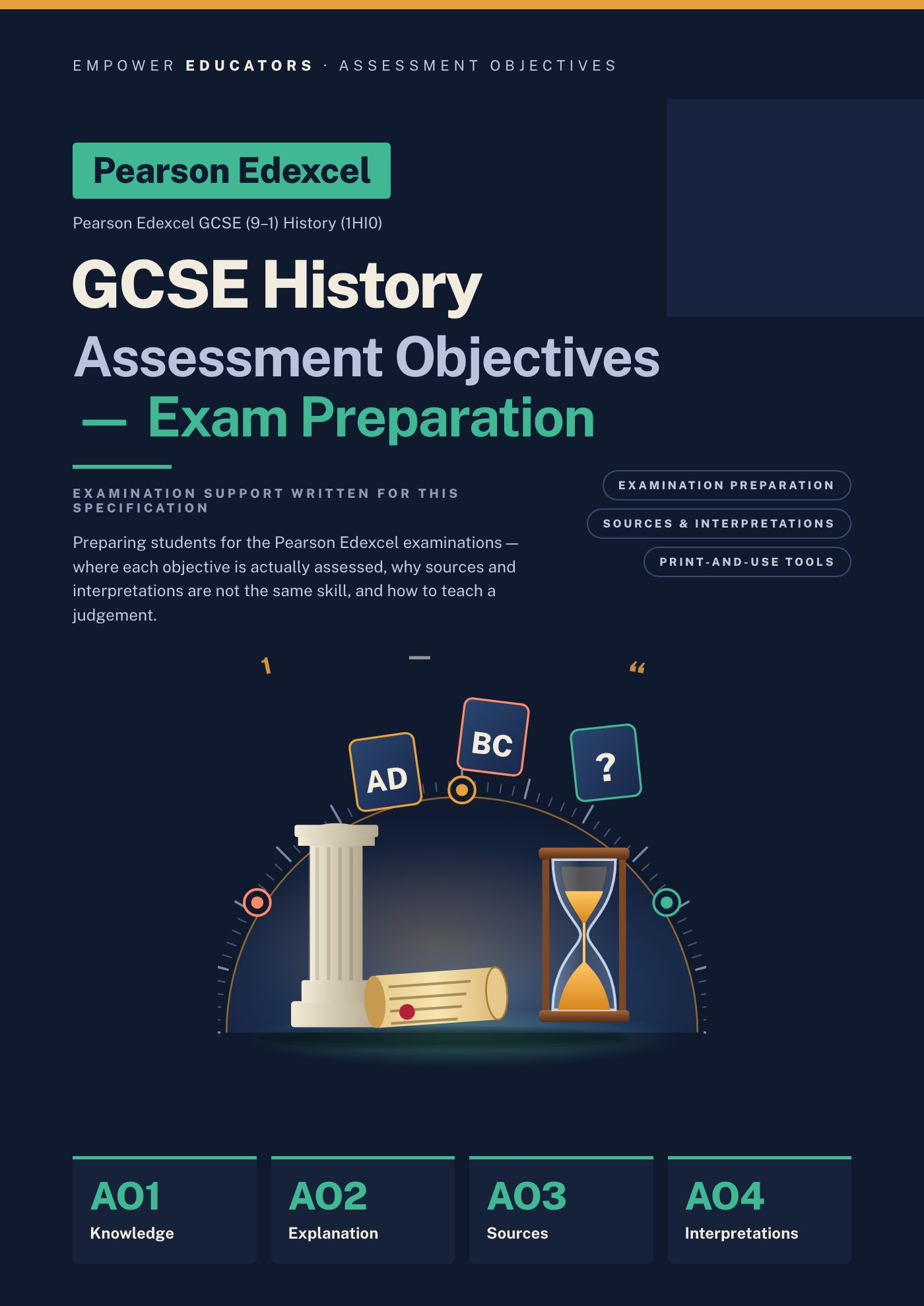
Pearson Edexcel 1HI0. Three papers of three different lengths and weights (30%, 40% and 30%), and every mark for interpretations is on Paper 3, with none anywhere else. Paper 2 is the mirror image: 40% of the qualification with no AO3 and no AO4 at all. Two papers, two completely different demands, and a department teaching them the same way is preparing for neither.
AO1 Knowledge
AO2 Explanation
AO3 Sources
AO4 Interpretations
Pearson Edexcel GCSE (9–1) History (1HI0) specification, with the assessment objective weighting table reconciled against it· 31 pages, 24 sections ·For teachers, heads of department and SLT. Not a student revision guide
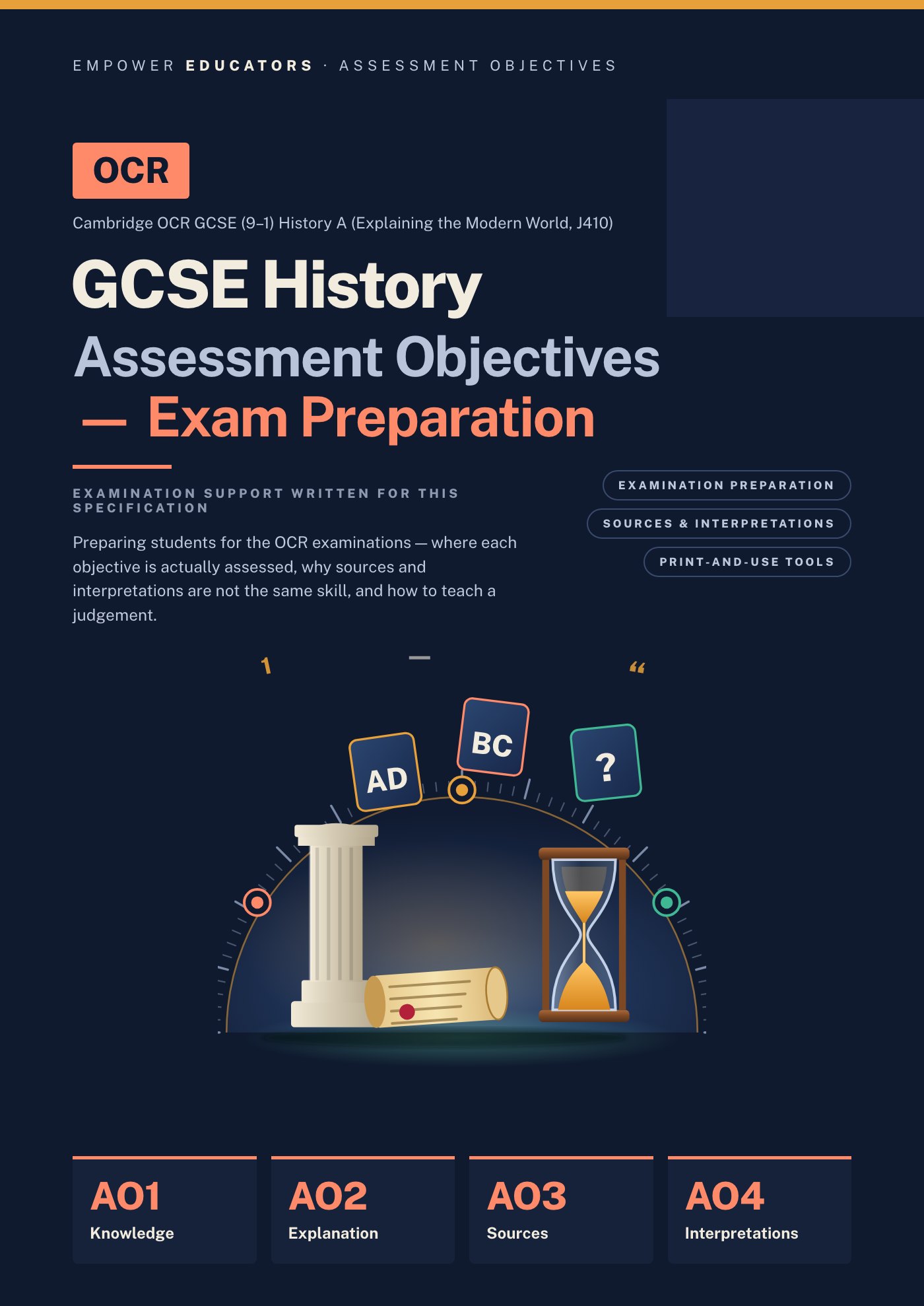
Cambridge OCR History A (Explaining the Modern World), J410. The board runs two GCSE histories and this edition names which. Three component groups at 50%, 25% and 25%, with every interpretation mark inside Group 1, which is also half the qualification. The thematic study carries no AO3 and no AO4 at all: a quarter of the grade on knowledge and explanation alone.
AO1 Knowledge
AO2 Explanation
AO3 Sources
AO4 Interpretations
Cambridge OCR GCSE (9–1) History A (Explaining the Modern World), J410, with the assessment objective weighting table reconciled against it· 31 pages, 24 sections ·For teachers, heads of department and SLT. Not a student revision guide
This site works the same either way. Measurement — Google Analytics and Microsoft
Clarity — only runs if you say yes, and it is used to see which resources people
actually reach.Measurement only runs if you say yes.What is collected.