
History · KS3 to A Level £4.99
History Key Terms
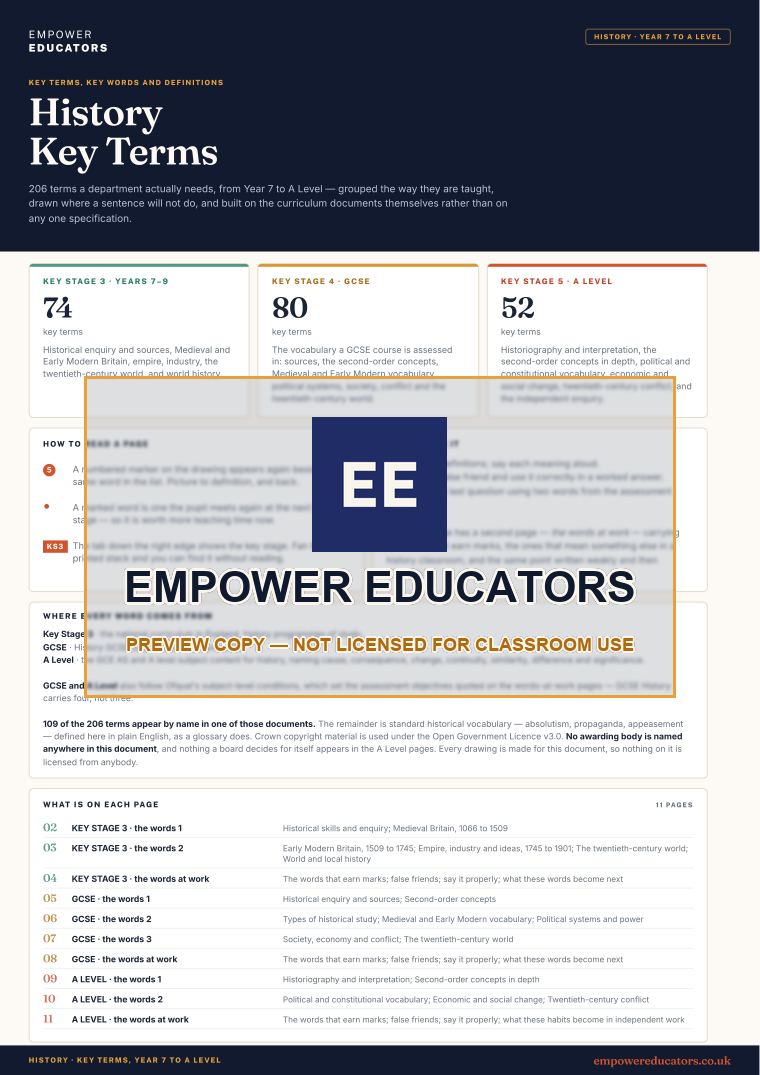
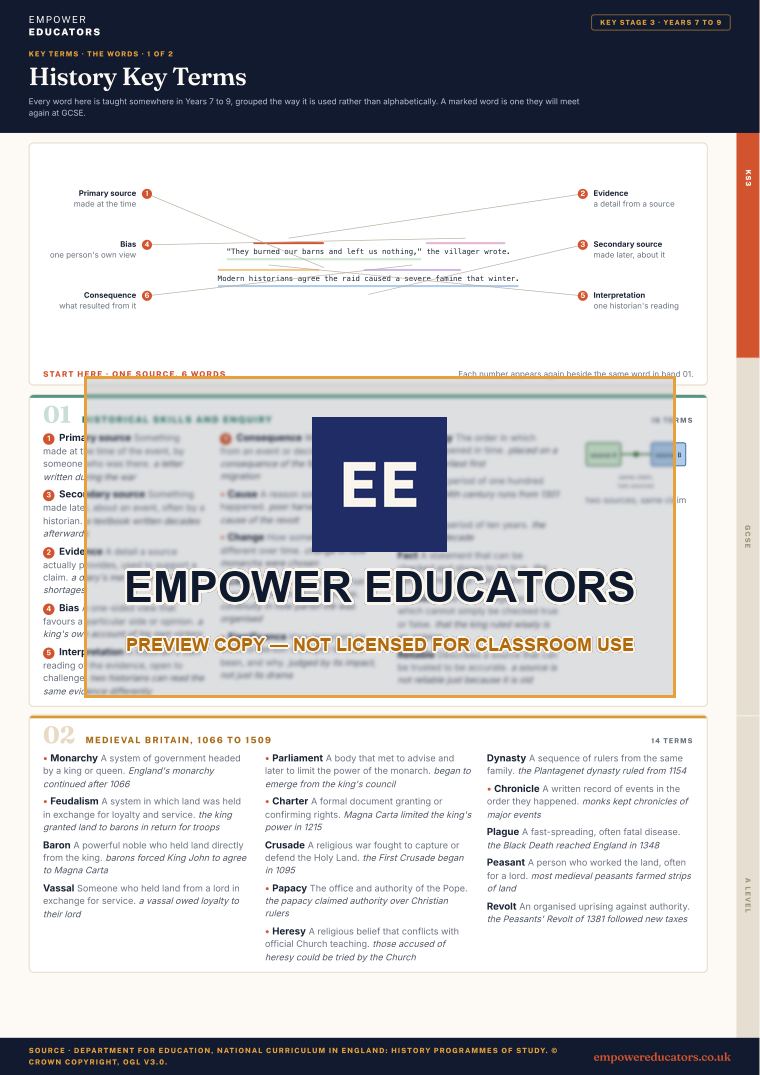
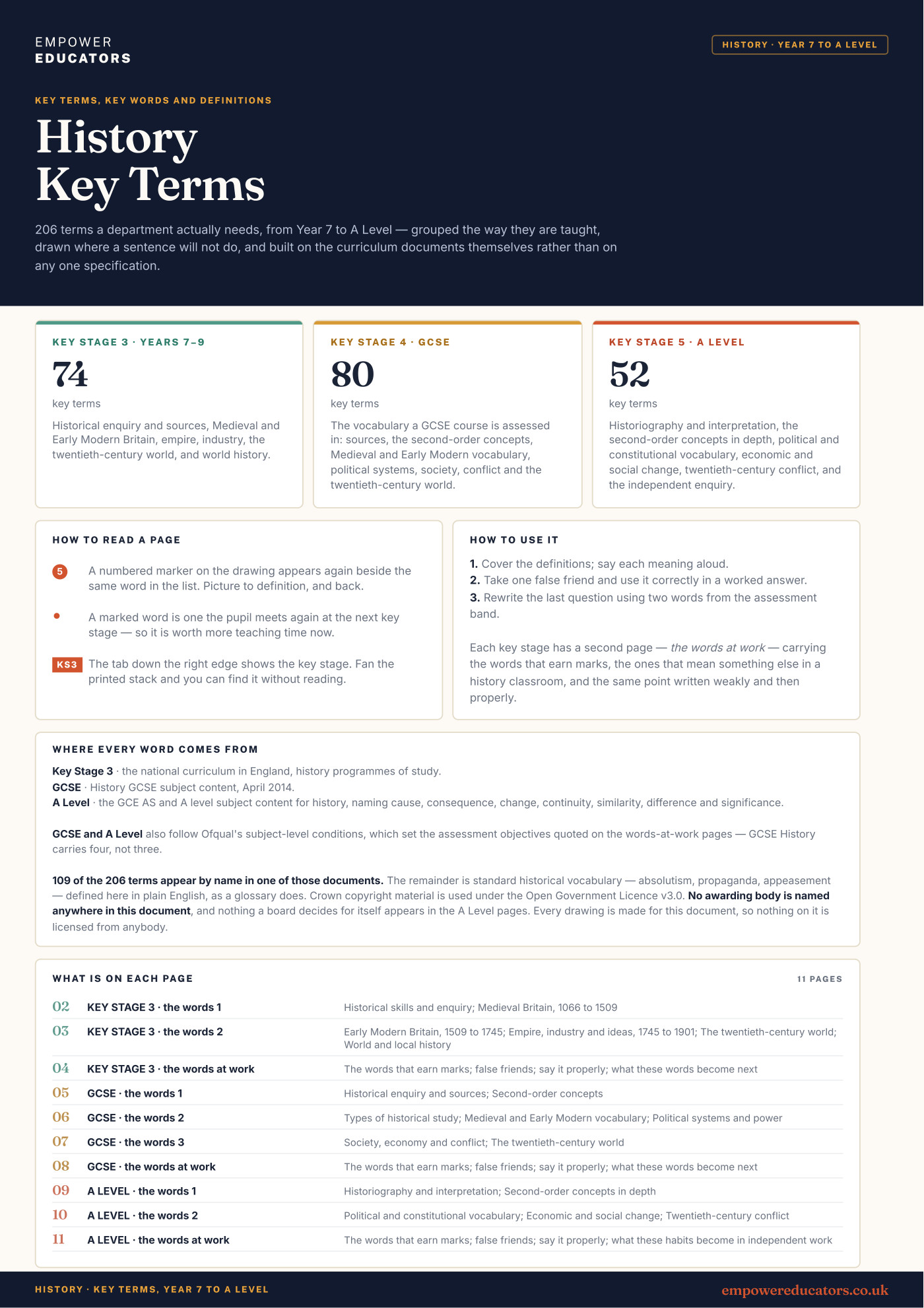
Every word a history department teaches, Year 7 to A Level, in one A4 book. Each key stage gets its own pages: the terms grouped the way they are taught rather than alphabetically, a definition that fits on two lines, and a worked example beside almost every one. Each key stage opens on one invented source extract, annotated — historical enquiry and sources, the one skill every other band in the book assumes — and the numbers on it appear again beside the same words in the list; a further four pages carry a real drawn figure wherever a picture genuinely teaches faster than a sentence: a timeline across the three eras, a long-term-cause-to-consequence chain, two sources either confirming or contradicting each other, an orthodox view challenged by a revisionist one. Then a page on using the words: the ones the assessment itself is written in — GCSE History carries four assessment objectives, not the three most subjects share — the false friends that mean something else in a history classroom, the same point written weakly and then properly, and what each word becomes at the next key stage.
The DfE's national curriculum programmes of study for history at Key Stage 3, the History GCSE subject content (April 2014, DFE-00346-2014), and the GCE AS and A level subject content for history (DFE-00364-2014), which names cause, consequence, change, continuity, similarity, difference and significance as the concepts every specification must assess; GCSE and A Level also follow Ofqual's subject-level conditions and guidance, which set the assessment objectives quoted on the words-at-work pages; 109 of 206 terms appear by name in one of those documents and the cover says so, the rest are standard historical vocabulary defined here in plain English; no awarding body is named, and nothing a board decides for itself appears in the A Level pages · 11 pages, 10 sections ·For history departments: printed one per pupil, kept in the front of an exercise book, or put on the wall by key stage