History · GCSE (Key Stage 4) · £5.99
Year 11 History
Scheme of Work
AQA GCSE History Scheme of Work (SOW) — Year 11, 8145 PDF
Sixty pages completing the course. Eight units, forty-eight phases. Five of AQA’s fourteen prescribed parts are taught here for the first time, so this is a teaching year with a revision unit at the end rather than a revision year. Revision is six diagnostic cycles, each of which finds something and treats it. The historic environment is taught as a transferable method, because AQA changes the specified site every year.
£5.99The Year 11 scheme: 8 units, 60 pages
- A4 PDF
- first 8 pages free to read
- instant download
Teaching all of the GCSE course? Year 10 and Year 11 as one set: £9.99, saving £1.99.
One purchase covers the school that buys it. Print it, copy it, hand it round your department. Not for passing to other schools or uploading anywhere.
PDF download, ready straight after payment. Downloading it ends the 14-day right to cancel; a file that is faulty or not as described is always refunded. Refunds
Read before publication by serving senior leaders, in school.
5.0 from 24+ reviews on Google
Schools that have bought from Empower Educators include Nottingham High School, Northampton High School GDST and Sutton Valence School.
Complete your History


Written for AQA 8145. All GCSE schemes of work
The whole course: GCSE History scheme of work
Everything else this site has for History: History teaching resources
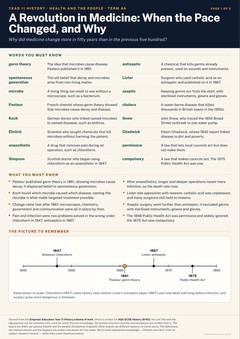
- 4aA Revolution in Medicine: When the Pace Changed, and Why
- 4bThe Causes of the First World War: Alliances, Rivalry and a Fortnight in July
- 5aStalemate and the End of the War
- 5bGermany and the Growth of Democracy — and the Depression
- 6aThe Experiences of Germans Under the Nazis
- 6bModern Medicine: The Arc Closes
- 6cThe Historic Environment: A Method for Whichever Site It Is
- 7aBoth Papers Whole: Timing, Interleaving and the Last Six Weeks
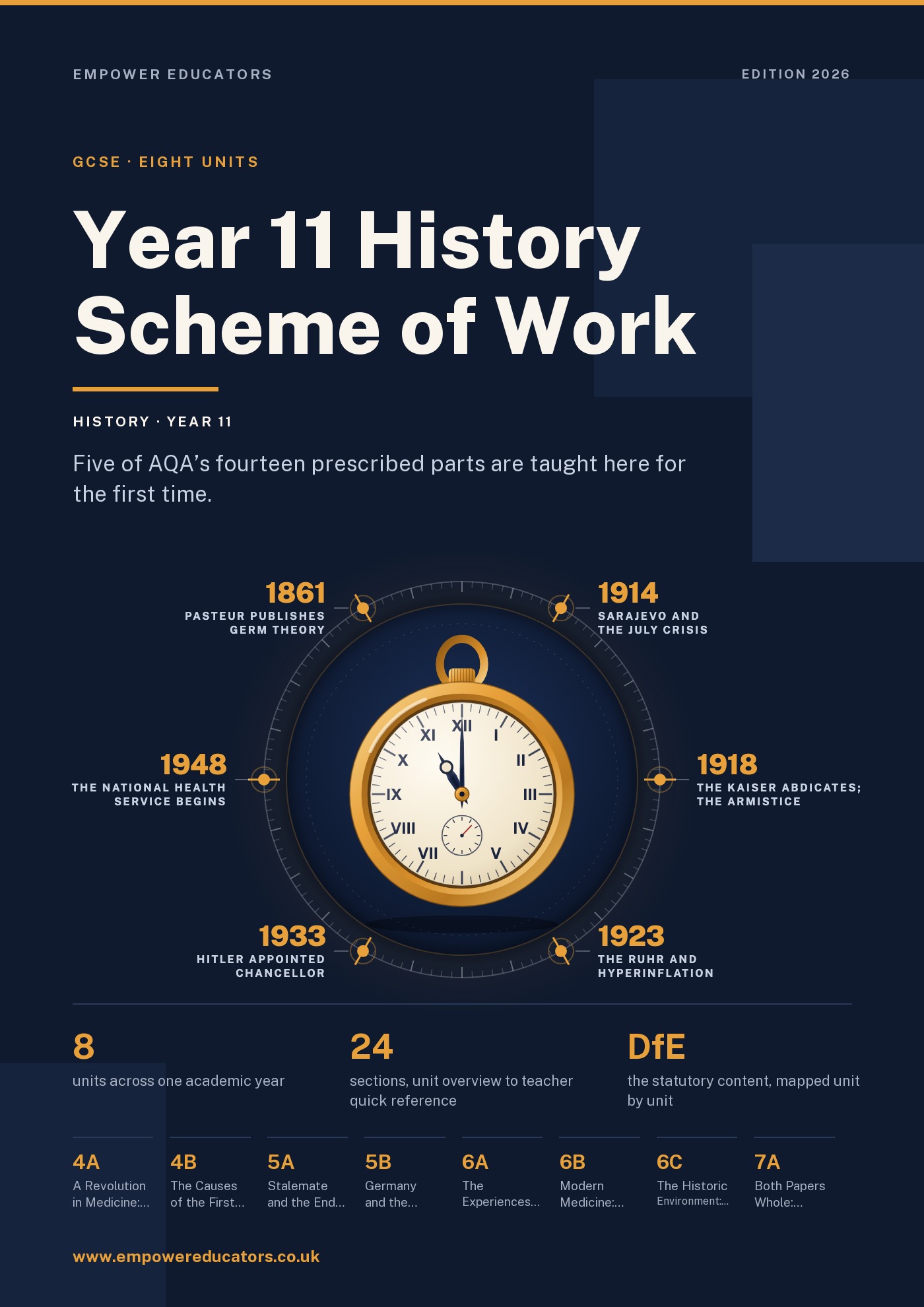
The second half of a two-year course, and deliberately not a revision year. Five of AQA’s fourteen prescribed parts are taught here for the first time, including the two hardest, and the revision unit is one unit at the end.
The historic environment is the part no printed scheme can write content for. AQA’s own words are that the site “will be as specified and will be changed annually” — so unit 6c teaches the seven aspects the board publishes, which do not change when the site does, and leaves the site as a slot the department fills in September. Two further sentences from the specification are printed for any department about to book a coach: there is no requirement to visit, and no reward is given in the assessment for visiting.
One unit is built differently from every other resource in this range. Unit 6a covers racial policy, persecution and the Final Solution, and it is handled on the same terms as the Key Stage 3 books: taught as a documented process with a chronology beginning in 1933, assessed on accuracy and sequence, and never a role-play, a simulation or a piece of imaginative writing from anybody’s perspective. No image of the dead or dying appears anywhere in this scheme. Those rules are printed in the unit, and the build fails if they are removed or contradicted.
- Written to
- GCSE subject content: history (DfE, DFE-00346-2014), Ofqual’s assessment objectives, and AQA 8145 version 1.3
- Intended for
- heads of history, subject leaders and every teacher who has to deliver it
- Extent
- 60 pages · 24 sections
The sequence
What this scheme of work covers, unit by unit
The 8 units of the Year 11 History Scheme of Work, in teaching order, with the term each one runs in and the question it is built to answer.
4a
A Revolution in Medicine: When the Pace Changed, and Why
Year 11 · Autumn 1 · 6 phases · September – October
Why did medicine change more in fifty years than in the previous five hundred?
4b
The Causes of the First World War: Alliances, Rivalry and a Fortnight in July
Year 11 · Autumn 1–2 · 6 phases · October – November
Why did the murder of one man in Sarajevo become a war between empires?
5a
Stalemate and the End of the War
Year 11 · Autumn 2 – Spring 1 · 6 phases · November – January
Why did a war expected to last months last four years, and why did it end when it did?
5b
Germany and the Growth of Democracy — and the Depression
Year 11 · Spring 1 · 6 phases · January – February
Why did Germans stop voting for democracy?
6a
The Experiences of Germans Under the Nazis
Year 11 · Spring 2 · 6 phases · February – March
What did the Nazi state do to the people who lived under it?
6b
Modern Medicine: The Arc Closes
Year 11 · Spring 2 · 5 phases · March
Has medicine got better, and for whom?
6c
The Historic Environment: A Method for Whichever Site It Is
Year 11 · Summer 1 · 5 phases · April – May
What can a single place tell you about the period it was built in?
7a
Both Papers Whole: Timing, Interleaving and the Last Six Weeks
Year 11 · Summer 1 · 8 phases · May – June
What do you already know, and what are you going to do about the rest?
Look inside
Real pages, straight from the PDF
Click any page to see it full size.
Contents
All 24 sections
Taken from the book’s own contents page, so the page numbers are the real ones.