Physical Education · GCSE (Key Stage 4) · £5.99
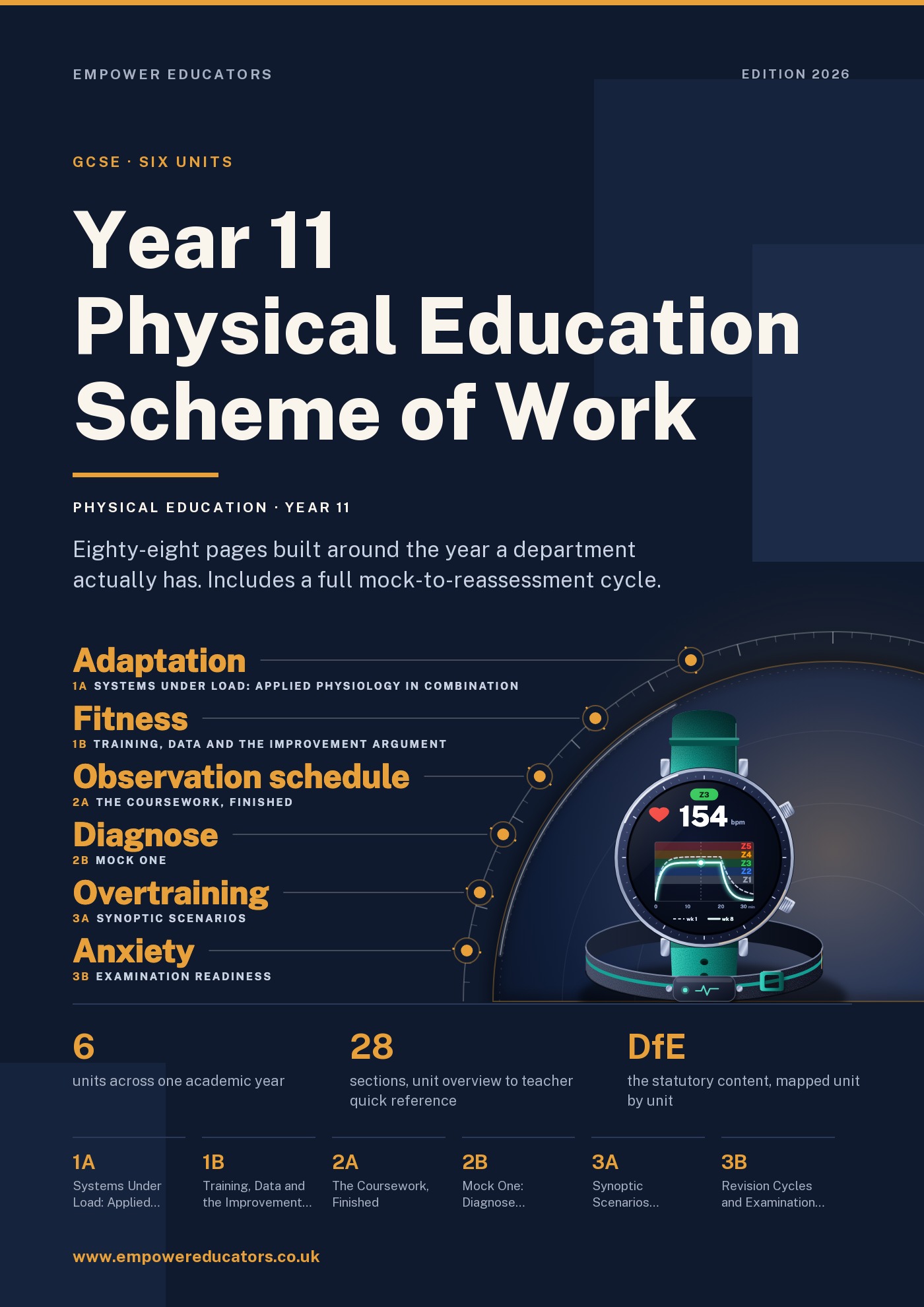
Year 11 Physical
Education
Scheme of Work
GCSE PE Scheme of Work (SOW) — KS4 Year 11, exam roadmap
Eighty-eight pages built around the year a department actually has: six units across five phases, ninety-six lessons, two mocks, a coursework deadline and a moderation window. Includes a full mock-to-reassessment cycle, eight targeted revision cycles, a command-word framework and forty-four examination questions with what the mark scheme rewards.
£5.99The Year 11 scheme: 6 units, 88 pages
- A4 PDF
- first 8 pages free to read
- instant download
Teaching all of the GCSE course? Year 10 and Year 11 as one set: £9.99, saving £1.99.
One purchase covers the school that buys it. Print it, copy it, hand it round your department. Not for passing to other schools or uploading anywhere.
PDF download, ready straight after payment. Downloading it ends the 14-day right to cancel; a file that is faulty or not as described is always refunded. Refunds
Read before publication by serving senior leaders, in school.
5.0 from 24+ reviews on Google
Schools that have bought from Empower Educators include Nottingham High School, Northampton High School GDST and Sutton Valence School.
Complete your Physical Education


Board-neutral, written for AQA, OCR and Pearson Edexcel. All GCSE schemes of work
The whole course: GCSE PE scheme of work
Everything else this site has for Physical Education: Physical Education teaching resources
- 1aSystems Under Load: Applied Physiology in Combination
- 1bTraining, Data and the Improvement Argument
- 2aThe Coursework, Finished
- 2bMock One: Diagnose, Intervene, Reassess
- 3aSynoptic Scenarios and the Extended Response
- 3bRevision Cycles and Examination Readiness
Year 11 is a shorter year and it is not empty. Teaching runs to the start of the examinations, and inside it sit two mocks, a coursework deadline, a practical moderation window and study leave, none of them chosen by the department. A final-year scheme that plans six equal units as though they were is planning a year that does not exist. So the units here are deliberately unequal, arranged across five phases, and two of them are processes rather than content.
The mock cycle is the spine. Unit 2b is a mock and what a department does with it: every lost mark coded as one of five things — did not know it, knew it but could not apply it, answered the wrong command word, ran out of time, careless — with the cohort totals deciding the intervention through decision rules that are printed and shared with the class. Then a reassessment narrow enough that any improvement can be attributed. The step most schools skip is the last one, and without it nobody finds out whether five lessons of intervention achieved anything.
The finding that changes departments: for most cohorts, application and command words together outnumber knowledge gaps, which makes more content revision the least likely right answer.
The content stops being separate. Year 10 taught the seven areas of the subject content one at a time, which is the only way to learn them. The examination asks about them together. Every unit here carries synoptic scenarios that no single topic answers, because that is what the high tariffs actually test.
The final term is eight targeted revision cycles, each ending in a retest, chosen from each student’s own coded grid rather than from a topic list. In the last fortnight the selection question changes from what is weakest to what is most improvable in the time remaining.
Every statutory and regulatory figure is traceable to the document it came from, and a verification harness resolves each one against the source text on every build. No board is named on any teaching page and no specification wording is reproduced.
- Written to
- The GCSE subject content for physical education published by the Department for Education (DFE-00697-2014) and Ofqual’s subject level conditions, with the four Ofqual-regulated specifications read directly to establish what differs between them
- Intended for
- PE teachers and heads of department. A final-year curriculum and examination roadmap
- Extent
- 88 pages · 28 sections
The sequence
What this scheme of work covers, unit by unit
The 6 units of the Year 11 Physical Education Scheme of Work, in teaching order, with the term each one runs in and the question it is built to answer.
1a
Systems Under Load: Applied Physiology in Combination
Autumn 1 · 18 lessons · approx. 6 weeks at three a week
Everything you know about the body is true of one system at a time. What happens when you ask all of it at once?
1b
Training, Data and the Improvement Argument
Autumn 1–2 · 18 lessons · approx. 6 weeks at three a week
2a
The Coursework, Finished
Autumn 2 · 12 lessons · the shortest unit, and a hard deadline
You wrote this a year ago and you know more now. Would it credit?
2b
Mock One: Diagnose, Intervene, Reassess
Spring 1 · 15 lessons · the cycle, not a topic
Everyone knows the mock produces a mark. What is it supposed to change?
3a
Synoptic Scenarios and the Extended Response
Spring 2 · 18 lessons · includes mock two and the moderation window
The question names a performer, a context and a problem, and no single topic answers it. Now what?
3b
Revision Cycles and Examination Readiness
Summer 1 · 15 lessons · to study leave
Three weeks left. What is the best possible use of them — for you, not for the class?
Look inside
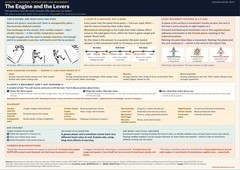
Real pages, straight from the PDF
Click any page to see it full size.
Contents
All 28 sections
Taken from the book’s own contents page, so the page numbers are the real ones.