Physical Education · GCSE · £6.99
GCSE Physical Education
Questions
& Answers
GCSE PE Questions and Answers (PDF)
GCSE PE turns into a definition test the moment the questions stop naming a performer, and a definition test is what students revise for and then fail. Seventy-four per cent of the marks here are set in a real sporting situation, with a build-failing floor at seventy. Every muscle, joint, plane, axis and lever class on the page is looked up from a table rather than typed, and every diagram is drawn from that same table, so a figure cannot contradict the sentence beside it.
£6.99100 questions, each answered three times (weak, middling, strong), 107 pages
- A4 PDF
- first 14 pages free to read
- instant download
One purchase covers the school that buys it. Print it, copy it, hand it round your department. Not for passing to other schools or uploading anywhere.
PDF download, ready straight after payment. Downloading it ends the 14-day right to cancel; a file that is faulty or not as described is always refunded. Refunds
Read before publication by serving senior leaders, in school.
5.0 from 24+ reviews on Google
Schools that have bought from Empower Educators include Nottingham High School, Northampton High School GDST and Sutton Valence School.
Complete your Physical Education


Everything else this site has for Physical Education: Physical Education teaching resources
Also teaching physical education lower down the school, or the exam itself? Physical Education scheme of work · GCSE Physical Education assessment objectives
- 1Applied anatomy and physiology
- 2Movement analysis
- 3Physical training
- 4Use of data
- 5Sport psychology
- 6Socio-cultural influences
- 7Health, fitness and well-being
- 8Answering the paper

Not a bank of questions with the answers printed underneath. The three banded responses are the starting point, not the output: what follows each one is the discriminator, named out loud, then the questions you actually ask to move a student from the first answer to the last, then the mark scheme that shows what each line was worth.
The failure this book is built against is the one every PE department knows. The subject content asks for theory connected to practice, and a book that asks what aerobic endurance is has not done that, so 74% of the marks here are set in a named sporting situation, with the floor at 70% enforced on every build. A question with a performer in it is earning application marks by definition, and the objectives are measured that way rather than asserted.
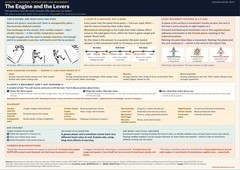
The anatomy is the part that has to be right, and it is checked rather than trusted. Every muscle, joint, bone, plane, axis and lever class printed anywhere in the book is looked up from one table, and a checker also hunts for anatomy that was typed instead — which is how a wrong antagonist would otherwise reach a page. The lever diagrams are generated from that same table, so a diagram cannot disagree with the text beside it, and the heart-rate graphs are drawn on a real grid so a value can be read off.
That table is then checked against itself a second way, because a table can be internally consistent and still wrong. Mutation testing showed it: moving abduction into the sagittal plane and putting the fibula in the knee both left every assertion passing. Planes are now derived independently from direction of travel and joints from body-segment bone lists, so one edit can no longer corrupt both statements at once.
The mark schemes carry the allow and do not accept lines a real scheme has, and on the extended questions they are sorted by objective rather than listed as points — because the commonest way to lose marks on a nine is to write three paragraphs of correct theory that never mention the performer, and an empty column shows that where a point list cannot. Nothing is copied from a past paper, a mark scheme or an examiner report, every figure is drawn in code, and no board is named anywhere.
- Written to
- The GCSE subject content for physical education published by the Department for Education, and the assessment objective weightings set by Ofqual — measured here against the written paper, since the practical objective carries 40% that no book can assess
- Intended for
- PE teachers and heads of department. Used with a class, not a student revision guide
- Extent
- 107 pages · 8 sections
Sample questions
Sample GCSE PE questions and answers
Eight questions from the book, printed exactly as they appear in it: the question, the answers it works through, and the mark each one scores. All of them are in the free preview.
Question 1·Applied anatomy and physiology·2 marks
Name the type of joint at the shoulder and give one movement it allows that the elbow does not.
Weaker0 marks
It is a hinge joint. It allows you to move your arm.
Middling2 marks
It is a ball and socket joint. It allows rotation.
Stronger2 marks
It is a ball and socket joint, formed where the humerus and scapula meet. It allows rotation, and also abduction and circumduction, none of which the elbow can do because a hinge moves in one plane only.
What separates them
Both of the last two answers score full marks, and one of them is worth much more to the student who wrote it. The second gives the two facts the question asks for. The third gives the reason — a hinge is restricted to one plane — which is what the next question on this topic will ask for, and it costs one extra clause.
The full-mark answer2 marks
The shoulder is a ball and socket joint, formed where the humerus and scapula meet. It allows rotation, which the elbow cannot perform because a hinge joint moves in one plane only.
Question 2·Applied anatomy and physiology·2 marks
Identify the agonist and the antagonist in the upward phase of a press-up.
Weaker0 marks
The agonist is the biceps and the antagonist is the triceps, because you are bending your arms.
Middling2 marks
The agonist is the triceps brachii and the antagonist is the biceps brachii .
Stronger2 marks
Going up, the elbow extends, so the agonist is the triceps brachii and the antagonist is the biceps brachii. Coming back down the same two muscles swap roles, which is why naming the phase matters.
What separates them
The first answer has the pair the right way round for the wrong phase: going down is elbow flexion, and the answer has described that. The question names the upward phase, which is extension. The third answer earns the same two marks as the second and adds the thing that stops the error happening again: work out the movement first, then look up the pair.
The full-mark answer2 marks
In the upward phase the elbow extends, so the agonist is the triceps brachii and the antagonist is the biceps brachii .
Question 3·Applied anatomy and physiology·3 marks
Explain the role of the antagonist during the upward phase of a biceps curl.
Weaker0 marks
The antagonist is the muscle that does not do anything while the other one works.
Middling2 marks
The antagonist is the triceps brachii. It relaxes while the biceps brachii contracts, which allows the elbow to bend.
Stronger3 marks
Lifting the weight is elbow flexion, so the biceps brachii is the agonist. The triceps brachii is the antagonist: it relaxes and lengthens as the other shortens, because a joint cannot move if both sides pull at once. On the way down the two exchange roles.
What separates them
‘Does nothing’ is the answer that loses the mark, because it is not doing nothing — it is relaxing and lengthening, which is an action. The second answer is correct and complete for two of the three marks. The third earns the last one by saying why the relaxation is necessary: two muscles pulling in opposite directions across the same joint would hold it still.
The full-mark answer3 marks
Lifting the weight is flexion at the elbow, so the biceps brachii is the agonist and shortens. The triceps brachii is the antagonist: it relaxes and lengthens to allow the movement, because if both muscles contracted across the joint at once it would not move at all.
Question 4·Applied anatomy and physiology·2 marks
Name the bones that articulate at the knee joint.
Weaker0 marks
The femur and the fibula .
Middling2 marks
The femur and the tibia.
Stronger2 marks
The femur, tibia and patella. The fibula sits alongside the tibia in the lower leg but does not form part of the joint.
What separates them
The second and third answers both score full marks. The difference is that the third knows why the wrong answer is tempting: the fibula is in the lower leg, so it feels as though it should be there, and it is at the ankle. A student who has learned that distinction will not lose the mark under pressure.
The full-mark answer2 marks
The femur, tibia and patella. The fibula lies alongside the tibia in the lower leg but does not reach the knee joint; it forms part of the ankle instead.
Question 5·Applied anatomy and physiology·4 marks
Explain why the ankle allows only two movements, and what that means for a sprinter.
Weaker1 mark
The ankle is a hinge joint so it can only go up and down. This means a sprinter can push off the ground.
Middling3 marks
The ankle is a hinge joint, which moves in one plane only, so it allows plantar flexion and dorsiflexion and nothing else. A sprinter uses plantar flexion to drive off the blocks.
Stronger4 marks
The hinge at the ankle allows movement in one plane only, which is why it is limited to plantar flexion and dorsiflexion. For a sprinter that limitation is an advantage: a joint that cannot move sideways cannot be forced sideways, so all the force of the drive goes down the leg and into the track rather than being lost.
What separates them
The first answer has the joint type and no consequence. The second is a sound answer and applies the movement correctly. The fourth mark is for treating the restriction as something the sprinter gains from rather than suffers: a hinge is stable in the plane it does not move in, and stability is what lets force pass through a joint instead of being absorbed by it.
The full-mark answer4 marks
The ankle is a hinge joint formed by the tibia, fibula and talus, and a hinge moves in one plane, so it is limited to plantar flexion and dorsiflexion. For a sprinter that is an advantage. A joint that cannot travel sideways cannot be pushed sideways, so the force of the drive is transmitted straight down the leg into the track instead of being lost.
Question 6·Applied anatomy and physiology·3 marks
Describe the pathway air takes from the mouth to the alveoli.
Weaker0 marks
Air goes down your throat and into your lungs, where the oxygen goes into the blood.
Middling3 marks
Air passes from the mouth into the trachea, then into the bronchi, then the bronchioles, and finally the alveoli.
Stronger3 marks
Mouth or nose, then trachea, then the two bronchi — one to each lung — then the bronchioles, which divide repeatedly and get narrower, and finally the alveoli, where the airways end in air sacs.
What separates them
The first answer names no structure at all: throat and lungs are not on the mark scheme. The second and third both earn full marks, and the third is the one to teach from because it says what each stage is — two bronchi, one per lung; bronchioles that divide and narrow. A student who knows that will not put them in the wrong order.
The full-mark answer3 marks
Air enters through the mouth or nose and passes down the trachea. The trachea divides into two bronchi, one entering each lung. Each bronchus divides into progressively narrower bronchioles, and these end in the alveoli, the air sacs where gaseous exchange takes place.
Question 7·Applied anatomy and physiology·3 marks
Explain how gaseous exchange takes place at the alveoli.
Weaker1 mark
Oxygen goes into the blood and carbon dioxide comes out. This happens in the lungs so you can keep exercising.
Middling2 marks
Oxygen diffuses from the alveoli into the blood in the capillaries, and carbon dioxide diffuses the other way. This happens because there is a higher concentration of oxygen in the alveoli than in the blood.
Stronger3 marks
Both gases move by diffusion, from high concentration to low. Blood arriving at the alveoli is low in oxygen and high in carbon dioxide, and the air in the alveoli is the reverse, so each gas moves down its own gradient. The alveoli are one cell thick, moist and surrounded by capillaries, which keeps the distance short and the gradient steep.
What separates them
The first answer describes the outcome without the mechanism, which is what most answers do. The second names diffusion and one gradient and earns two. The third mark is for the features that make it fast: one cell thick, moist, and richly supplied with capillaries. Those three are what turn a slow process into one that can keep up with exercise.
The full-mark answer3 marks
Both gases move by diffusion, from a high concentration to a low one. Blood arriving at the alveoli is low in oxygen and high in carbon dioxide, while the alveolar air is the reverse, so oxygen moves into the blood and carbon dioxide moves out. The exchange is rapid because the alveolar wall is one cell thick, moist, and surrounded by capillaries, which keeps the diffusion distance short and the gradient steep.
Question 20·Applied anatomy and physiology·9 marks
Evaluate the claim that a larger heart always means a better endurance performance.
WeakerLevel 1
A bigger heart is better for endurance because it can pump more blood, so athletes with bigger hearts will do better in endurance events. Training makes your heart bigger, which is why endurance athletes are good at endurance.
MiddlingLevel 2
A larger heart does help: hypertrophy raises stroke volume, so maximum cardiac output is higher and more oxygen reaches the muscles. However, performance also depends on the muscles using that oxygen, on technique and on nutrition. So it helps but does not guarantee a better performance.
StrongerLevel 3
A larger heart raises the ceiling; it does not decide what happens under it. Hypertrophy raises stroke volume and maximum cardiac output. But oxygen delivered is not oxygen used: capillarisation and technique decide how much becomes work. And always is where the claim fails — a heart enlarged by disease performs worse.
What separates them
The first extract agrees with the claim and then argues in a circle. The second is a solid Level 2: it supports, it qualifies, it concludes. What lifts the third is that it attacks the word the question chose. ‘Always’ is a claim about every case, so a single counter-case settles it — and the counter-case here, a heart enlarged by disease, also explains what the real variable is.
The whole answer, at the top levelLevel 3
A larger heart raises the ceiling on endurance performance rather than determining it. Cardiac hypertrophy increases stroke volume and therefore maximum cardiac output, so more oxygenated blood reaches the working muscles. But oxygen delivered is not oxygen used: capillarisation, the muscle’s own aerobic capacity, technique and pacing all decide how much of that delivery becomes performance. The claim fails on always: a heart enlarged by disease rather than by training performs worse, which shows that what matters is the adaptation, not the size.
Look inside
Real pages, straight from the PDF
Click any page to see it full size.
Contents
All 8 sections
Taken from the book’s own contents page, so the page numbers are the real ones.