Physical Education
A PE scheme of work does not run one unit at a time, because the department does not have one hall, one gym and one field to spare.
Six strands a year, and a curriculum map that pretends they run in sequence falls apart the first week a wet Wednesday moves gymnastics into the hall booked for something else.
Written from the Key Stage 3 PE scheme of work published on this site, against the Ofsted school inspection toolkit. Every document quoted is named and dated below.
Six strands a year, and what each one actually teaches
- 1a Invasion Games Keeping possession
- 1b Gymnastics Body management and control
- 2a Net and Wall Creating space
- 2b Fitness How the body responds
- 3a Striking and Fielding Roles in the field
- 3b Athletics Run, jump, throw
Write a PE scheme of work the way you’d write a maths or English one. Six units, one after another, a term each. It survives about a week. Then the hall gets booked for exams, the field floods, and half the department discovers their “next” unit needs equipment currently locked in a cupboard three miles away at another site.
That isn’t a planning failure. It’s what happens when a document built for one classroom is used to run six groups sharing one hall, one gym and one field.
What is a scheme of work?
A plan that sets out what is taught, in what order, and why. It has to be light enough for a department to keep updated, and detailed enough that a teacher can plan a lesson from it without rebuilding the reasoning themselves. For most subjects, that also means a fixed sequence: unit two assumes unit one happened first.
Why doesn’t PE just teach one unit at a time?
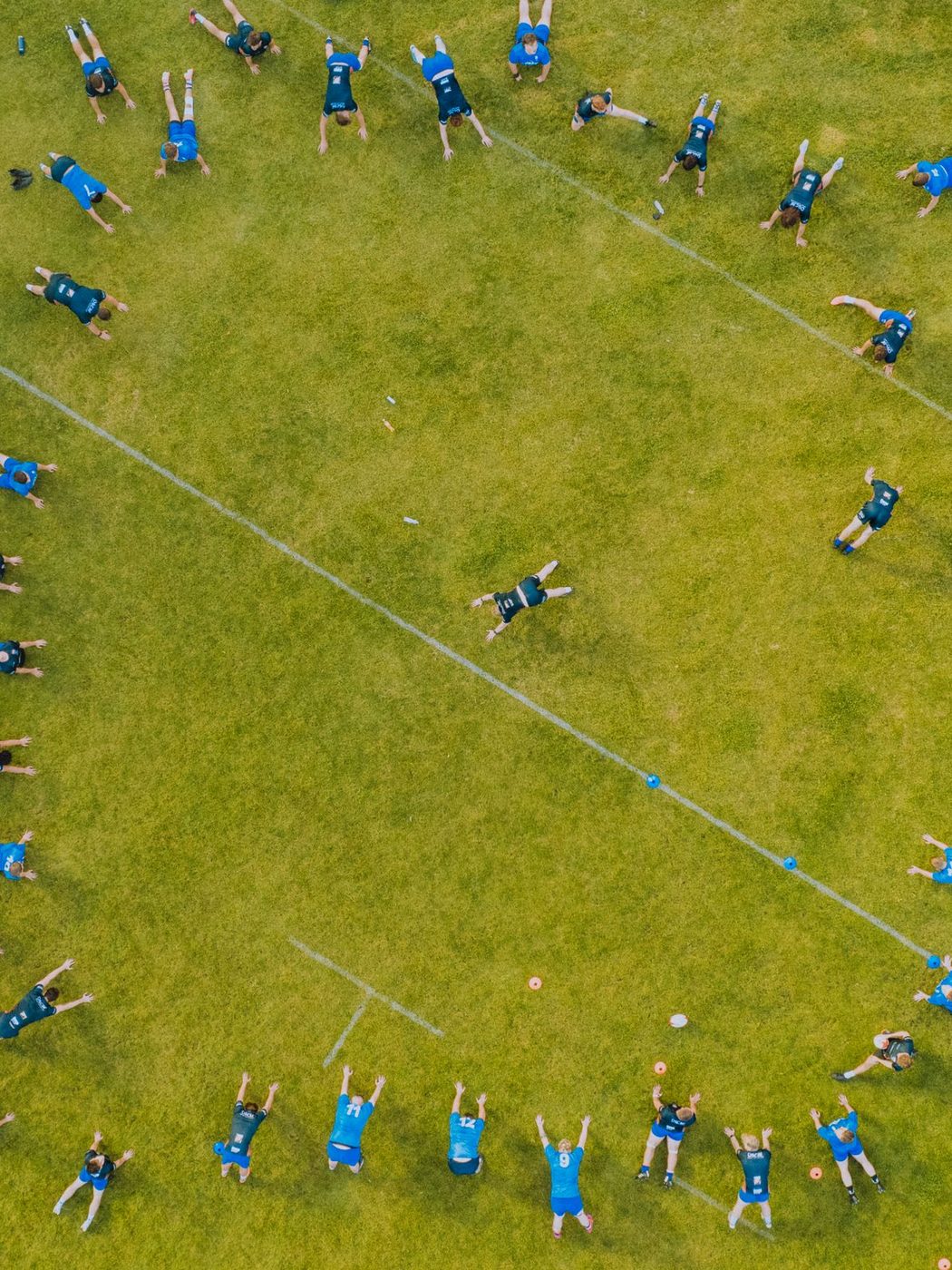
Because almost no PE department has the space to. A school might have one hall, one gym and one field between every class timetabled for PE that week. So instead of the whole year group doing invasion games in September and gymnastics in November, six groups run six different strands at the same time, rotating through them across the year. The scheme has to describe a carousel, not a queue.
Get the carousel wrong on paper and it still runs. Departments have been solving that on a whiteboard for years. Get it wrong in the scheme of work and the document stops being the thing anyone actually follows, which is the same failure as a scheme nobody opens for any other reason.
What actually has to stay fixed, if the order doesn’t?
The strand across years. The term a block falls in within a year can move. Year 7’s six blocks can run in almost any order a timetable and a facilities rota demand. What can’t move is that each strand still builds on what the same strand covered the year before. A department can put athletics in the autumn term this year and the summer term next without breaking anything, provided the athletics content still progresses.
The activity named in each block is the department’s choice; what is fixed is the strand and what it teaches.
Year 7 Physical Education Scheme of Work, Empower Educators
That single distinction, strand fixed and term flexible, is what a curriculum map and a lesson-by-lesson plan both fail to carry for PE specifically. A curriculum map states the six strands and nothing about the rotation. A folder of lesson plans locks in a term order that the first facilities clash breaks.
What does Ofsted’s inspection toolkit actually ask for?
Two of the six factors under curriculum and teaching are almost exactly the scheme of work’s job, in PE as in every other subject: sequencing the curriculum so pupils gain knowledge and skills incrementally, and making sure what is taught matches what leaders intended. Both are quoted verbatim below.
- planning and sequencing the curriculum clearly so that all pupils can access it and gain knowledge and skills incrementally to reach its stated aims
- making sure the curriculum is implemented in line with leaders’ intentions and that teachers teach the subject curriculum effectively
Ofsted, State-funded school inspection toolkit, updated June 2026 (v2.0), in force from 7 September 2026
Neither factor cares whether Year 7 does gymnastics in the autumn term or the spring one. What they ask is whether the sequencing within each strand still builds, whichever order the carousel actually runs in, and whether what happens in the hall matches what the department’s own scheme says should happen there.
Four questions a PE unit has to answer that a content-only subject’s doesn’t
Not ten sections and not a template. These are the ones a teacher covering someone else’s PE class, or a head of department building the rota, will actually need answered.
Shared with
Which other groups need the same hall, gym or field at the same time, and how the rotation is decided.
Risk in this activity
What actually causes injuries in it, and what the department does to manage that risk.
If the weather rules it out
The indoor fallback for an outdoor strand, decided in advance instead of on the day.
What must carry over
What the next year’s teacher needs regardless of which block ran in which term this year.
The risk question is the one most schemes underdocument. Each activity area carries its own injury profile. A striking-and-fielding lesson and a gymnastics lesson do not fail in the same way. A scheme that names the specific risk per activity, instead of one generic “PE is inherently risky” line, is the one a cover teacher can use without having taught that strand before.
What this is not
It is not an argument for more paperwork, and the toolkit says so itself:
We do not need leaders to produce documents specifically for an Ofsted inspection of their school. This would create unnecessary workload.
Ofsted, State-funded school inspection toolkit, updated June 2026 (v2.0), in force from 7 September 2026
A maths scheme of work is a promise about sequence. A PE scheme of work promises a rotation that still teaches something in order, and it is the only one of the two that has to survive a wet Wednesday and a double-booked hall.