GCSE English Literature · J. B. Priestley · AQA, Edexcel, Eduqas and OCR · £6.99
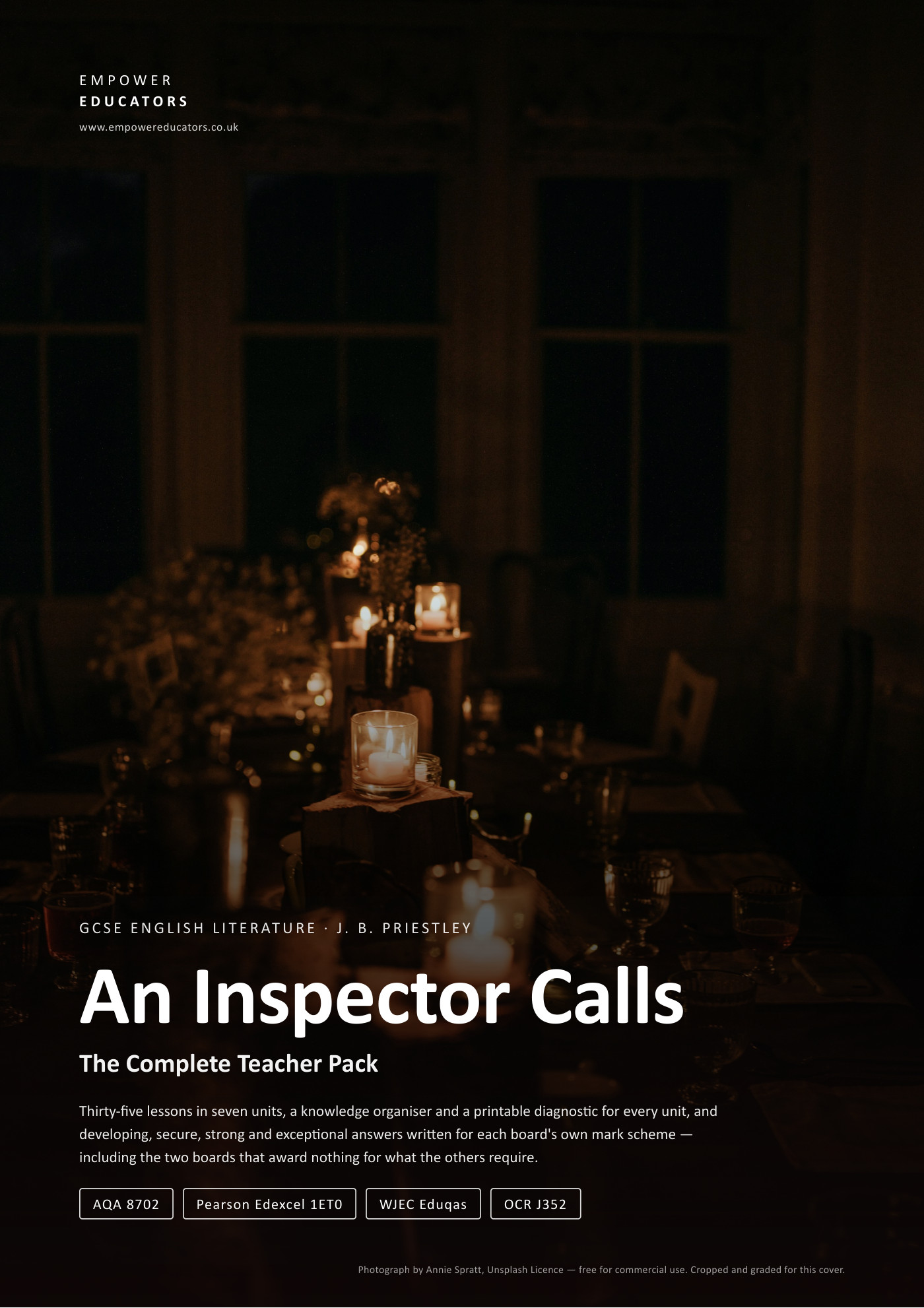
An Inspector Calls
The Complete Teacher Pack
An Inspector Calls Scheme of Work and Resources (GCSE)
Thirty-five lessons in seven units, a knowledge organiser and a printable diagnostic for every unit, and developing, secure, strong and exceptional answers written for each board’s own mark scheme, including the two boards that award nothing for what the others require.
£6.99The complete teacher pack for An Inspector Calls, 97 pages
- A4 PDF
- first 14 pages free to read
- instant download
One purchase covers the school that buys it. Print it, copy it, hand it round your department. Not for passing to other schools or uploading anywhere.
PDF download, ready straight after payment. Downloading it ends the 14-day right to cancel; a file that is faulty or not as described is always refunded. Refunds
Read before publication by the serving head of that department and by senior leaders, in school.
5.0 from 24+ reviews on Google
Schools that have bought from Empower Educators include Nottingham High School, Northampton High School GDST and Sutton Valence School.
Complete your English Literature

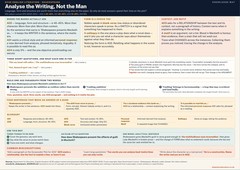
Everything else this site has for English Literature: English Literature teaching resources
- 1Two Dates: 1912, 1945, and the Man Who Wrote It
- 2The Doorbell: Birling’s World, Interrupted
- 3Sheila: The One Who Turns
- 4Mrs Birling: The One Who Does Not
- 5Eric, and the Chain Closed
- 6The Hoax, and the Telephone
- 7The Exam: Four Boards, One Play
An Inspector Calls taught as the argument it is, for whichever of the four boards sets it. Thirty-five one-hour lessons in seven units: a week on the two dates the play is built across, then the play in the order the Inspector asks (not the order events happened), then the exam, board by board. Every lesson is one card: a five-minute retrieval, the passage to read, the main activity in numbered steps with minutes, the writing, the check, an exam-focus line for each board, and what changes for a student who is stuck or ahead.
No two of these boards ask the same question, and two of them award nothing for what the others require. Edexcel gives no marks at all for analysing Priestley’s language on this question; Eduqas gives none for context. OCR asks for a comparison with a second extract, by another writer, printed on the day and never seen before. A single model answer would be wrong for three of the four, so there are four sets, one per board, each answered at four standards: developing, secure, strong and exceptional, with an assessment-objective rail beside every paragraph and a line saying what would move it up.
Seven knowledge organisers and seven printable diagnostics, one per unit. Retrieval that is cumulative from lesson 6. Every starter says whether its questions come from last lesson, last week, last unit or long-term memory. Forty-nine graded questions across seven demands, from recall through inference, analysis and comparison to examination application. Eight character masterfiles and sixteen theme masterfiles, each giving the argument Priestley is making rather than a definition. A hundred-question knowledge test with answers, four revision routes chosen by the time you actually have, and the twenty things to remember if a student remembers nothing else.
The play is in copyright until 2054, so no extract is printed and none can be. That rules out the usual proof that a quotation is accurate. The pack holds to a stricter standard instead: every quotation it prints is one an examination board has itself published in a paper or a mark scheme, sixty-four of them, each recorded with the document it came from, and the build refuses to produce the book if a quotation appears that cannot be traced. Every exam figure is read from the boards' own papers. Every date in 1912 and 1945 is traced to a named source, and the pack says which of its sources are strong and which are secondary.
Where the play is commonly got wrong, the pack says so and says what it costs in the exam: the Moscow premiere that was not a political gesture, the welfare state the play precedes rather than celebrates, the Inspector who is not simply Priestley with a notebook. There is a page setting the statutory key stage 4 programme of study against what this pack actually does — including two rows naming what it does not cover, because one play cannot deliver a programme of study and a scheme that claimed otherwise would be worth less to you, not more.
- Written to
- AQA 8702, Pearson Edexcel 1ET0, WJEC Eduqas and OCR J352, read from each board’s own papers and mark schemes; the play is in copyright, so every quotation printed here is one an examination board published first
- Intended for
- English teachers and heads of English. A seven-week scheme taught to a class, not a student revision guide
- Extent
- 97 pages · 70 sections
Look inside
Real pages, straight from the PDF
Click any page to see it full size.
Contents
All 70 sections
Taken from the book’s own contents page, so the page numbers are the real ones.