All 4 sheets — Shakespeare, The 19th-century novel, Poetry, seen and unseen and Writing about literature — for £3.99. One landscape page per topic,
every claim sourced and every image licensed.
4 sheets · one A4 landscape PDF each · instant download
Bought once for the set, not per sheet. Photocopy them for your classes freely — keep
the running foot on the page, which carries the image credits the licences require.
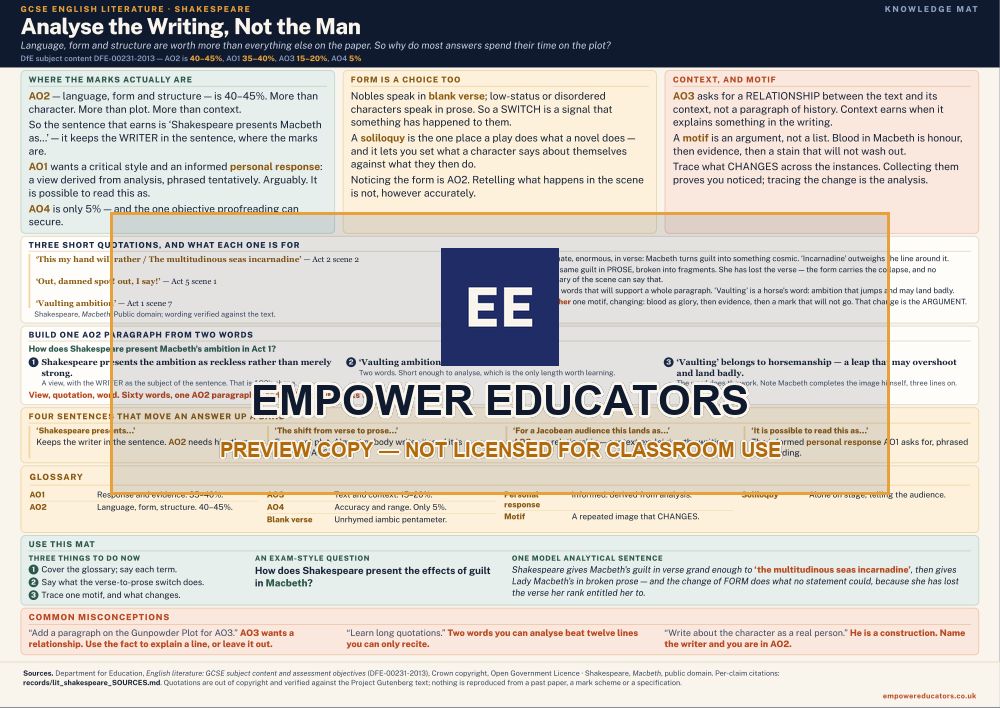
Language, form and structure are worth more than everything else on the paper — so why do most answers spend their time on the plot? Where the marks actually are, with the DfE's own AO weightings; form as a choice, verse and prose; context and motif; three short Macbeth quotations verified against the text, and what each is for; one AO2 paragraph built from two words; four sentences that move an answer up a band. Eight terms to define, a model answer on guilt, and the misconceptions that cost marks.
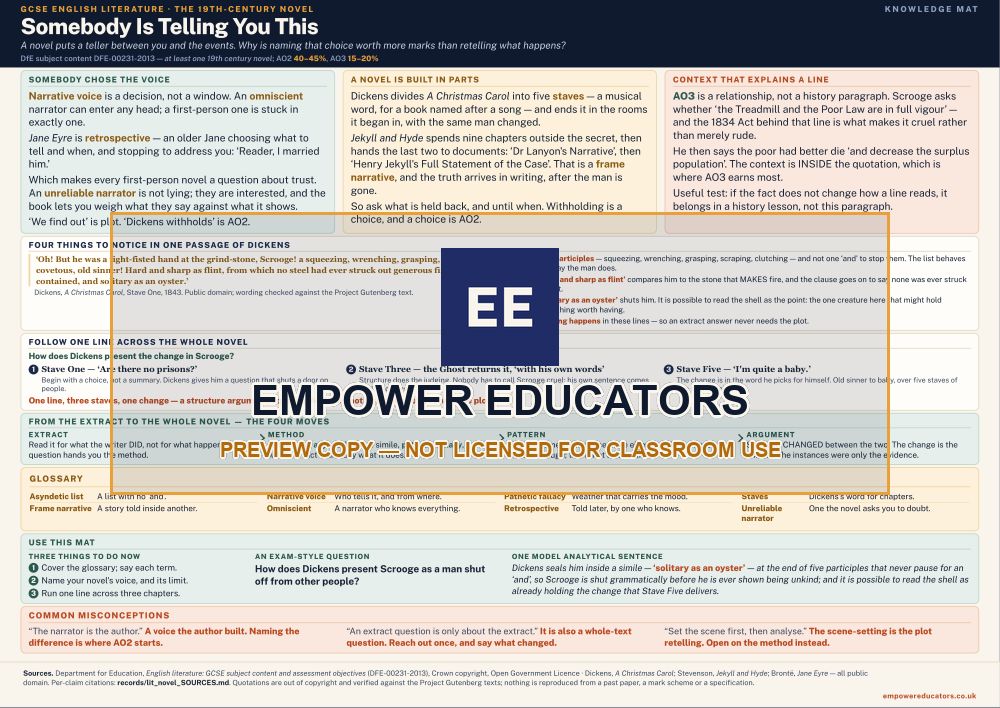
A novel puts a teller between you and the events. Why is naming that choice worth more marks than retelling what happens? Narrative voice; a novel built in parts, from Dickens's five staves to Stevenson's closing documents; context that explains a line, with the Poor Law behind Scrooge's own words; the opening description of Scrooge, verified against the text and annotated; one line followed across three staves; four moves from the extract to the whole novel. Eight terms to define, a model answer on Scrooge shut off from other people, and the misconceptions that cost marks.
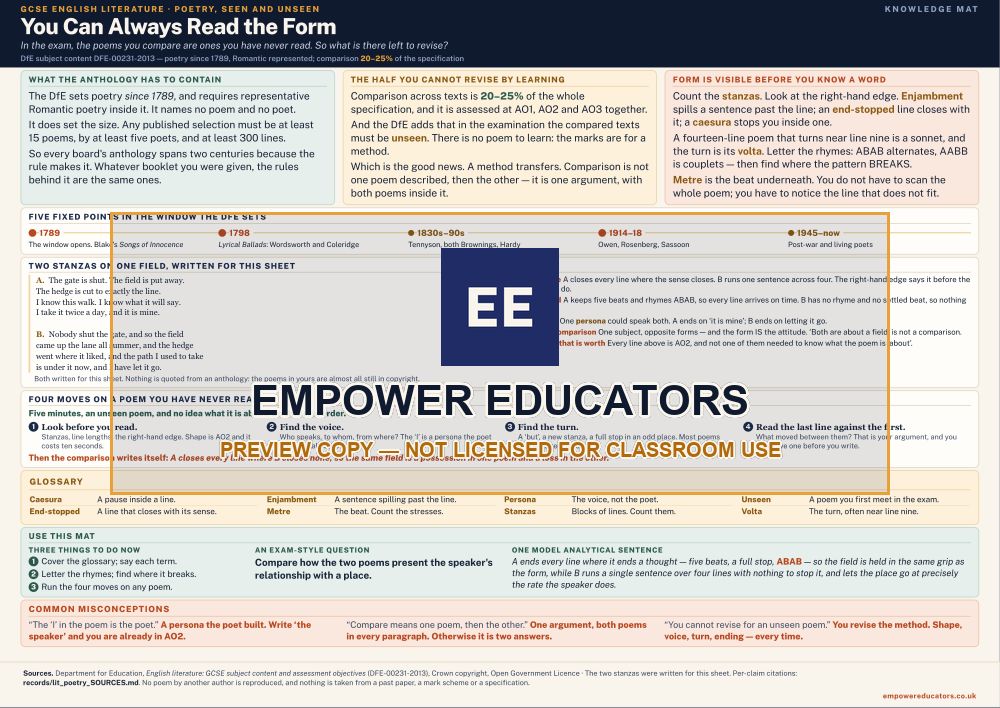
In the exam, the poems you compare are ones you have never read. So what is there left to revise? What the anthology has to contain, in the DfE's own numbers; the comparison that is a fifth of the qualification; reading form before a single word; five fixed points in the window since 1789; two stanzas written for the sheet, compared on form alone; four moves on a poem you have never read. Eight terms to define, a model comparison sentence, and the misconceptions that cost marks.
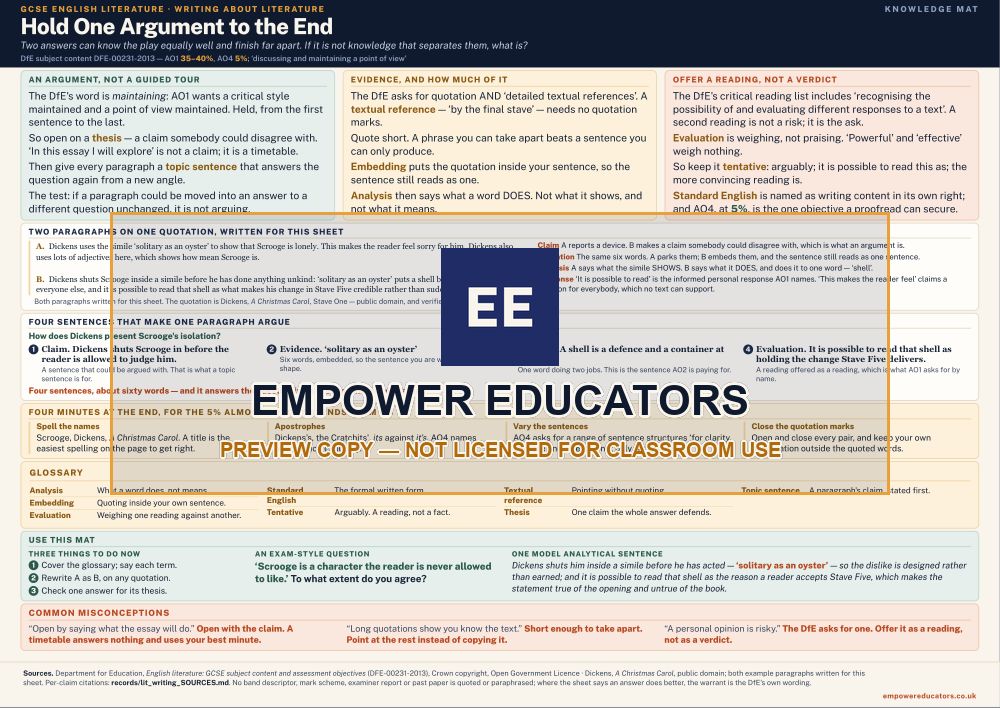
Two answers can know the play equally well and finish far apart. If it is not knowledge that separates them, what is? An argument, not a guided tour; evidence and how much of it; offering a reading, not a verdict; two paragraphs on one quotation, one describing and one arguing, annotated; four sentences that make a paragraph argue; four minutes at the end for the 5% almost nobody spends them on. Eight terms to define, a model answer on whether the reader is allowed to like Scrooge, and the misconceptions that cost marks.
The previews above are the full sheets, watermarked. Where a sheet carries photographs,
every one is public domain worldwide or licensed CC BY, verified per image against the
licence itself rather than a label, and the running foot names every creator, records that
the images have been cropped and adjusted for print, and links the licence; figures are
drawn in code for the sheet, and extracts are written for it or verified against a
public-domain text. Nothing on any sheet is reproduced
from a past paper, a mark scheme, an examiner report or a specification, and Empower
Educators is not affiliated with any awarding body.
Cookies
This site works the same either way. Measurement — Google Analytics and Microsoft
Clarity — only runs if you say yes, and it is used to see which resources people
actually reach. What is collected.