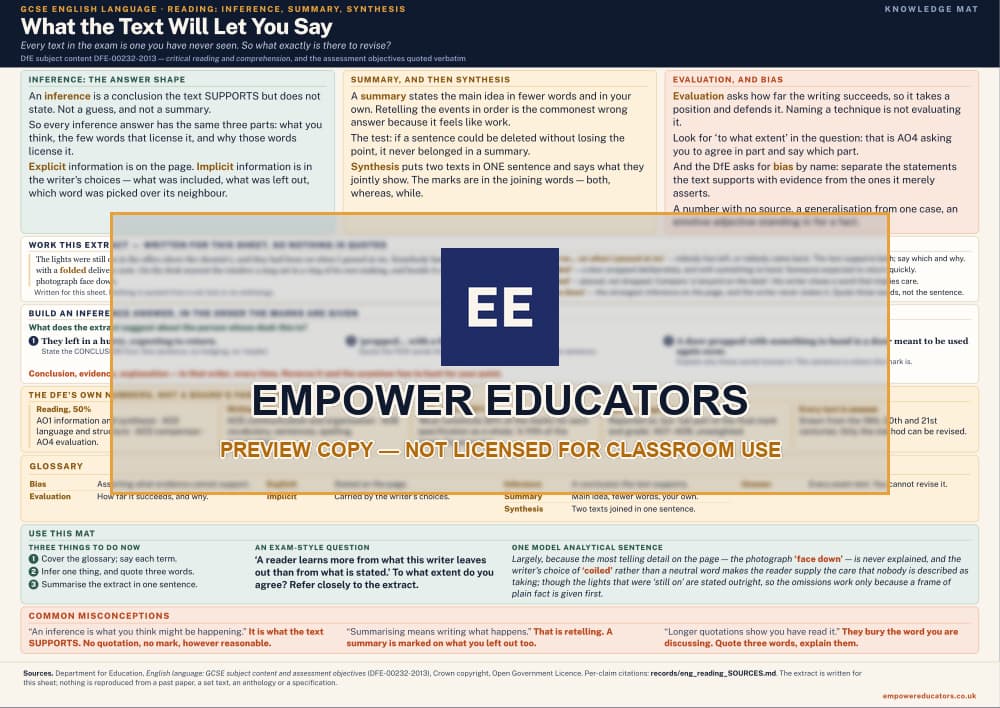
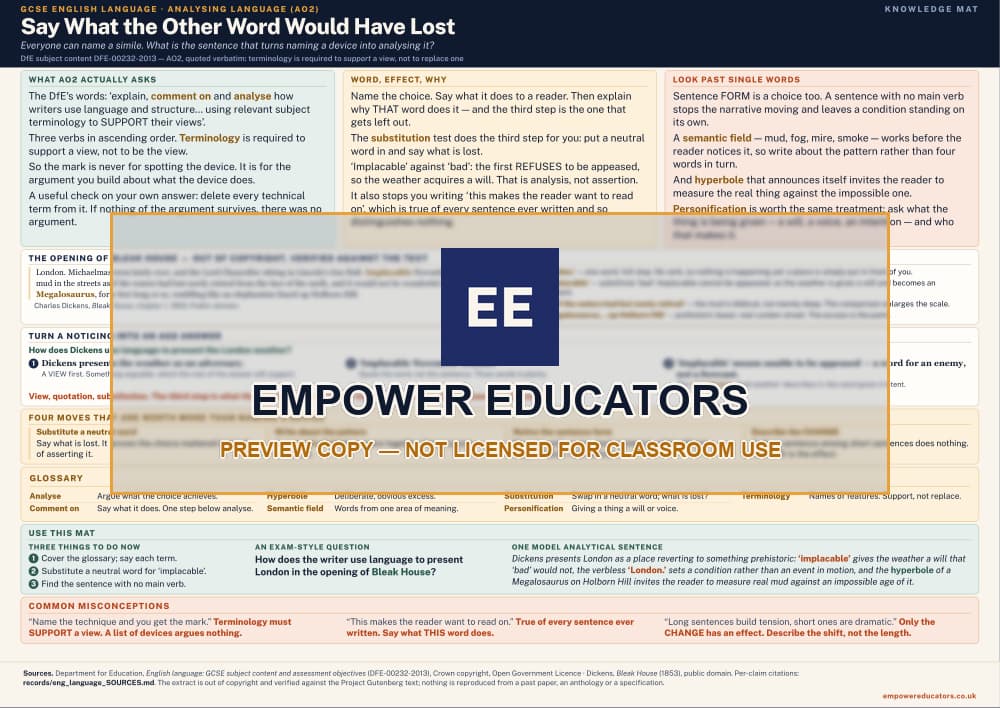
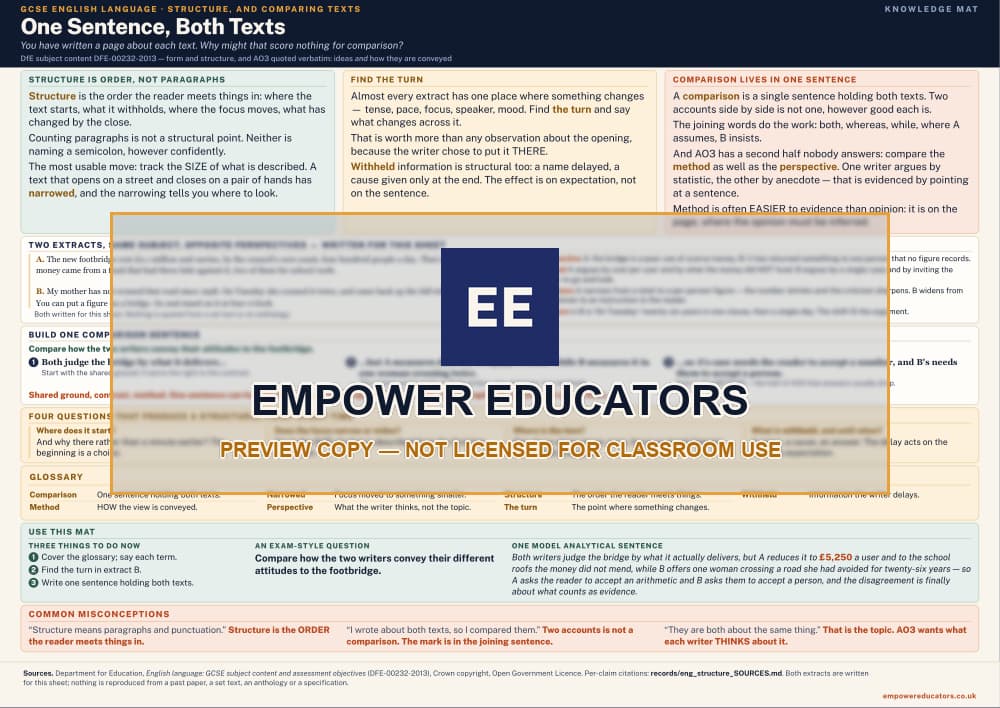
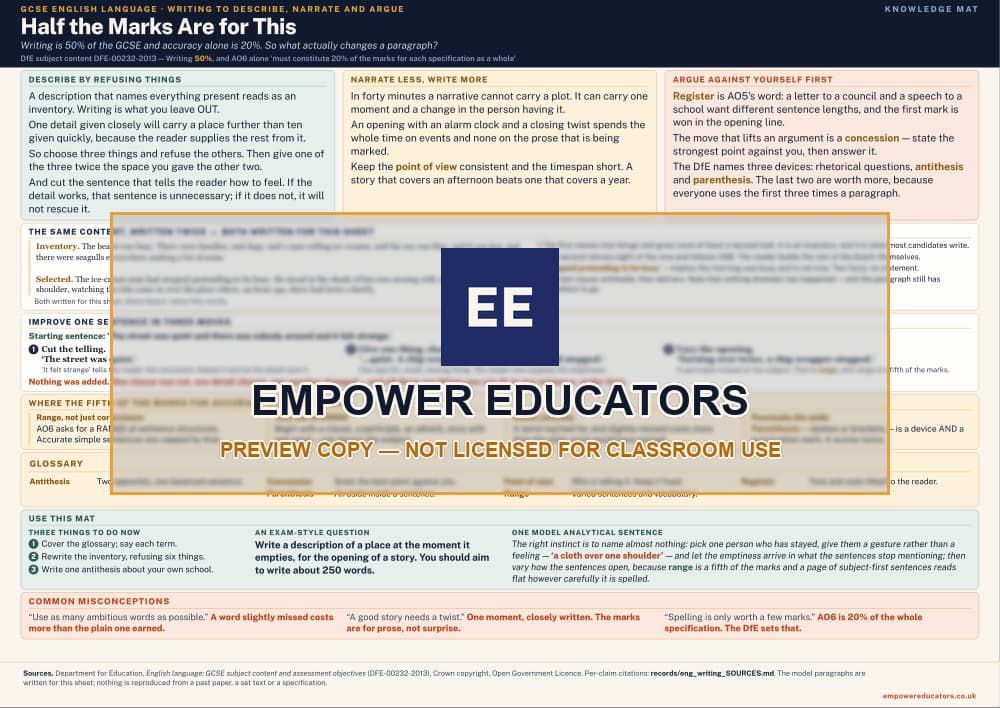
All 4 sheets — Reading: inference, summary, synthesis, Analysing language, Structure, and comparing texts and Writing to describe, narrate and argue — for £3.99. One landscape page per topic, every claim sourced and every image licensed.
4 sheets · one A4 landscape PDF each · instant download
Bought once for the set, not per sheet. Photocopy them for your classes freely — keep the running foot on the page, which carries the image credits the licences require. One purchase covers the school that buys it. Downloading it ends the 14-day right to cancel; a file that is faulty or not as described is always refunded. Refunds
Every text in the exam is one you have never seen, so what is there to revise? Inference as a three-part answer shape; summary and synthesis; evaluation and bias; an extract written for the sheet, annotated four ways; an inference answer built in the order the marks are given; the DfE’s own weightings for reading, writing and accuracy. Eight terms to define, a model answer on what a writer leaves out, and the misconceptions that cost marks.
Everyone can name a simile. What is the sentence that turns naming a device into analysing it? What AO2 actually asks; word, effect, why, with the substitution test; sentence form, semantic fields and personification; the opening of Bleak House, out of copyright and verified against the text, annotated; a noticing turned into an AO2 answer; four moves worth more than naming a device. Seven terms to define, a model analytical sentence, and the misconceptions that cost marks.
You have written a page about each text. Why might that score nothing for comparison? Structure as order, not paragraphs; finding the turn; comparison held in one sentence; two extracts written for the sheet, same subject and opposite perspectives, annotated; a comparison sentence built in three moves; four questions that produce a structural point every time. Seven terms to define, a model answer comparing two attitudes, and the misconceptions that cost marks.
Writing is 50% of the GCSE and accuracy alone is 20%. So what actually changes a paragraph? Describing by refusing things; narrating one moment rather than a plot; arguing against yourself first; the same beach written twice, inventory against selection; one sentence improved in three moves; where the fifth of the marks for accuracy actually goes. Six terms to define, a model analytical sentence, and the misconceptions that cost marks.
The previews above are the full sheets, watermarked. Where a sheet carries photographs, every one is public domain worldwide or licensed CC BY, verified per image against the licence itself rather than a label, and the running foot names every creator, records that the images have been cropped and adjusted for print, and links the licence; figures are drawn in code for the sheet, and extracts are written for it or verified against a public-domain text. Nothing on any sheet is reproduced from a past paper, a mark scheme, an examiner report or a specification, and Empower Educators is not affiliated with any awarding body.
Cookies
This site works the same either way. Measurement — Google Analytics and Microsoft Clarity — only runs if you say yes, and it is used to see which resources people actually reach.Measurement only runs if you say yes.What is collected.