All 4 sheets — Visual language, Investigating sources, Experimenting and recording and Realising the outcome — for £3.99. One landscape page per topic,
every claim sourced and every image licensed.
4 sheets · one A4 landscape PDF each · instant download
Bought once for the set, not per sheet. Photocopy them for your classes freely — keep
the running foot on the page, which carries the image credits the licences require.
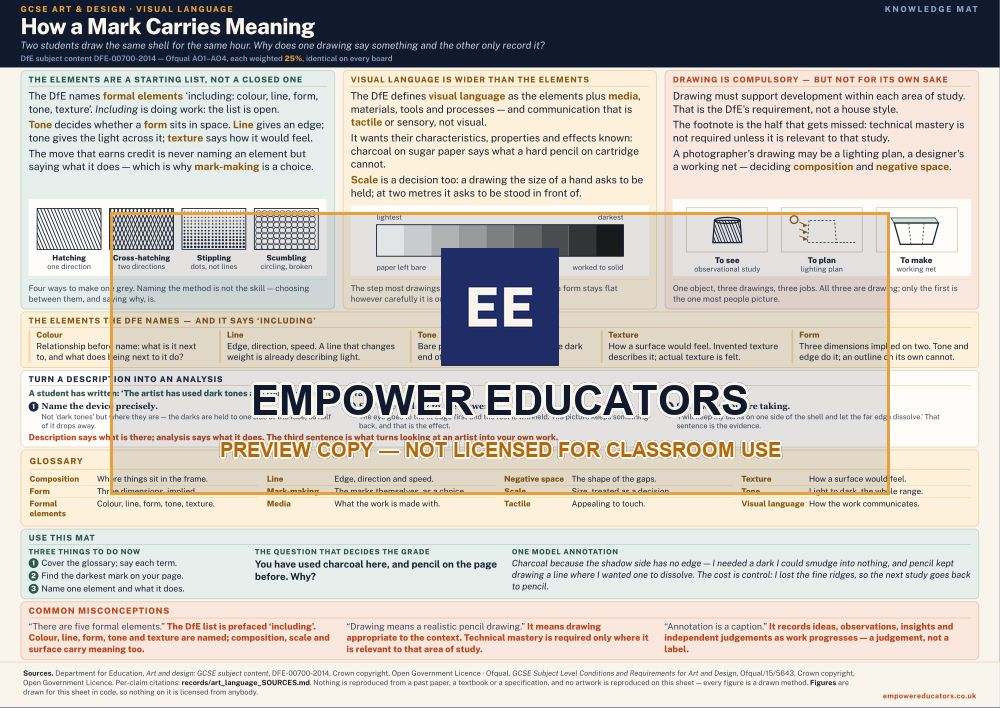
Two students draw the same shell for the same hour — so why does one drawing say something and the other only record it? The formal elements the DfE actually names, and why it never says there are five of them; visual language as the DfE defines it, wider than the elements; and the drawing requirement with the footnote most departments miss. Three drawn figures: four ways of making one grey, a full tonal range, and one object drawn three times for three different jobs. Twelve terms to define, a model annotation, and the misconceptions that cost marks.
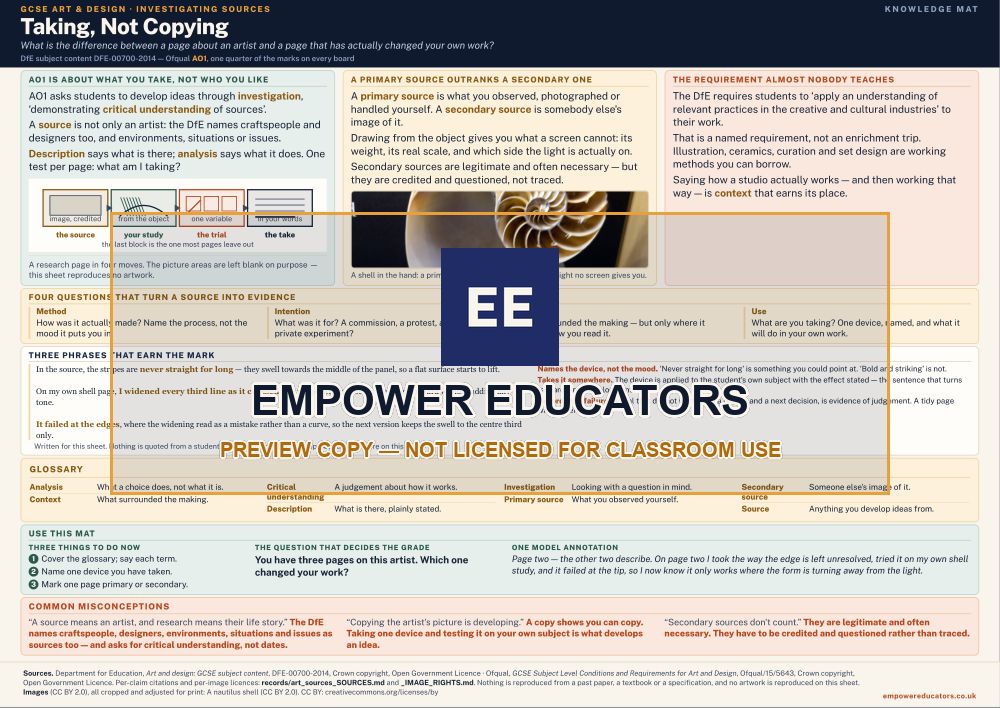
What is the difference between a page about an artist and a page that has actually changed your own work? AO1 as the objective it really is — critical understanding, not biography; what the DfE actually counts as a source, which is craftspeople and designers and even places and issues, not only artists; primary and secondary sources and why the object beats the screen; and the creative-industries requirement almost nobody teaches. The centrepiece is a worked annotation marked the way a moderator reads it, with the three phrases that earn the mark pulled out and explained. Eight terms to define and the misconceptions that cost marks. Photographed, not drawn: a nautilus shell.
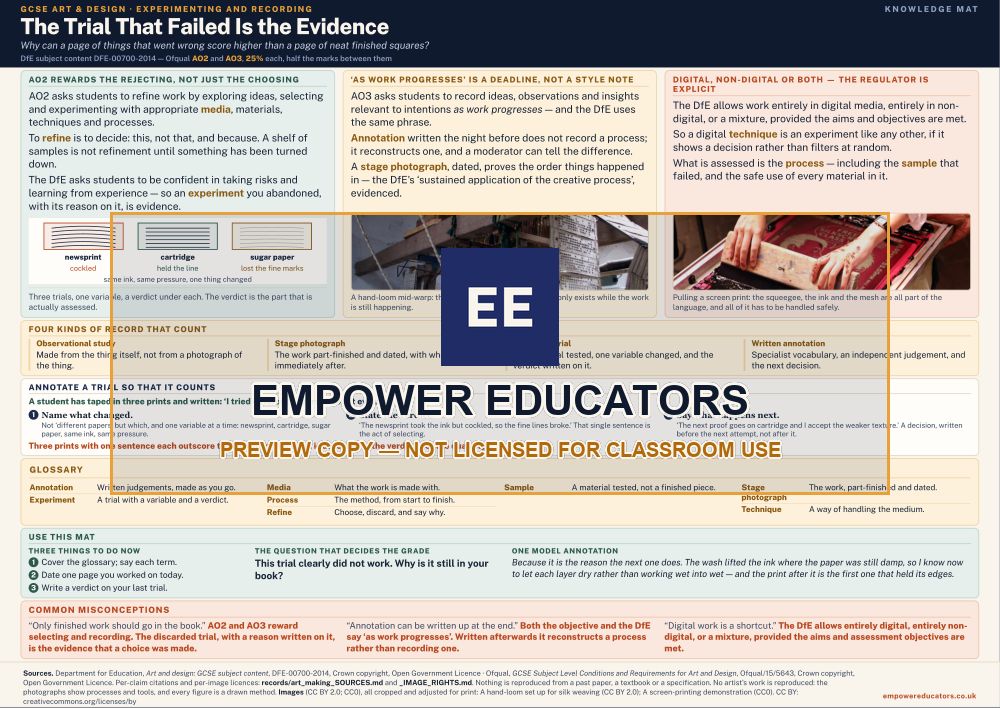
Why can a page of things that went wrong score higher than a page of neat finished squares? AO2 and AO3 carry half the marks between them and reward the two things students hide: the rejected trial, and the note written during the job rather than after it. Three trials with one variable changed and a verdict under each, drawn; the four kinds of record that count; the DfE's aim that students take risks and learn from experience; safe use of materials, which the DfE names twice; and its position that digital, non-digital or a mixture are all equally acceptable. Eight terms to define, a worked trial annotation, and the misconceptions that cost marks. Photographed: a hand-loom mid-warp.
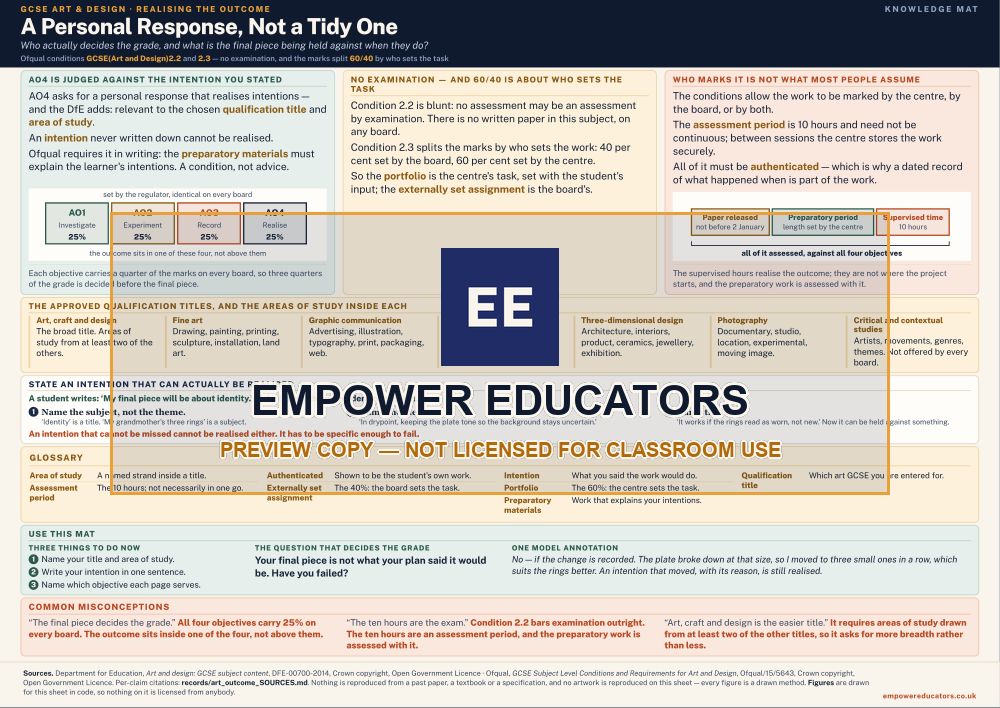
Who actually decides the grade, and what is the final piece being held against when they do? AO4 measured against the intention the student stated; the 60/40 split every board must use; 10 hours of supervised time, a paper that cannot be released before 2 January, and preparatory work that is assessed alongside the outcome. All seven approved qualification titles with the DfE's areas of study inside each, so a department can see at a glance what it is actually entered for. Every regulatory claim carries its Ofqual condition number. Eight terms to define and a worked example of an intention specific enough to fail.
The previews above are the full sheets, watermarked. Where a sheet carries photographs,
every one is public domain worldwide or licensed CC BY, verified per image against the
licence itself rather than a label, and the running foot names every creator, records that
the images have been cropped and adjusted for print, and links the licence; figures are
drawn in code for the sheet, and extracts are written for it or verified against a
public-domain text. Nothing on any sheet is reproduced
from a past paper, a mark scheme, an examiner report or a specification, and Empower
Educators is not affiliated with any awarding body.
Cookies
This site works the same either way. Measurement — Google Analytics and Microsoft
Clarity — only runs if you say yes, and it is used to see which resources people
actually reach. What is collected.