Physical Education · KS3 to A Level · £4.99
PE
Key Terms
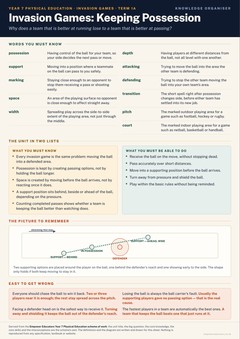
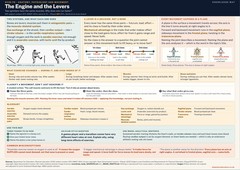
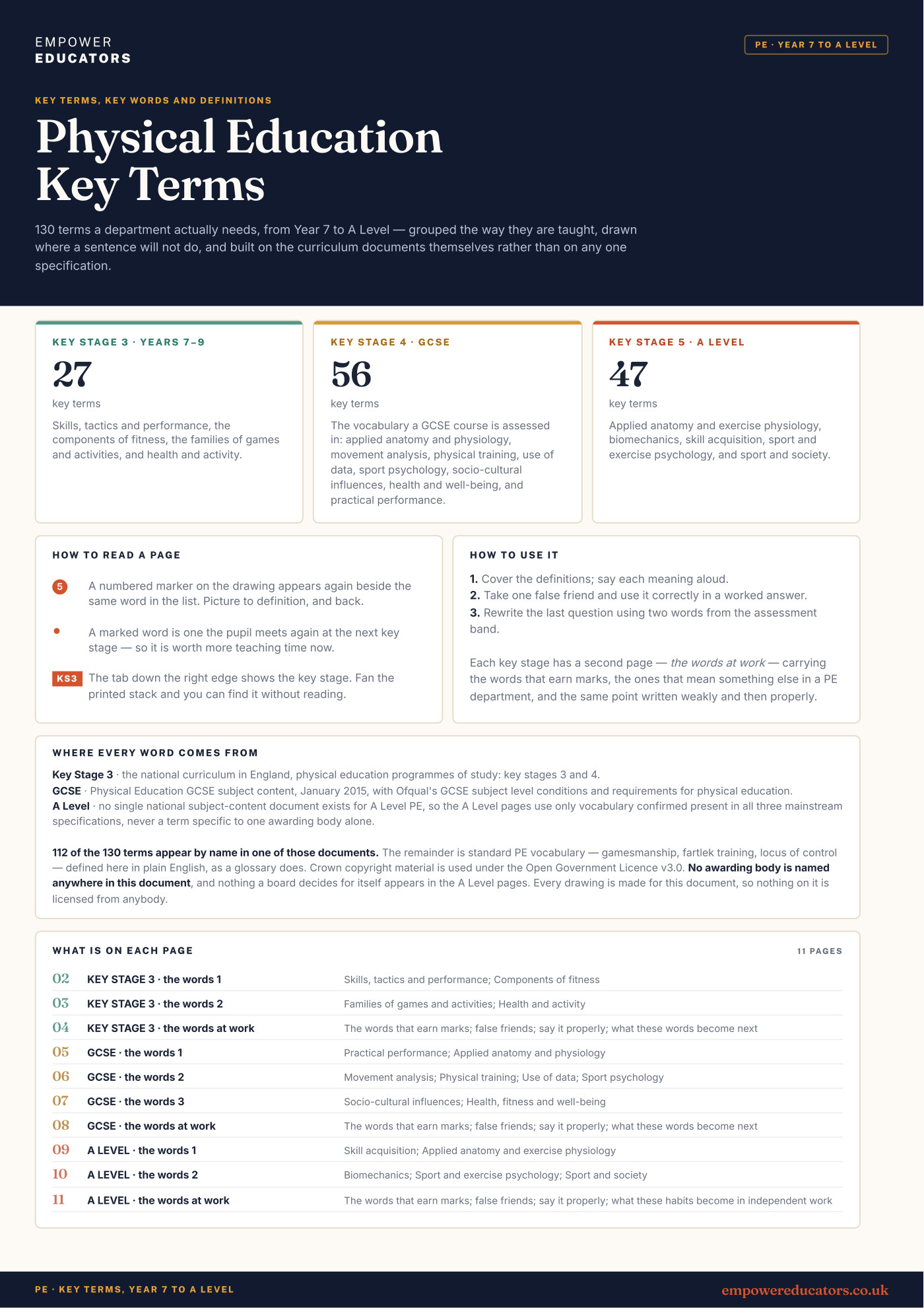
Every word a PE department teaches, Year 7 to A Level, in one A4 book. Each key stage gets its own pages: the terms grouped the way they are taught rather than alphabetically, a definition that fits on two lines, and a worked example beside almost every one. Each key stage opens on one large drawing instead of a list: a tactic in play at Key Stage 3, a decision made under pressure at GCSE, a skill being learned at A Level — three genuinely different drawings, because the subject asks something different of a pupil at each stage. GCSE then follows the DfE's own PE content in order: practical performance, applied anatomy and physiology, movement analysis, physical training, use of data, sport psychology, socio-cultural influences, and health, fitness and well-being; A Level adds skill acquisition, applied anatomy and exercise physiology, biomechanics, sport and exercise psychology, and sport and society. Seventeen small diagrams are drawn where a sentence will not do, including a lever at the elbow, the inverted-U hypothesis, and the golden triangle linking sport, sponsorship and the media. Then a page on using the words: the ones the assessment itself is written in, the false friends that mean something else in a PE department, the same point written weakly and then properly, and what each word becomes at the next key stage.
£4.99The whole book, Year 7 to A Level, 11 pages
- A4 PDF
- every page shown, part-blurred
- instant download
One purchase covers the school that buys it. Print it, copy it, hand it round your department. Not for passing to other schools or uploading anywhere.
PDF download, ready straight after payment. Downloading it ends the 14-day right to cancel; a file that is faulty or not as described is always refunded. Refunds
5.0 from 25+ reviews on Google
Schools that have bought from Empower Educators include Nottingham High School, Northampton High School GDST and Sutton Valence School.
Complete your Physical Education

Everything else this site has for Physical Education: Physical Education teaching resources
£4.99 PDF · instant download
A pupil who knows a word is not yet using it. This book is built around that gap. The words for each key stage sit in the groups they are taught in, each with a short definition and a worked example, and a marked word is one the pupil meets again at the next key stage, so a department can see where its vocabulary carries forward and where it changes name. Every key stage opens on one large labelled drawing rather than a card strip: numbered markers on the picture match the same numbers beside the words in band one, so a pupil can go from the drawing to the definition and back. Key Stage 3's own national curriculum is written for participation rather than vocabulary, so its first band is honestly shorter than the others — the rest is made up from the ten components of fitness every department teaches from Year 7.
Every key stage closes on a page about using the words. The words the assessment is written in, taken from Ofqual's assessment objectives where they are theirs. The false friends: power is not simply strength, reliable is not the same as right, and gamesmanship is not cheating outright. The same point written weakly and then properly, so "a performer plays better the more aroused they are" becomes a sentence an examiner would credit. And a table of what each habit is called at the next stage. The GCSE pages name no awarding body: the DfE content sets the vocabulary every specification shares, and which topics a specification examines, and in what depth, belongs to the awarding organisation. The A Level pages go further, using only words confirmed shared by AQA, Pearson Edexcel and OCR, because no single national document exists to settle it for them. It has not been read by a practising PE teacher.
- Written to
- Key Stage 3 follows the national curriculum in England, physical education programmes of study for key stages 3 and 4 (September 2013); GCSE follows the DfE's Physical Education GCSE subject content (January 2015) and Ofqual's GCSE subject level conditions and requirements for physical education. A Level PE is the one exception in this series: no single national subject-content document exists for it, and AQA, Pearson Edexcel and OCR genuinely structure their specifications differently, weighting one assessment objective anywhere from 20% to 25% depending on the board. So the A Level pages use only vocabulary checked against, and confirmed present in, all three mainstream specifications — never a term specific to one awarding body alone. 112 of 130 terms appear by name in one of those documents or specifications, the rest being standard PE vocabulary defined here in plain English; no awarding body is named anywhere in the book.
- Intended for
- PE departments: printed one per pupil, kept in the front of an exercise book, or put on the wall by key stage
- Extent
- 11 pages · 10 sections
Look inside
Real pages, straight from the PDF
Click any page to see it full size.
Contents
All 10 sections
Taken from the book’s own contents page, so the page numbers are the real ones.