English · KS3 to A Level
English Key Terms
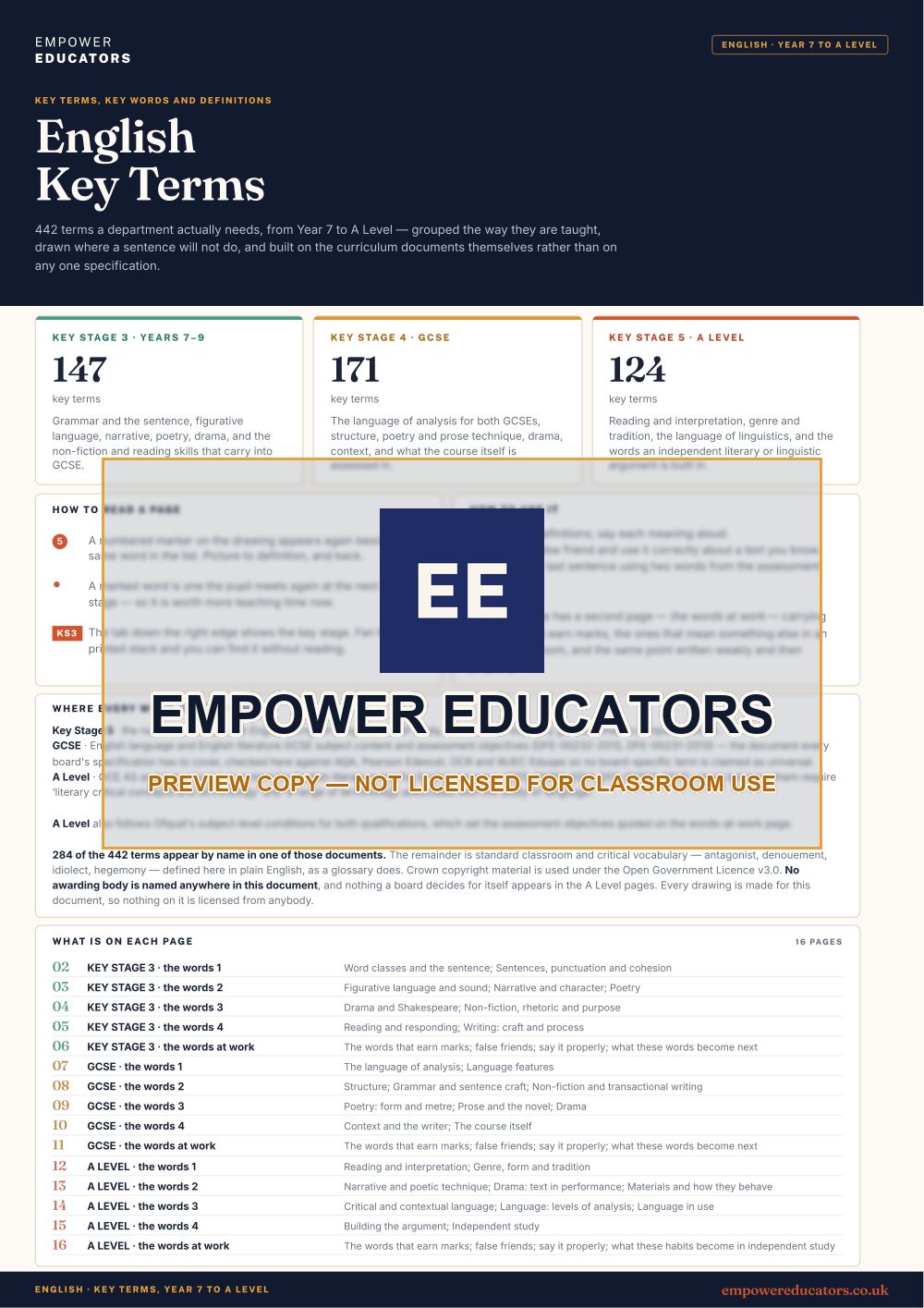
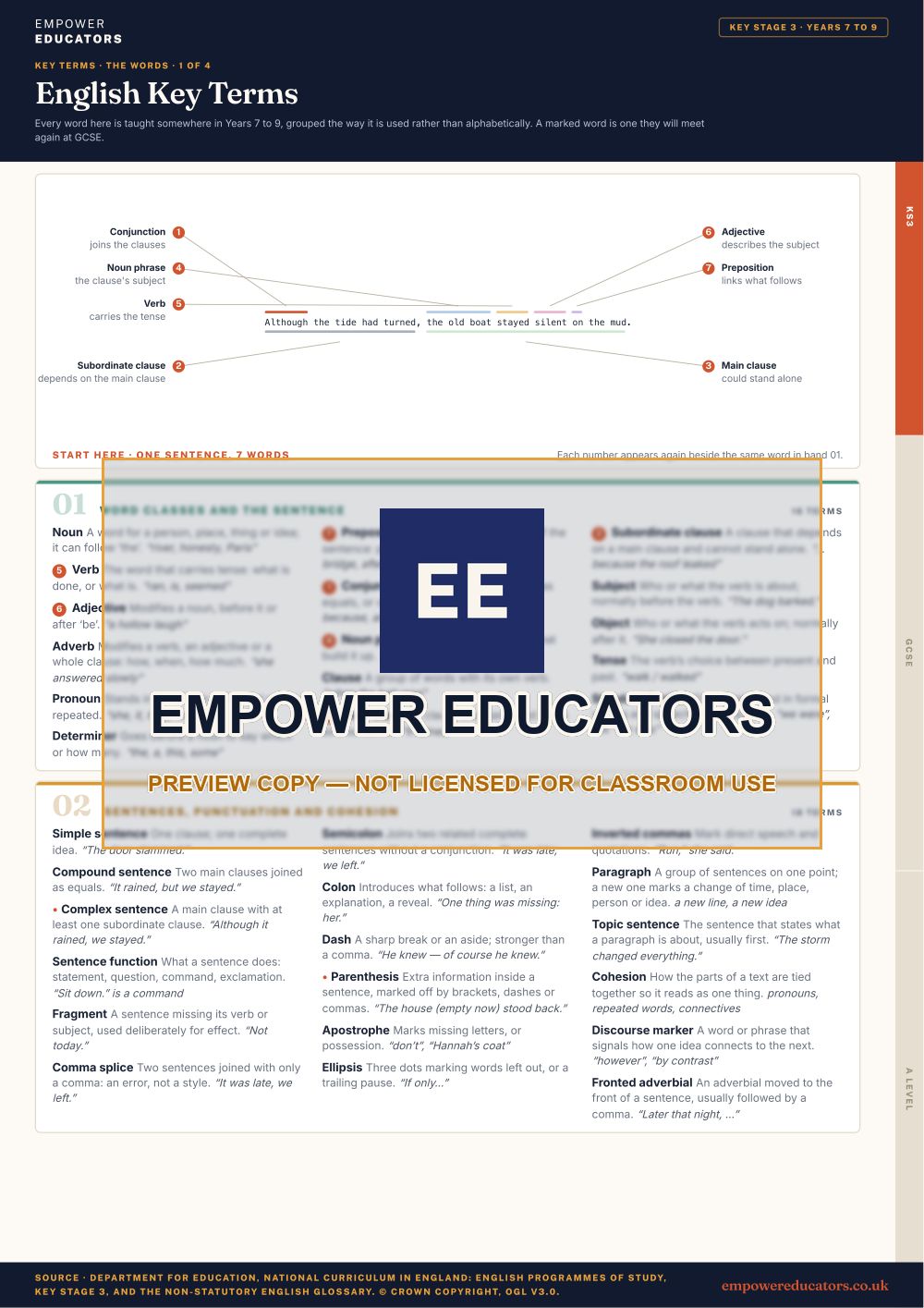
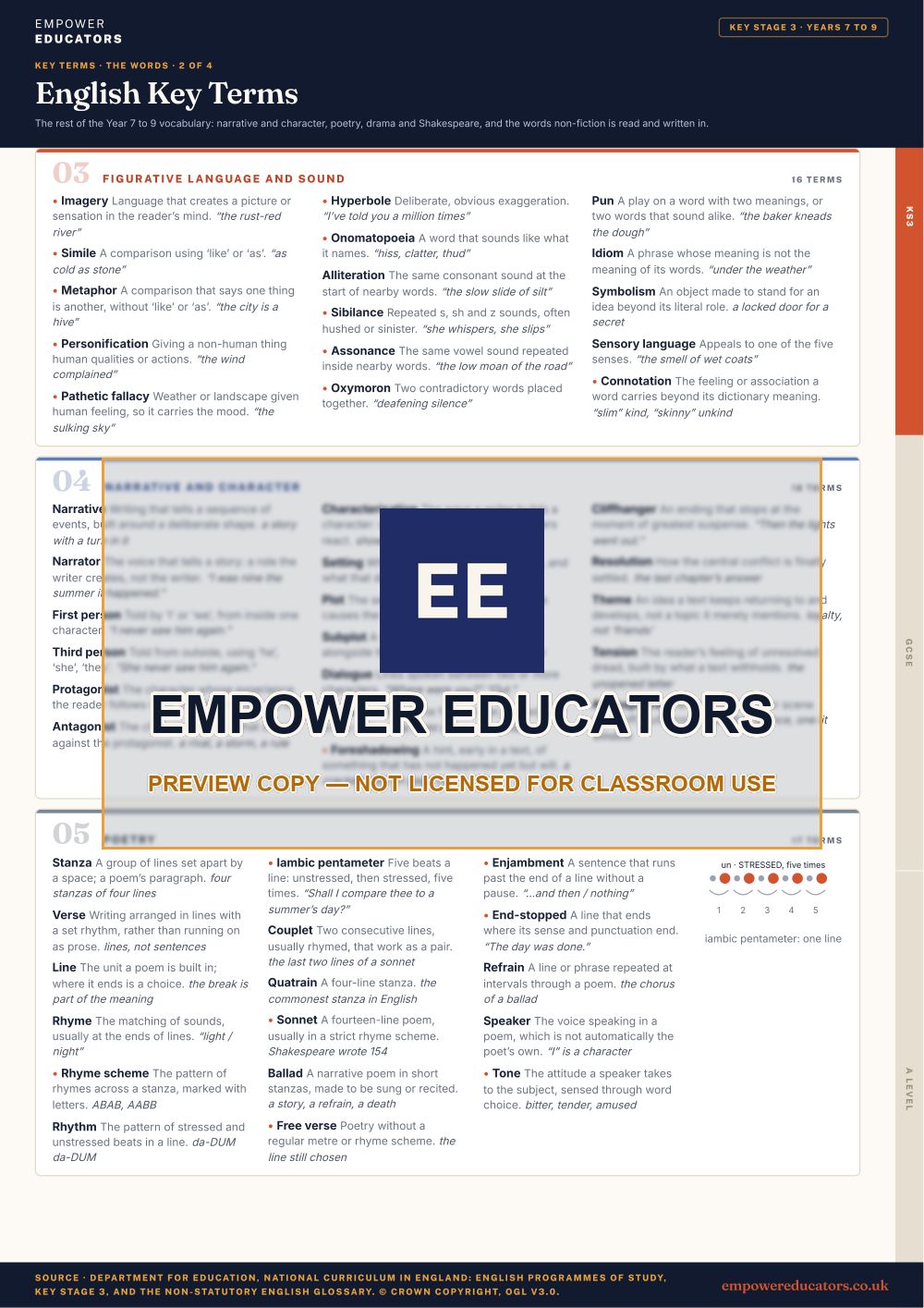
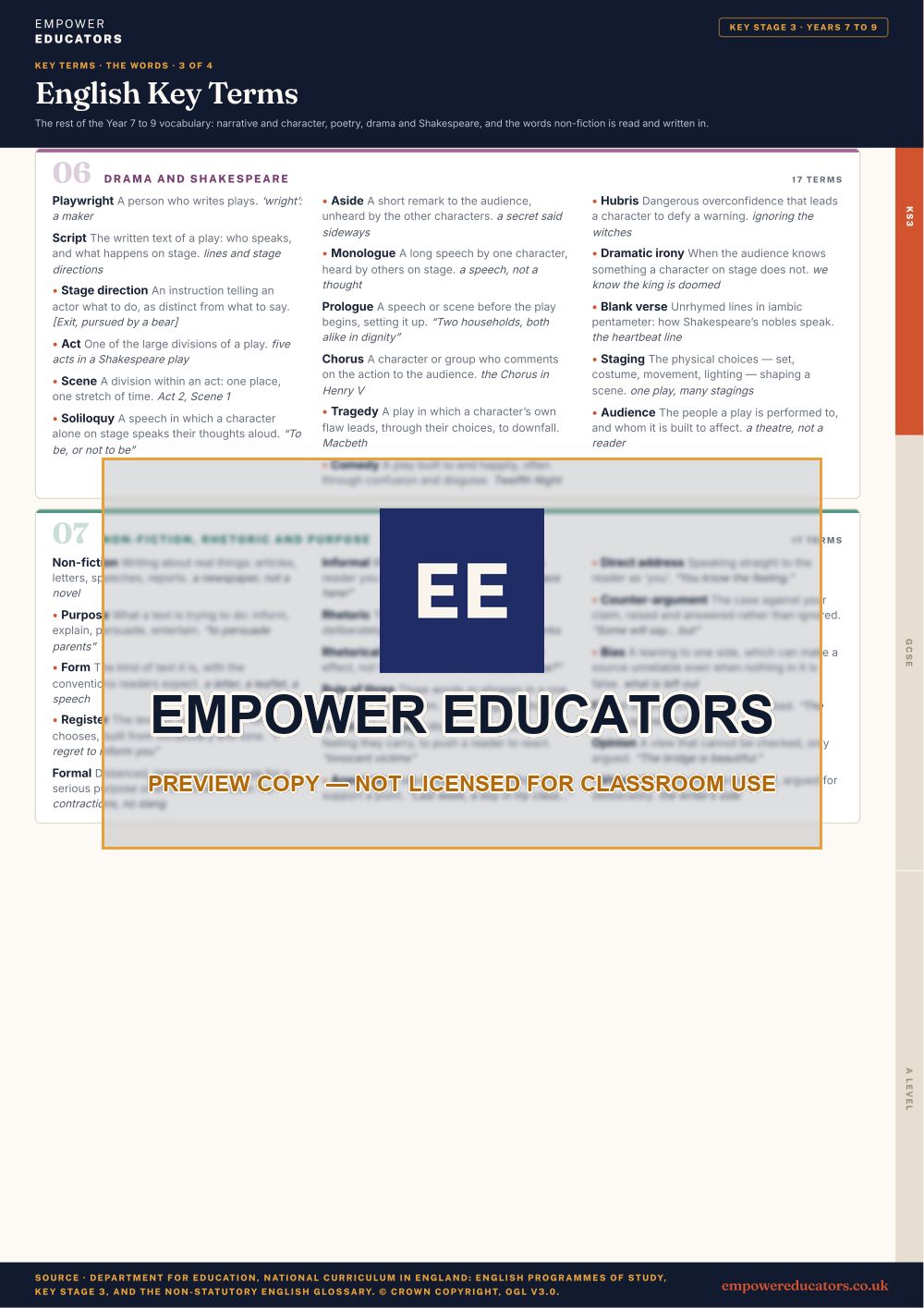
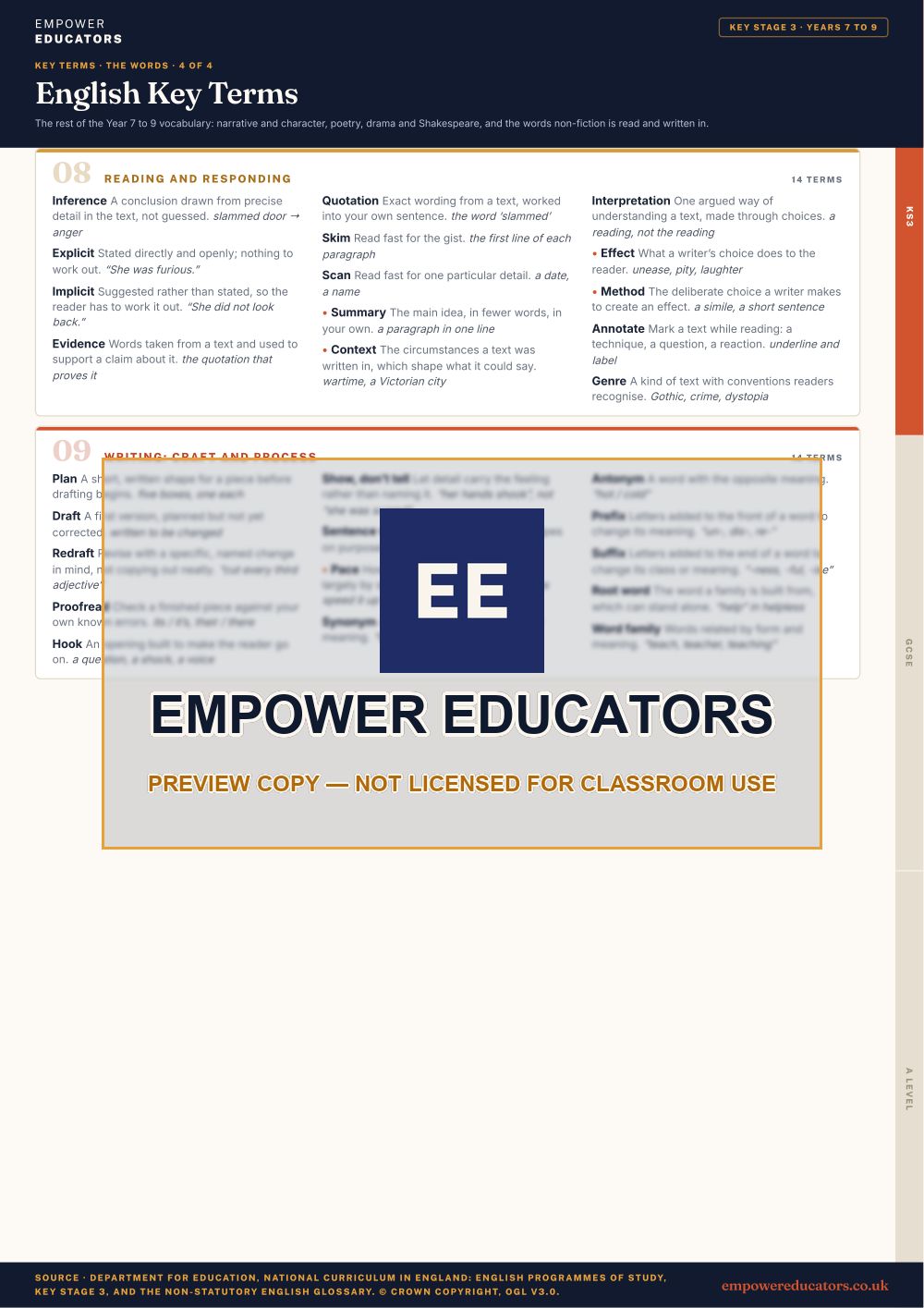
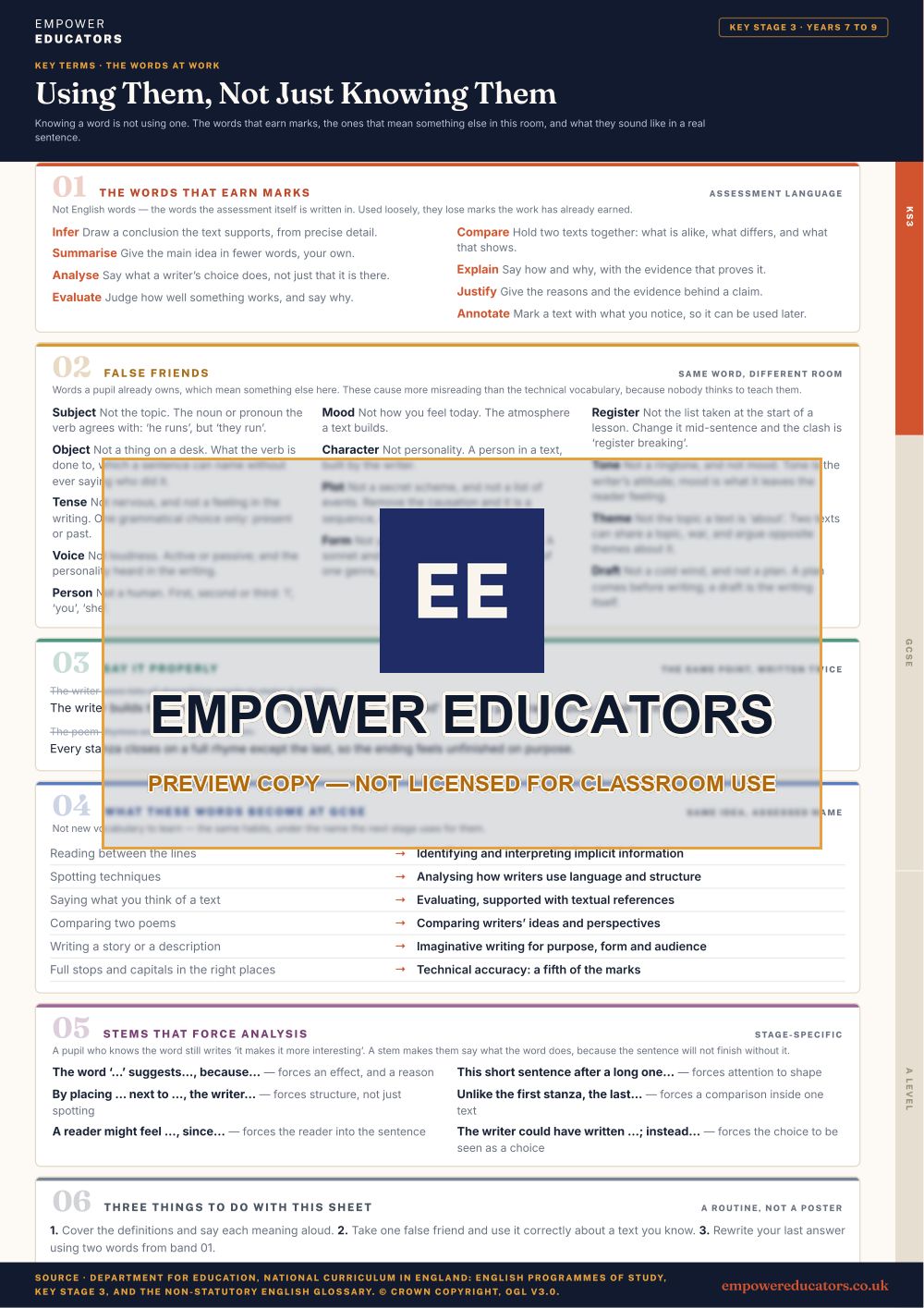
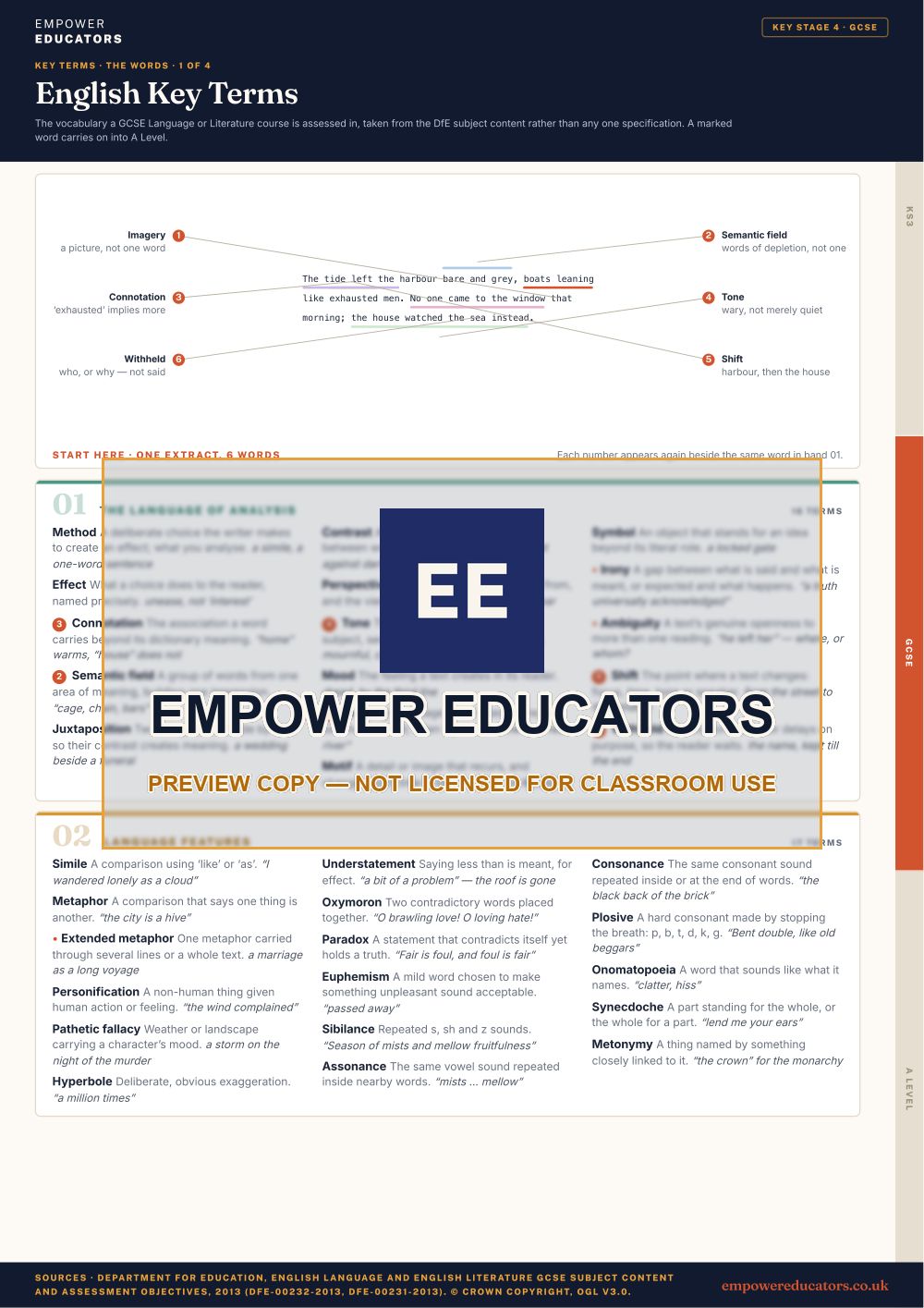
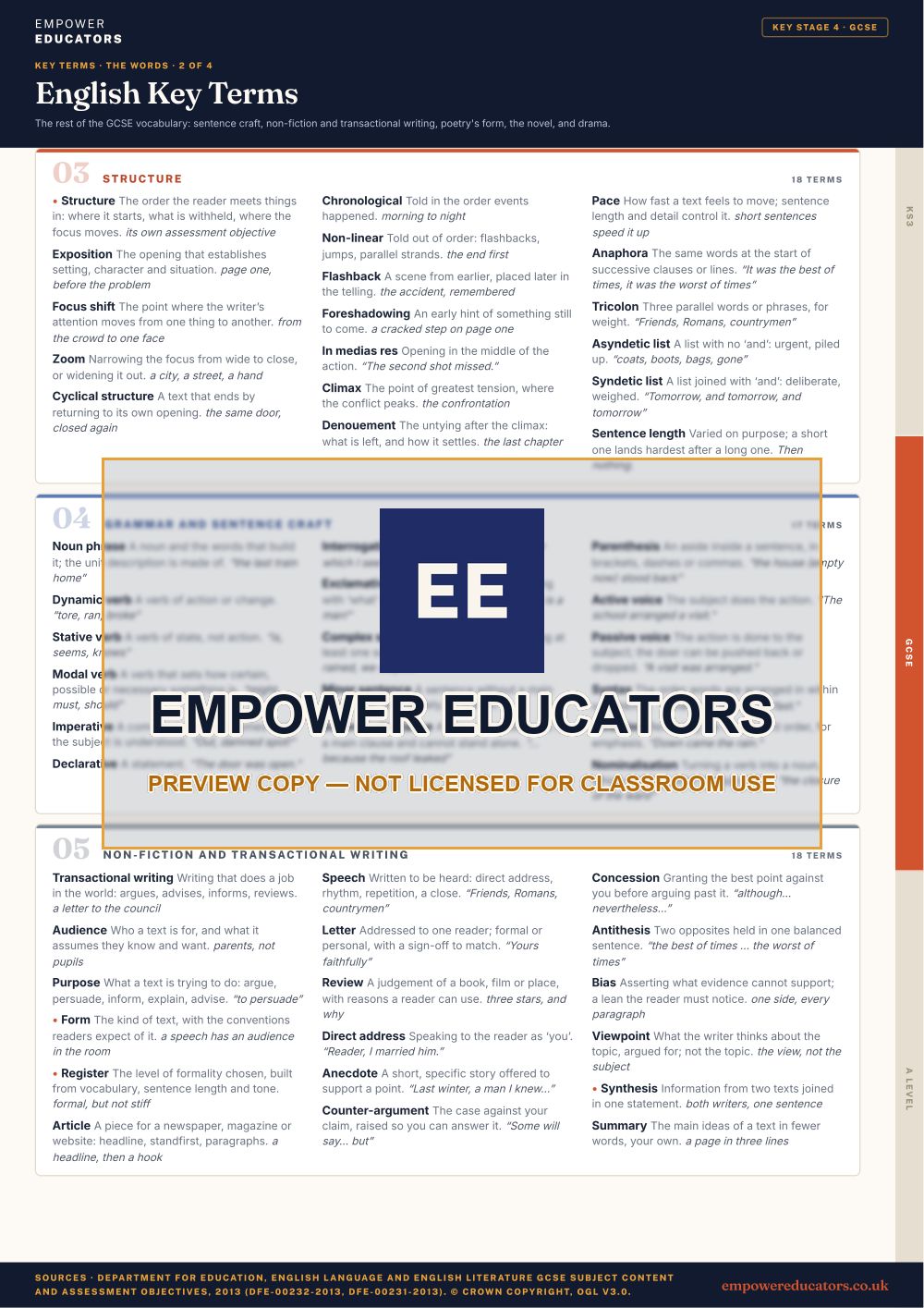
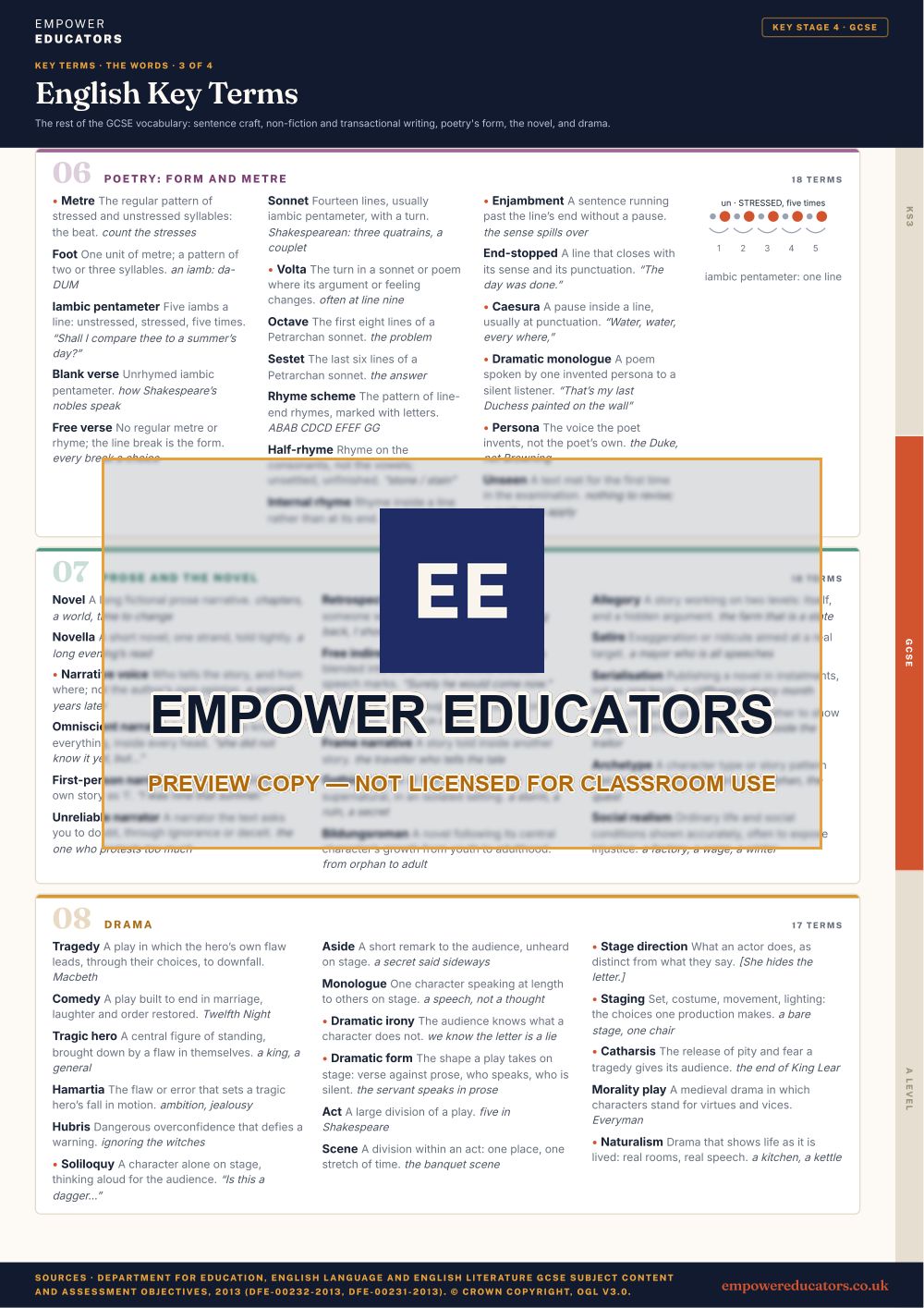
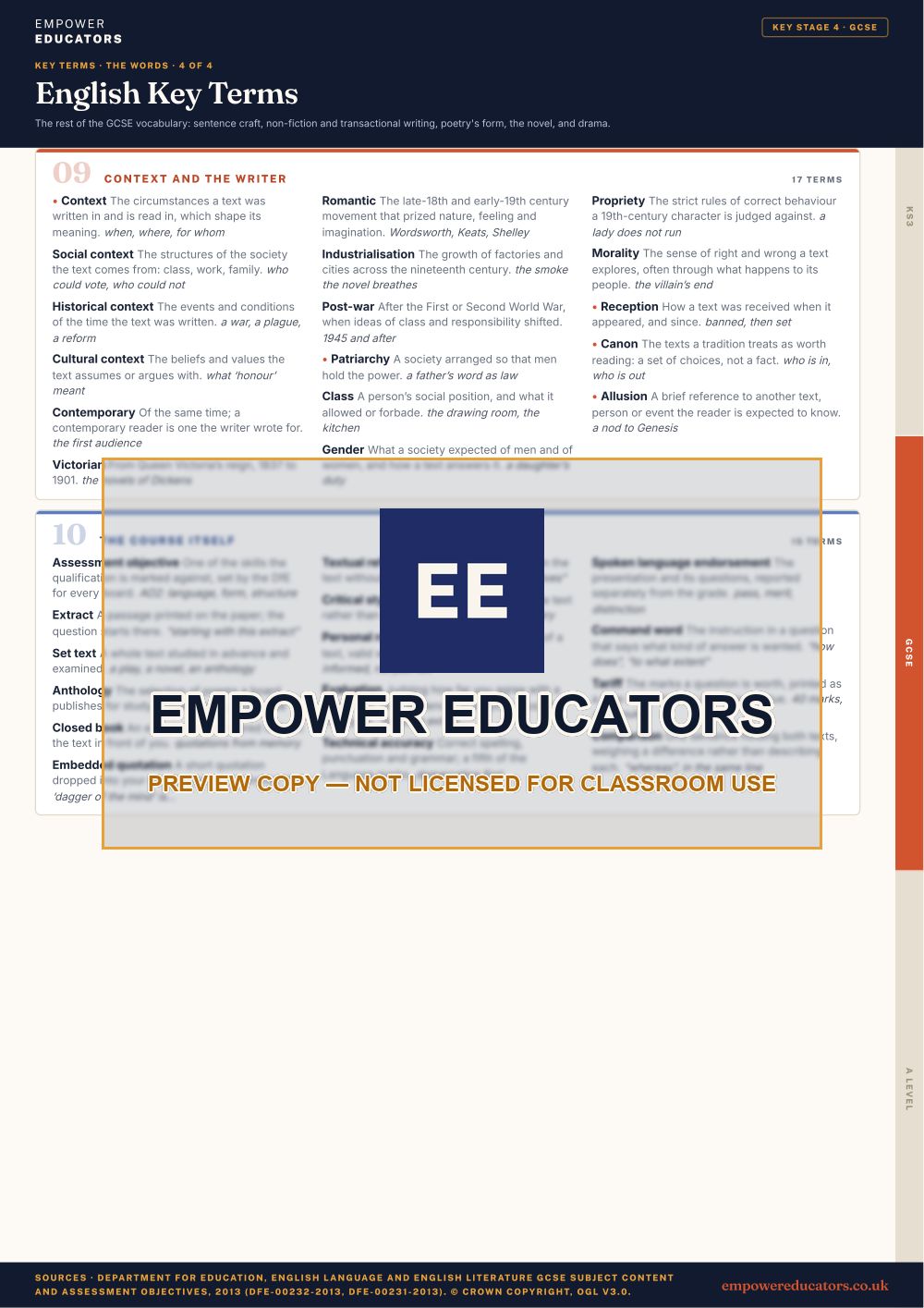
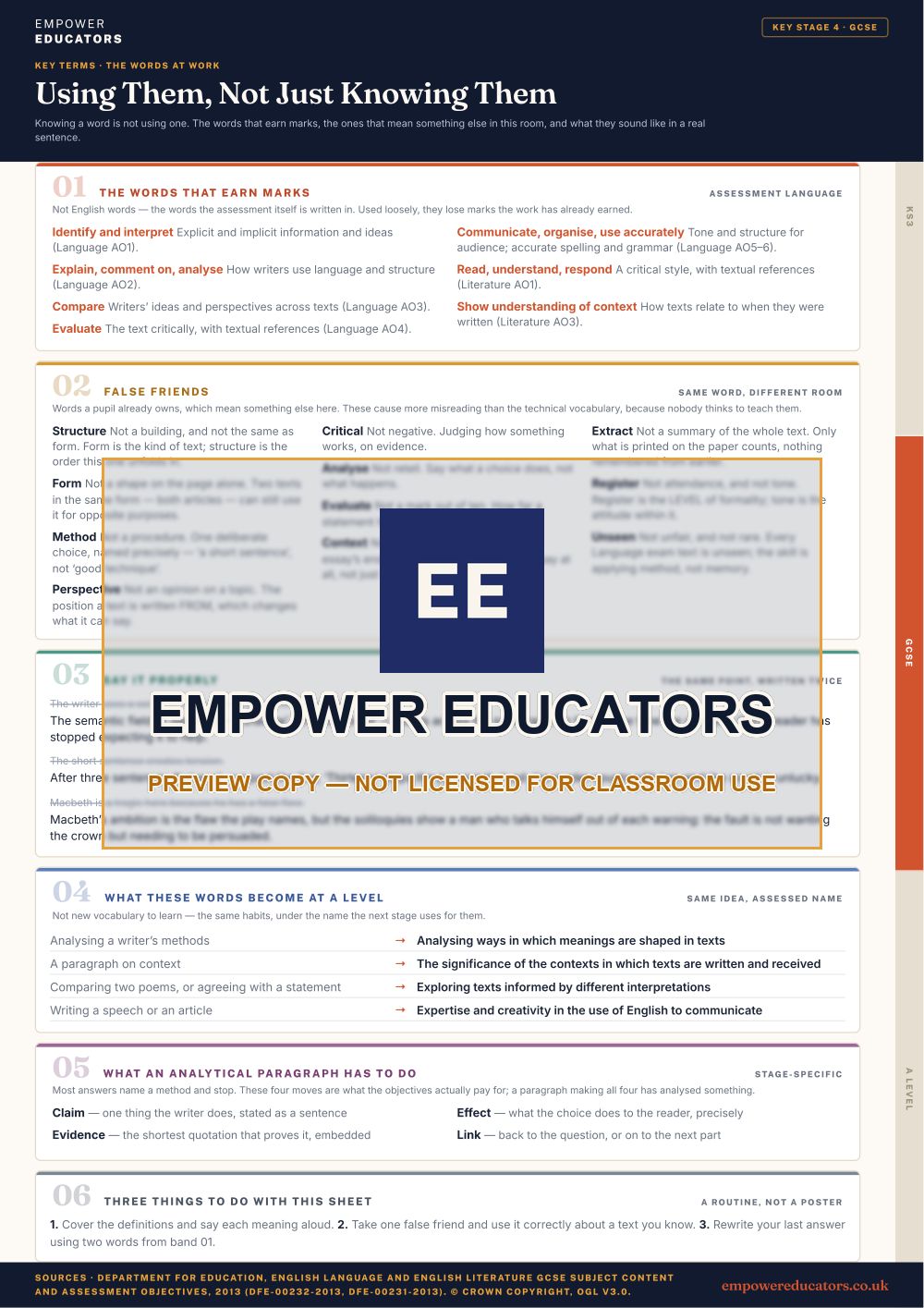
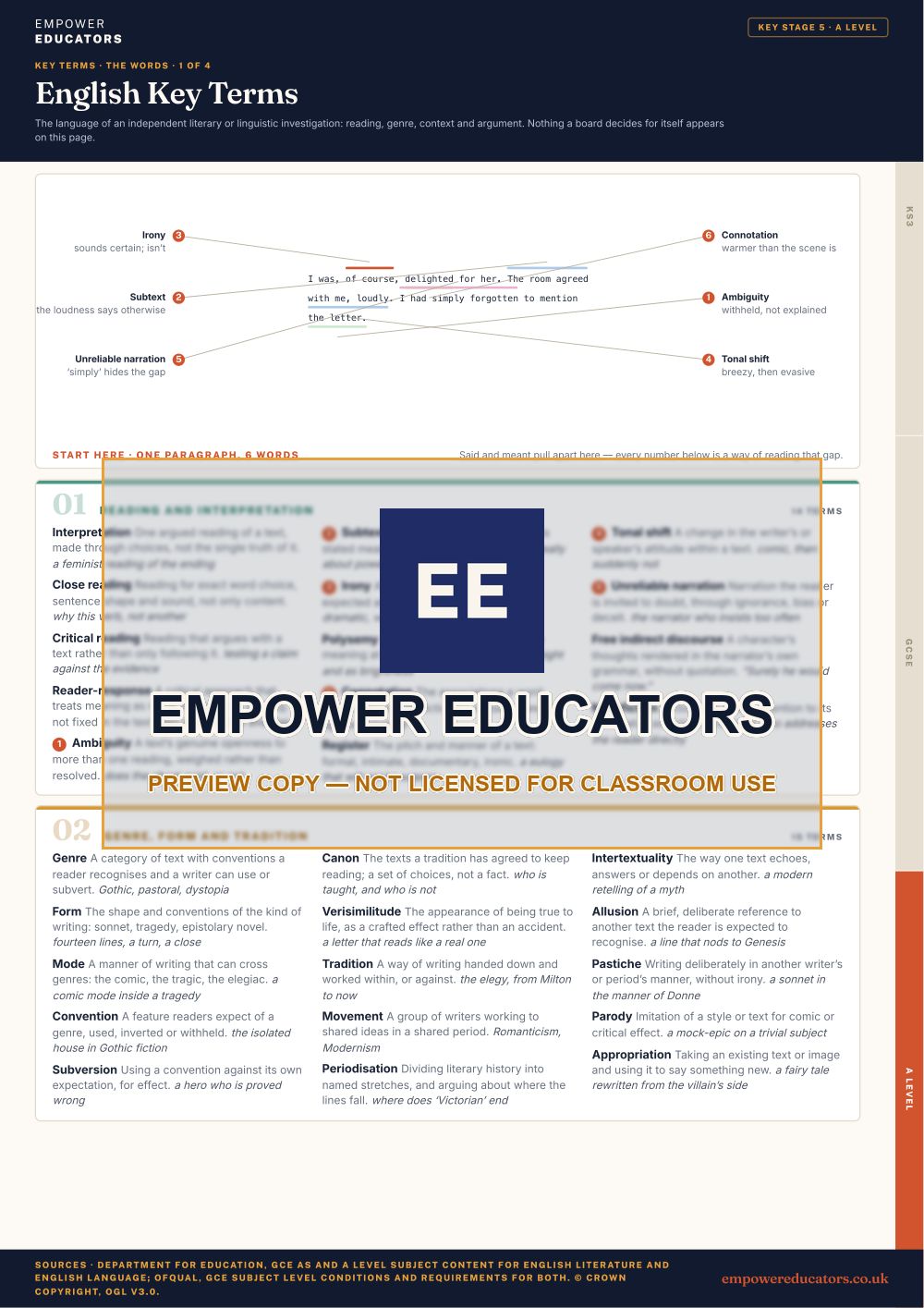
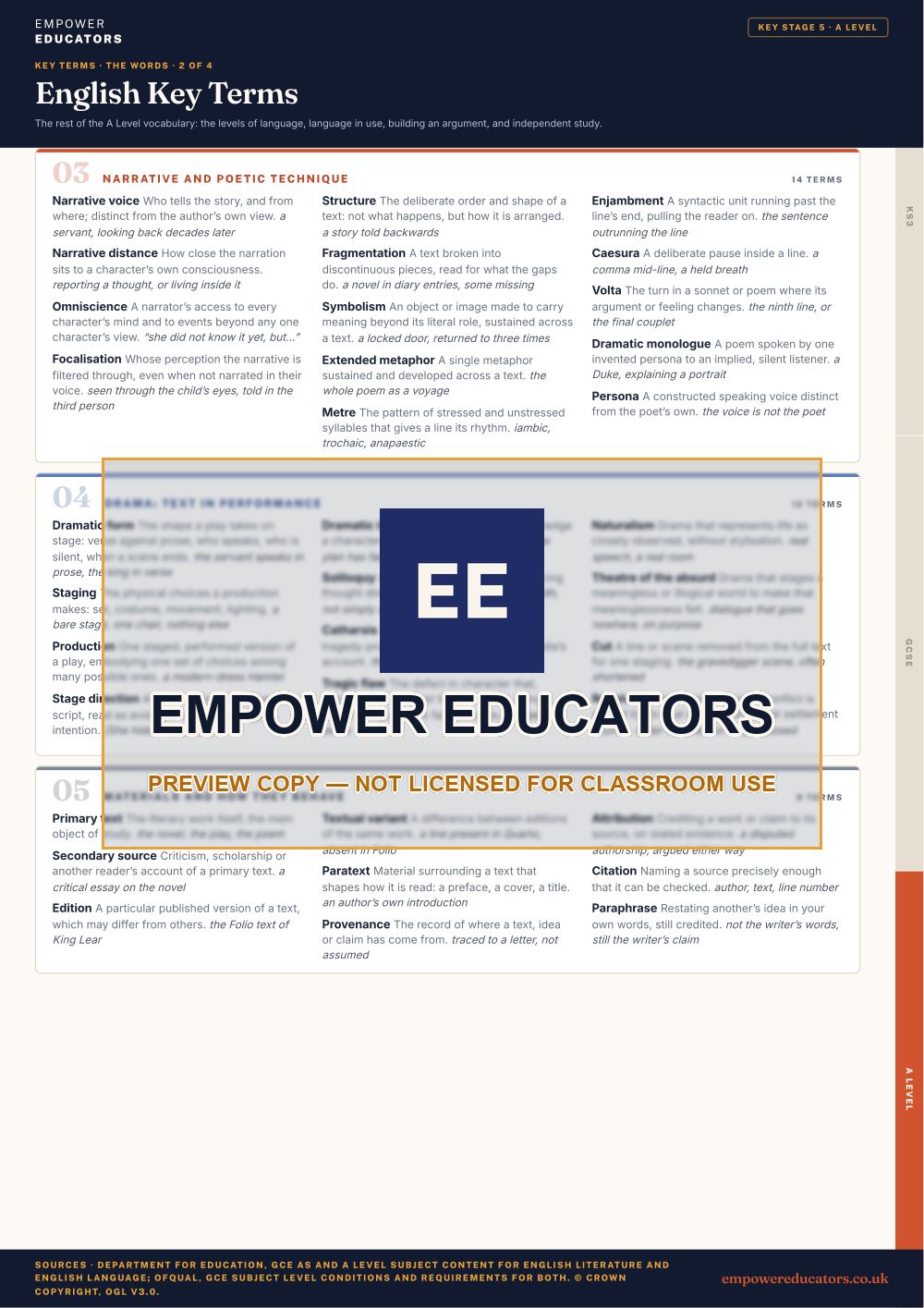
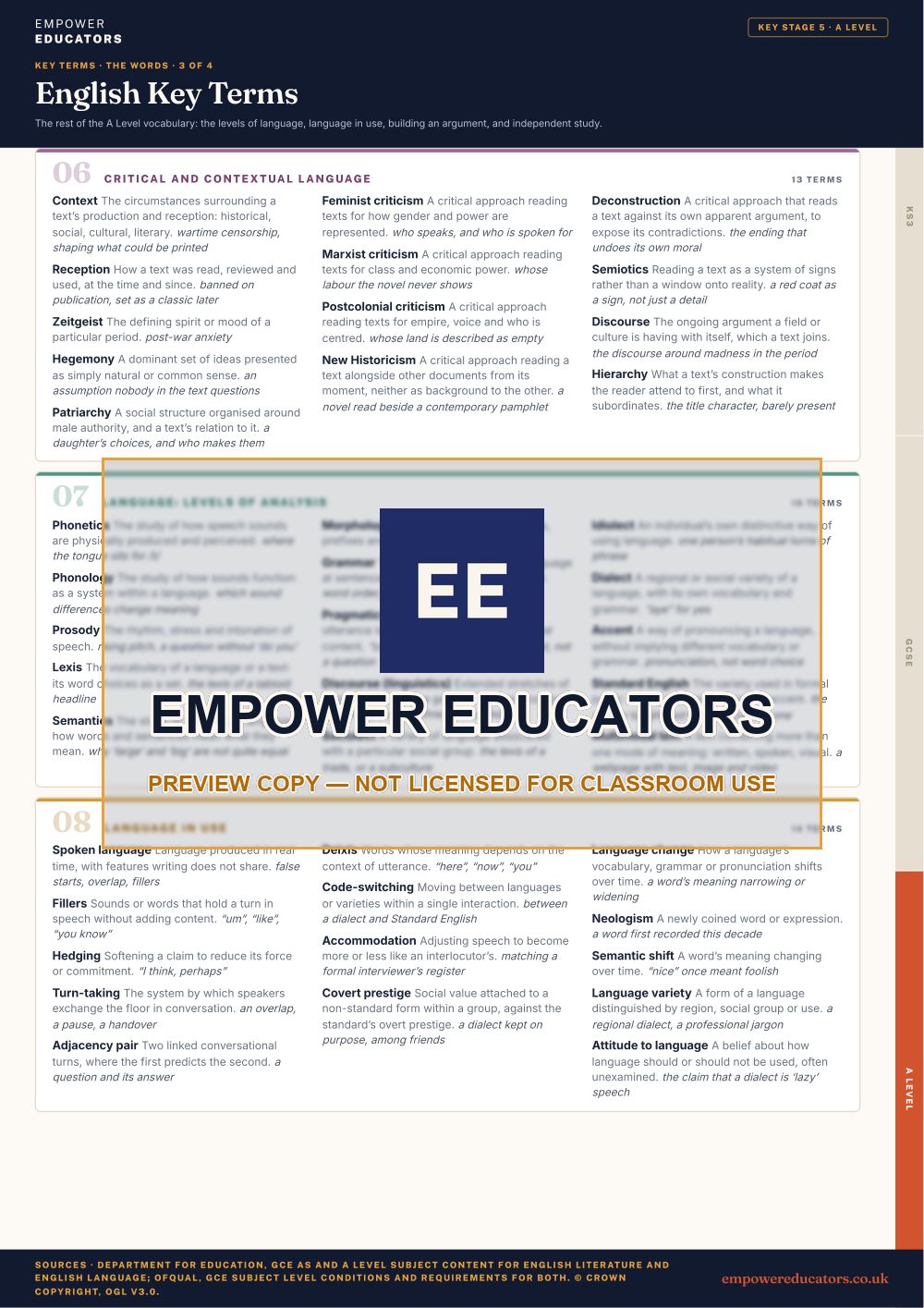
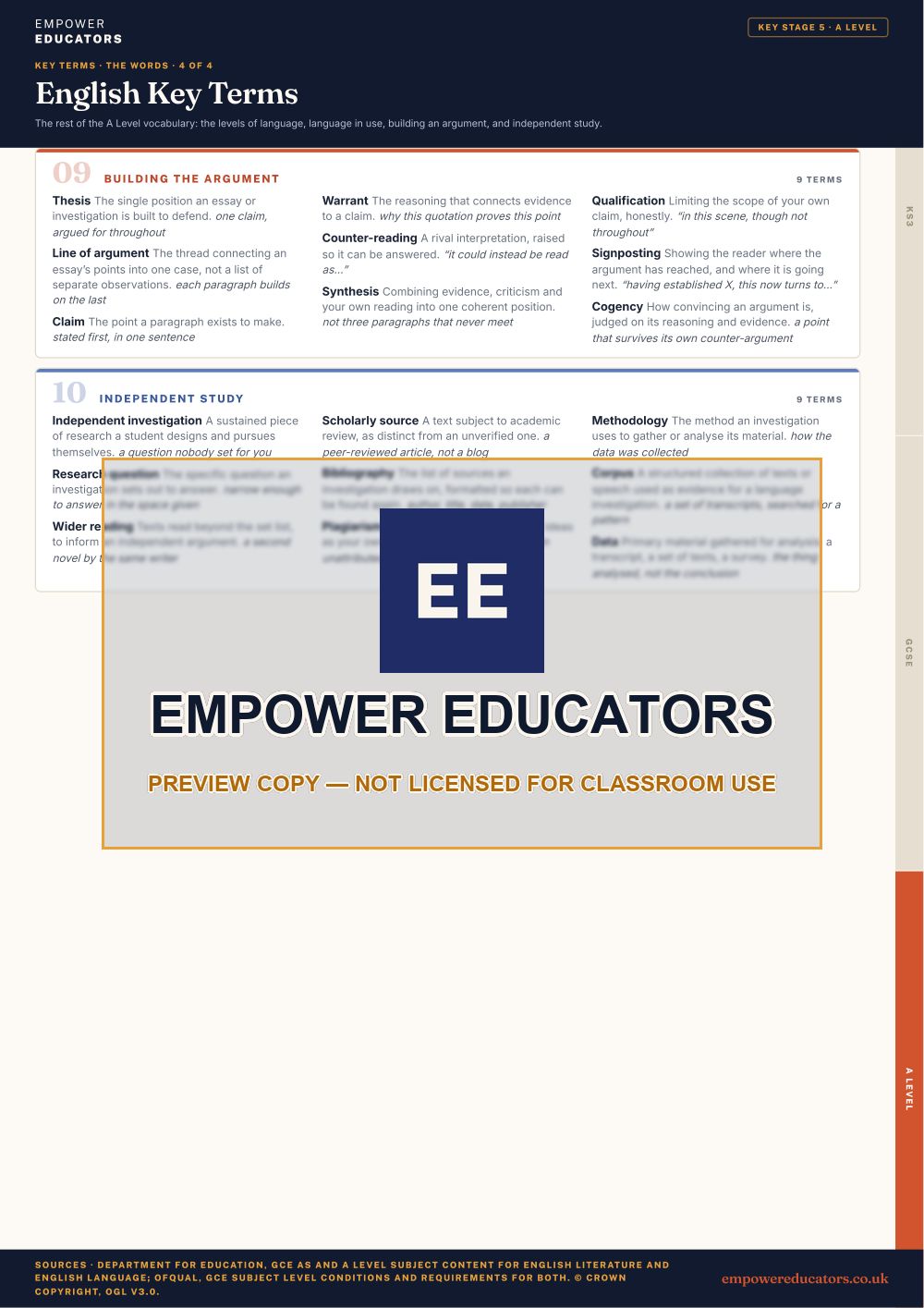
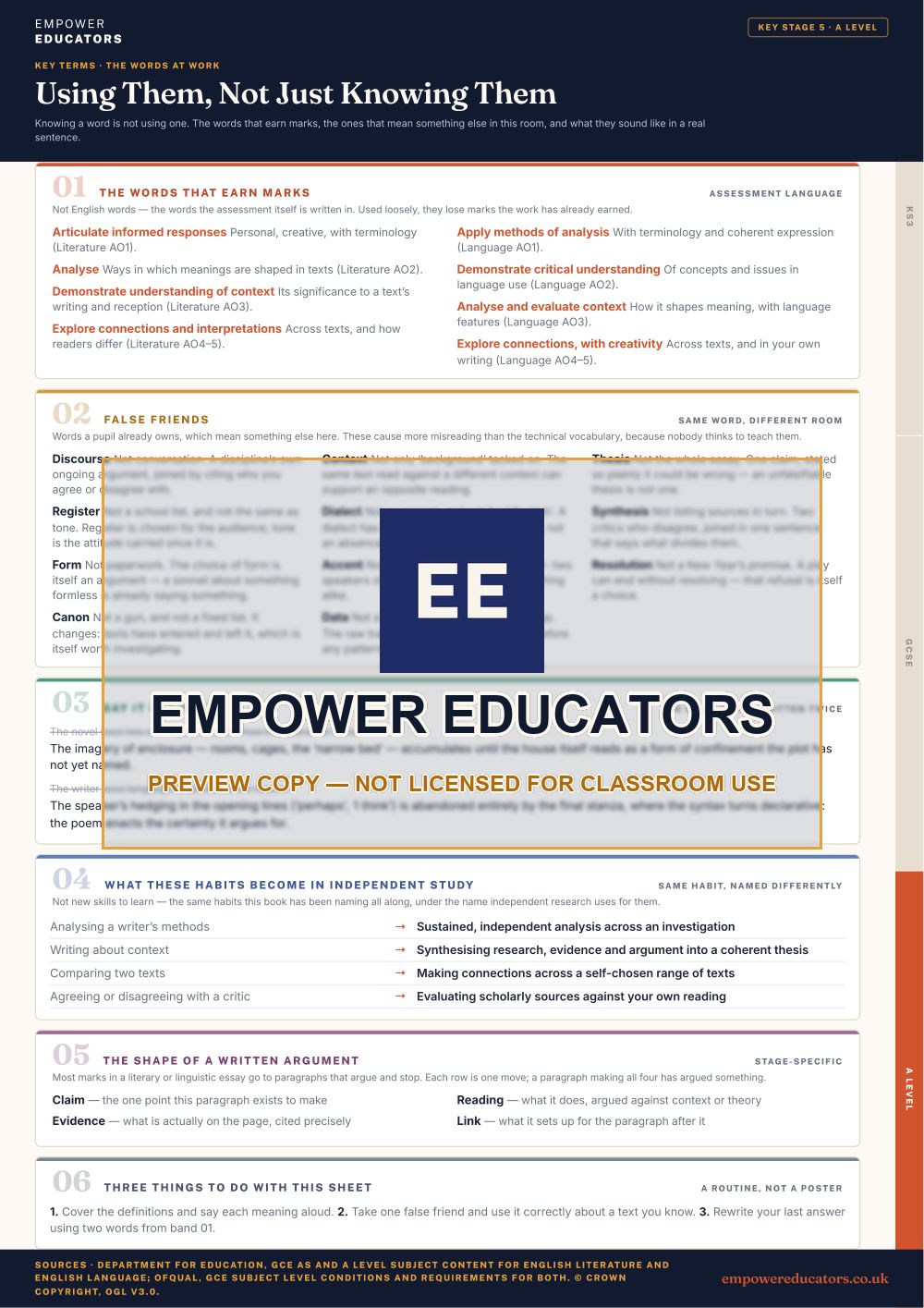
Every word an English department teaches, Year 7 to A Level, in one A4 book — Language and Literature both. Each key stage gets its own pages: the terms grouped the way they are taught rather than alphabetically, a definition that fits on two lines, and a worked example beside almost every one. Each key stage opens on one large annotated passage instead of a drawing — a sentence marked up for grammar at Key Stage 3, an extract marked up for analysis at GCSE, a paragraph read for what it implies at A Level — and the numbers on it appear again beside the same words in the list. Then a page on using the words: the ones the assessment itself is written in, the false friends that mean something else in an English classroom, the same point written weakly and then properly, and what each word becomes at the next key stage.
Ready for the classroom
Get the clean copy
You have seen the whole layout of all 16 sheets, with part of each blurred in the preview. What you buy is the same set without the watermark or the blur, at full print resolution, ready to run off for every class in the department.
- Every sheet with no watermark, at print resolution
- 5 print-and-use templates
- Referenced to the DfE's national curriculum programmes of study for English at Key Stage 3 and its non-statutory glossary, the English Language and English Literature GCSE subject content (DFE-00232-2013, DFE-00231-2013), and the GCE AS and A level subject content for English Literature and English Language, with Ofqual's GCE subject level conditions; checked against AQA, Pearson Edexcel, OCR and WJEC Eduqas so no board-specific term is claimed as universal; most terms appear by name in one of those documents and the cover says how many, the rest are standard classroom and critical vocabulary; no awarding body is named, and nothing a board decides for itself appears in the A Level pages
- Instant PDF download, yours to keep and reproduce across the school that buys it — not for other schools