Business · KS3 to A Level
Business Key Terms
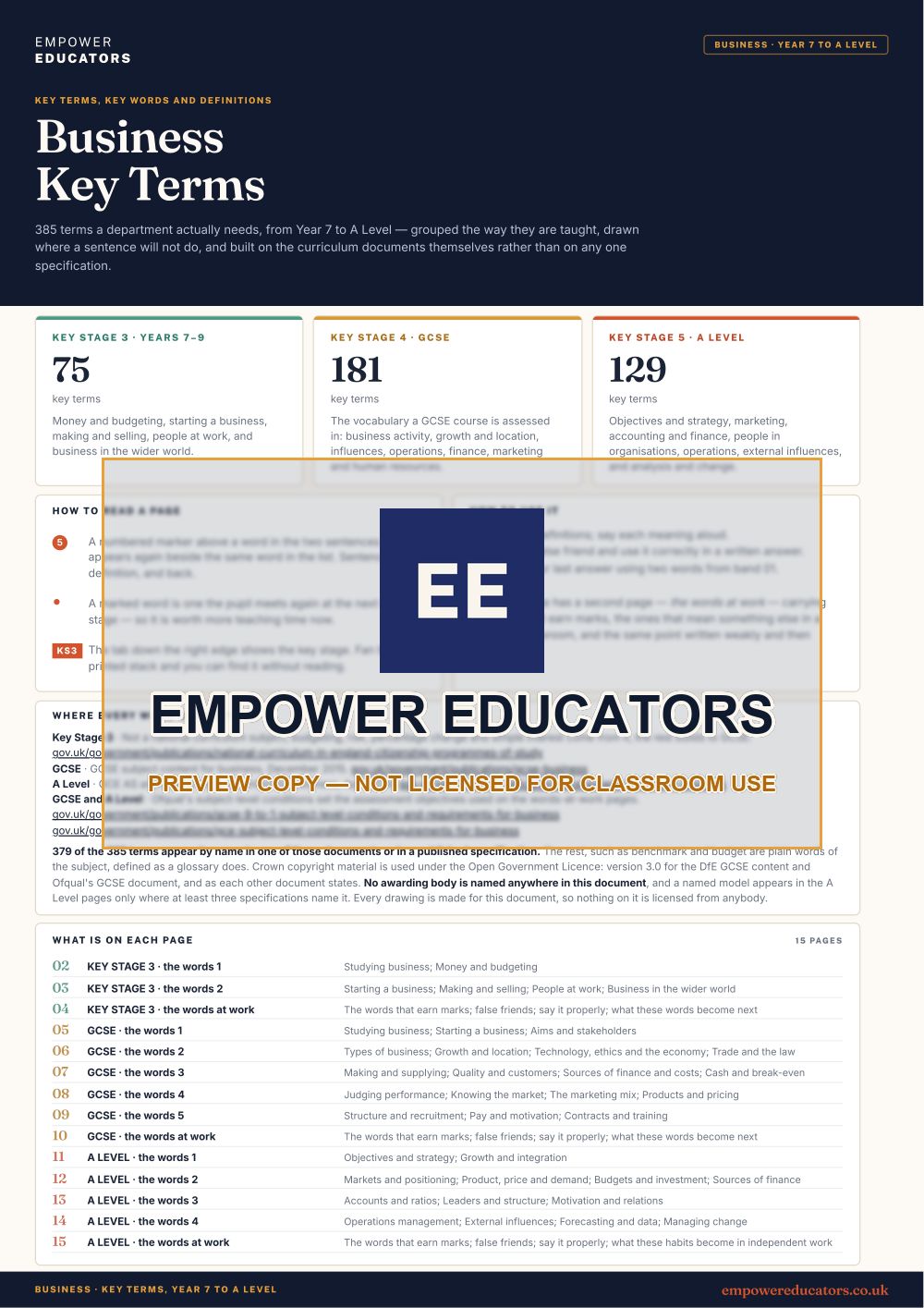
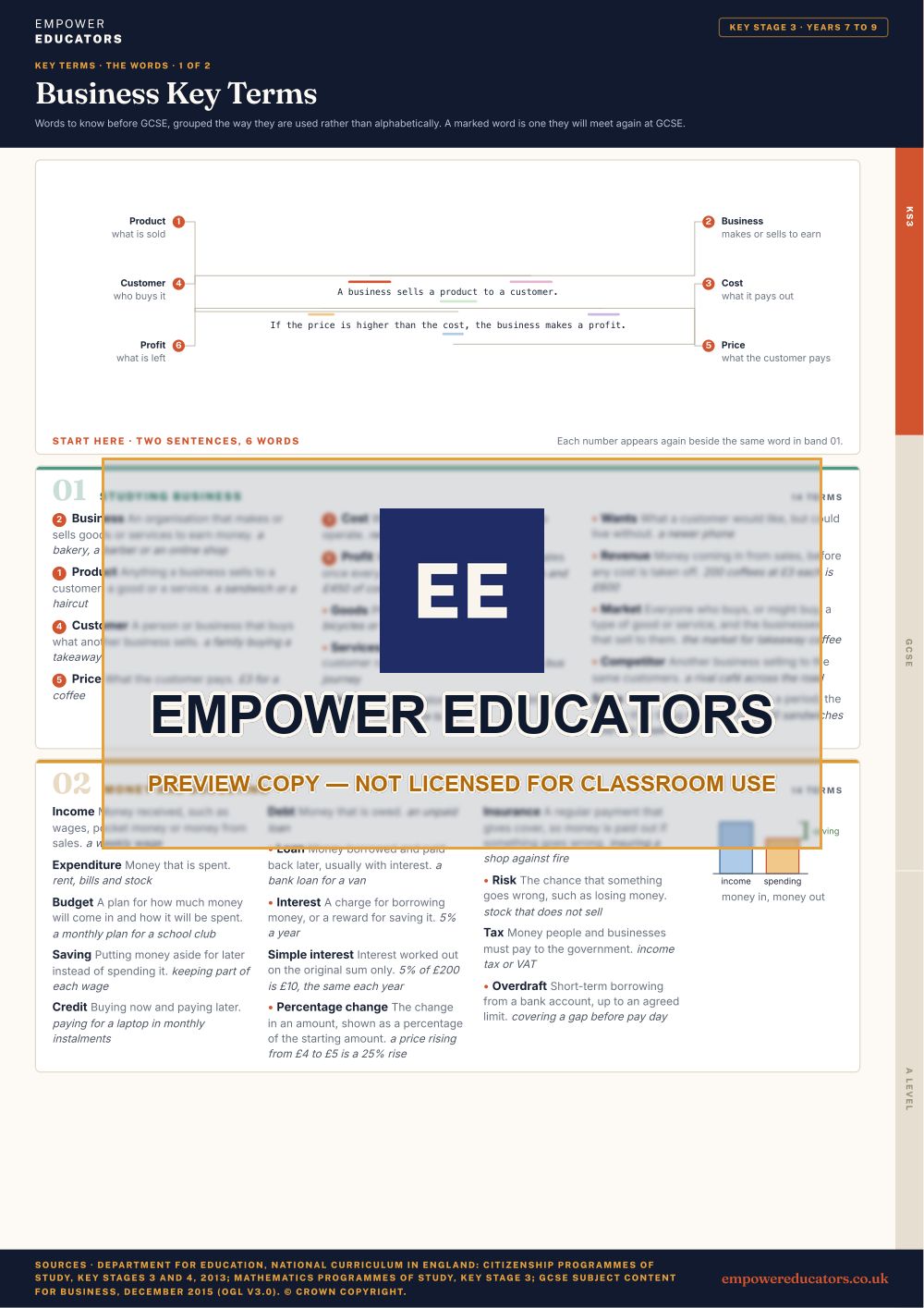
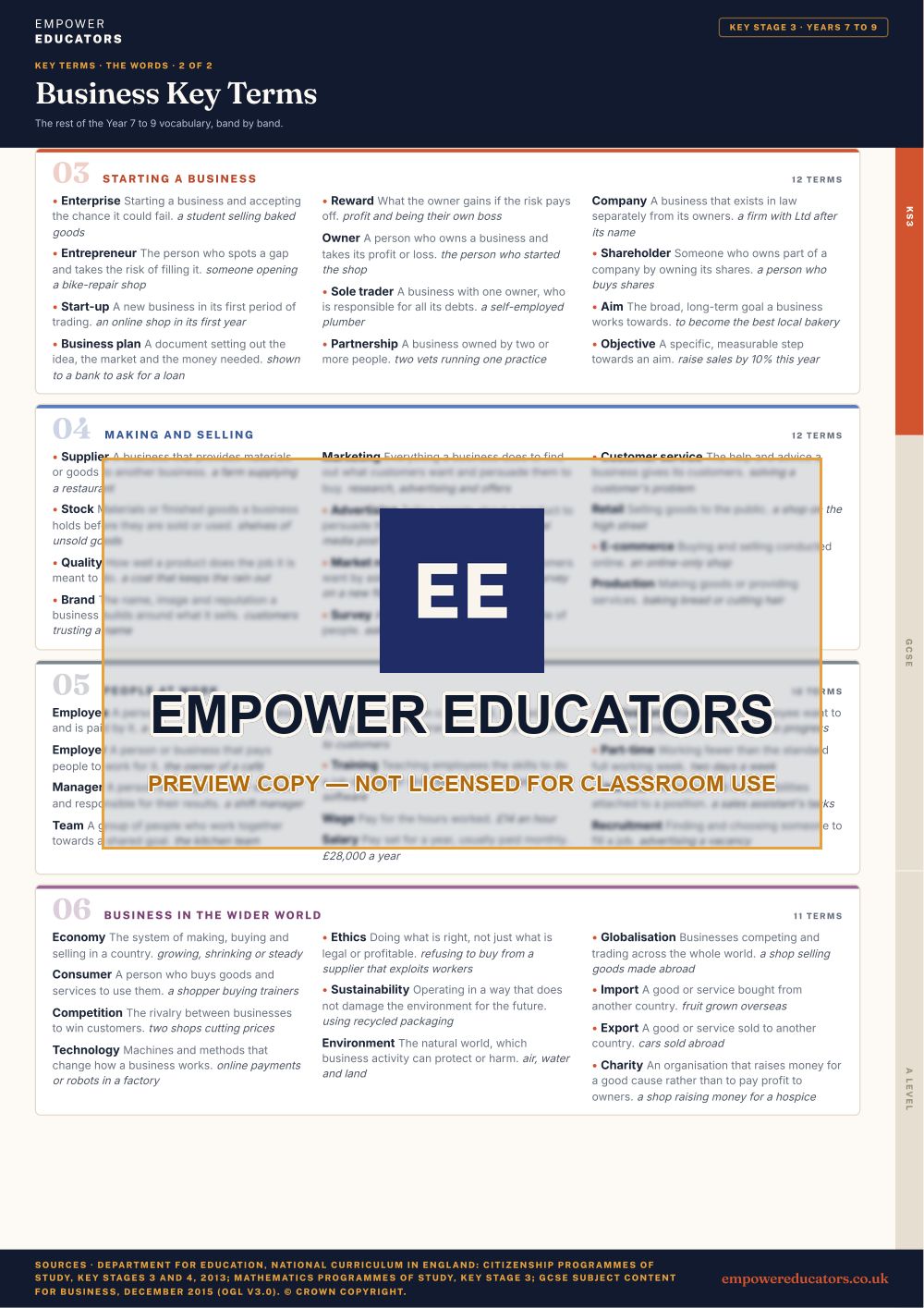
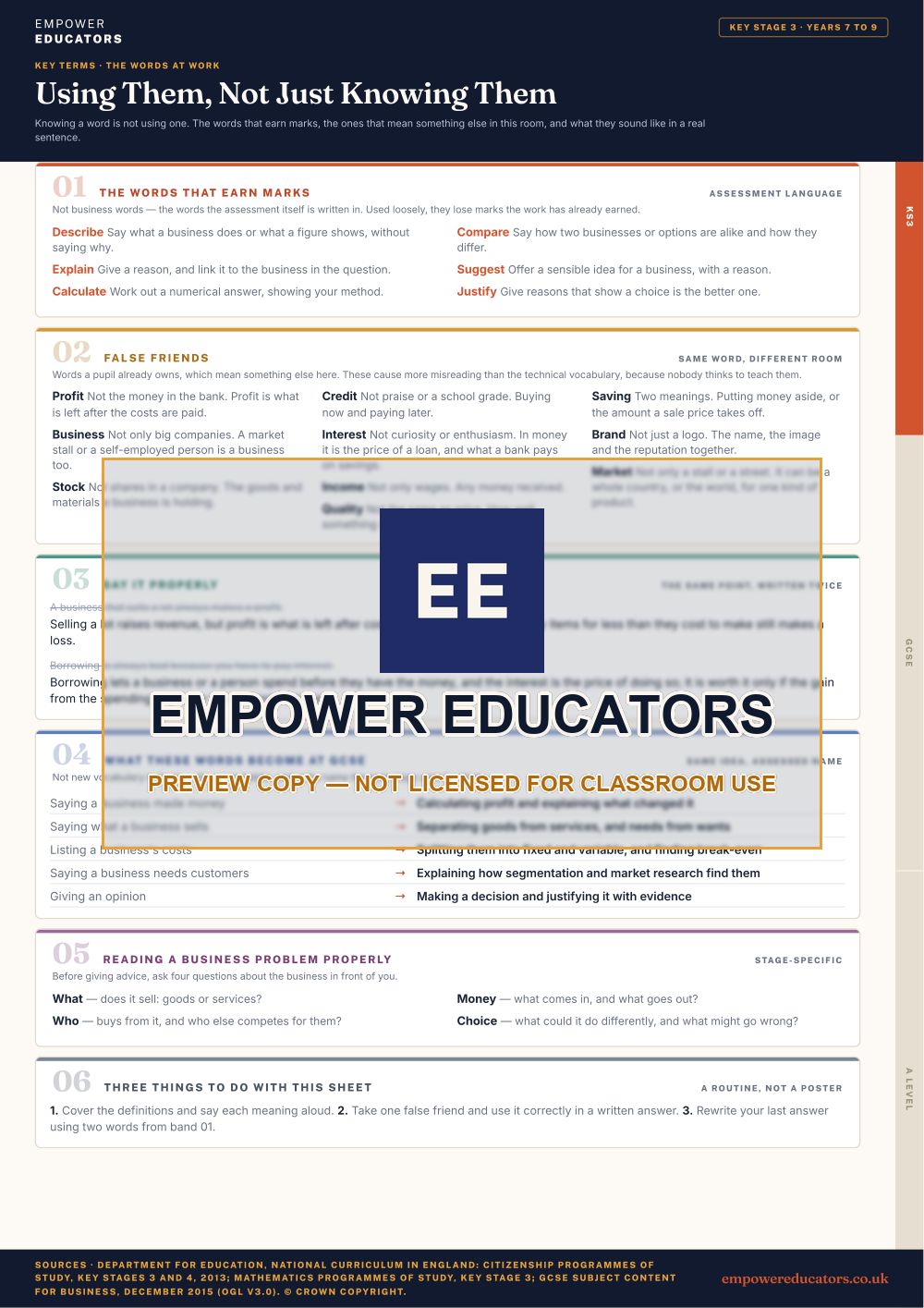
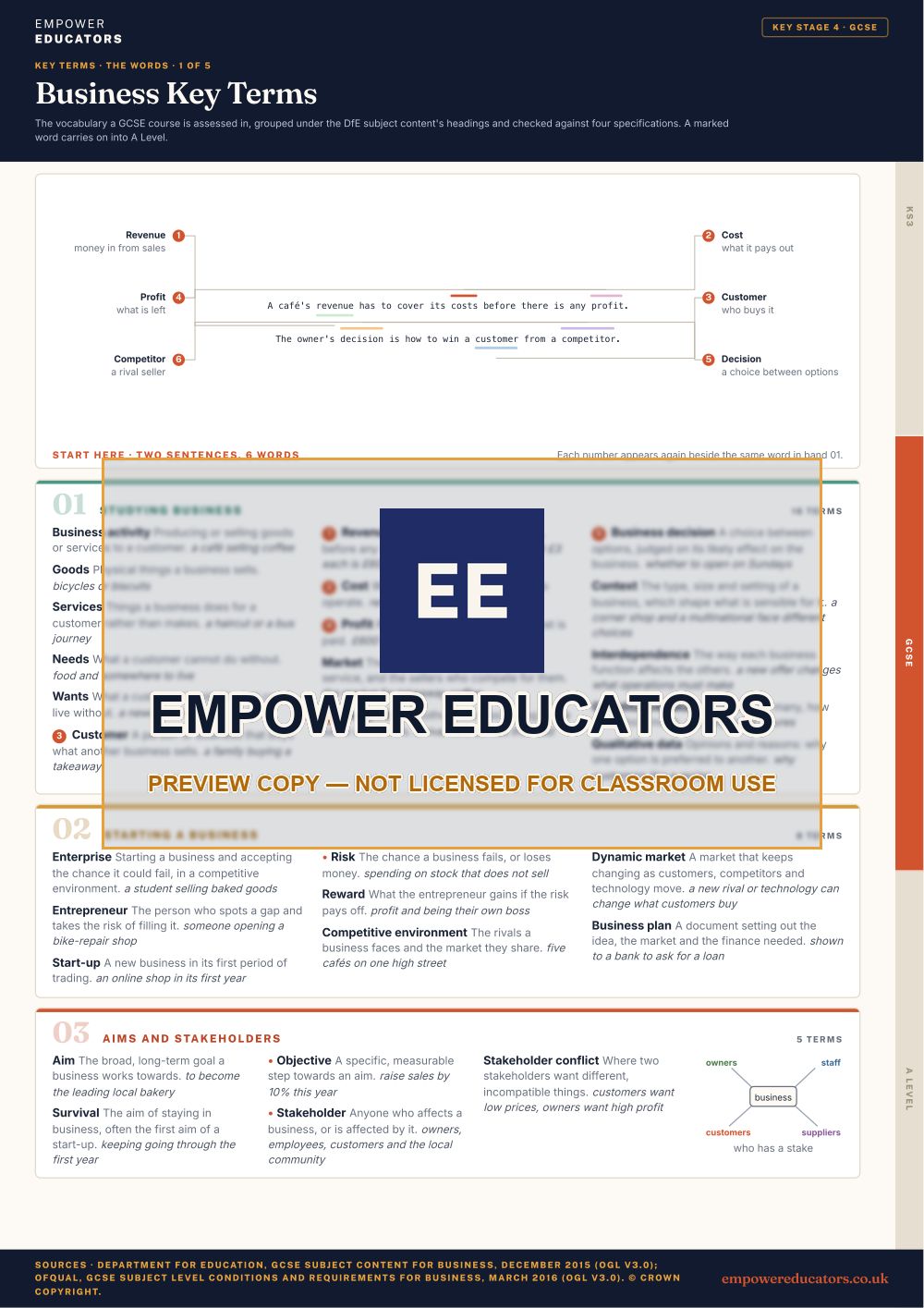
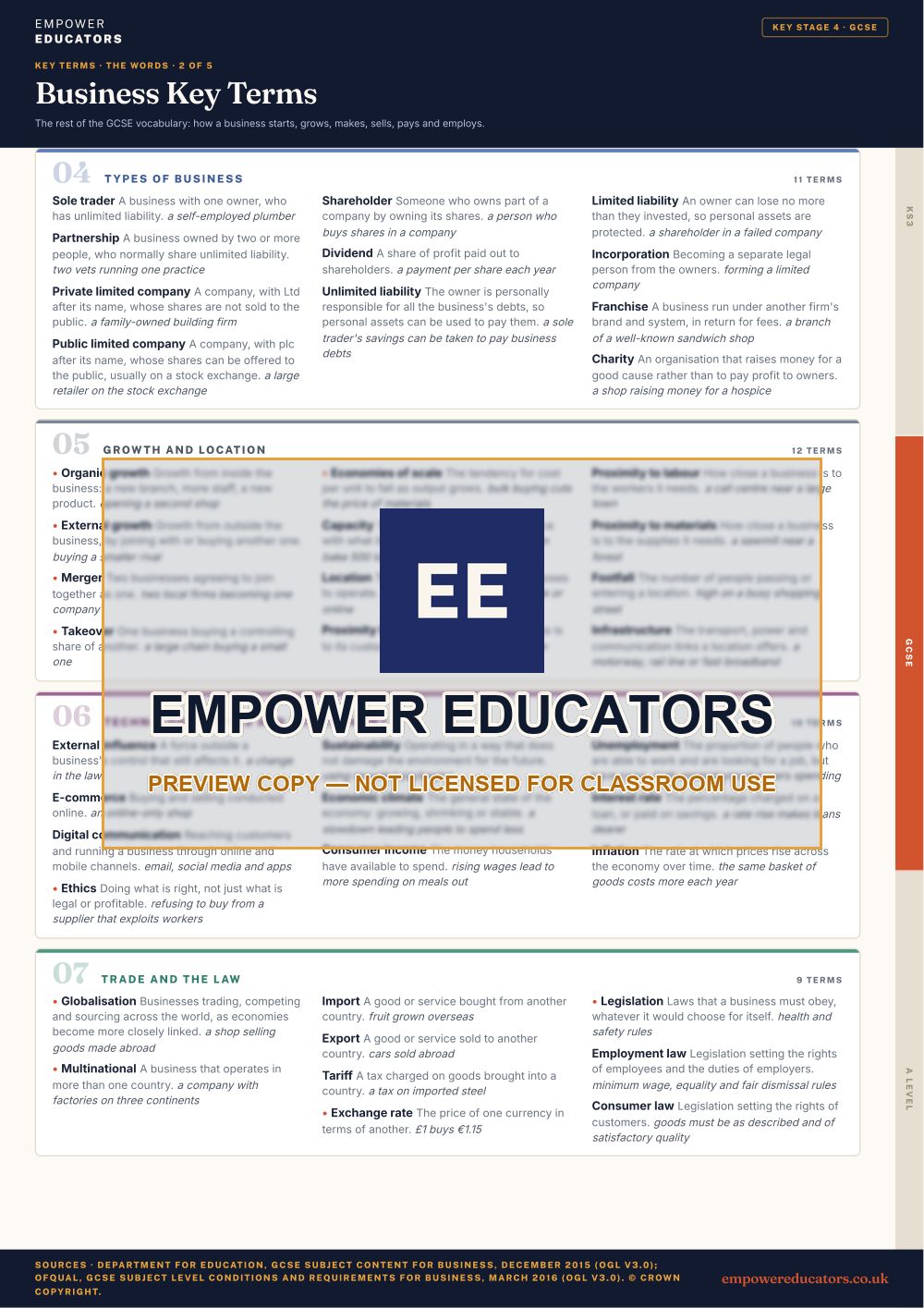
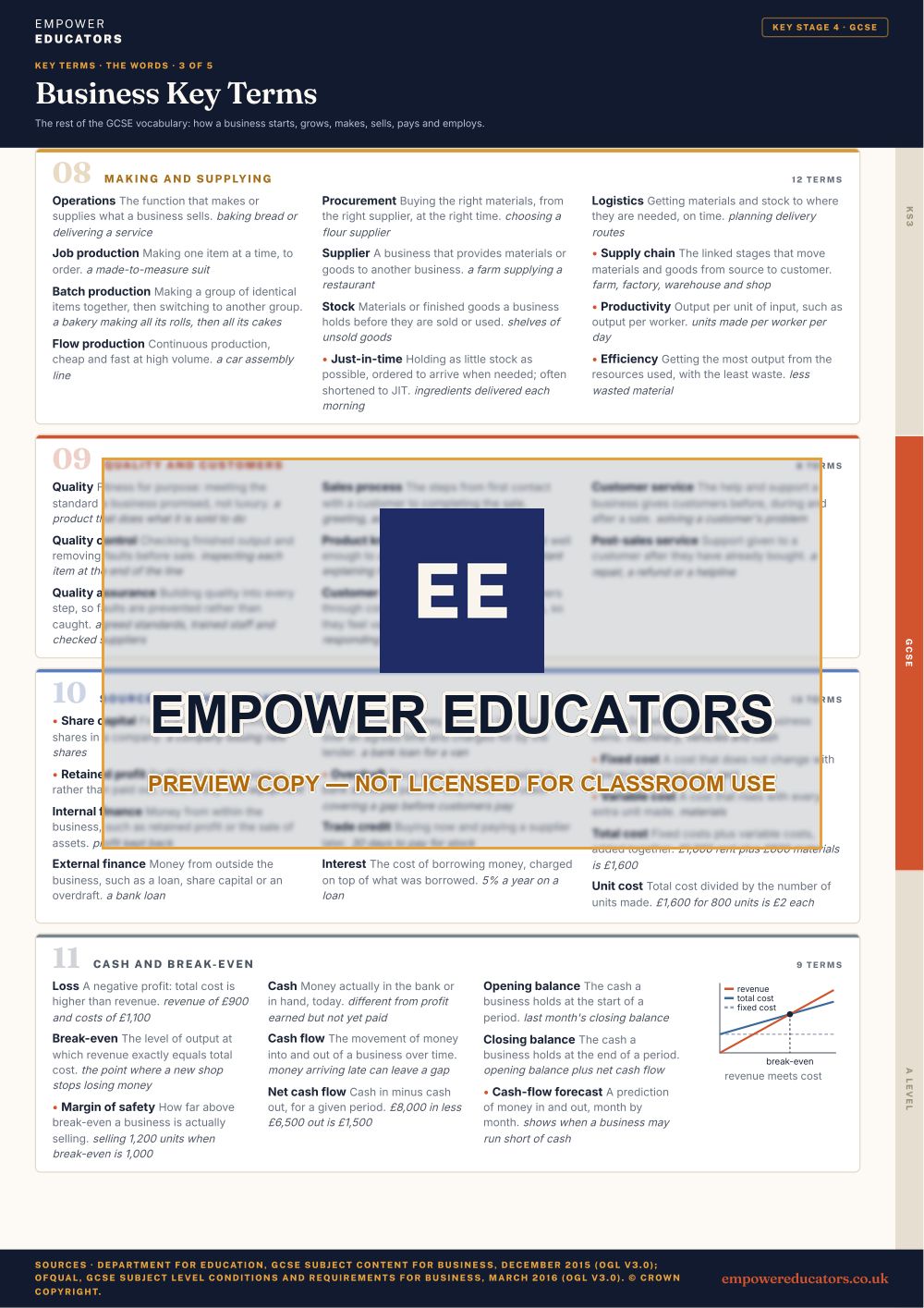
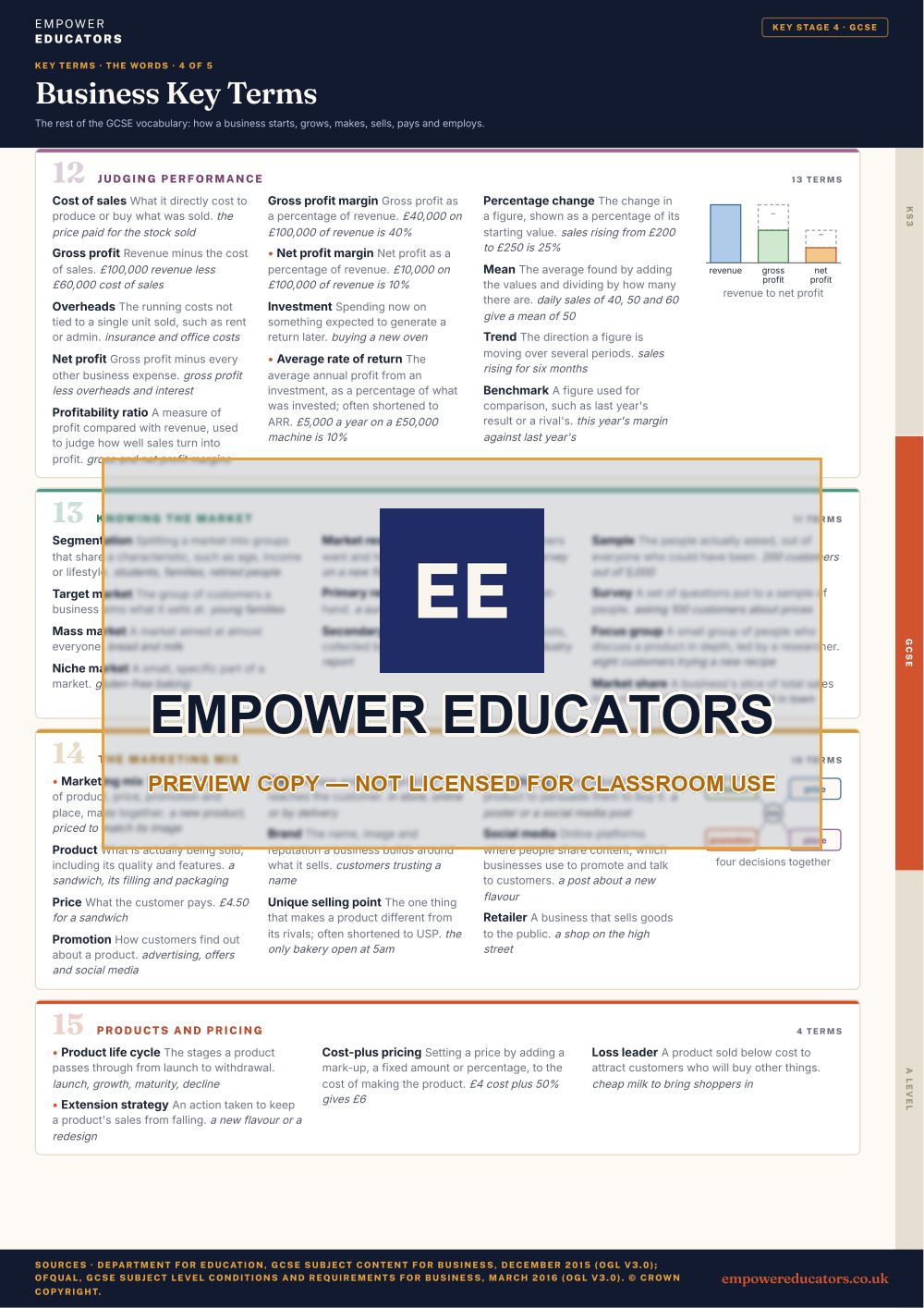
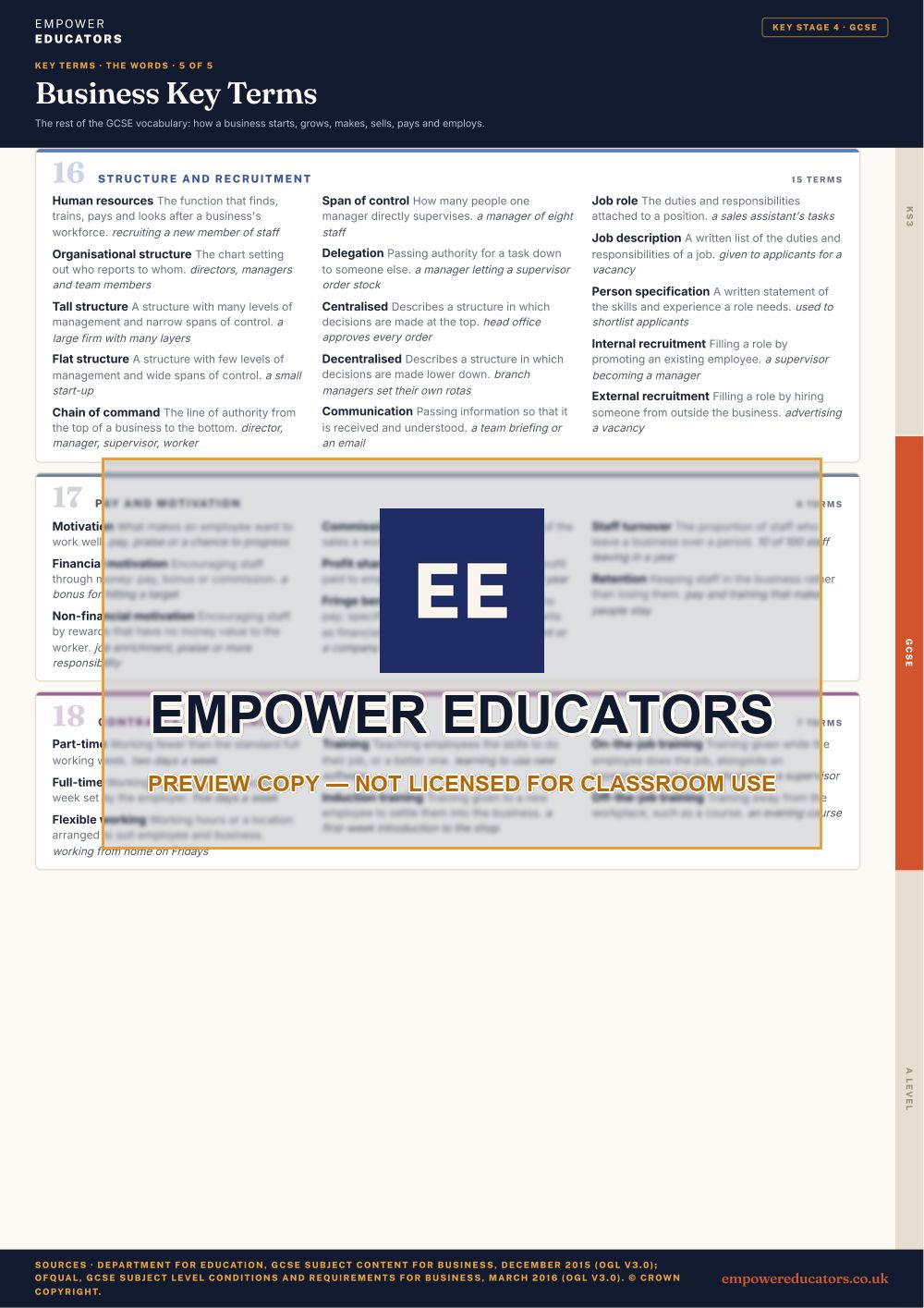
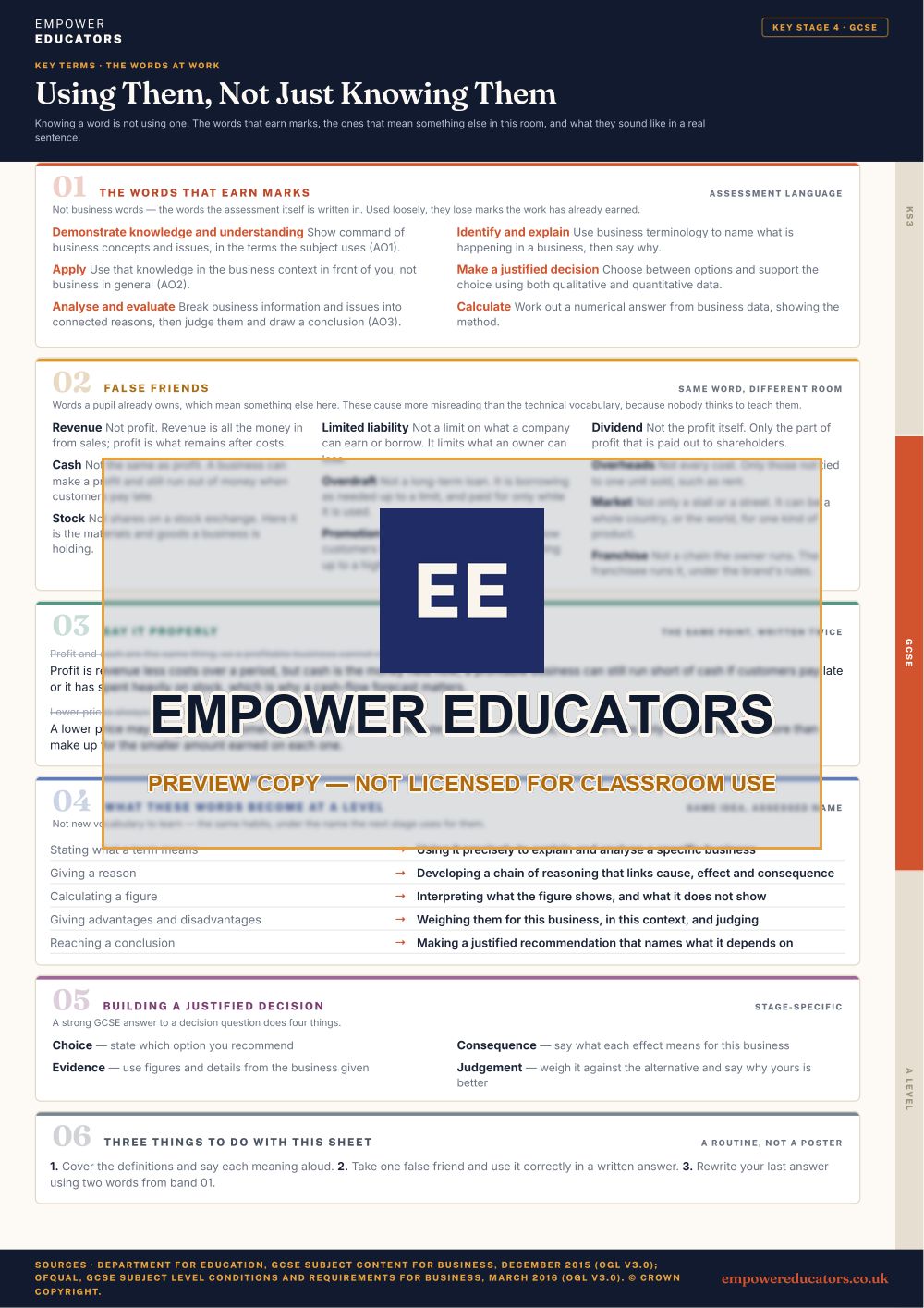
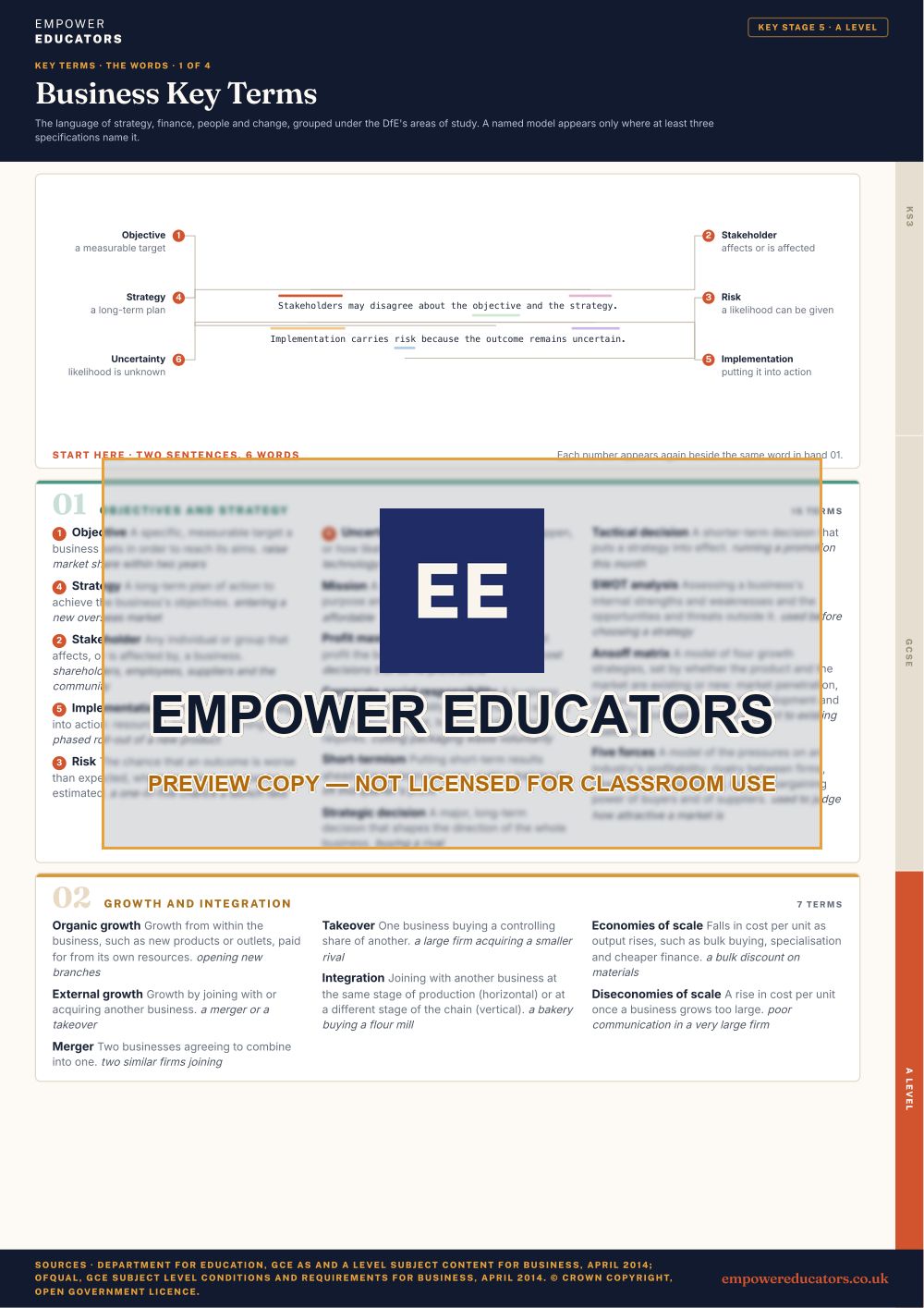
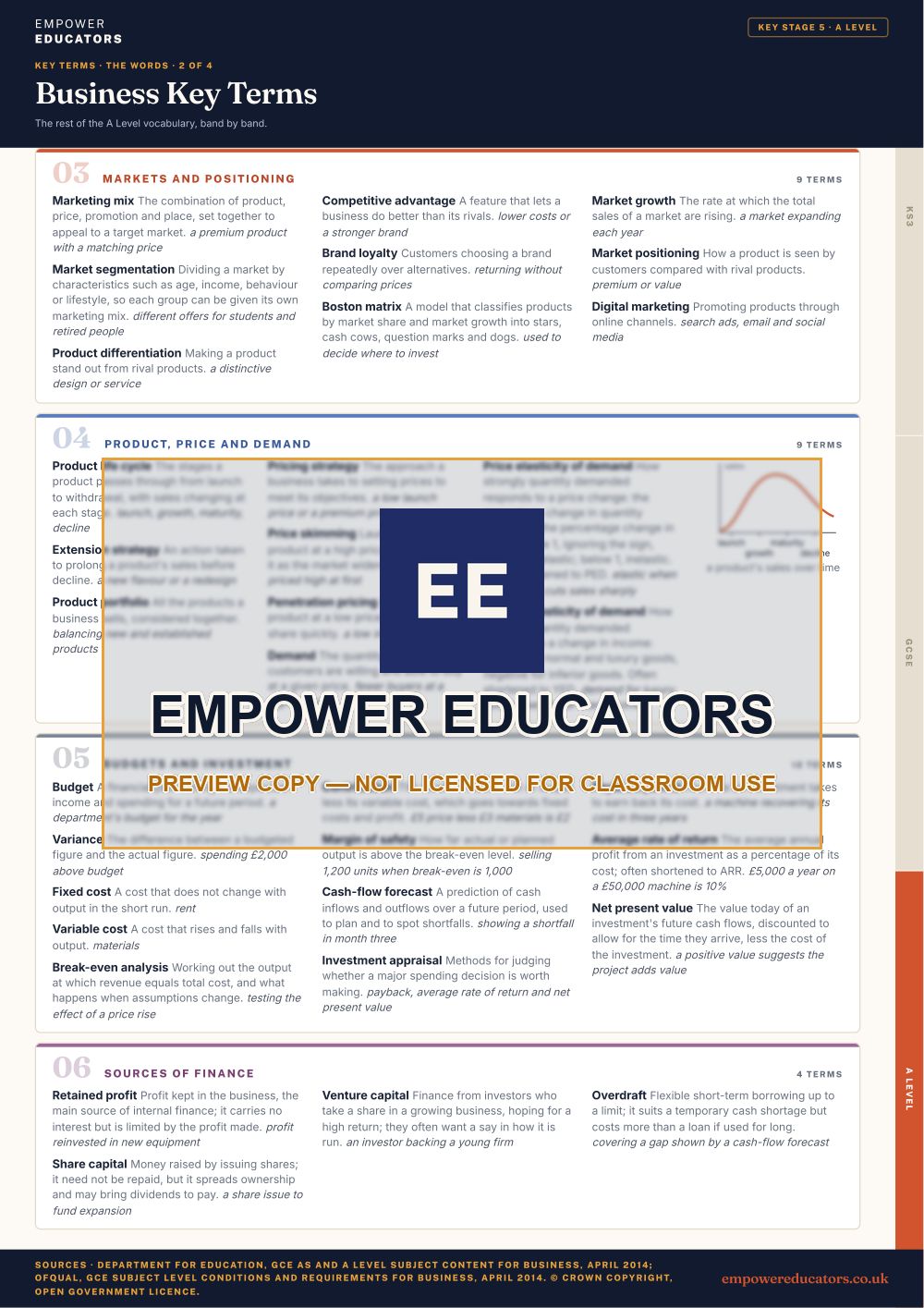
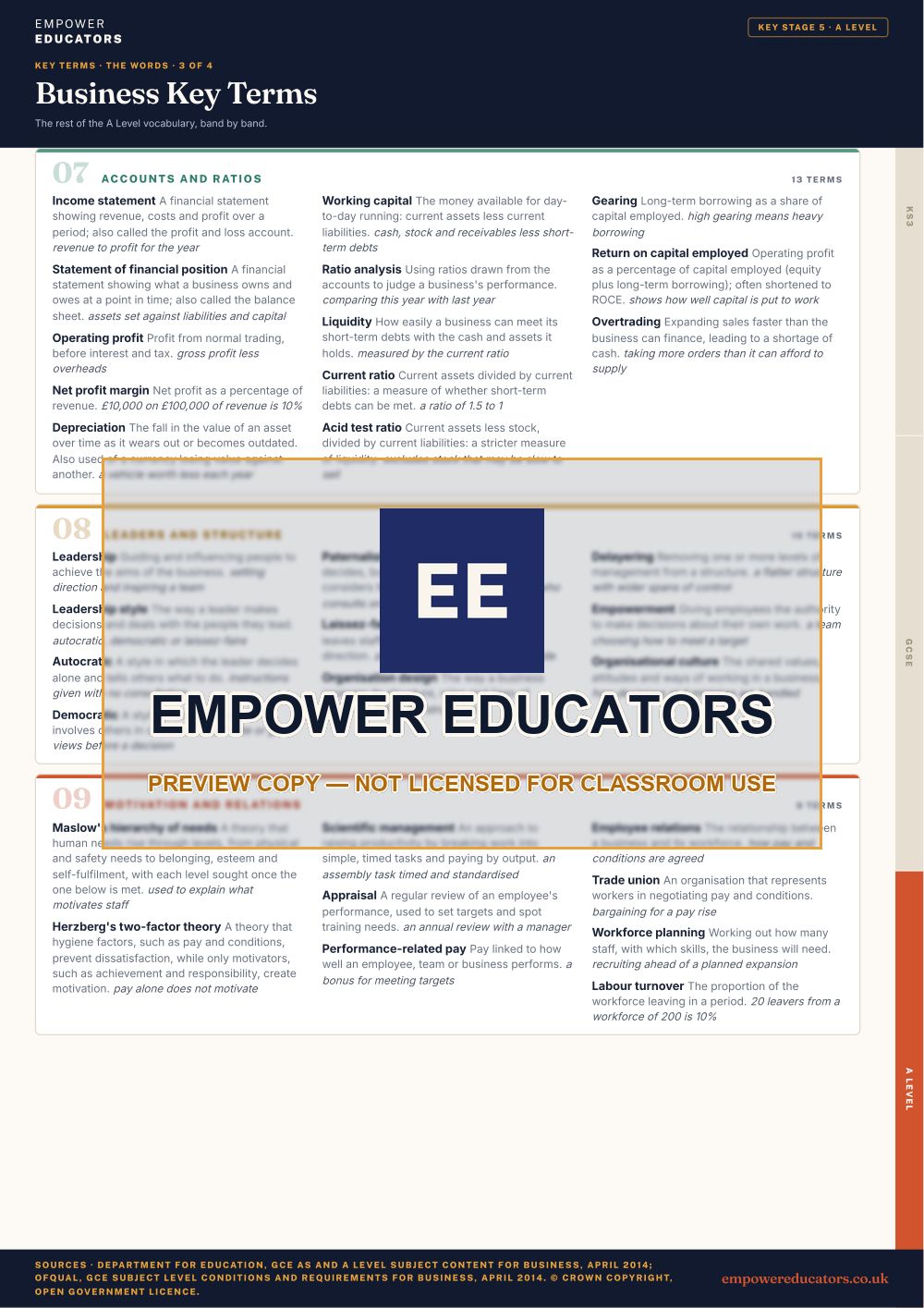
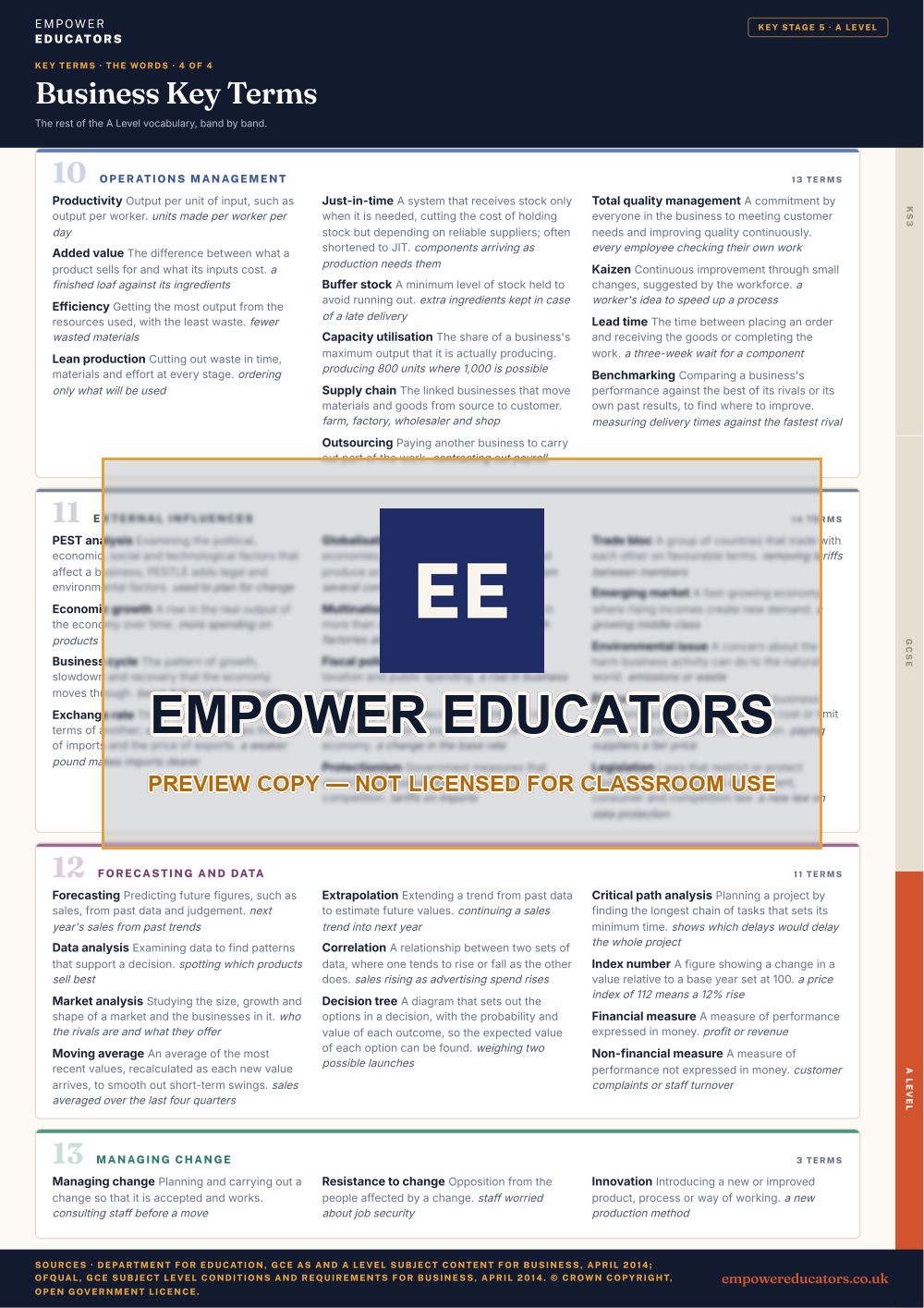
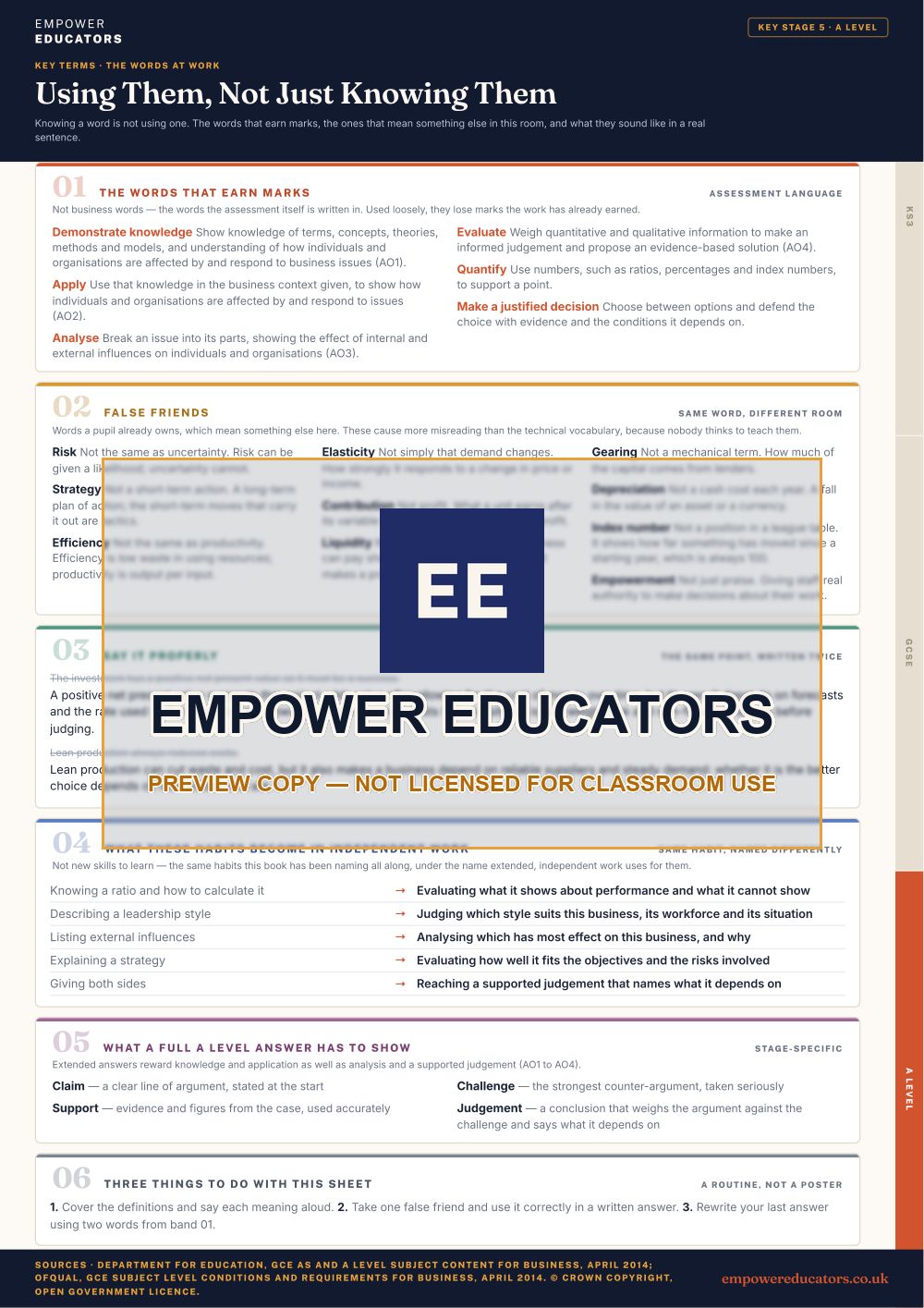
Every word a business department teaches, Year 7 to A Level, in one A4 book. Each key stage gets its own pages: the terms grouped the way they are taught rather than alphabetically, a definition that fits on two lines, and a worked example beside almost every one. Each key stage opens on two short sentences, annotated: price, cost and profit at Key Stage 3; revenue, cost, profit, customer, competitor and a decision at GCSE; stakeholders, objectives, strategy and risk at A Level. The numbers on those sentences appear again beside the same words in the list. GCSE then follows the business, from starting and owning it, through growth and location, the influences on it, operations, finance and performance, to marketing and people; A Level adds strategy, markets and pricing, budgets and investment appraisal, accounts and ratios, leadership and motivation, operations, external influences, data and change. Six small diagrams are drawn where a sentence will not do, including a break-even chart, the marketing mix and the life of a product. Then a page on using the words: the ones the assessment itself is written in, the false friends that mean something else in a business classroom, the same point written weakly and then properly, and what each word becomes at the next key stage.
Ready for the classroom
Get the clean copy
You have seen the whole layout of all 15 sheets, with part of each blurred in the preview. What you buy is the same set without the watermark or the blur, at full print resolution, ready to run off for every class in the department.
- Every sheet with no watermark, at print resolution
- 5 print-and-use templates
- Referenced to Business is not part of the national curriculum, so no DfE Key Stage 3 list exists: budgeting, risk, percentage change and simple interest come from the national curriculum for citizenship and mathematics, and the rest are the words a GCSE course builds on; the GCSE pages are grouped under the headings of the DfE's GCSE subject content for business (December 2015) and the A Level pages under the DfE's AS and A level subject content for business (April 2014); GCSE and A Level also draw on Ofqual's subject-level conditions, which set the assessment objectives used on the words-at-work pages; every term was checked against the GCSE and A Level specifications of all four awarding organisations, and 379 of 385 terms appear by name in one of those national documents or in a published specification, the rest being plain words of the subject defined in plain English; no awarding body is named, and a named model appears in the A Level pages only where at least three specifications name it
- Instant PDF download, yours to keep and reproduce across the school that buys it — not for other schools