—·Computer Science · GCSE
Two Digits, Every Decision
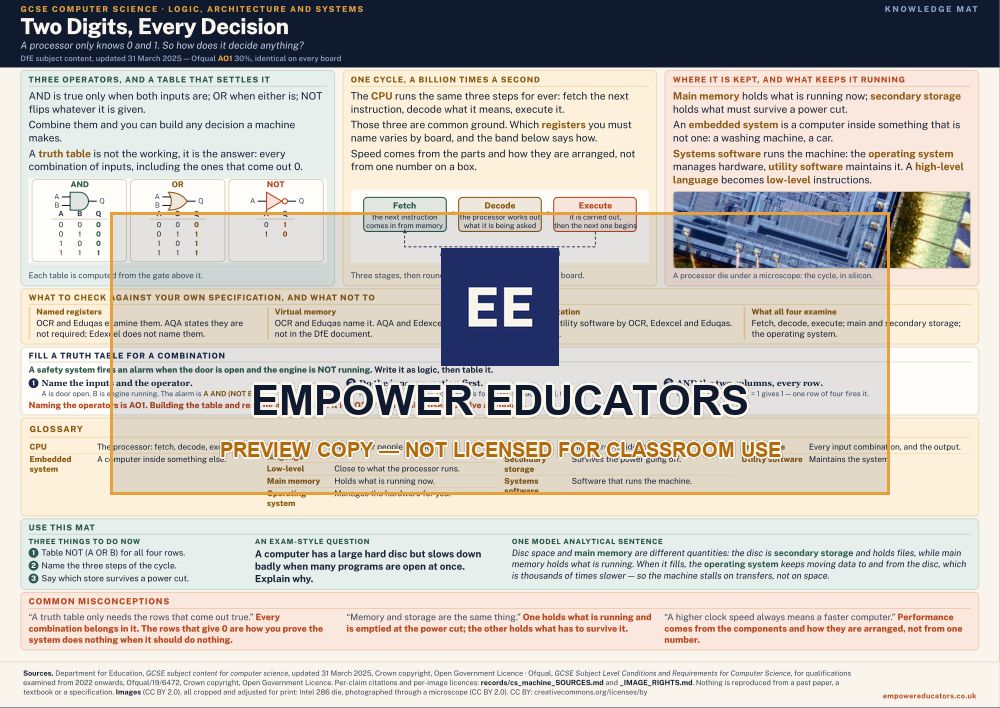
A processor only knows 0 and 1, so how does it decide anything? AND, OR and NOT drawn as real gate symbols with the truth table under each one — and each table is computed from the gate above it, so a table cannot drift from the gate it belongs to. Then the fetch–decode–execute cycle drawn as a cycle, with a return path that closes it, kept deliberately at the three stages every board examines. Then main memory against secondary storage, embedded systems, the operating system and utility software, and high-level against low-level language, beside a photograph of a processor die taken through a microscope. A band on what to check against your own specification — named registers, virtual memory, defragmentation — a worked truth table for a combination, eleven terms, and the misconceptions that cost marks.
Ready for the classroom
Get the clean copy
You have seen the whole sheet — nothing is held back. What you buy is the clean copy without the watermark, at full print resolution, ready to run off for every class in the department.
- Every sheet with no watermark, at print resolution
- 1 print-and-use template
- Referenced to the DfE GCSE subject content for computer science (updated 31 March 2025) and Ofqual's subject level conditions for qualifications examined from 2022 onwards (Ofqual/19/6472), quoted; no board's specification, mark scheme or past paper. Named registers are examined by two of the four specifications read and explicitly not required by a third, so the cycle is taught at the level all four examine
- Instant PDF download, yours to keep and reproduce across the school that buys it — not for other schools