—·Computer Science · GCSE
Everything Is a Number
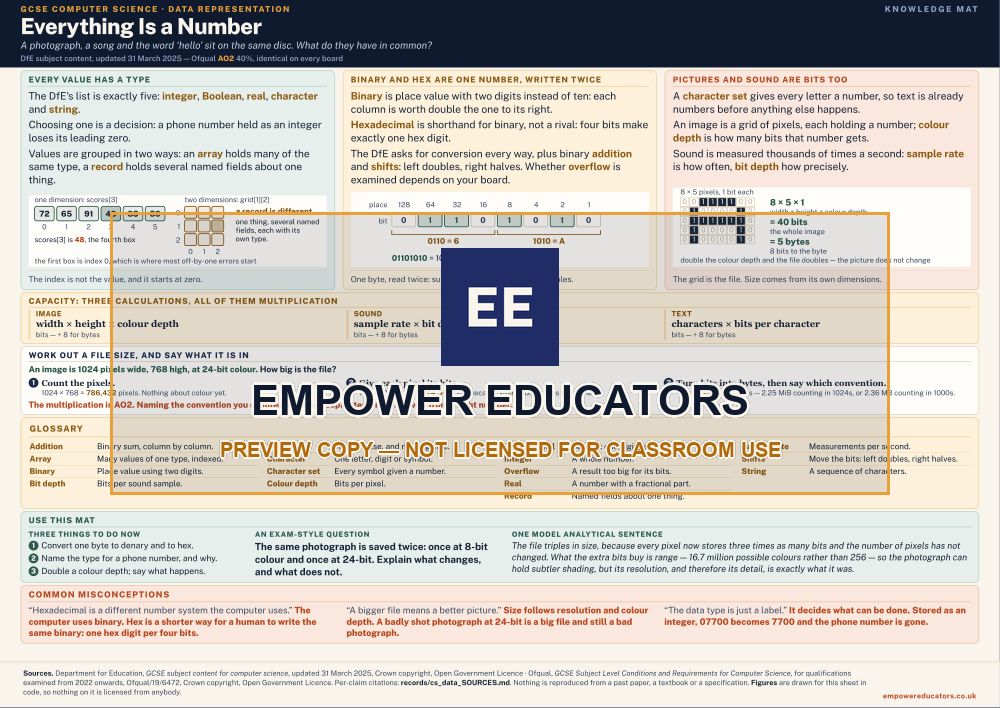
A photograph, a song and the word 'hello' sit on the same disc — what do they have in common? The five data types the DfE names and why choosing one is a decision, with a figure that draws a one-dimensional array beside a two-dimensional one and puts the index under the box, never in it. Then binary and hexadecimal as one number written twice, with a place-value strip that sums its own bits to 106 and splits itself into the nibbles 6 and A. Then text, sound and graphics, with a bitmap small enough to count: the grid is the file, and the file size is multiplied out of the grid's own dimensions. Three capacity formulae, a worked file-size calculation that ends by naming which convention it counted in, sixteen terms, and the misconceptions that cost marks.
Ready for the classroom
Get the clean copy
You have seen the whole sheet — nothing is held back. What you buy is the clean copy without the watermark, at full print resolution, ready to run off for every class in the department.
- Every sheet with no watermark, at print resolution
- 1 print-and-use template
- Referenced to the DfE GCSE subject content for computer science (updated 31 March 2025) and Ofqual's subject level conditions for qualifications examined from 2022 onwards (Ofqual/19/6472), quoted; no board's specification, mark scheme or past paper. Every number printed is computed by the figure that prints it
- Instant PDF download, yours to keep and reproduce across the school that buys it — not for other schools