Empower
Educators

Empower Educators

01·Empower Educators · Edition 2026

Practical resources to empower every educator in a secondary school

Written inside a school, not a consultancy.

Every figure traced to the DfE, Ofsted or exam-board publication it came from, and quoted in place rather than summarised. Every page typeset to be printed and handed to staff on Monday — not adapted first.

Schemes of workSchemes of work Key Stage 3 & GCSE

Year 7 to Year 11 27 titles GCSE in Art & Design and English and Mathematics and Science

  1. 17 English to GCSE
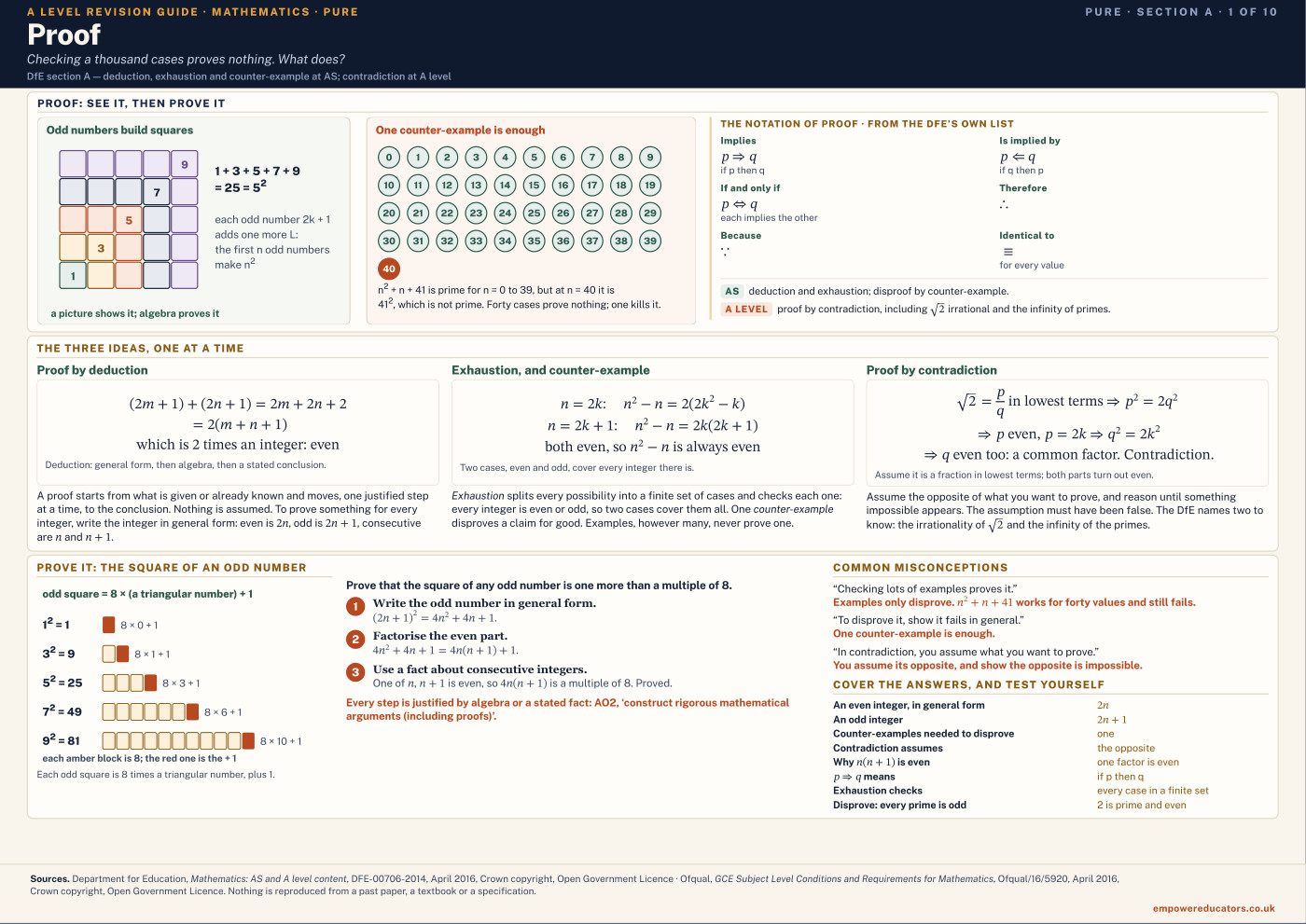
  2. 18 Mathematics to GCSE
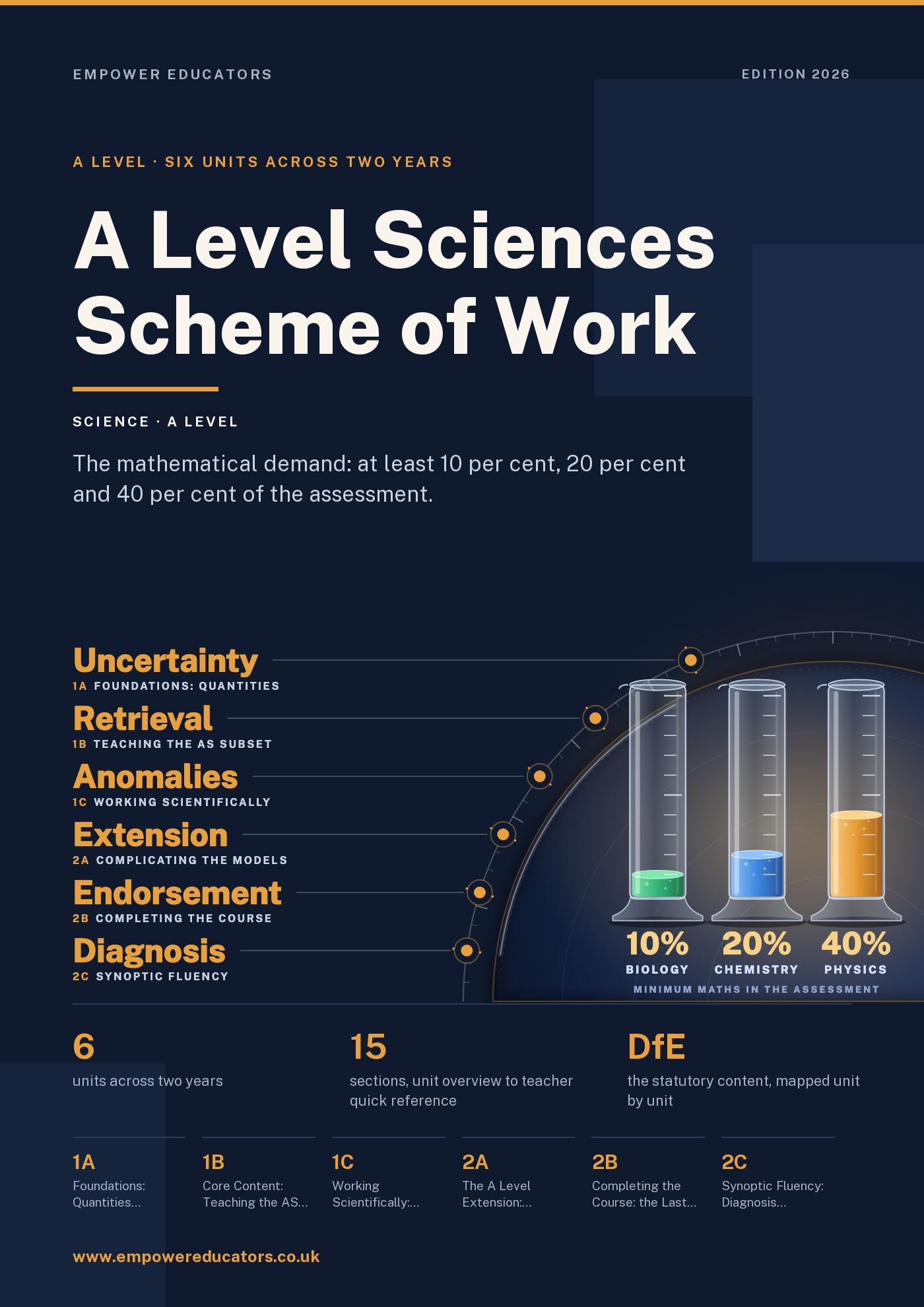
  3. 19 Science to GCSE
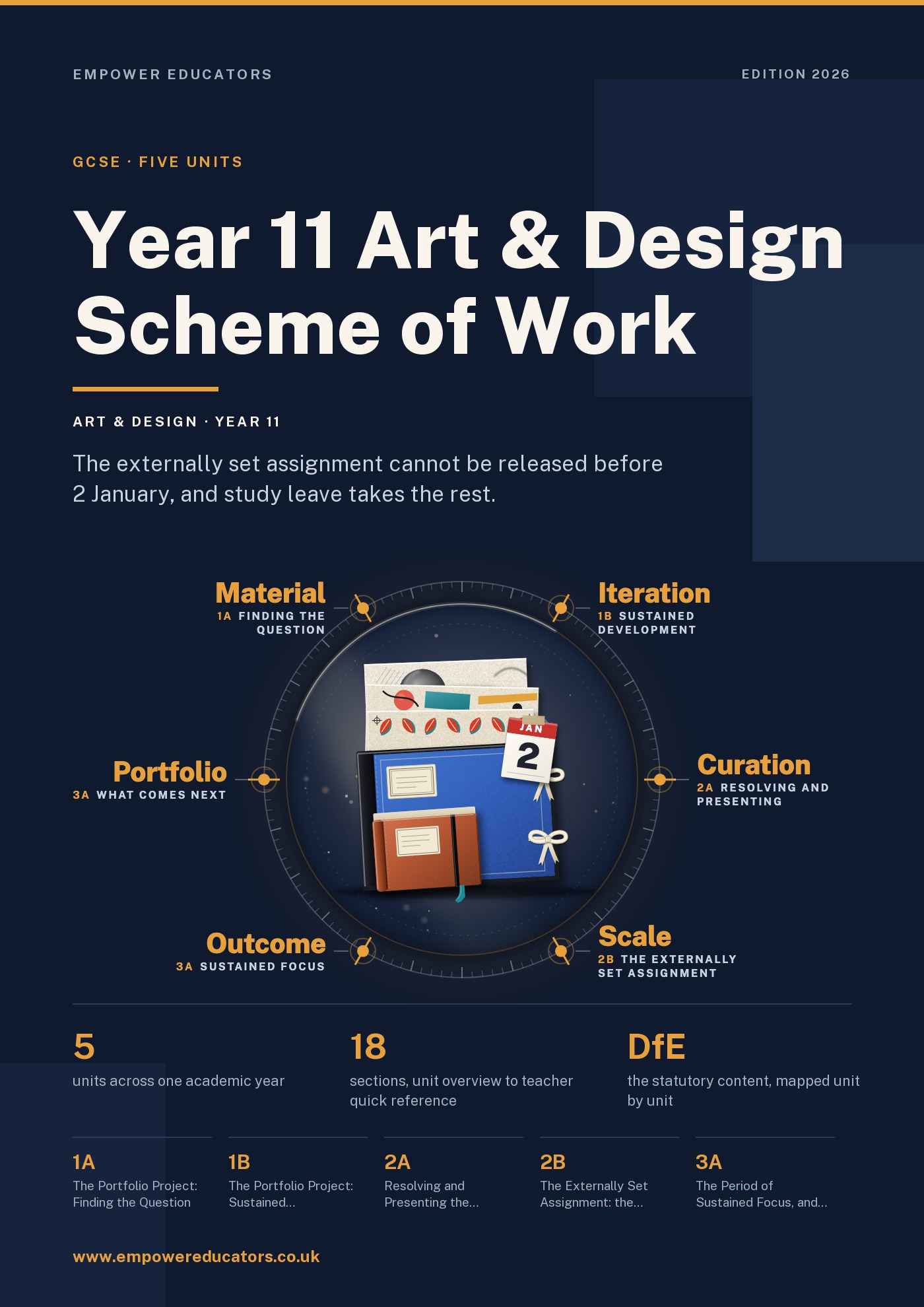
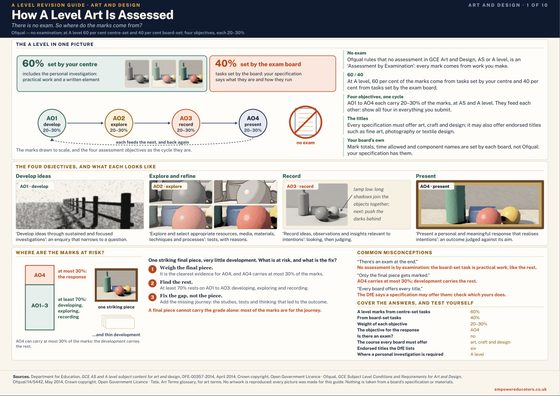
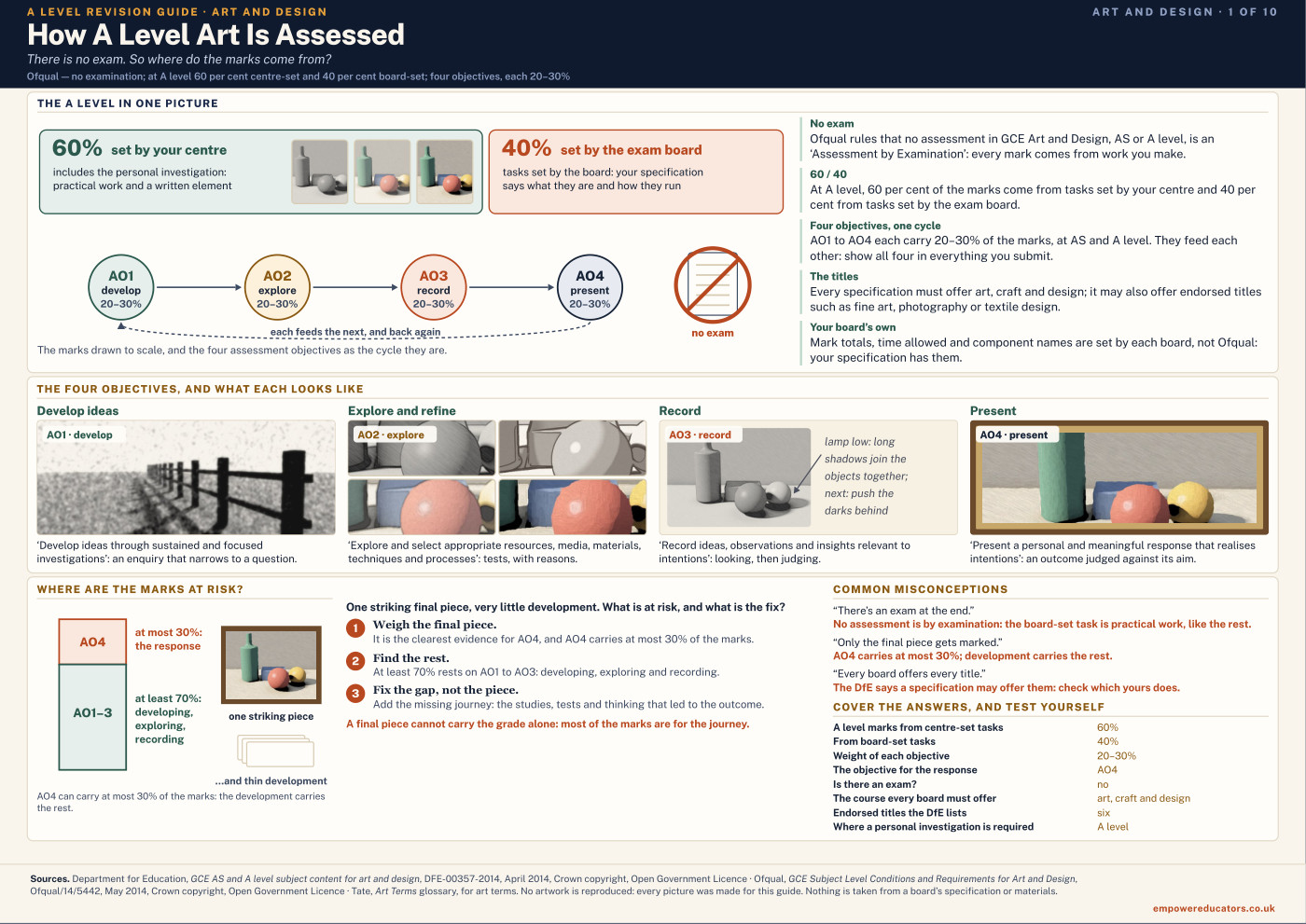
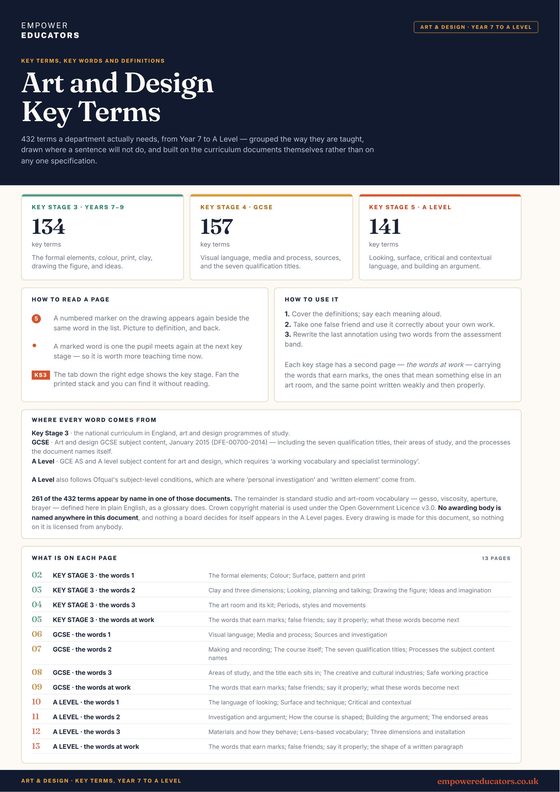
  4. 20 Art & Design to GCSE
  5. 21 Physical Education
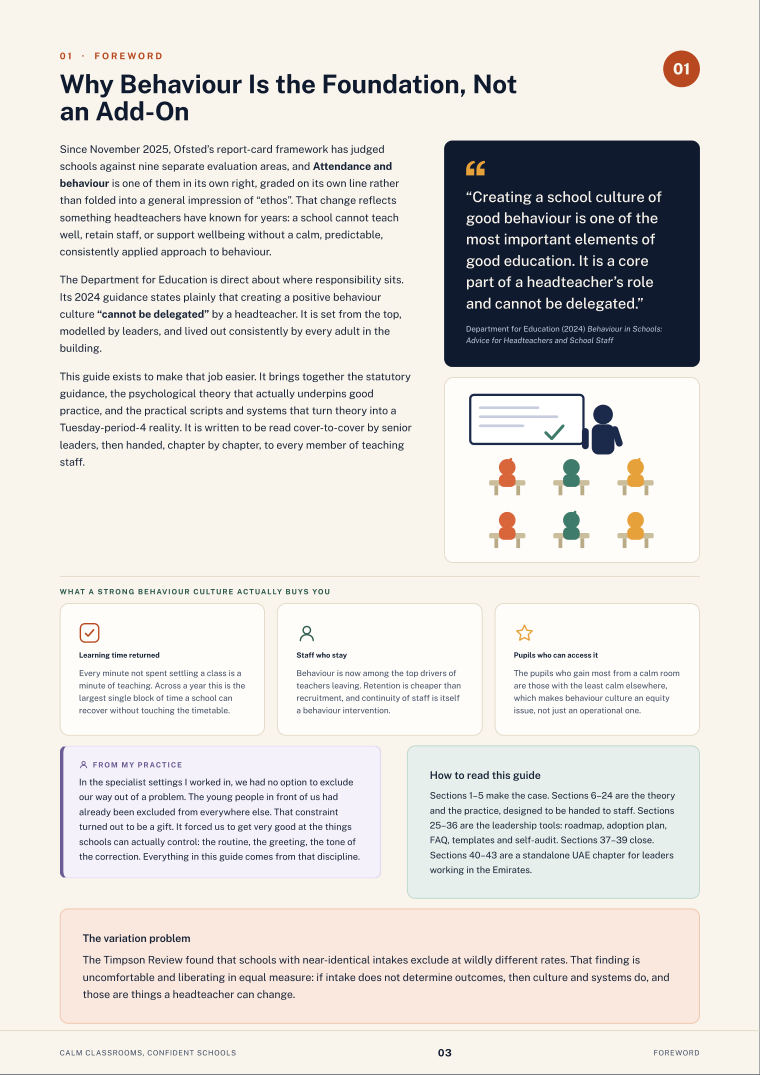
Cover of Calm Classrooms, Confident Schools Free
Calm Classrooms, Confident Schools Behaviour & Classroom Culture · 68 pages · yours for a name and an email
109 titles in all, one design system and one sourcing standard
7 whole-school playbooks, from behaviour to inspection
9 subject playbooks, one per department
38 examination playbooks, one per subject per board
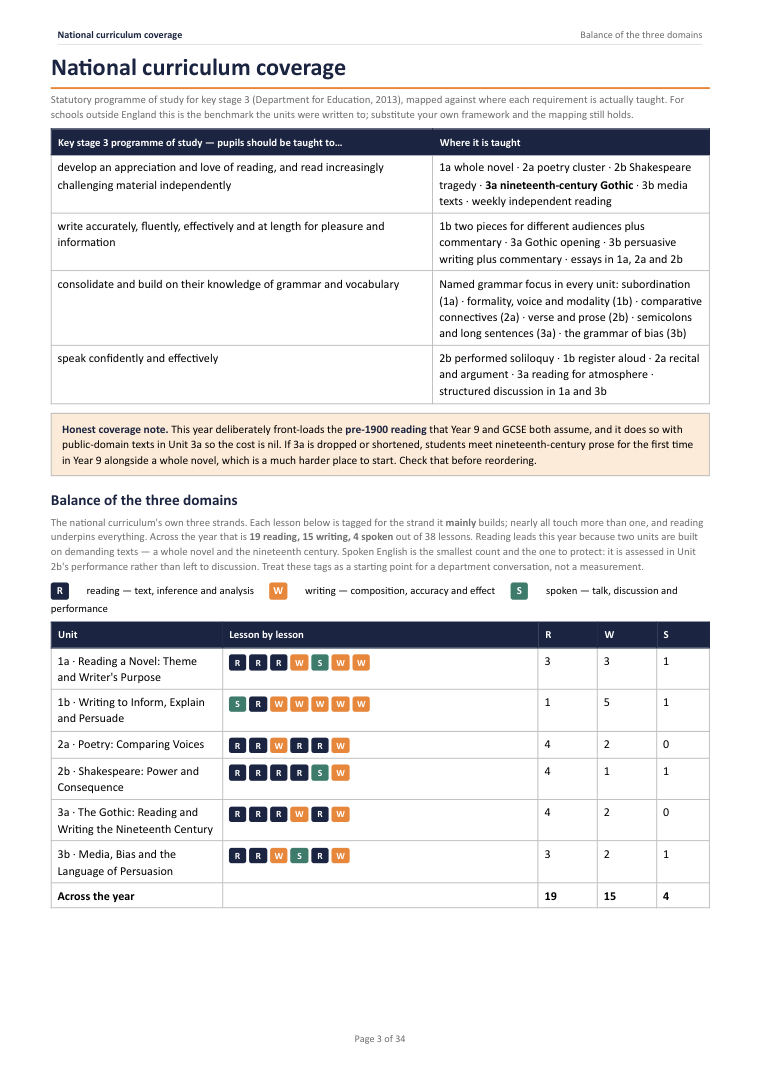
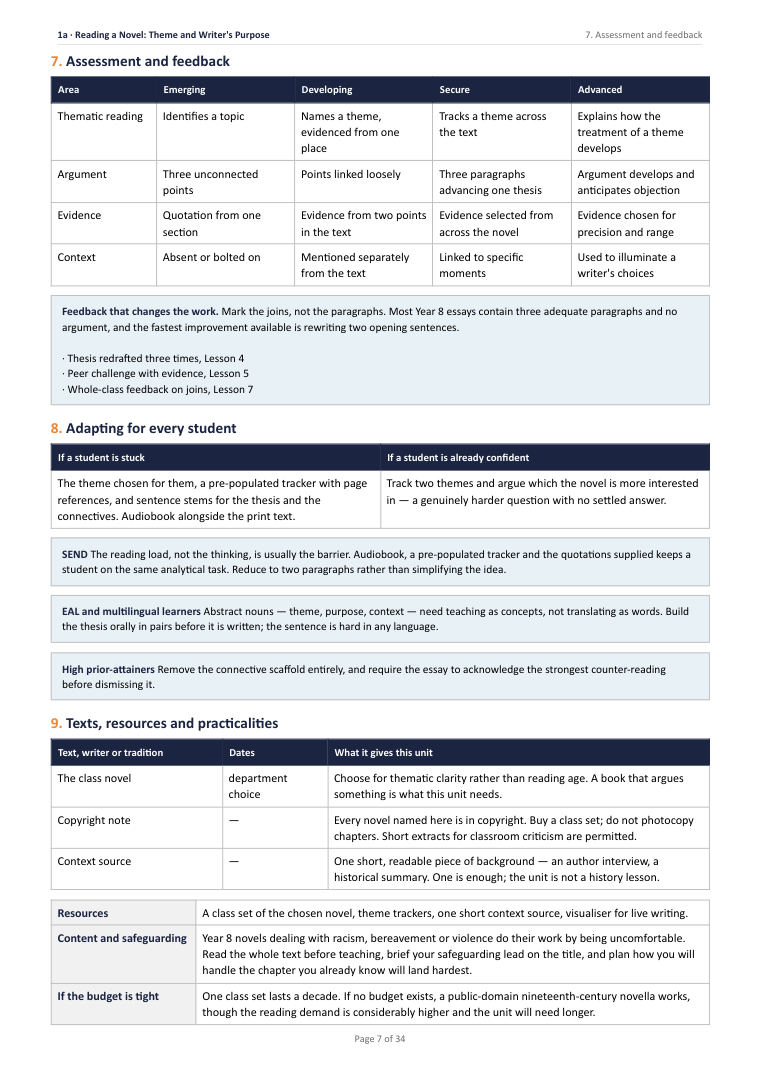
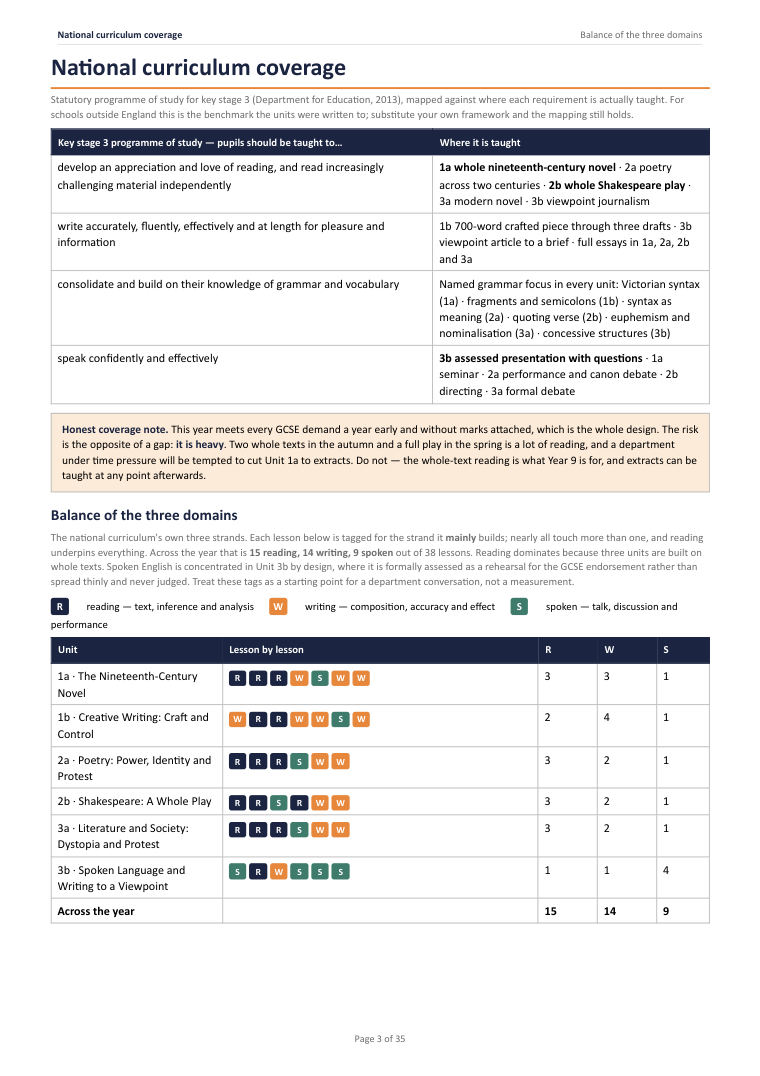
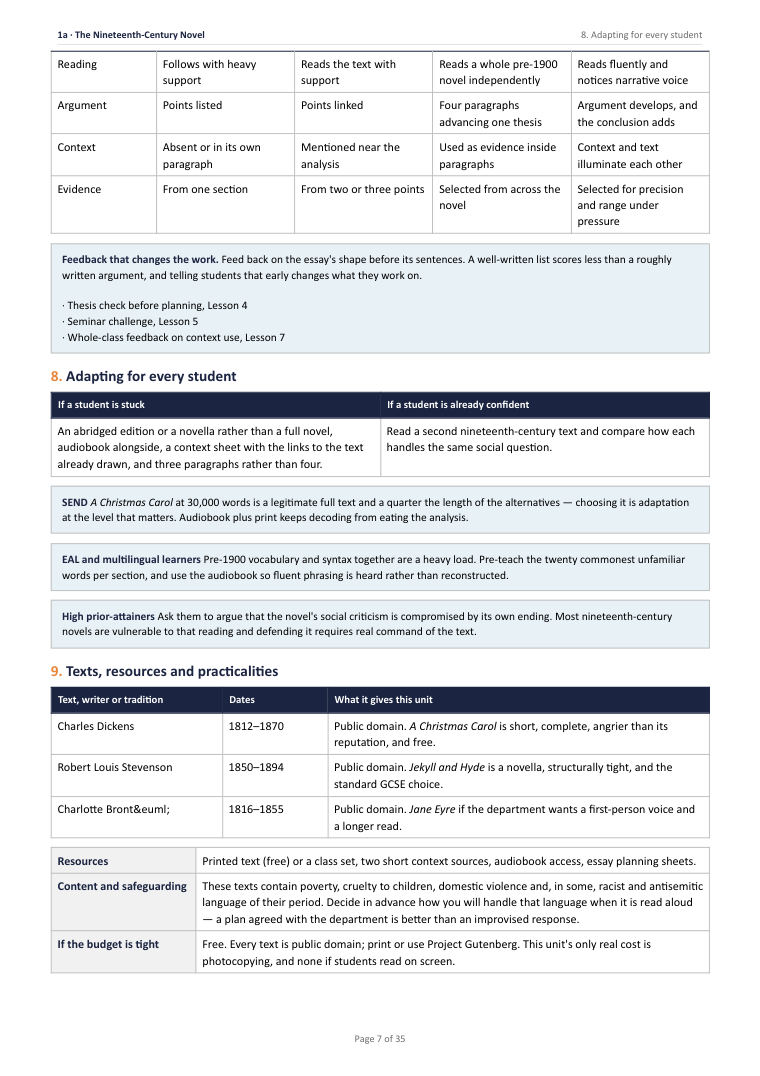
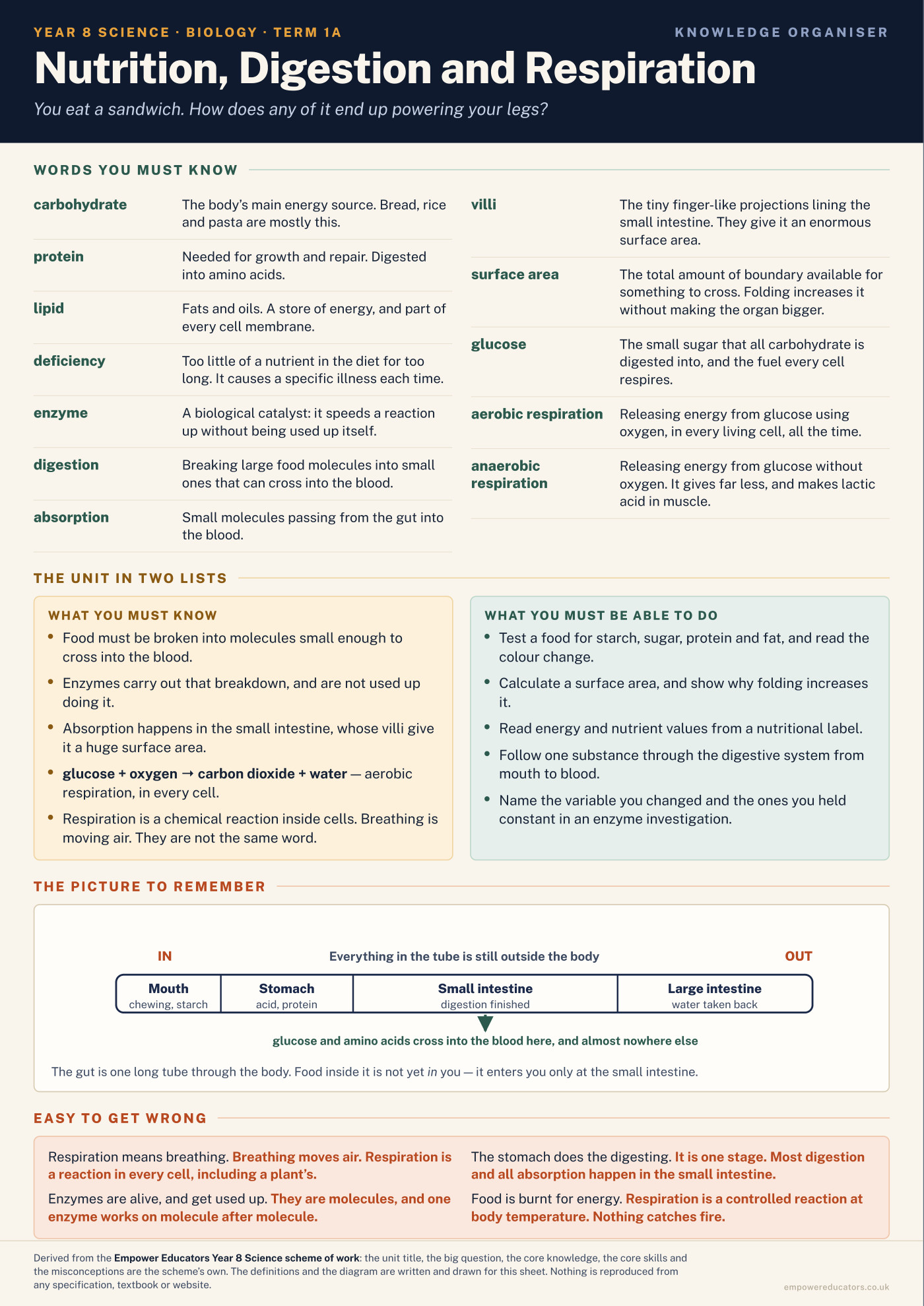
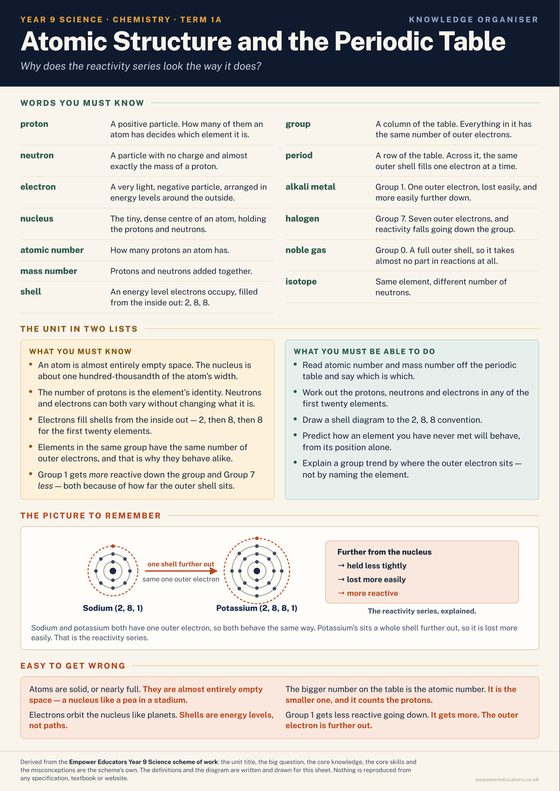
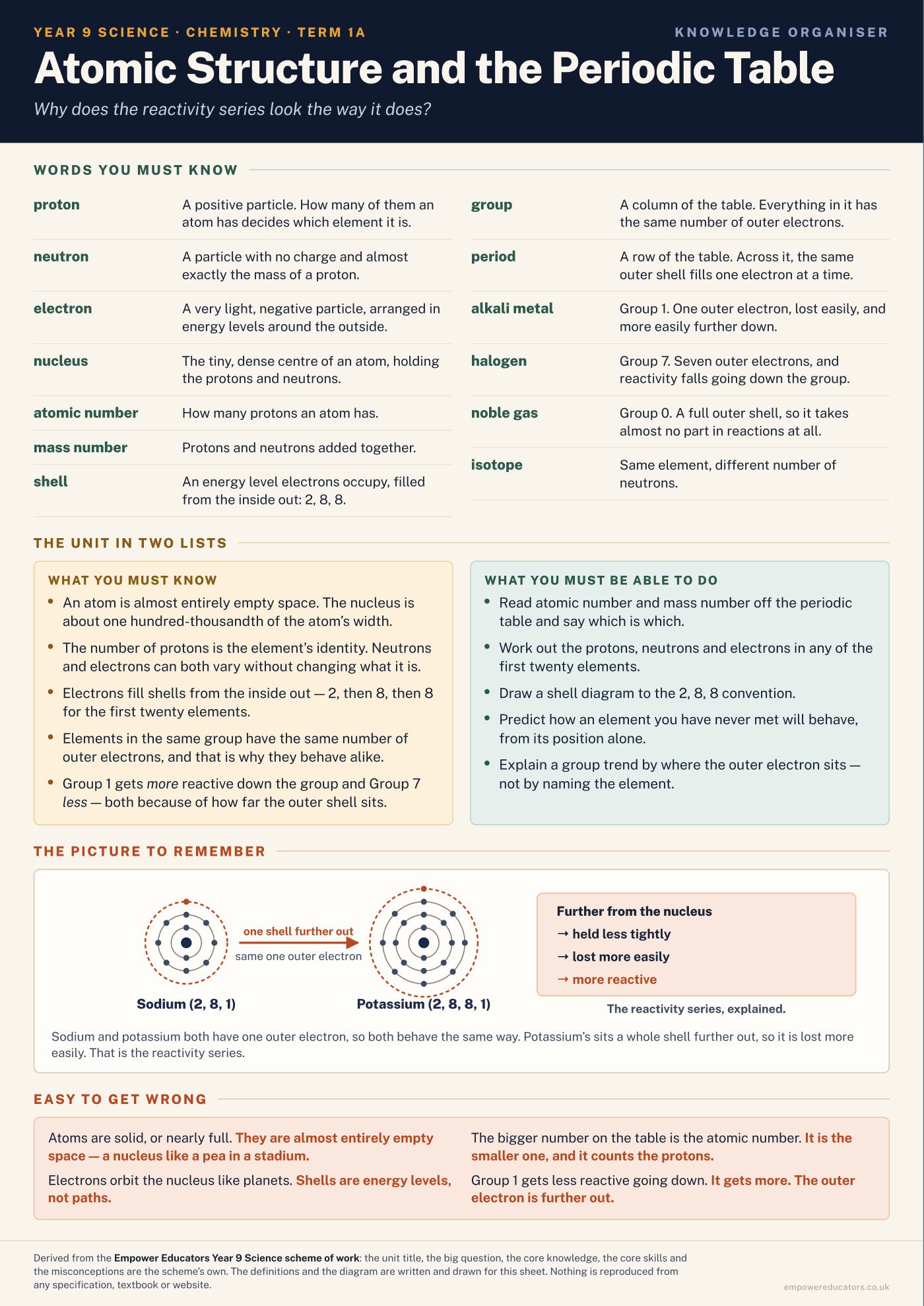
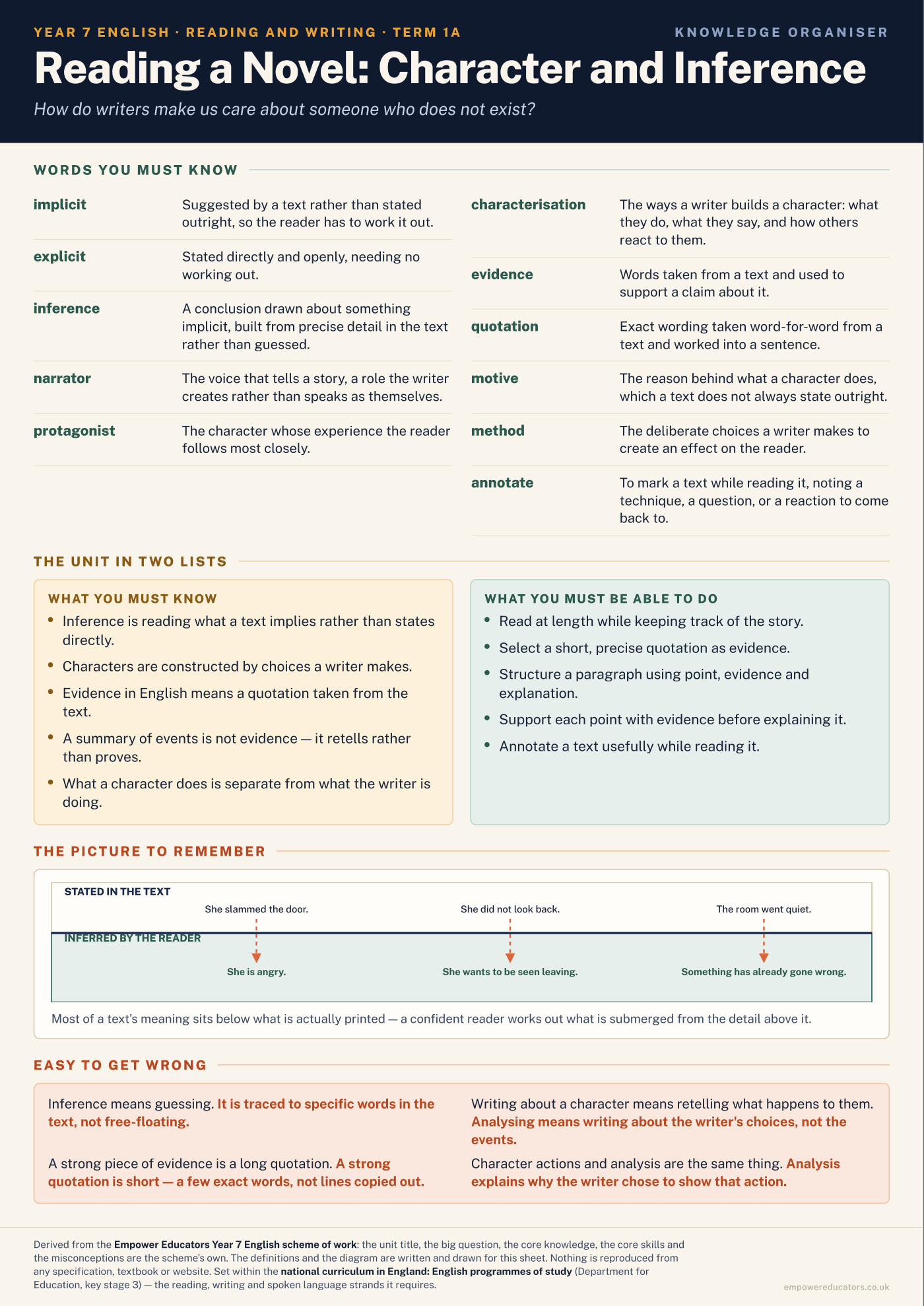
27 schemes of work, Year 7 to Year 11, a year at a time
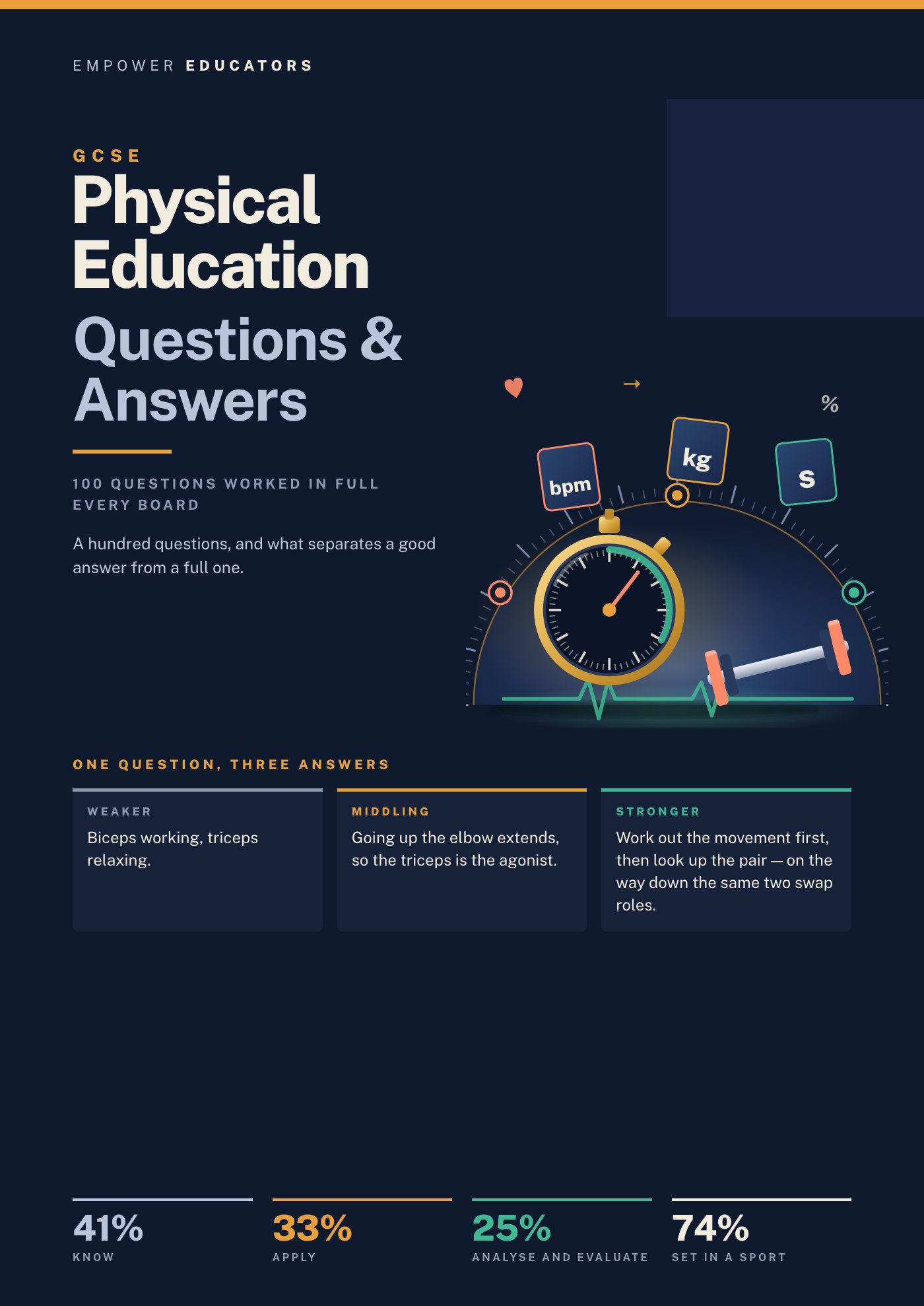
100 exam questions a subject, worked in full — a page each, three answers apiece
4528 pages in total, every one typeset for print
5 whole-staff INSET hours, deck and facilitator pack
53 A3 classroom posters, quoted from the specification

02·The resource hub

Everything a department actually needs, in one place

Empower Educators publishes practitioner resources for secondary schools, written inside one. Every figure is traced to a named DfE, Ofsted or exam-board publication, and everything is written to be handed straight to staff rather than adapted first. The playbooks came first, then the schemes of work, the examination playbooks, the classroom sets and the INSET sessions — all six kinds are finished and open to read.

02·The resource hub

01 / 07

01 Whole-school playbooks 7 books

The work that sits above any one department.

For SLT, pastoral leads, DSLs and SENCOs

Behaviour · Attendance · Safeguarding · SEND · Culture · Leadership · Inspection — seven books, one each.

What the guidance actually requires of you, what inspectors look for, and what to change first when the data says something is wrong. Built from DfE guidance, the Ofsted toolkit, the SEND Code of Practice and EEF evidence — quoted, not summarised.

Written for schools here and abroad. Most close with a standalone UAE chapter built on UAE law and the KHDA and ADEK frameworks, not a UK book with the names swapped.

Browse A4 PDF, 59–69 pages · Instant download

Showing 4 of 7 First 14 pages of each, free

Cover of Calm Classrooms, Confident Schools
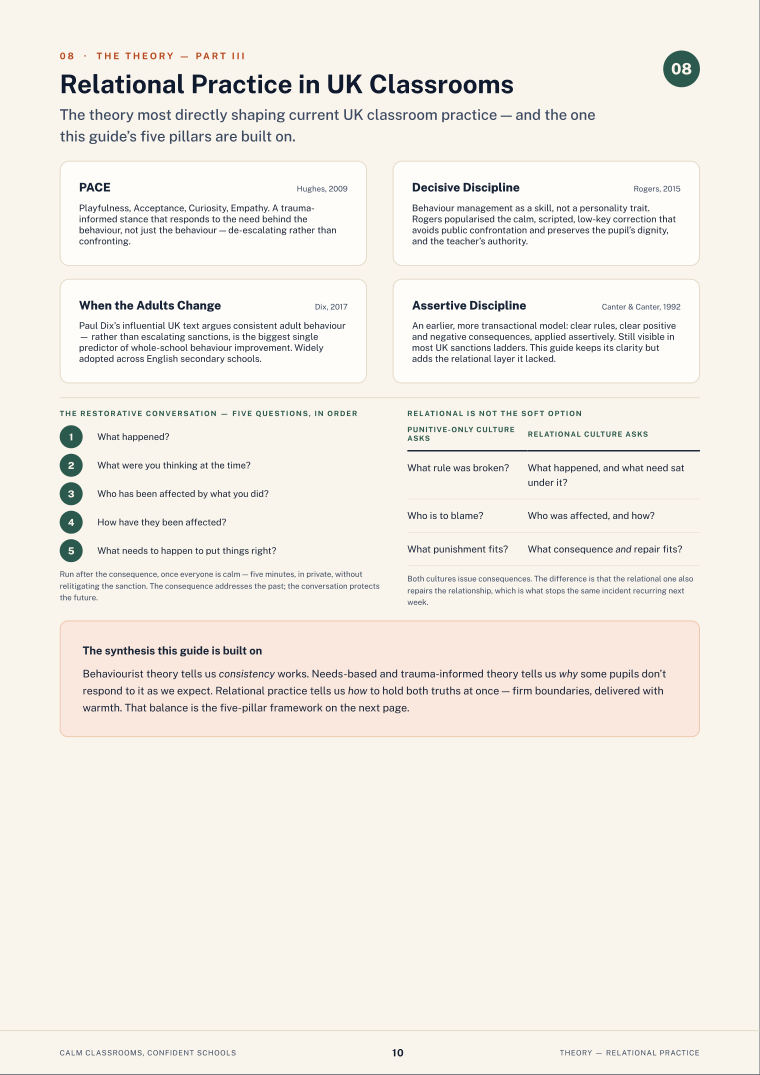
Cover of Every Day Counts, Confident Schools
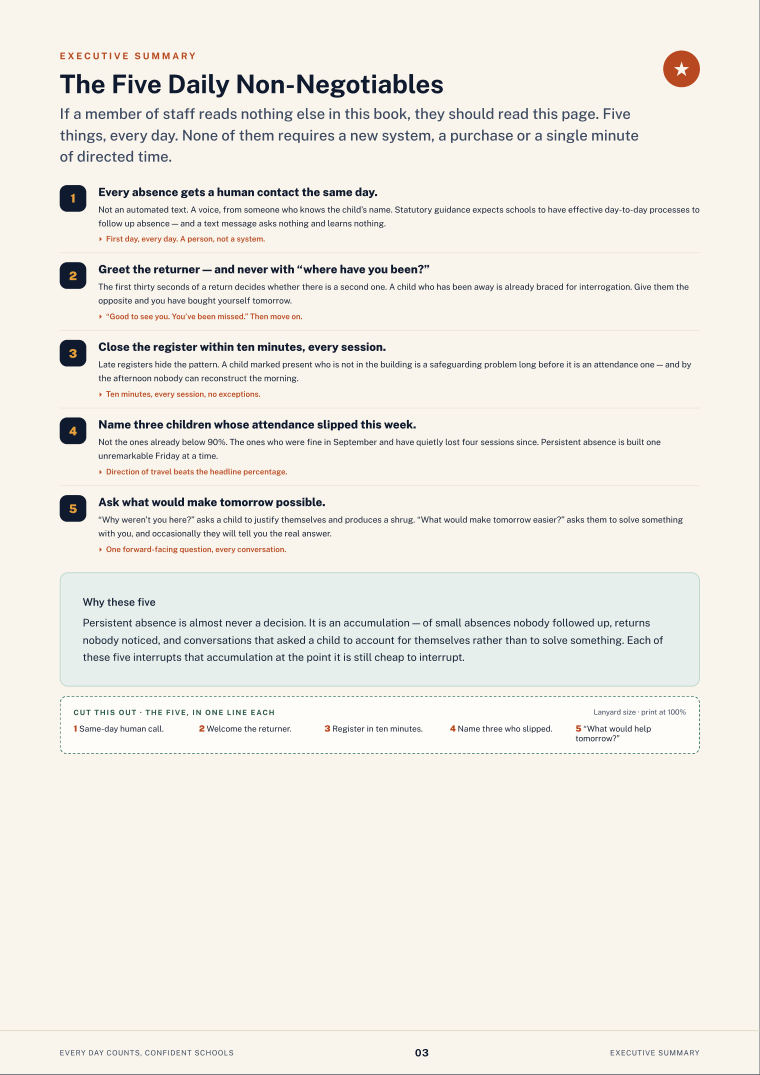
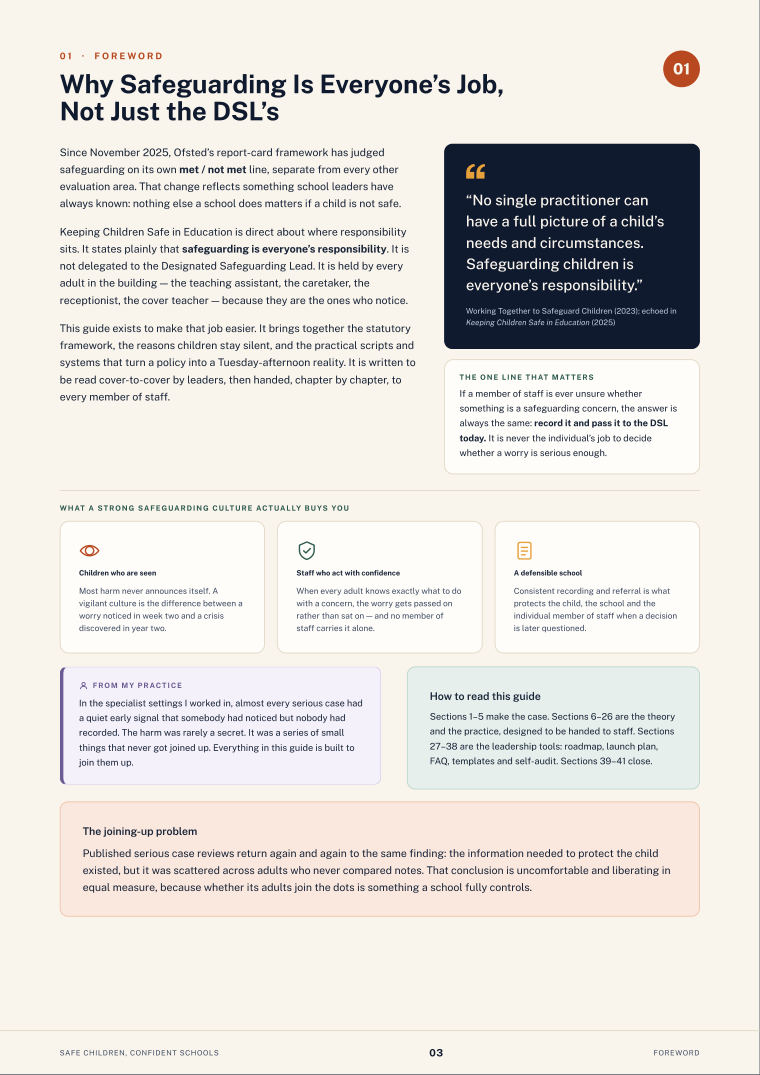
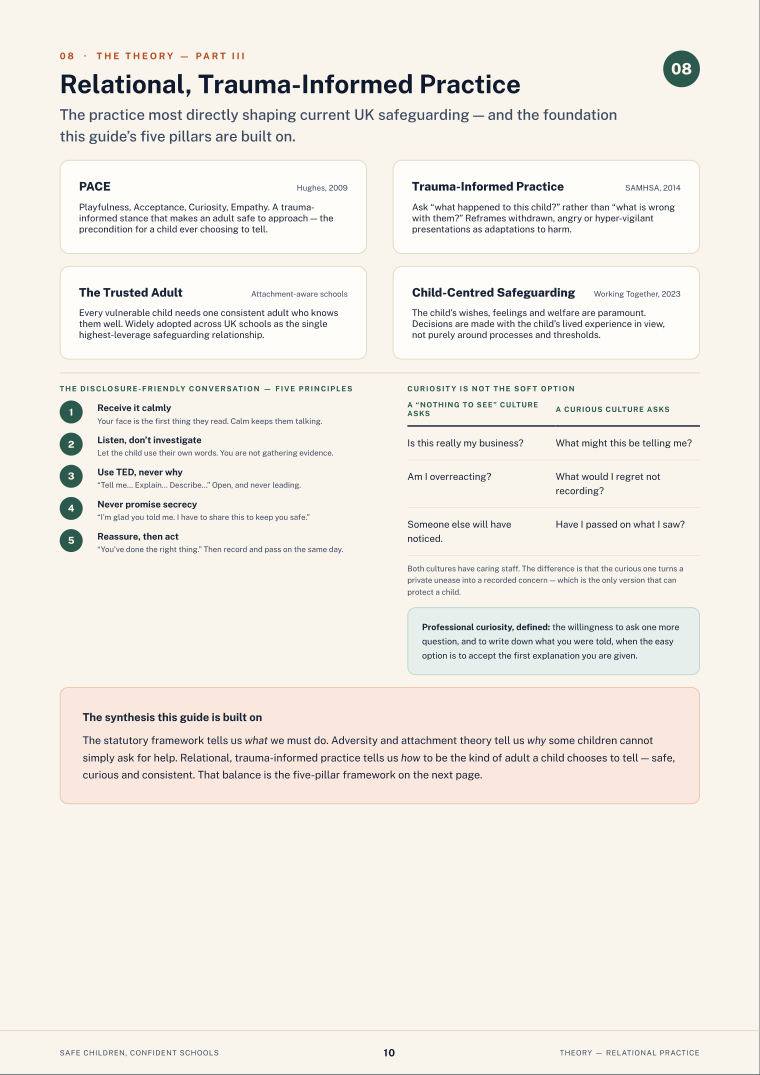
Cover of Safe Children, Confident Schools
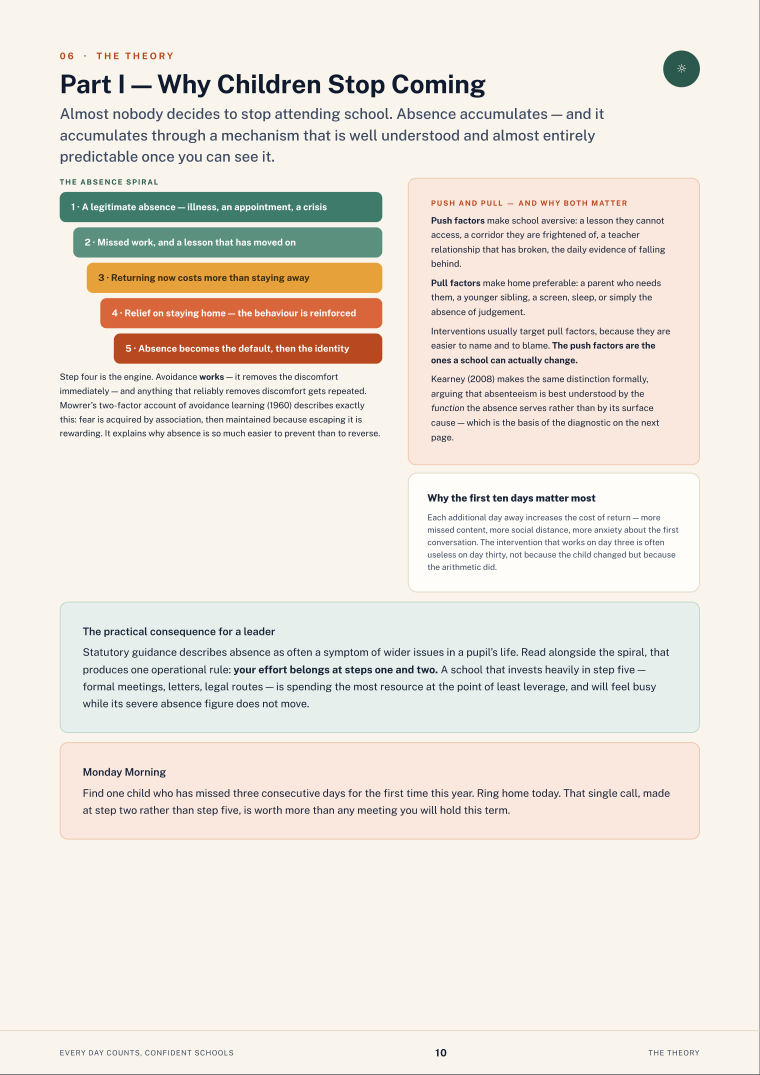
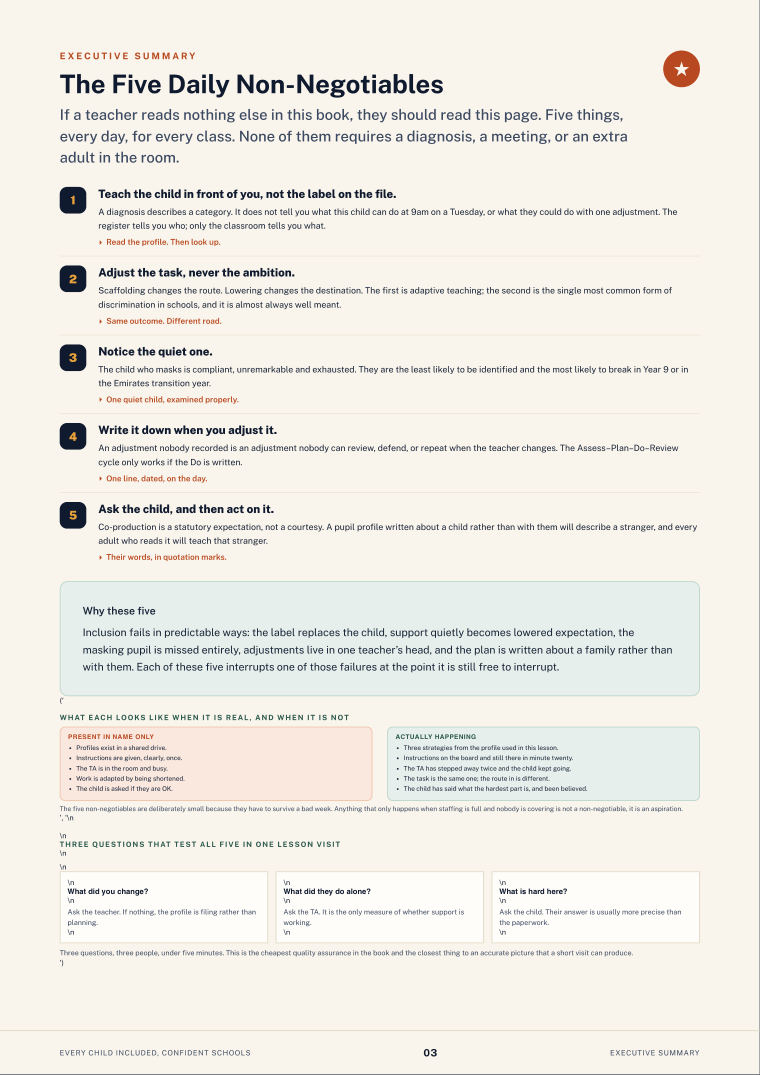
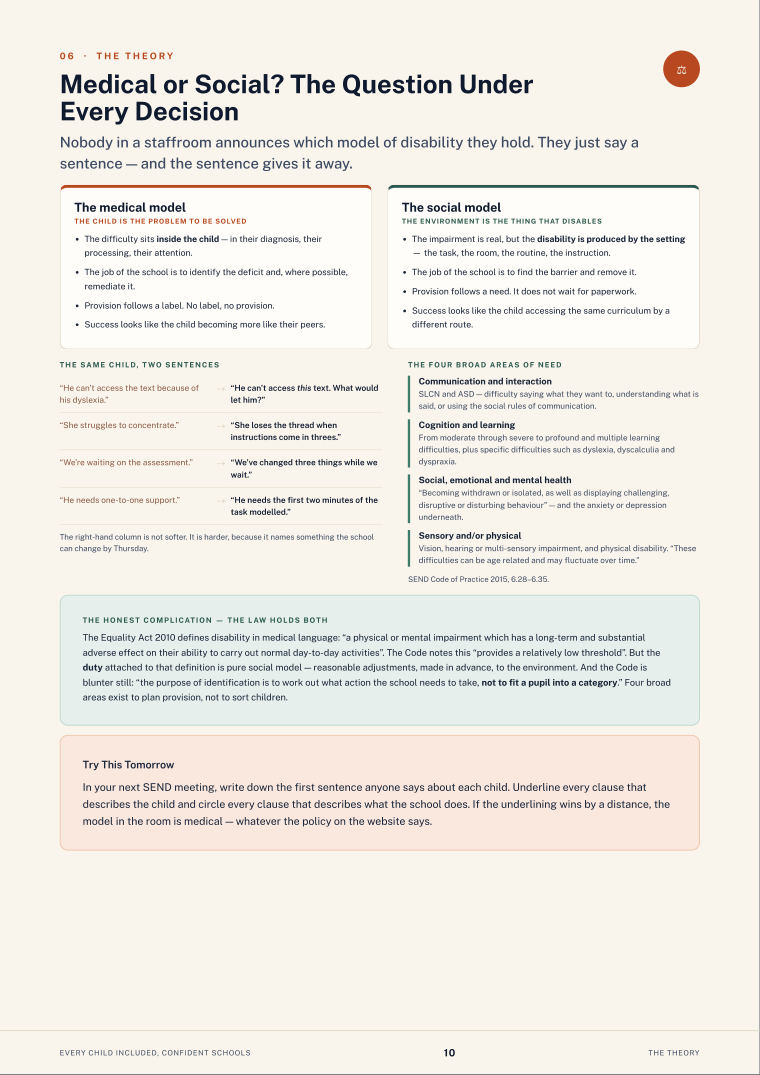
Cover of Every Child Included, Confident Schools

02 Subject playbooks 9 books

One book per department, Key Stage 3 to A Level.

For heads of department and every teacher in one
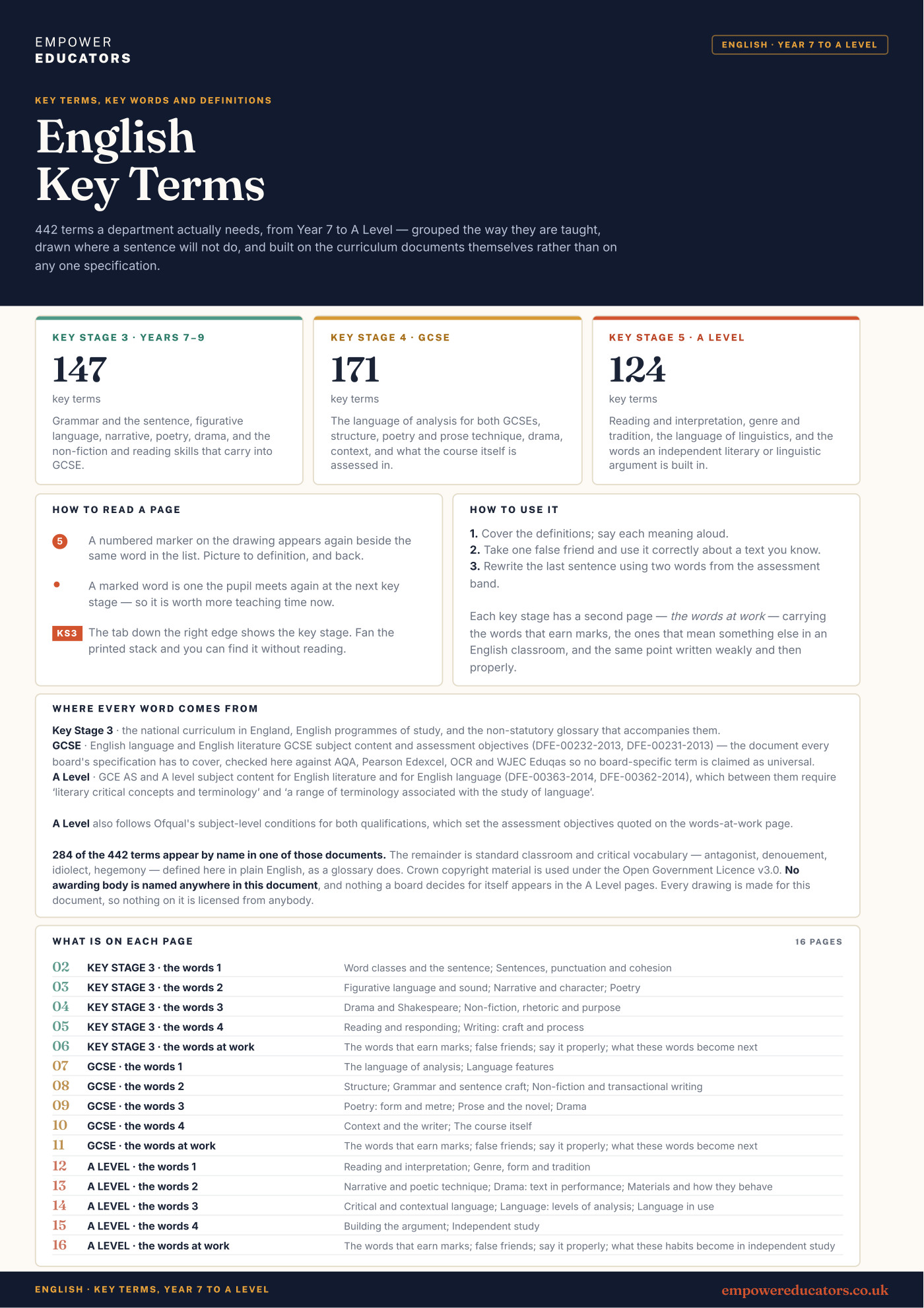
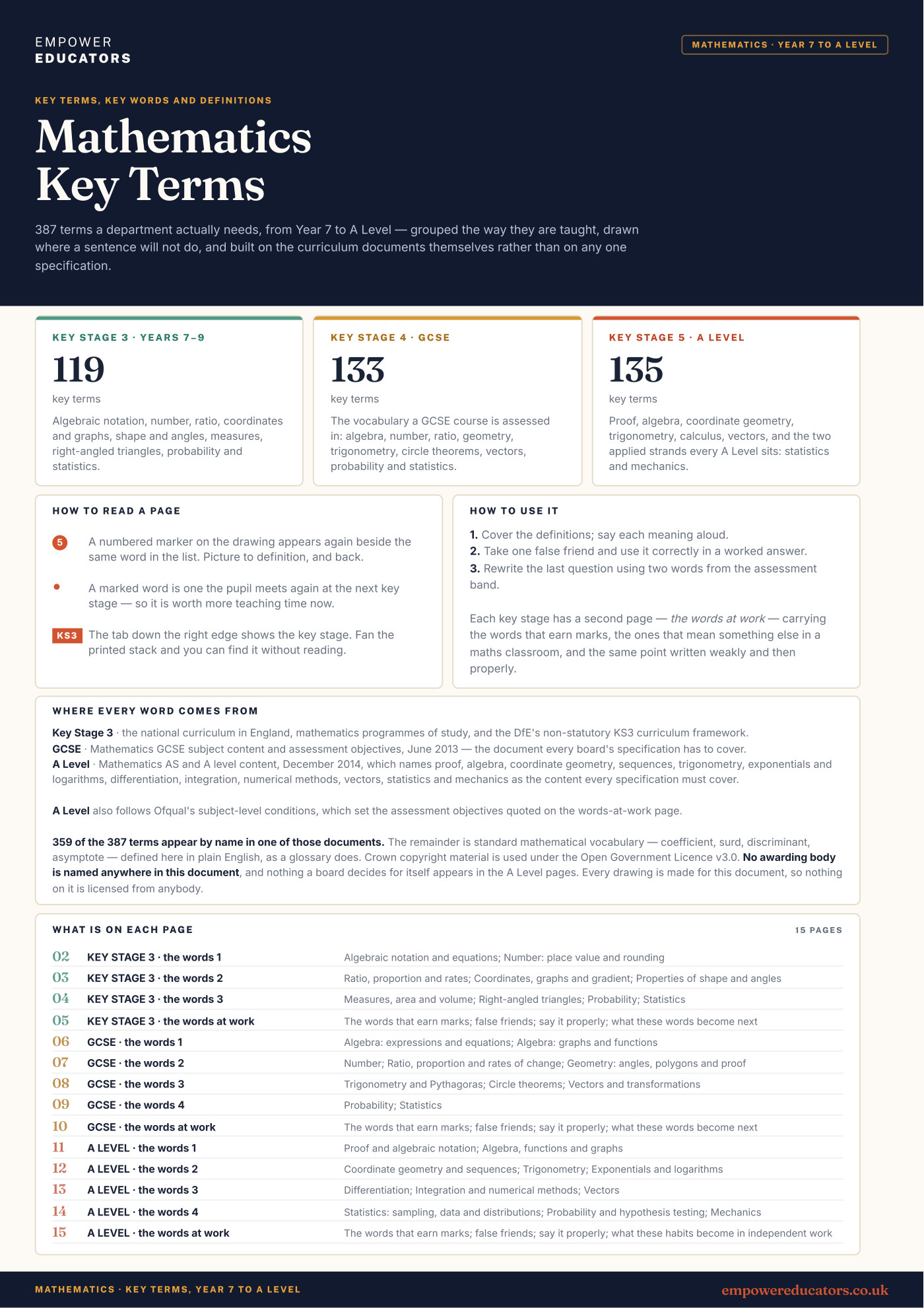
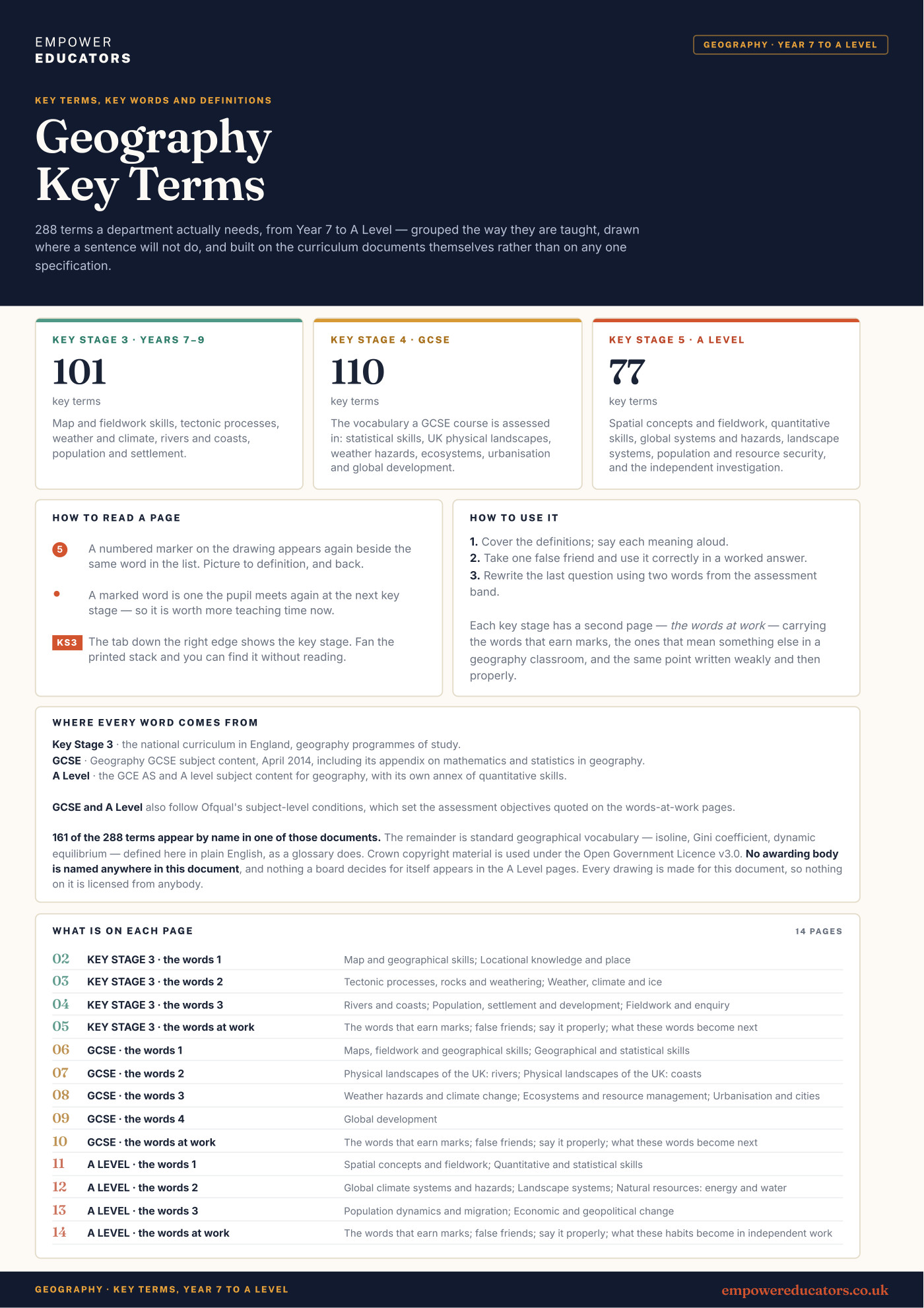
English · Mathematics · Science · Art & Design · PE · Geography · History · Business · Drama

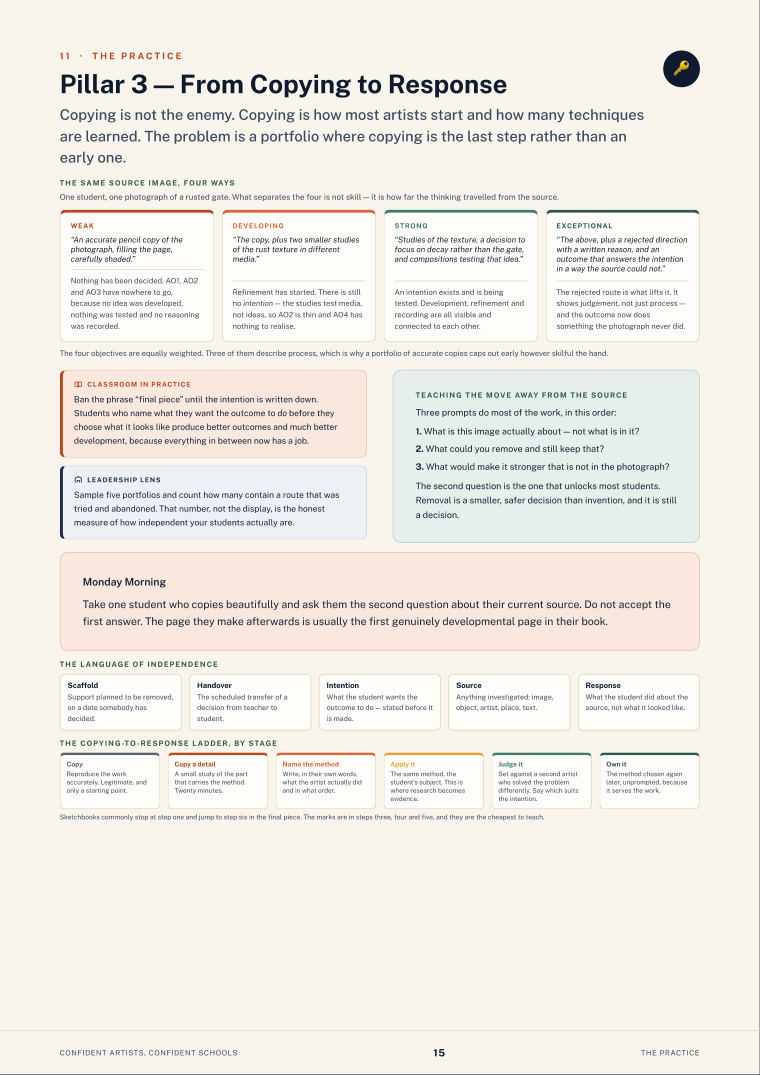
How the subject builds from Year 7 to Year 13, what each key stage has to leave behind for the next, and where departments lose ground without noticing. Built from the exam boards' own specifications read in full — with what the specification demands kept clearly apart from what we recommend.

Every judgement comes with a quality ladder: what weak, developing, strong and exceptional actually look like in this subject, so a department can place itself honestly.
Browse A4 PDF, 72–93 pages · Instant download
Showing 4 of 9 First 14 pages of each, free

Cover of Articulate Writers, Confident Schools
Cover of Fluent Mathematicians, Confident Schools
Cover of Curious Scientists, Confident Schools
Cover of Skilled Artists, Confident Schools

03 Examination playbooks 38 playbooks

How your exam board actually marks your subject.

For teachers, heads of department and SLT · Not a student revision guide

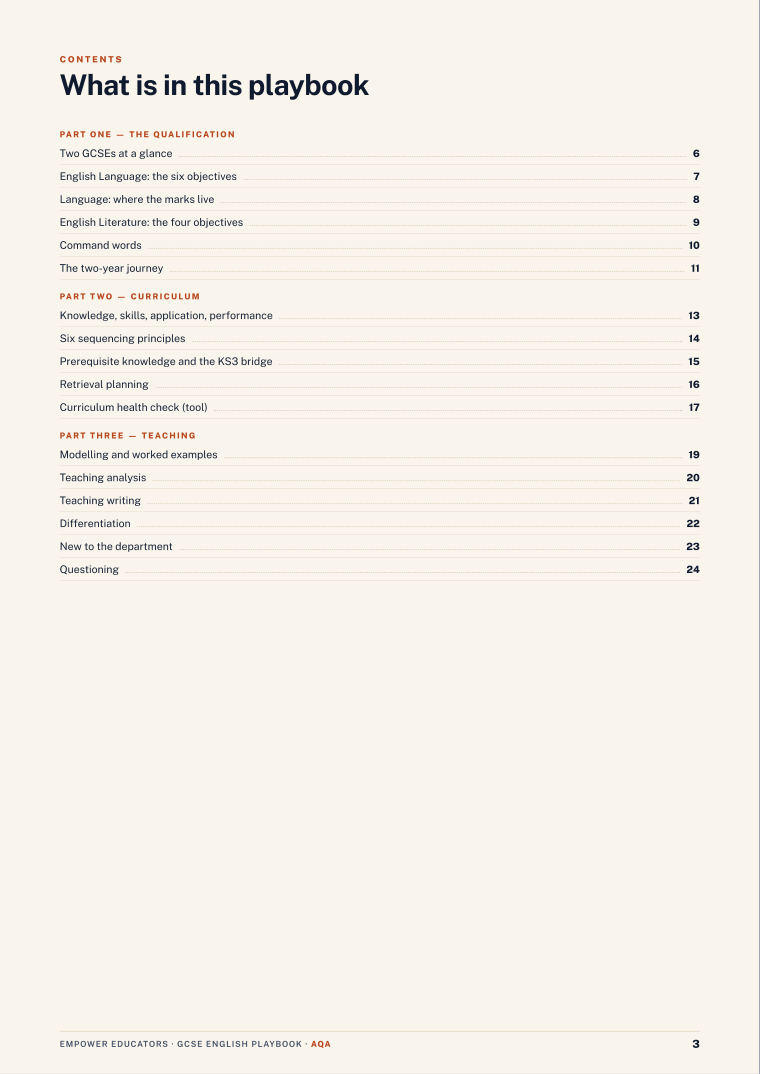
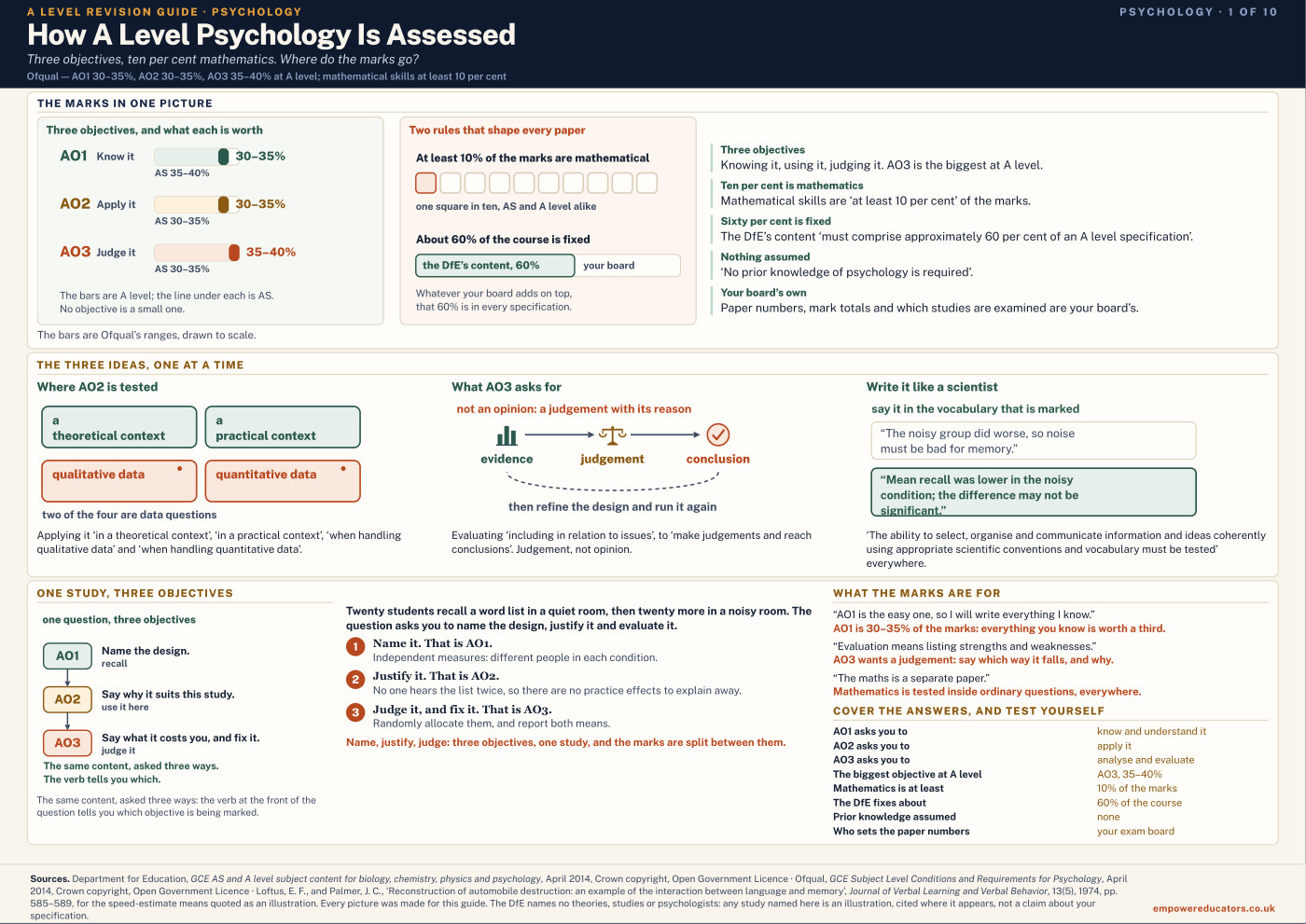
English · Mathematics · Science · Art & Design · Physical Education · Geography · Business — AQA, OCR and Pearson Edexcel, one book per board

What each assessment objective is really worth, how the mark scheme levels work, what lifts an answer from the middle to the top, and where students quietly lose marks. Quoted word for word from your board’s own specification.

Check your board AQA gives A Level English Literature AO1 28%. OCR gives it 20%. Same wording, different priorities.

Browse A4 PDF · Instant download

Showing 4 of 38 First 15 pages of each, free

Cover of AQA GCSE English Assessment Objectives — Exam Preparation
Cover of OCR GCSE English Assessment Objectives — Exam Preparation
Cover of Pearson Edexcel GCSE English Assessment Objectives — Exam Preparation
Cover of AQA A Level English Assessment Objectives — Exam Preparation

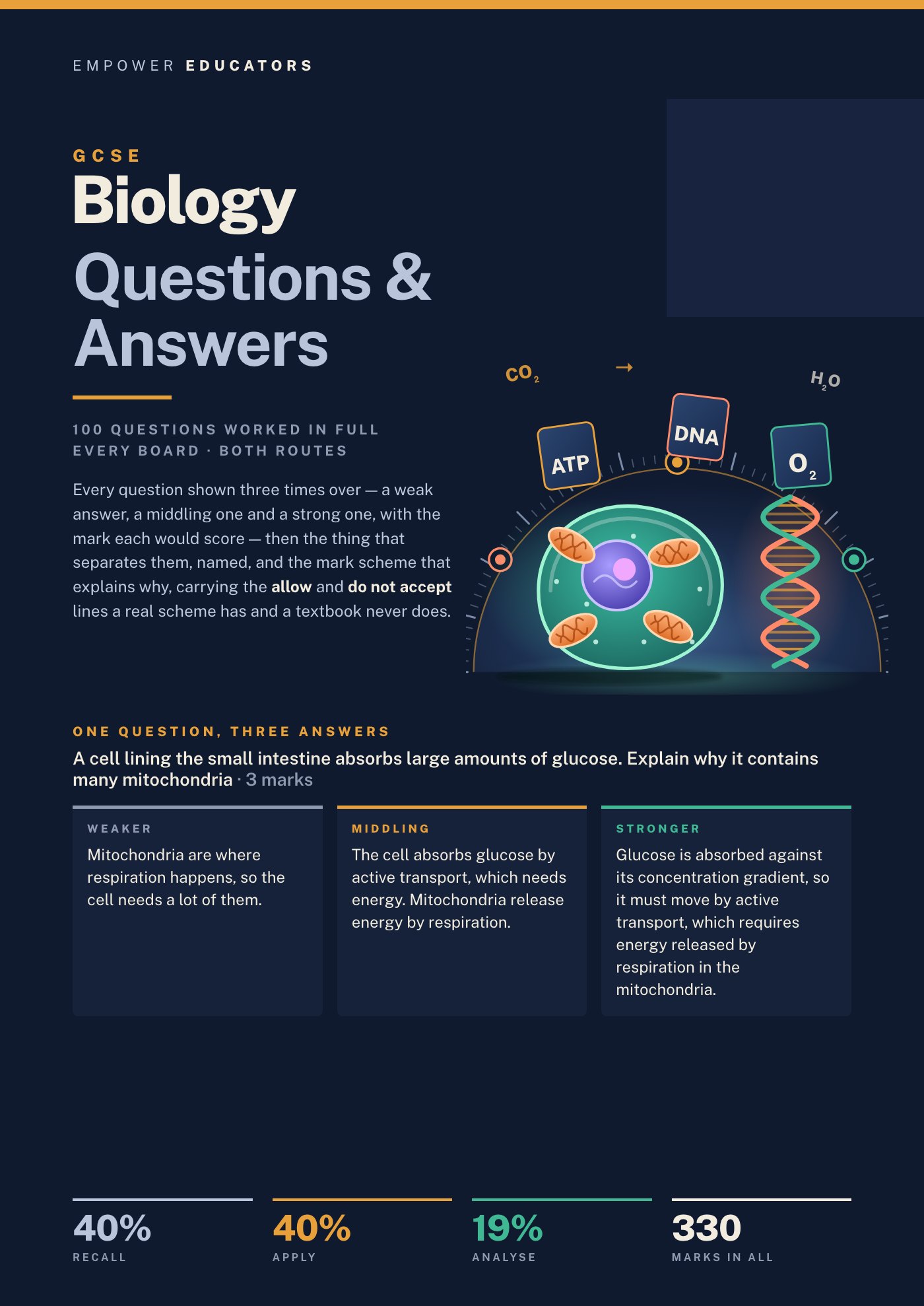
04 Questions and model answers New 6 books

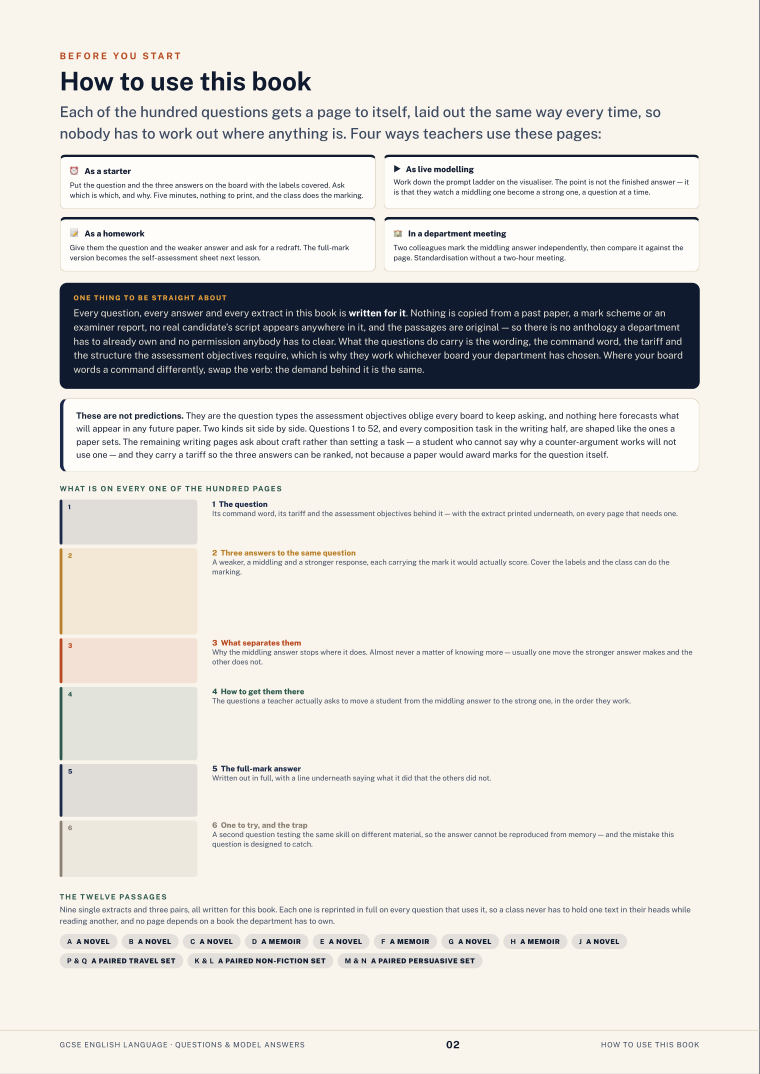
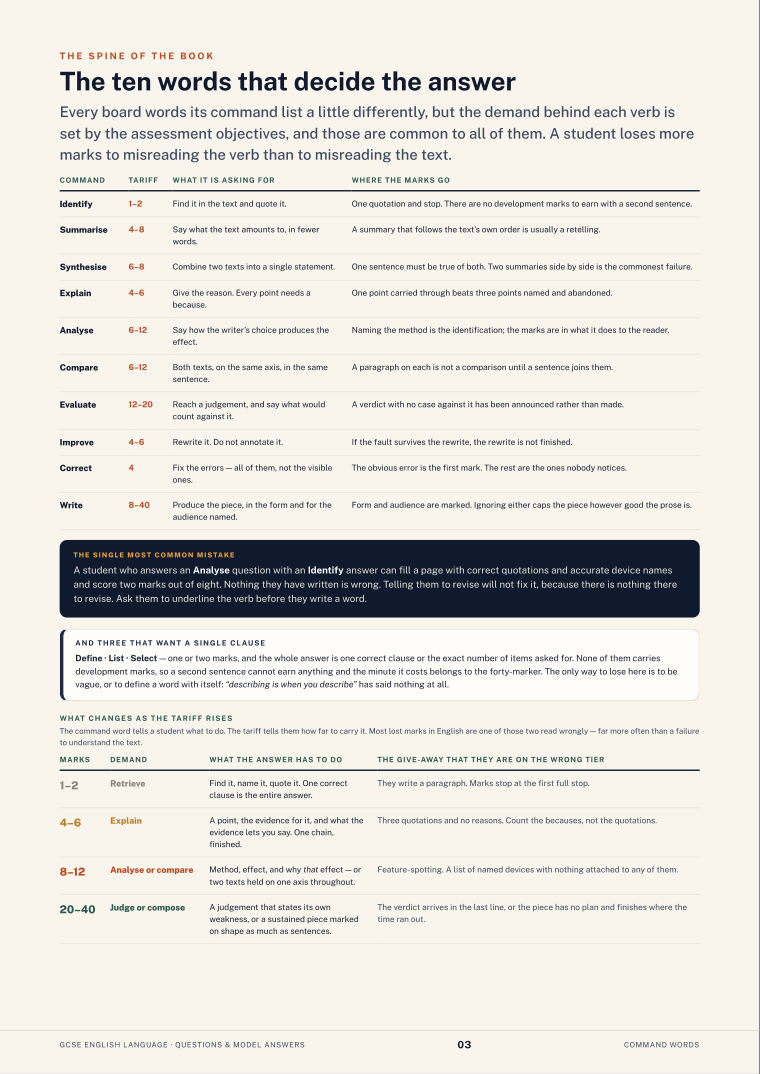
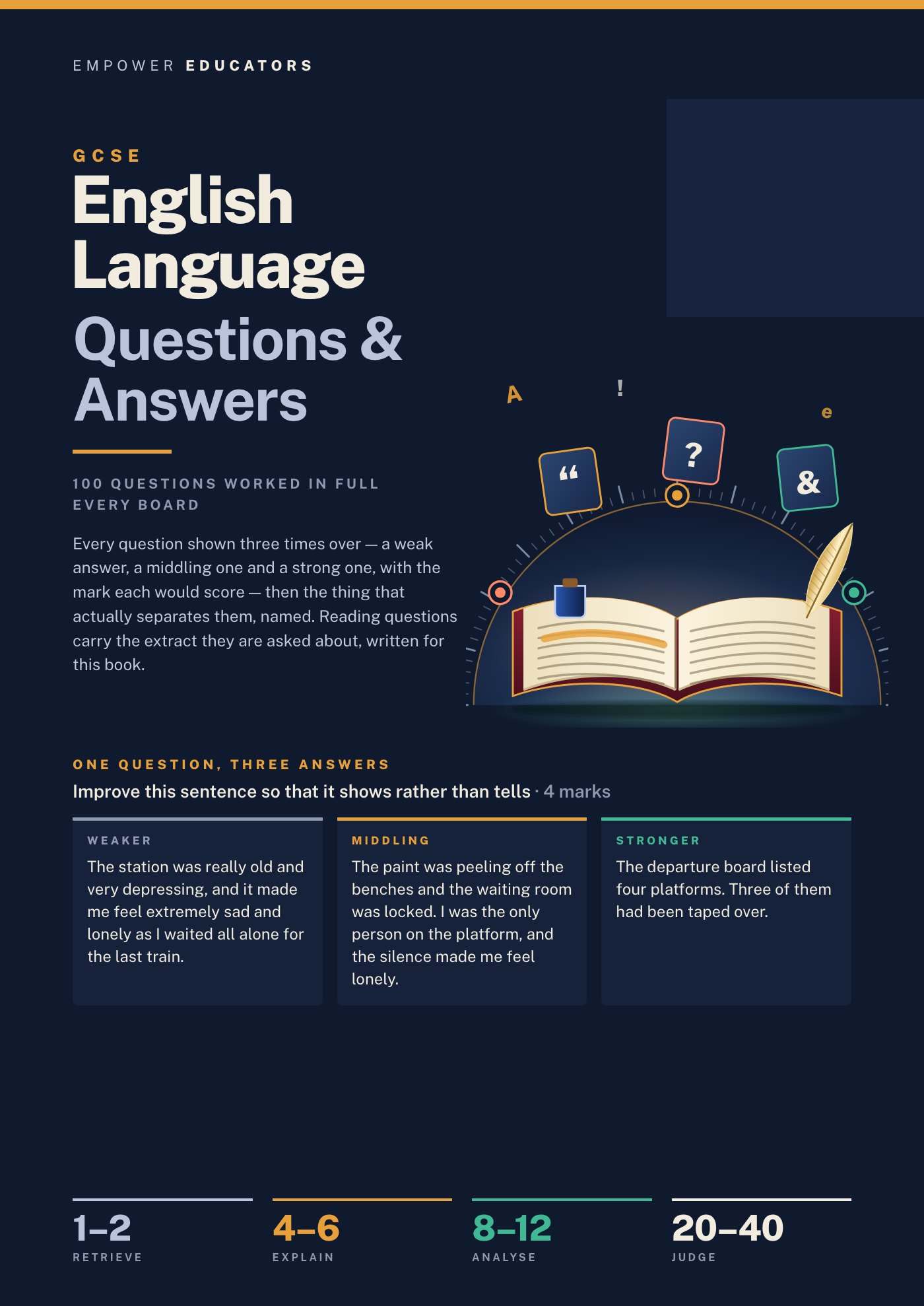
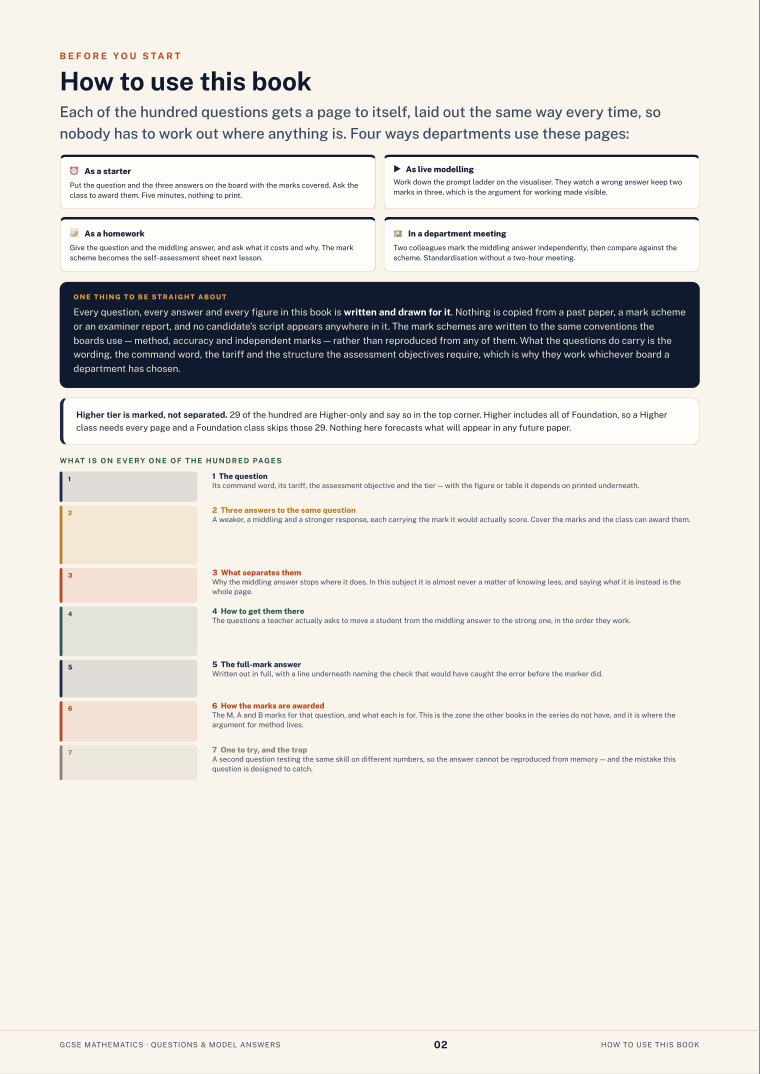
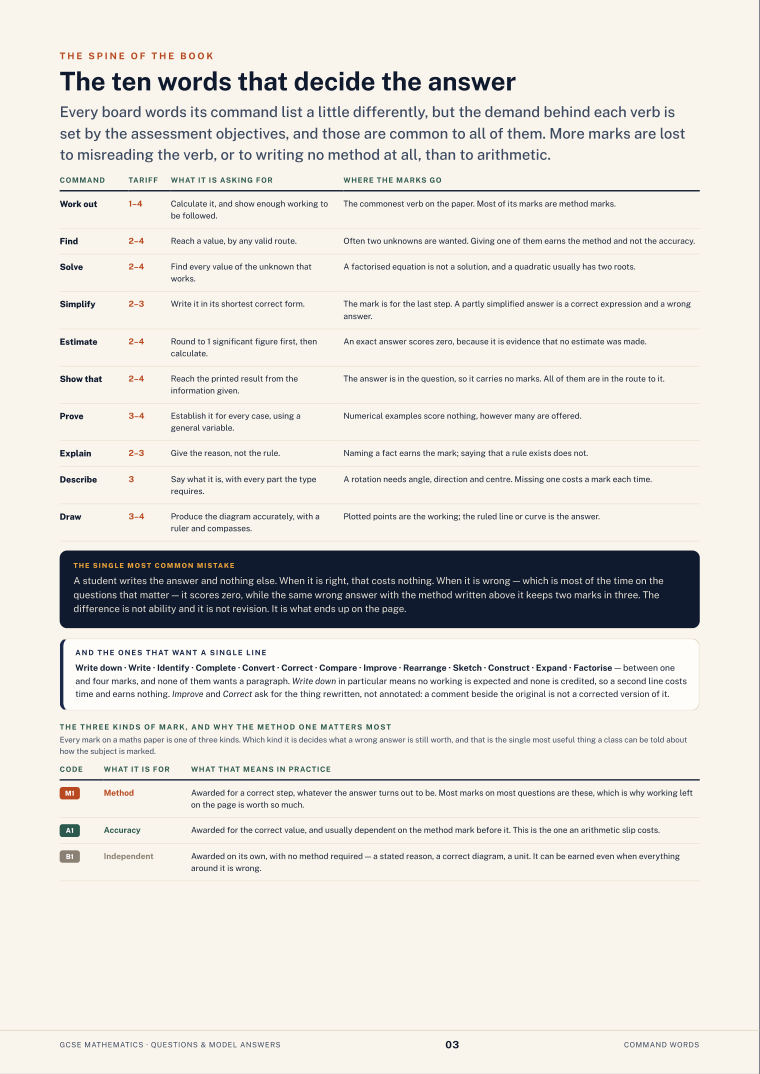
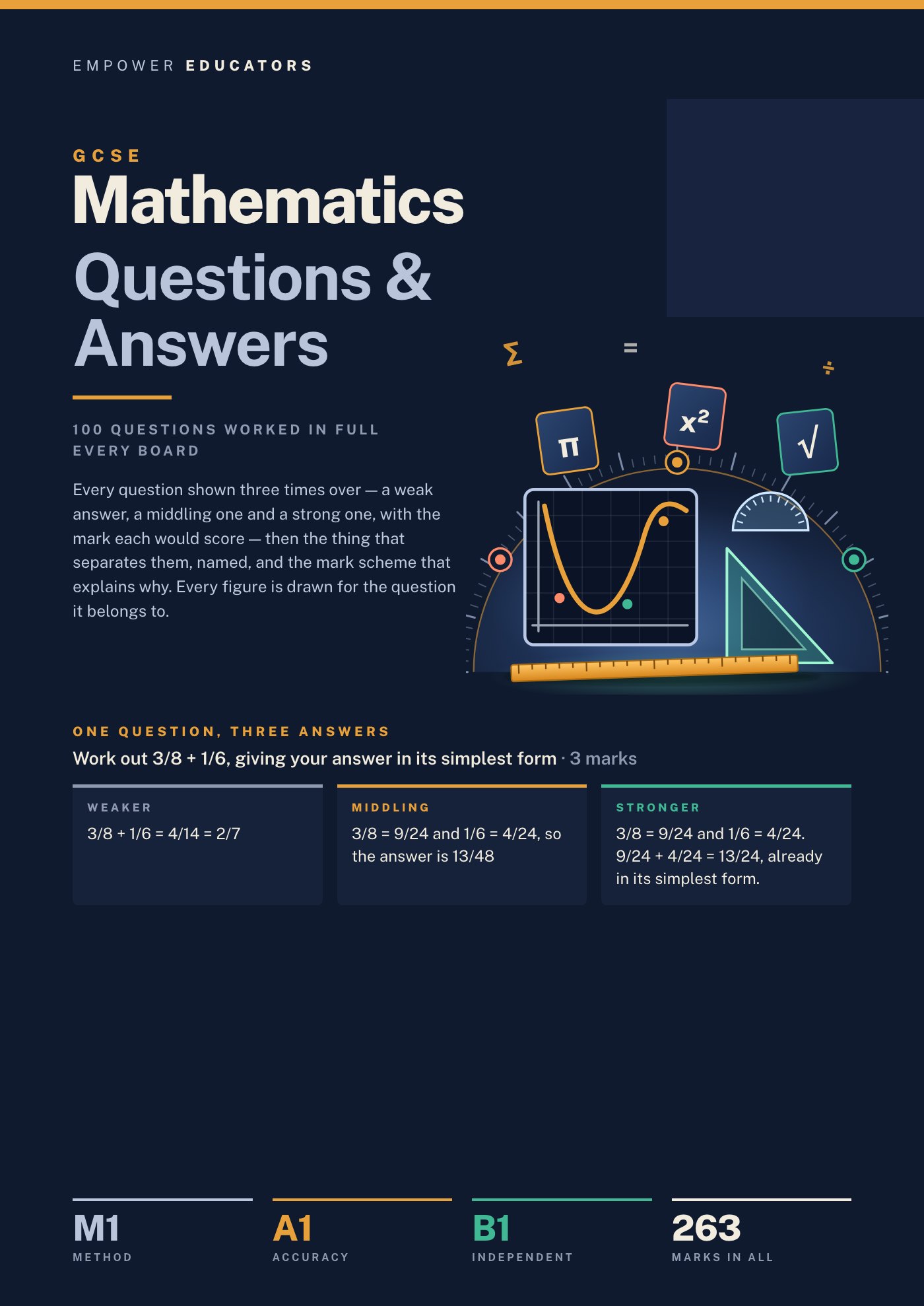
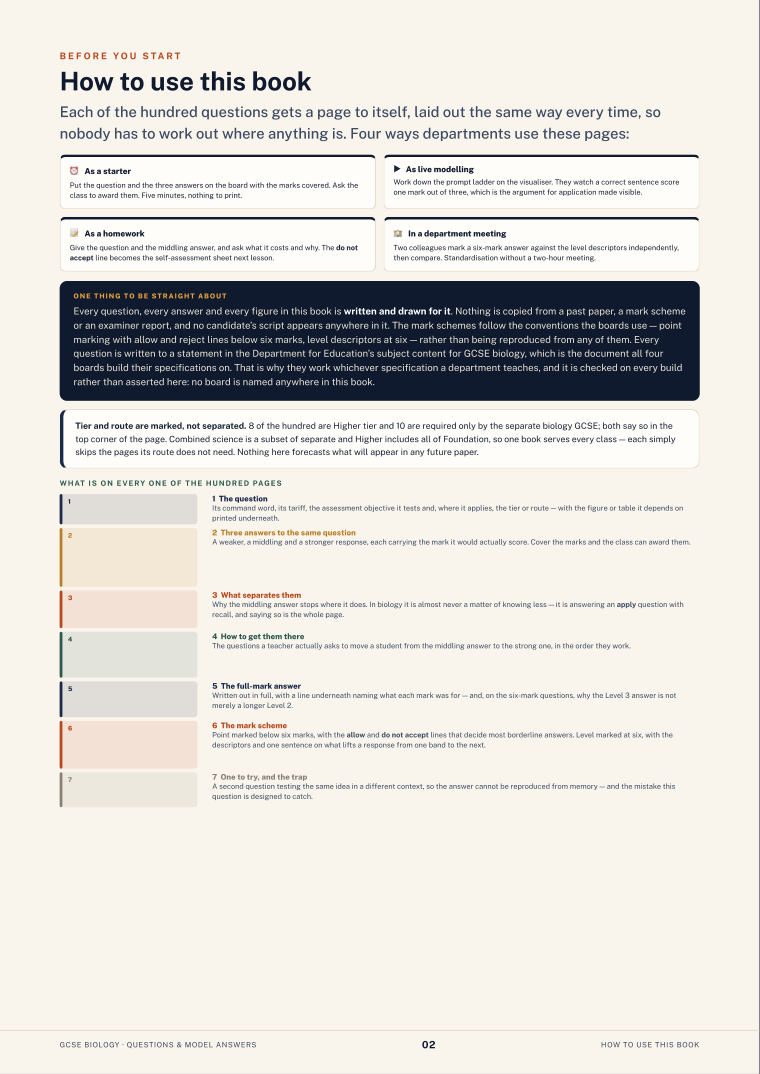
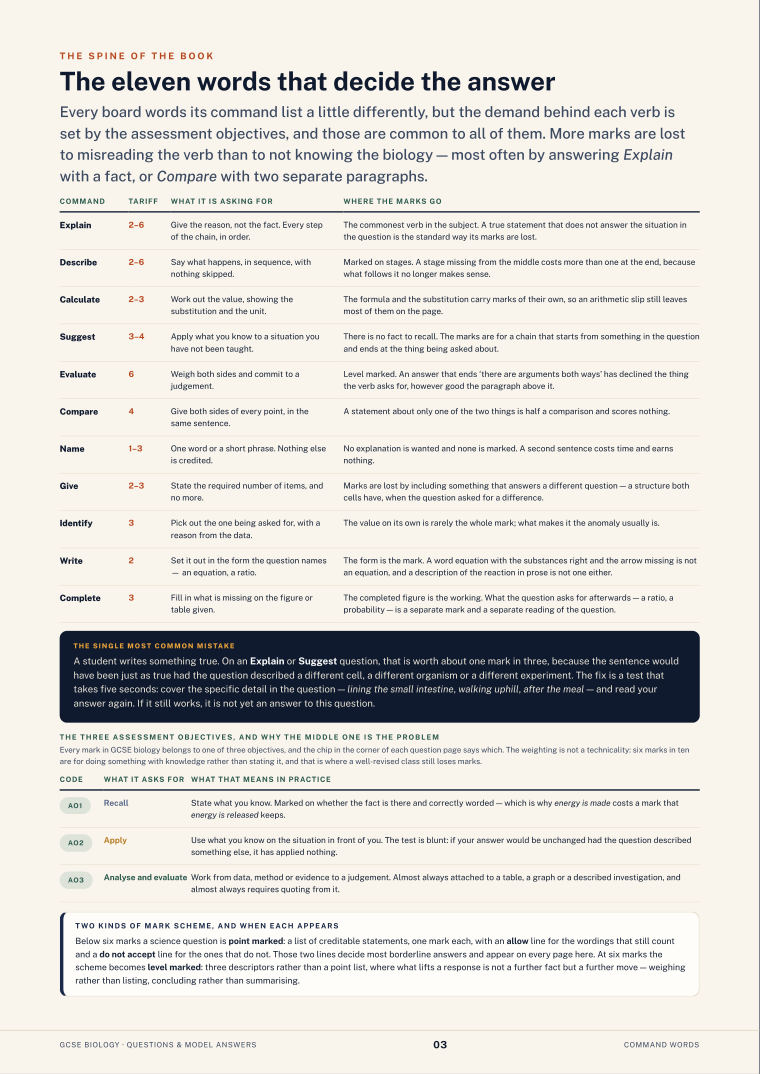
A hundred questions a subject, each worked over a full page.

For subject teachers and heads of department

English Language · Mathematics · Biology · Chemistry · Physics · Geography

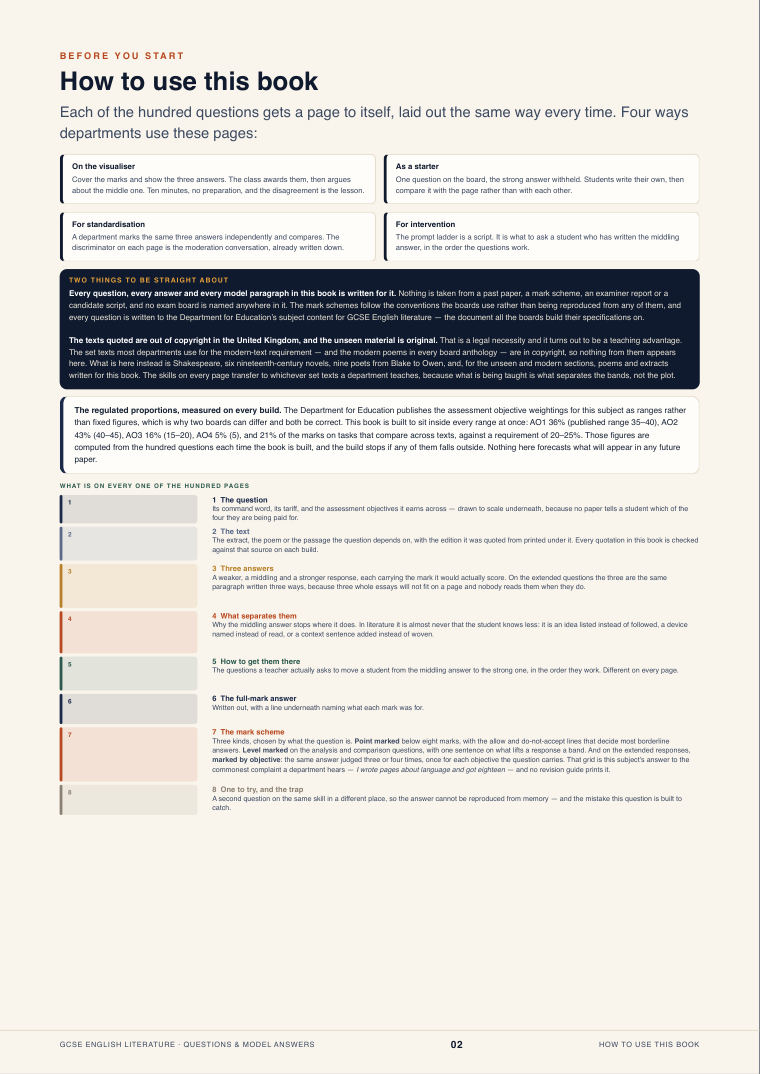
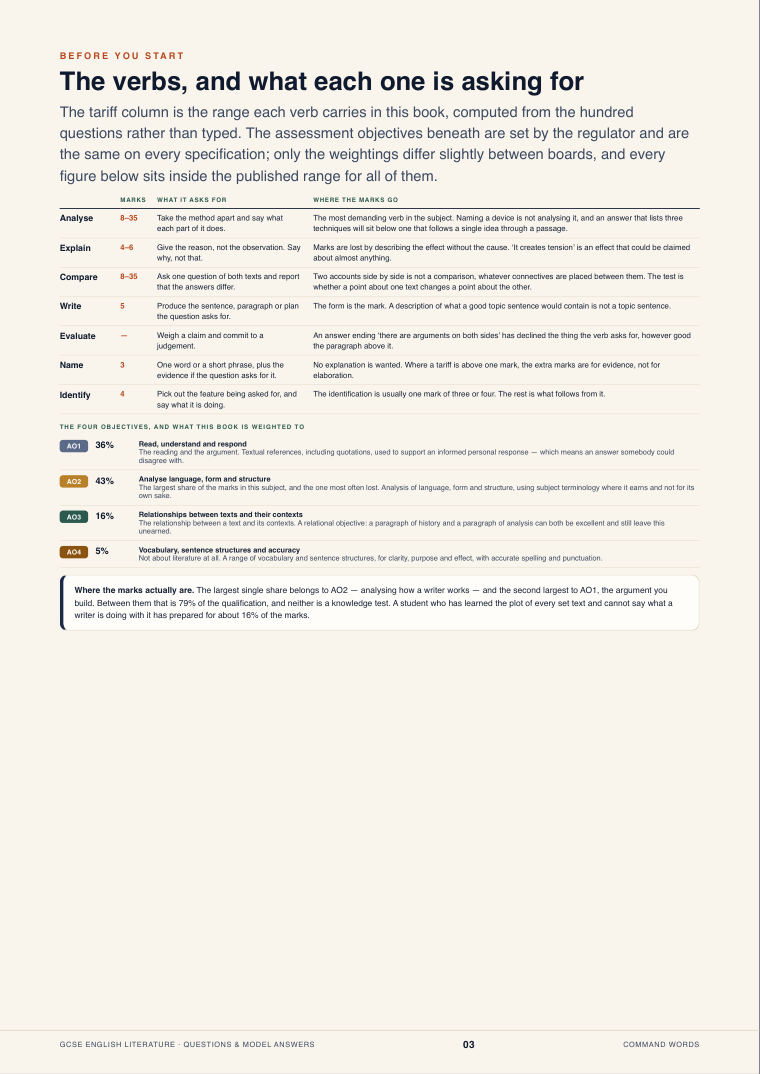
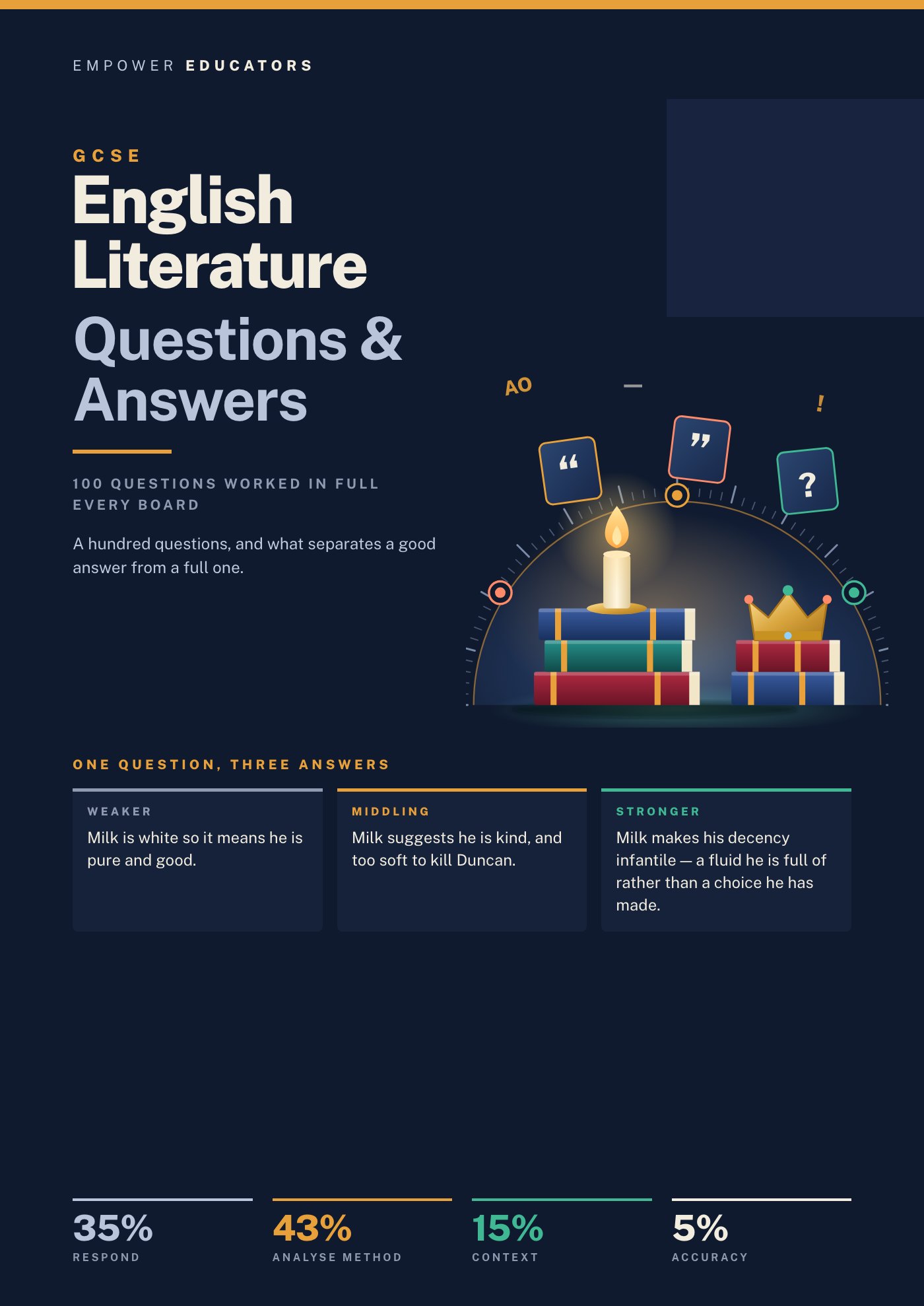
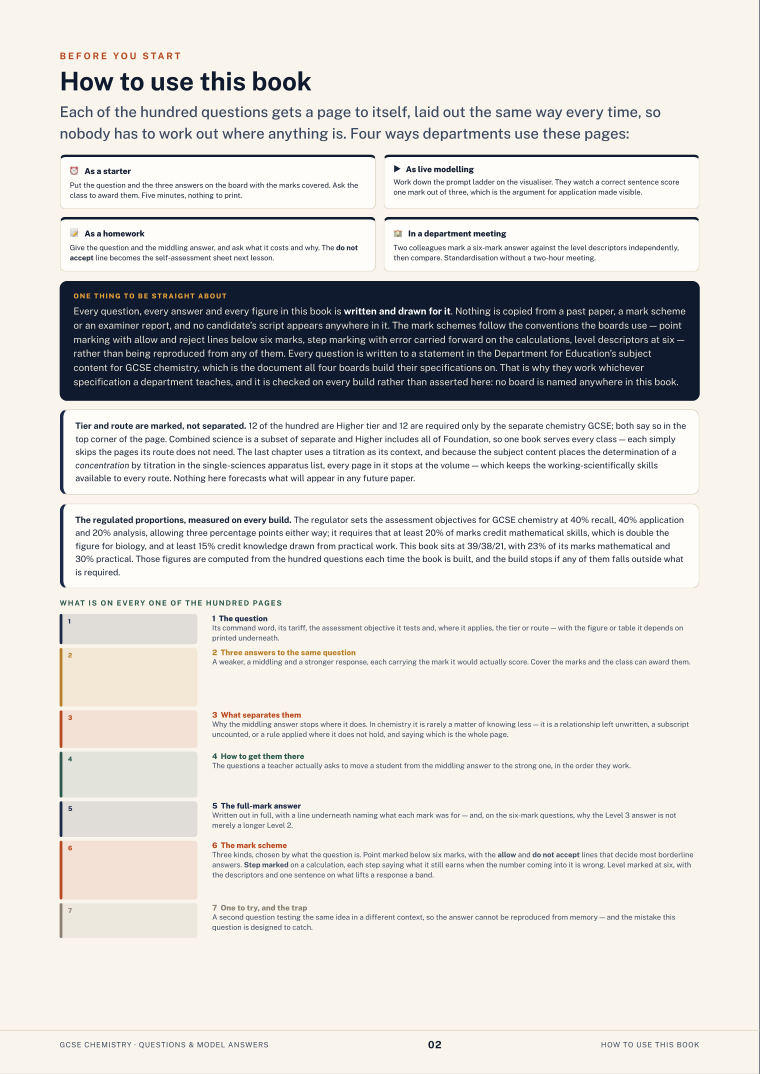
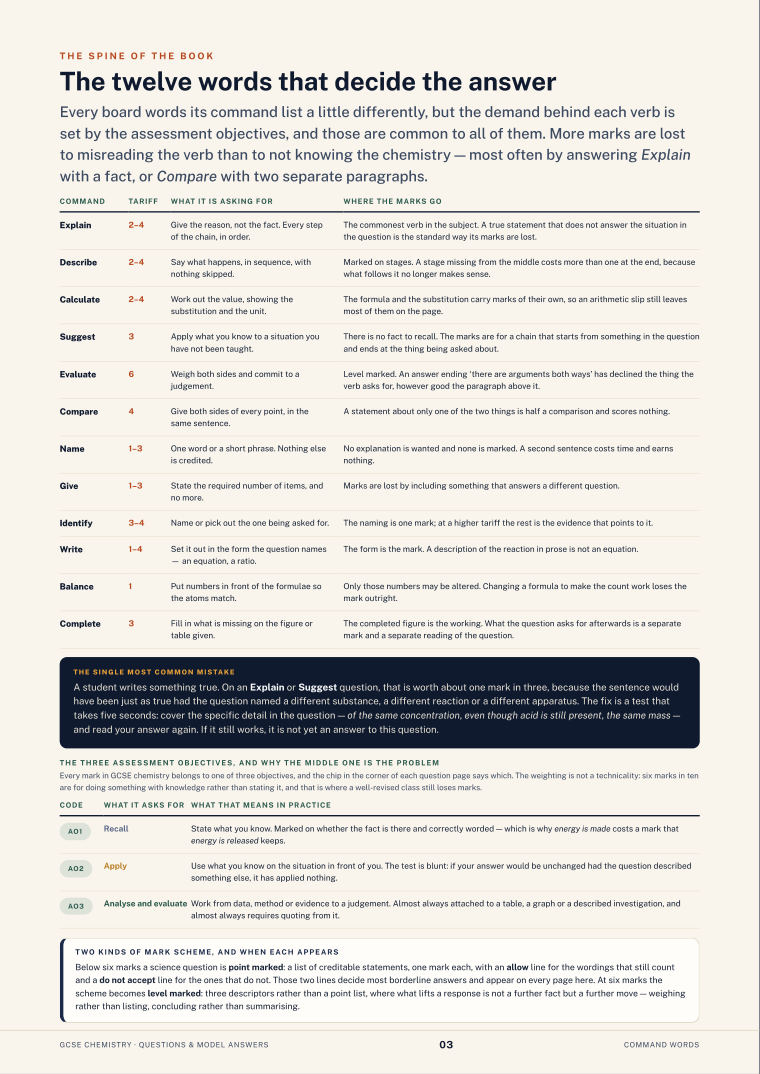
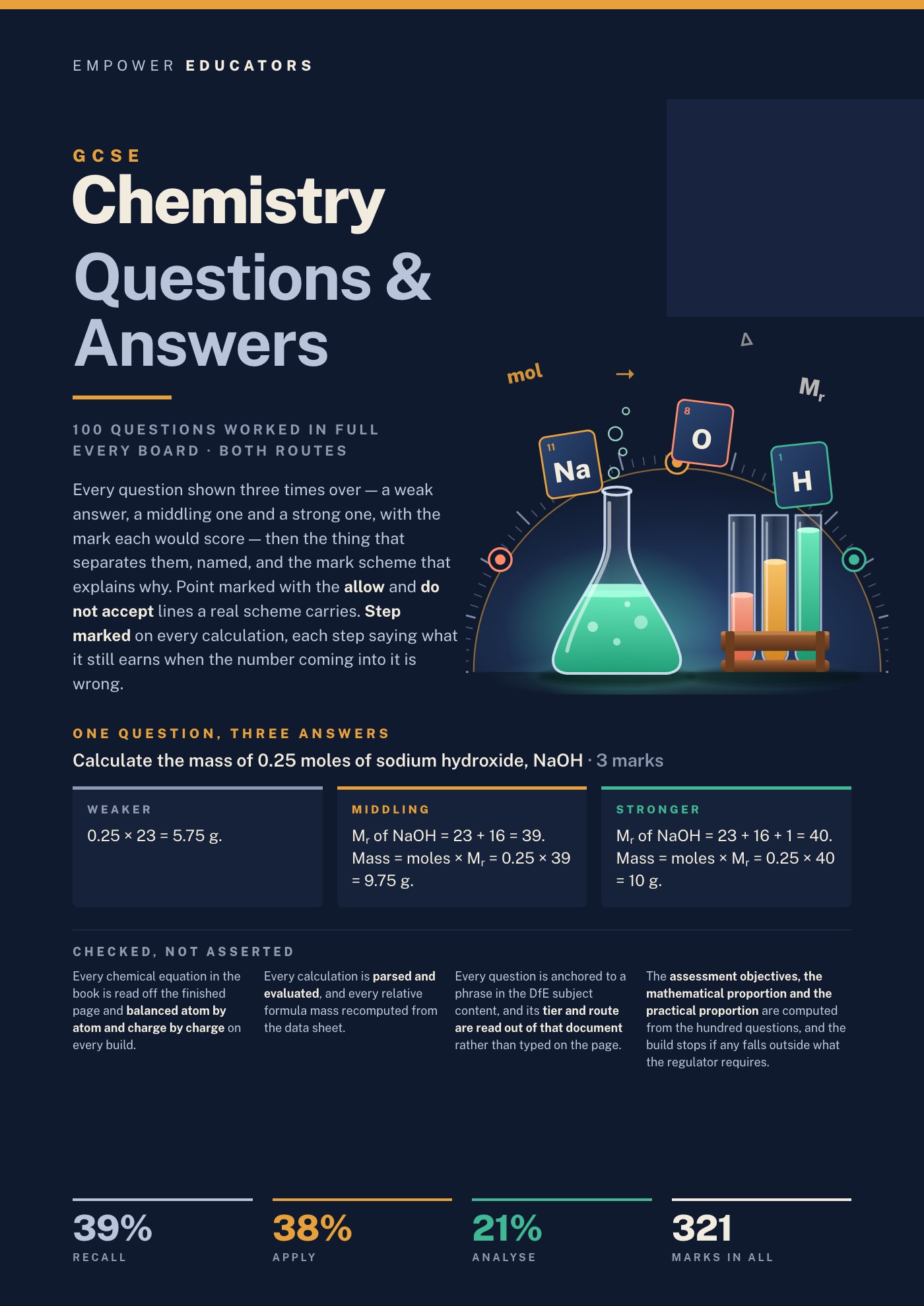
Every question is shown three times over: a weak answer, a middling one and a strong one, each carrying the mark it would actually score. Then the thing that separates them is named out loud, and the prompts you ask to move a student from the first to the last are set out in order. That prompt sequence is the part no mark scheme contains. Board-neutral by construction. A subject’s assessment objectives are set by Ofqual and worded identically for AQA, Edexcel, OCR and Eduqas, so a question written to the objectives works whichever specification a department teaches. No board is named anywhere in the books.

Written for these books rather than taken from anywhere: no past paper, no mark scheme, no examiner report, and no candidate’s script. Nothing inside them carries a licensing question either — every figure is drawn in code and every passage is original, so no anthology and no picture credit is needed to teach from any of them.

Browse A4 PDF, 106–107 pages.

Showing 4 of 6 First 14 pages of each, free

Cover of GCSE English Language Questions & Model Answers
Cover of GCSE Mathematics Questions & Model Answers
Cover of GCSE Biology Questions & Model Answers
Cover of GCSE Chemistry Questions & Model Answers

05 Schemes of work 27 schemes

Sequences, not lists.

For curriculum leads

English · Mathematics · Science · Art & Design · Physical Education — Years 7 to 11

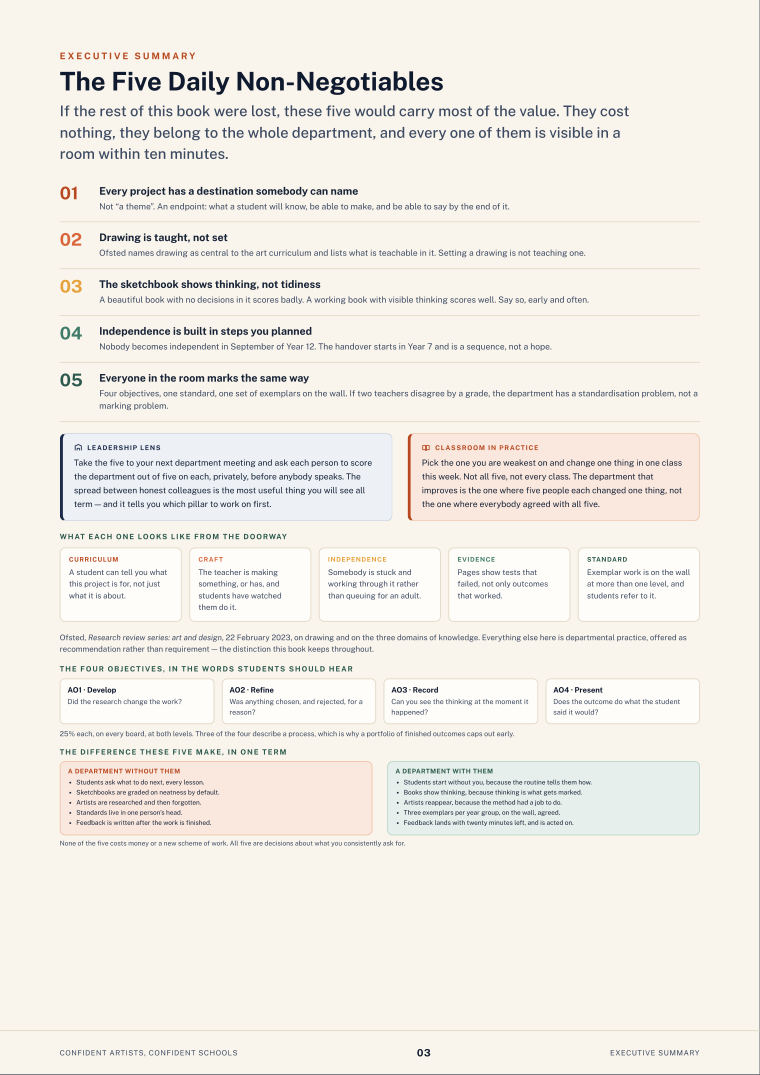
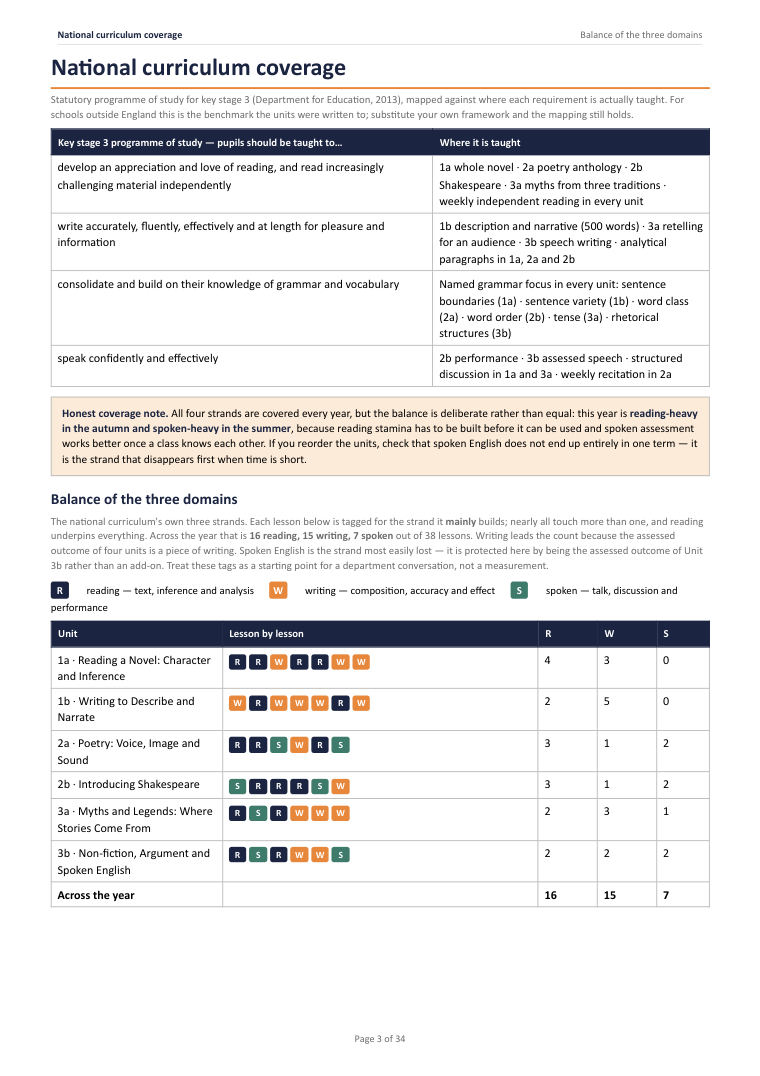
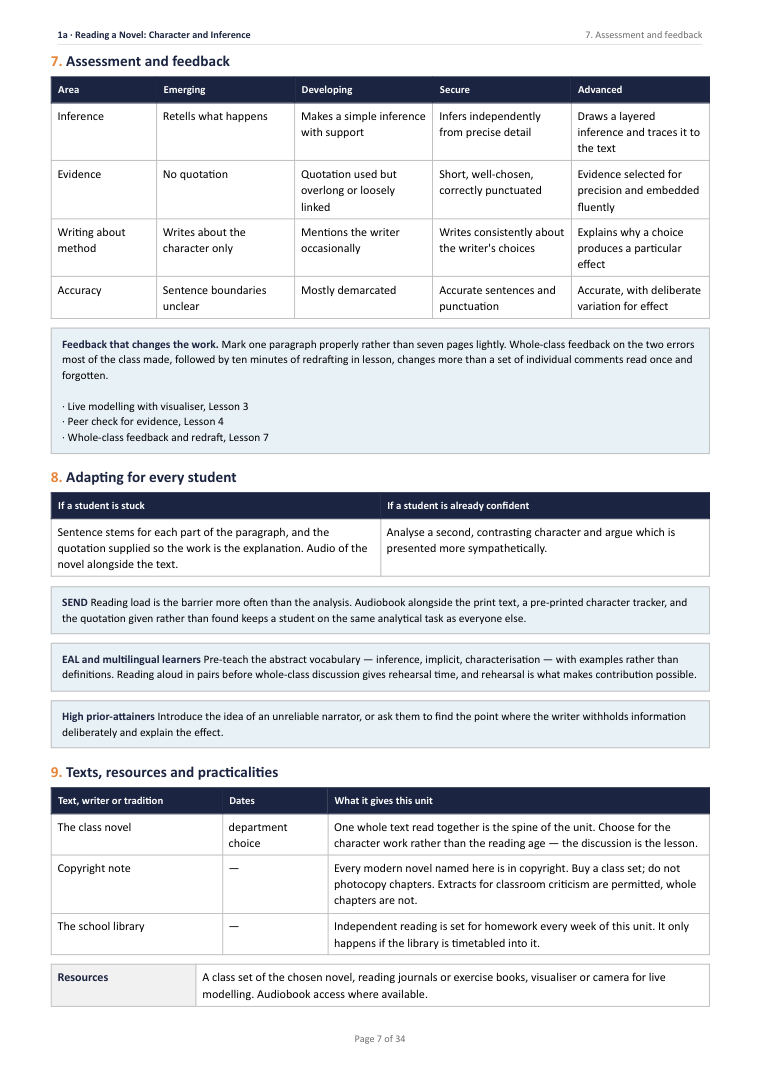
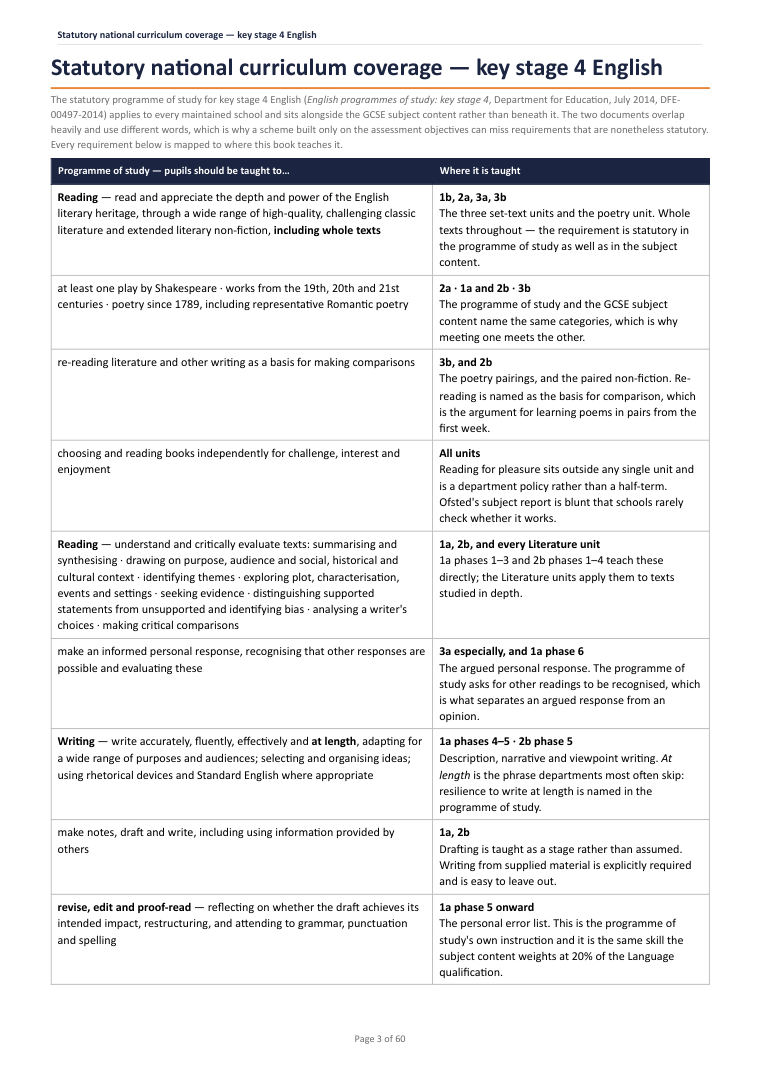
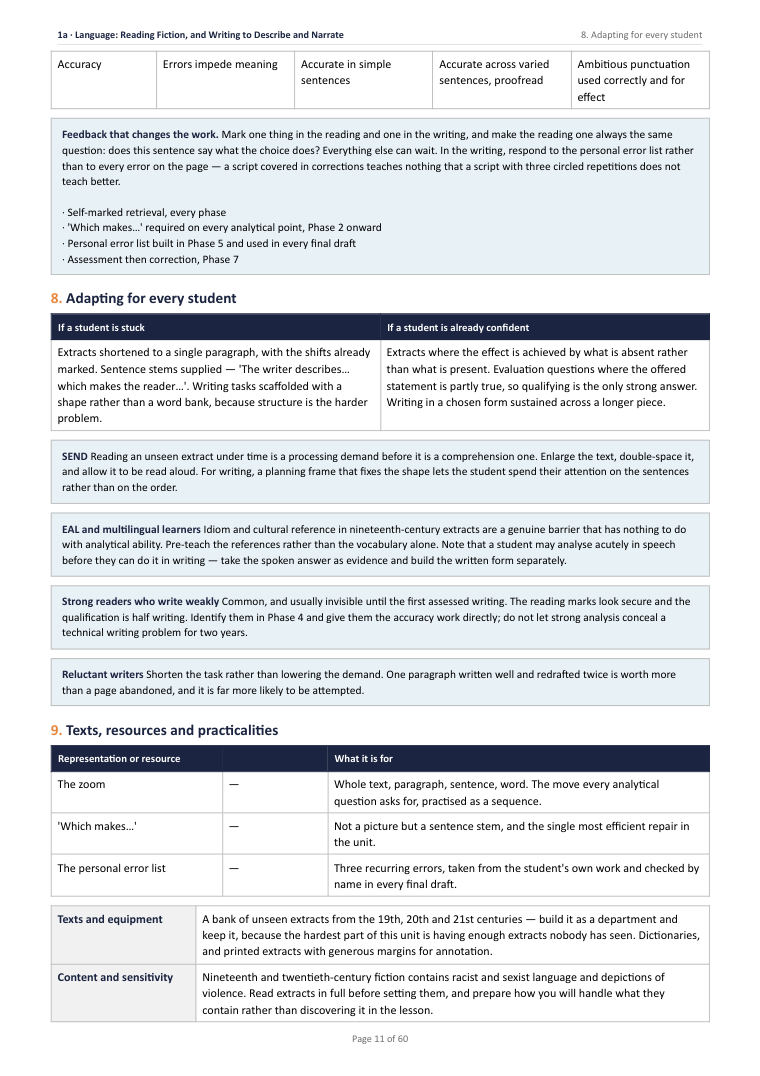
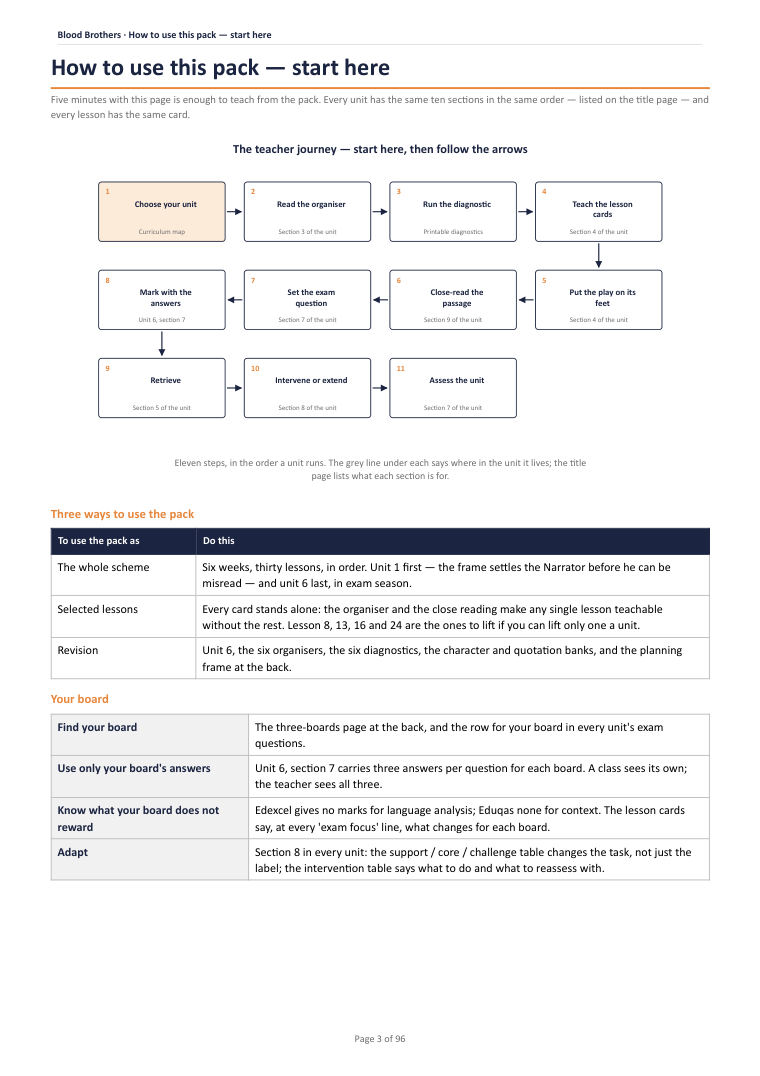
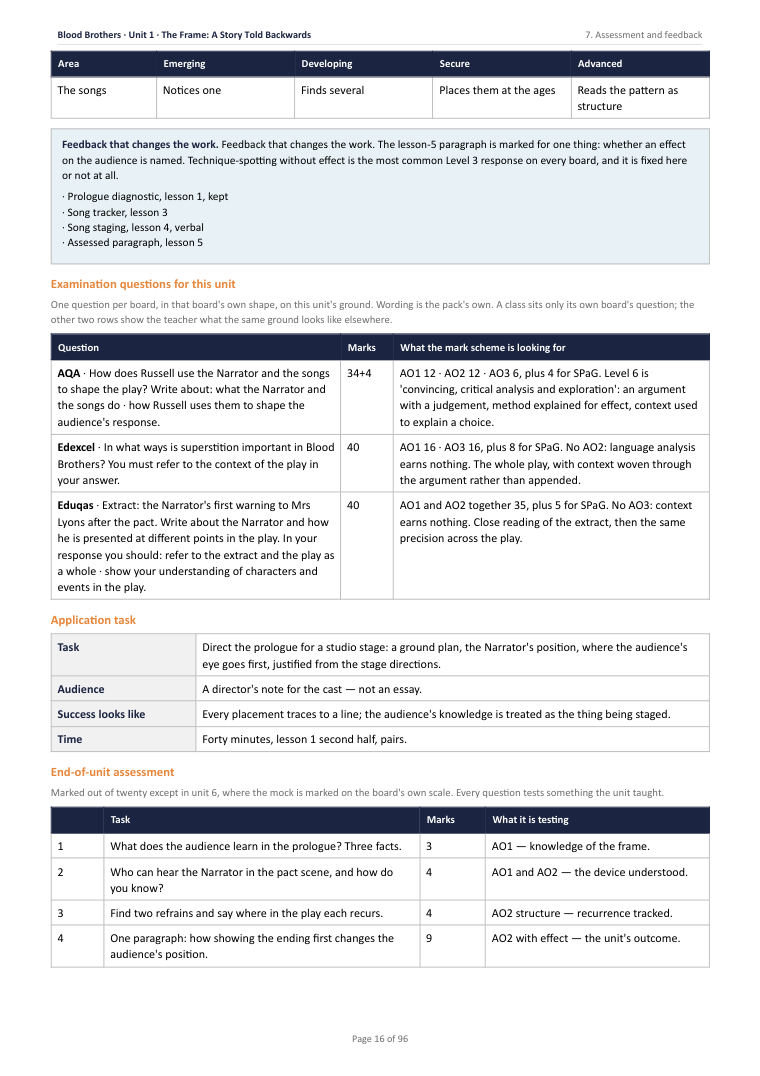
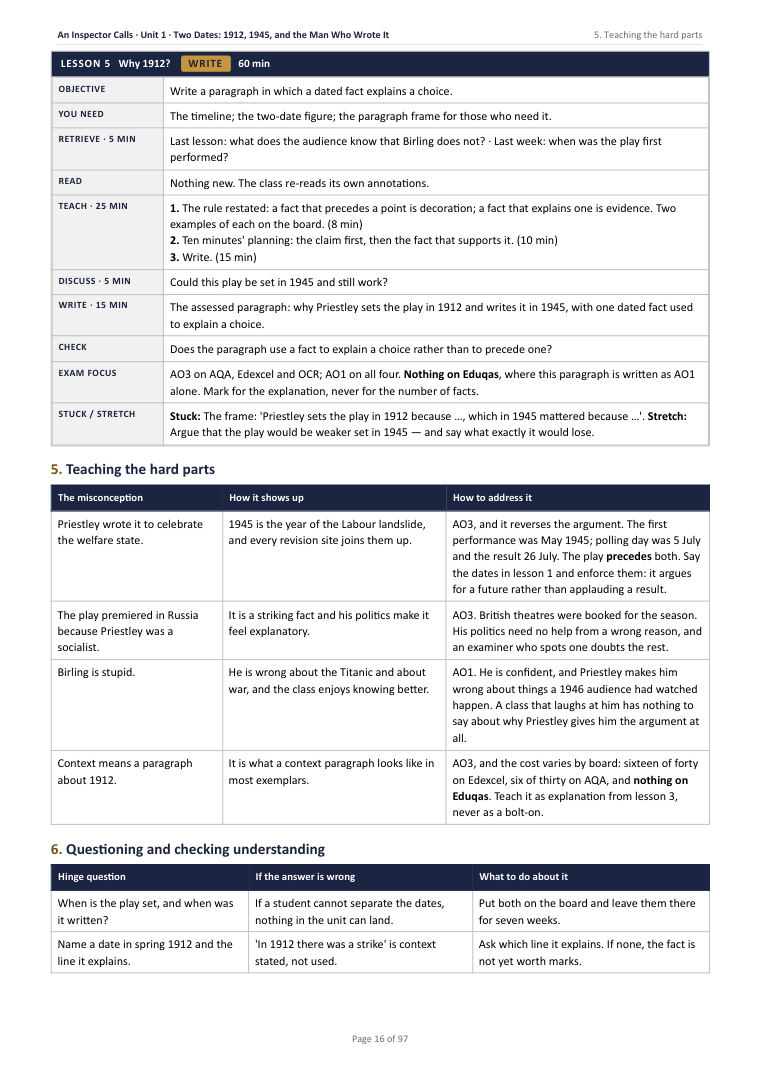
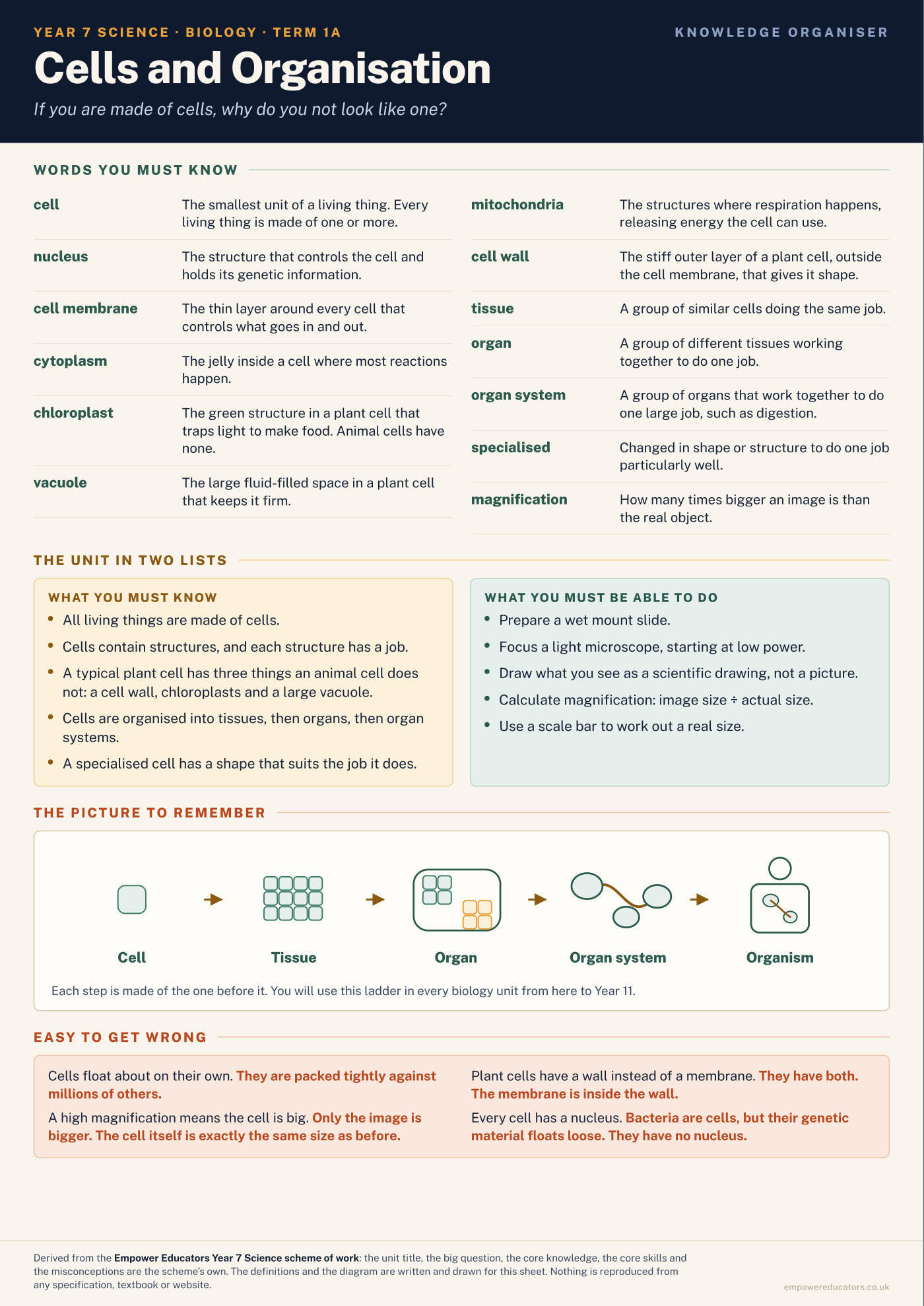
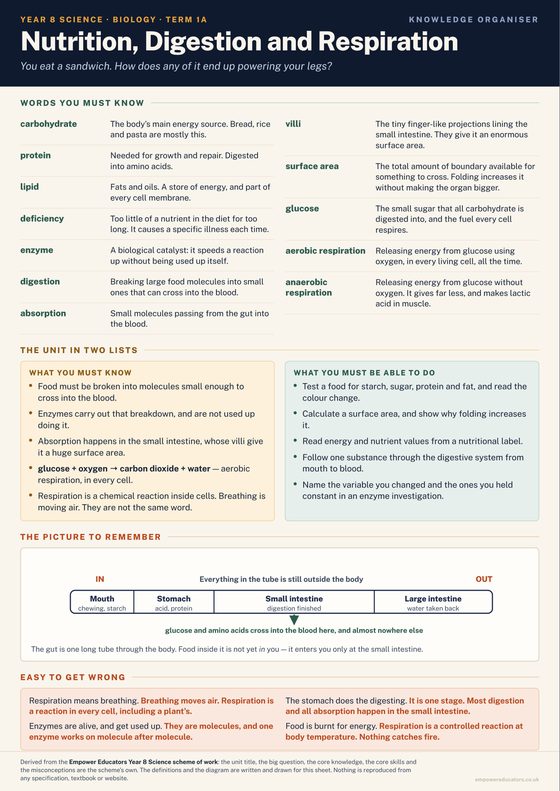
Written to the national curriculum and the DfE’s subject content rather than to one exam board, so a department can use them whichever board it sits with. Six half-termly units a year, sequenced in teaching order with the timetable allocation stated. Each unit is written backwards from what the next year assumes, so Year 7 ends where Year 8 needs it to start — and nothing is taught twice by accident.

Every unit follows the same shape every time — intent, prior knowledge, vocabulary, assessment, adaptations and the rest. A department can pick up any year and know where to look.

Browse A4 PDF · Instant download

Showing 4 of 27 First 8 pages of each, free

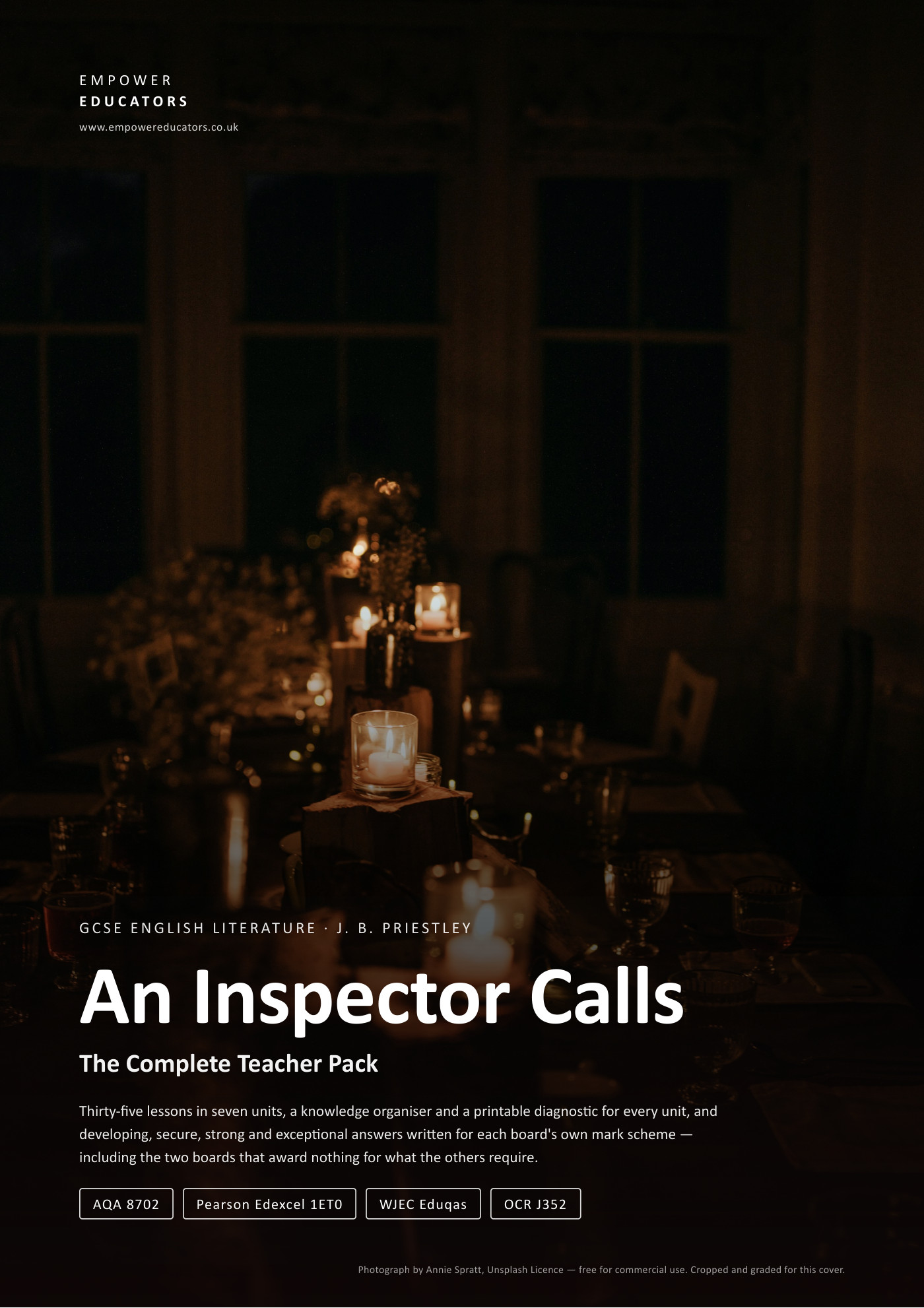
Cover of Year 7 English Scheme of Work
Cover of Year 8 English Scheme of Work
Cover of Year 9 English Scheme of Work
Cover of Year 10 English Scheme of Work

06 Classroom resources 12 sets

A3 posters for the wall, quoted from the specification.

For the teacher on Monday morning

English · Mathematics · Art & Design · Business · Physical Education · Geography · Science · Computer Science · History · Drama — A3, print-ready

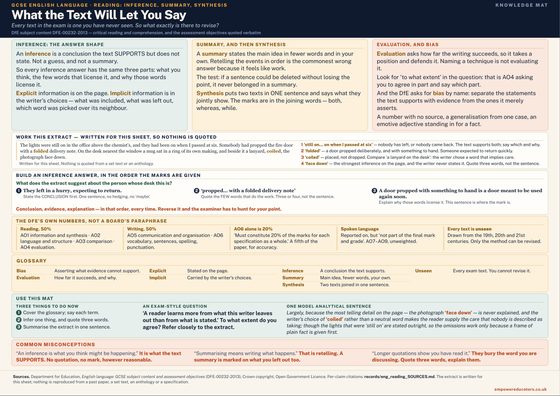
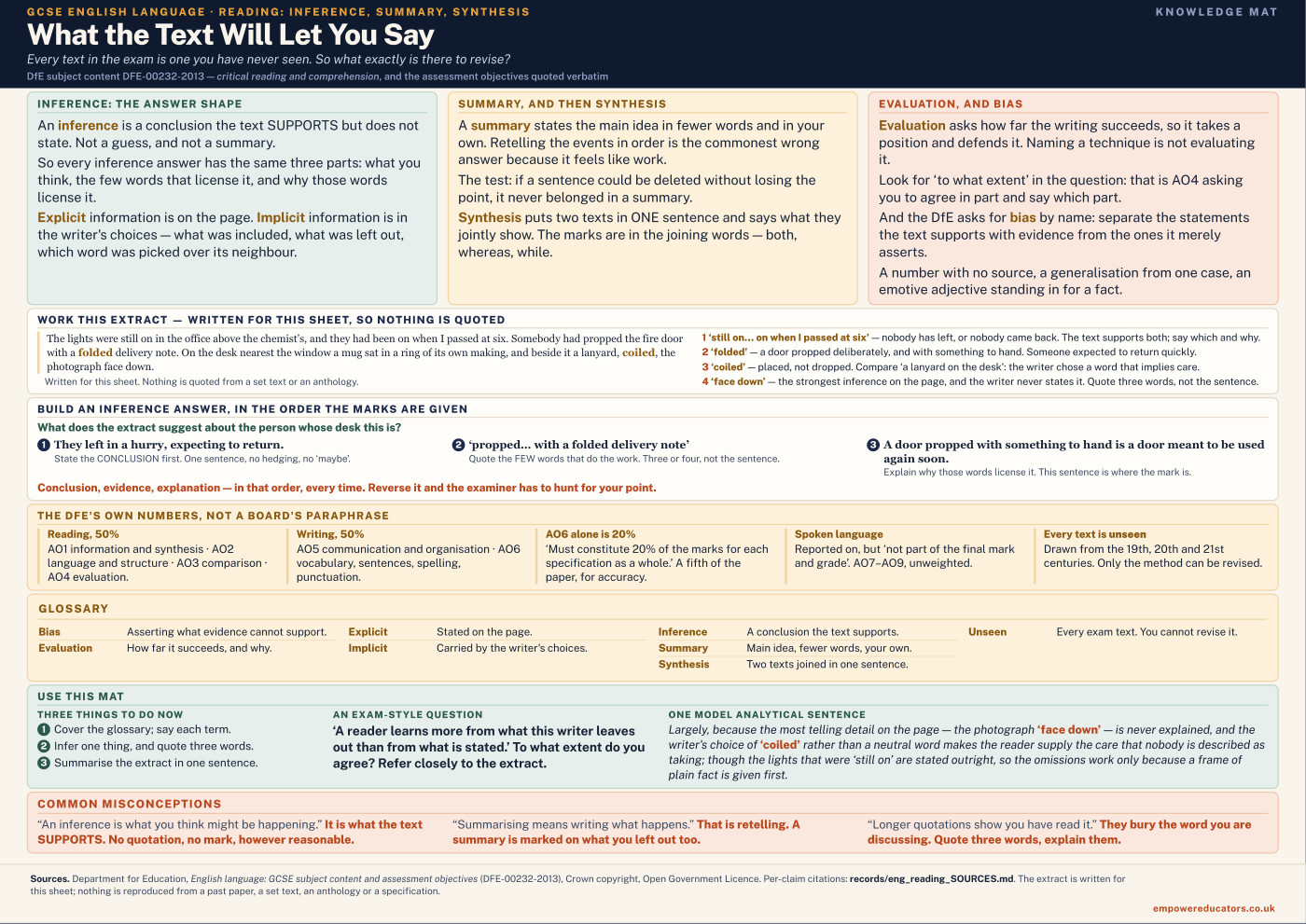
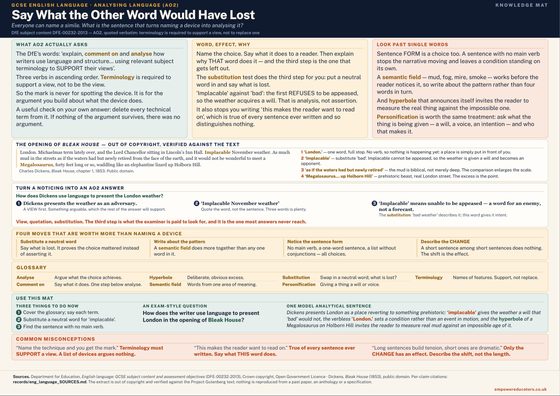
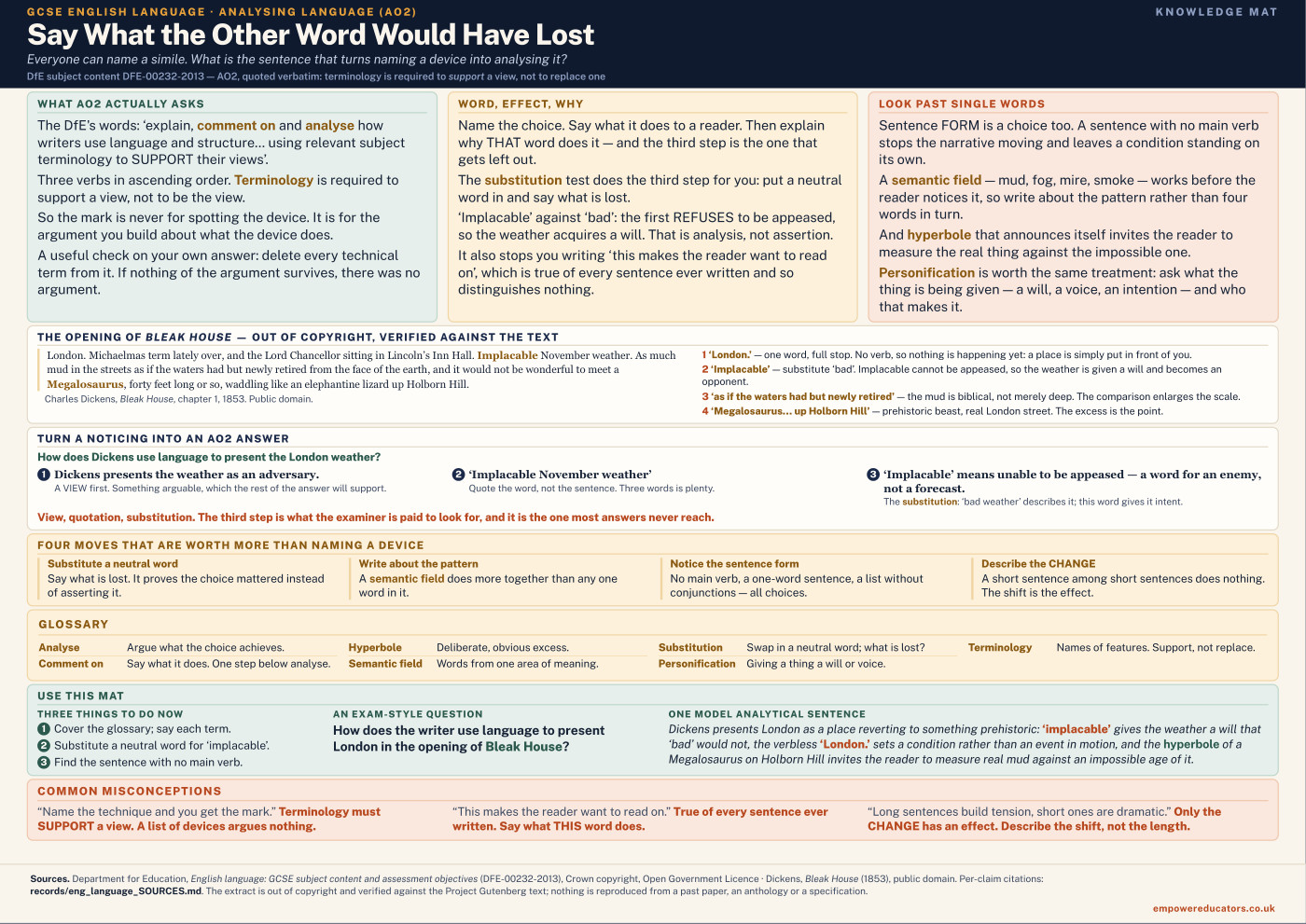
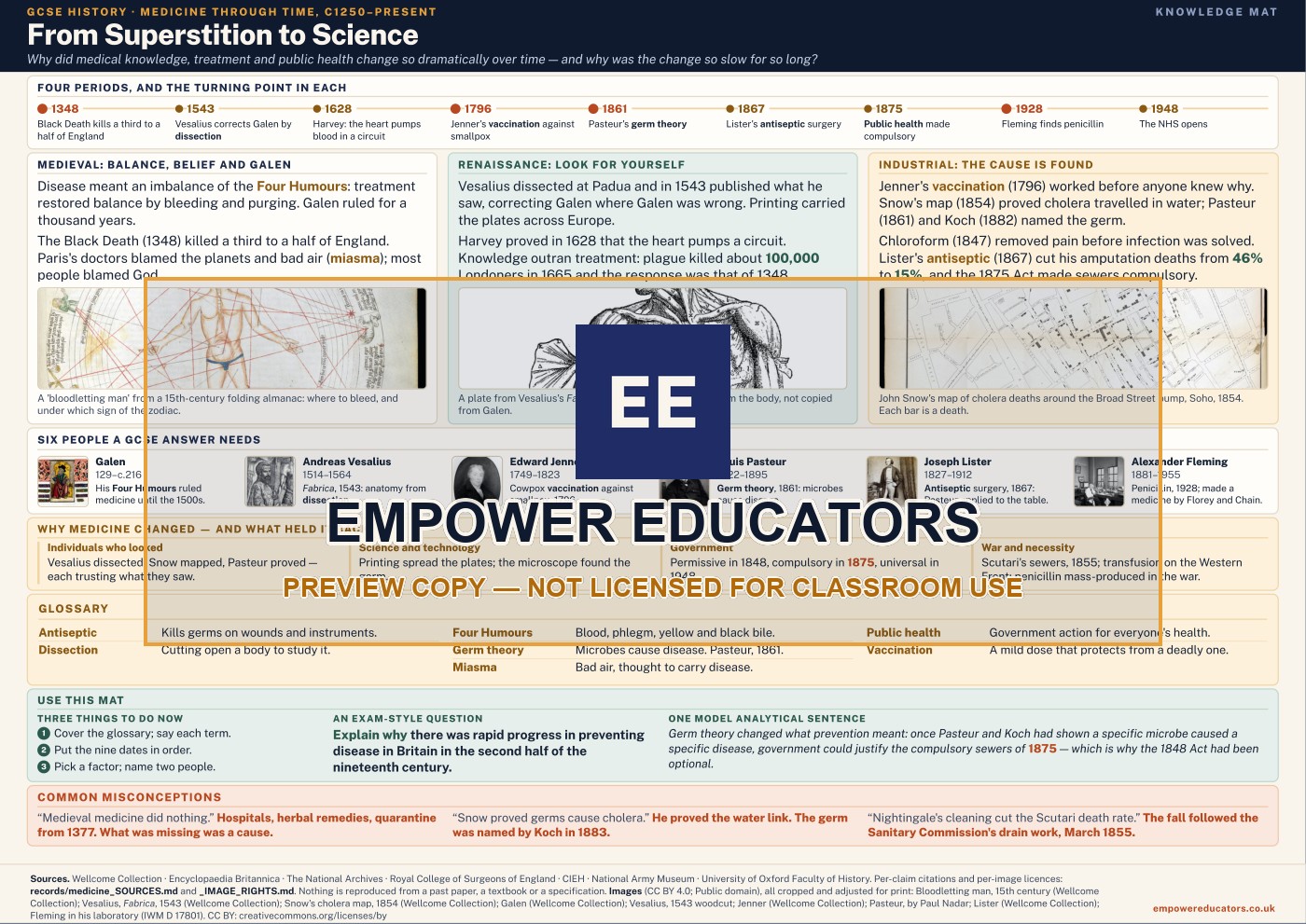
What every mark is for, the formulae and command words a paper can ask for, and the shape of an answer that earns the marks — printed large enough to be read from the back of the room. Every statement is quoted from the published subject content or the board’s own specification.

Free to every school. Preview pages carry a watermark block across the middle; the file you download is clean and print-ready at A3.

Browse A3 PDF, print-ready · Free to download

Showing 4 of 12 Free to download, print-ready

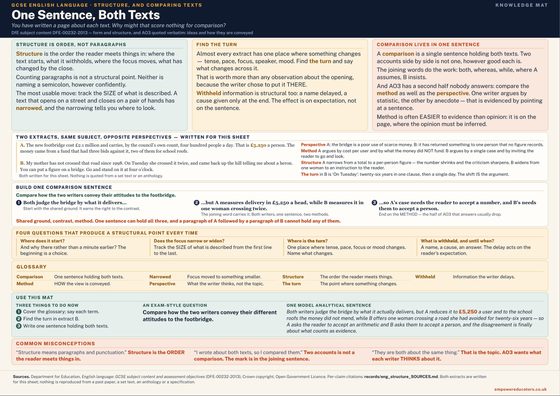
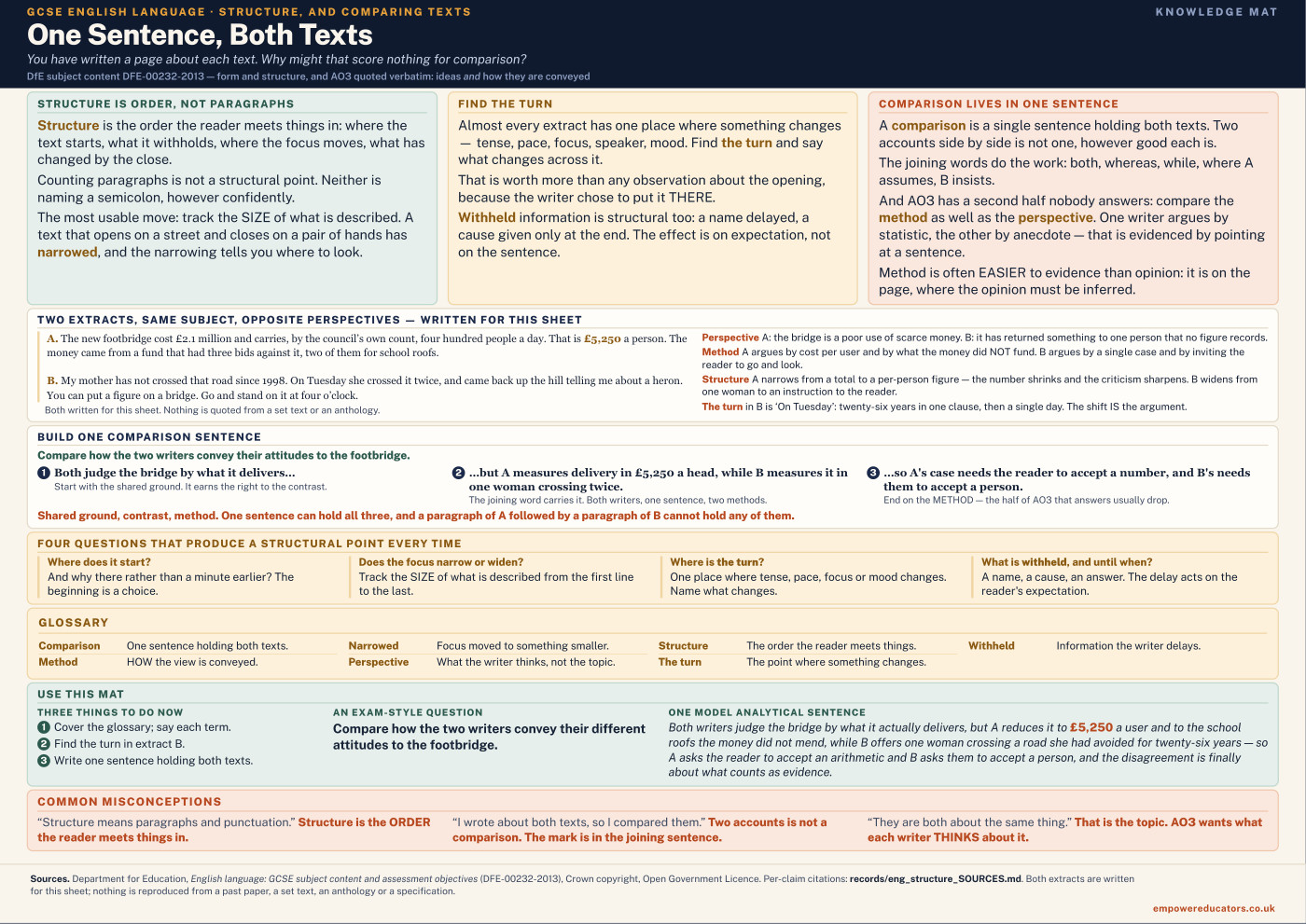
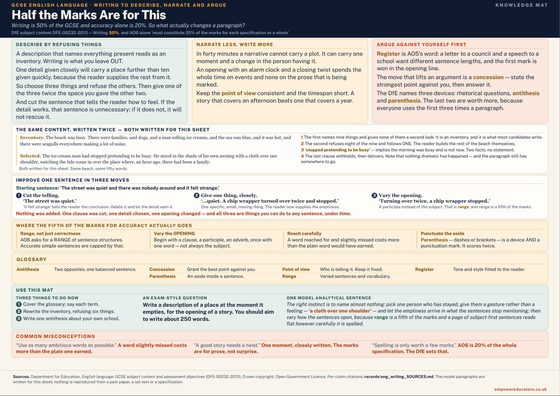
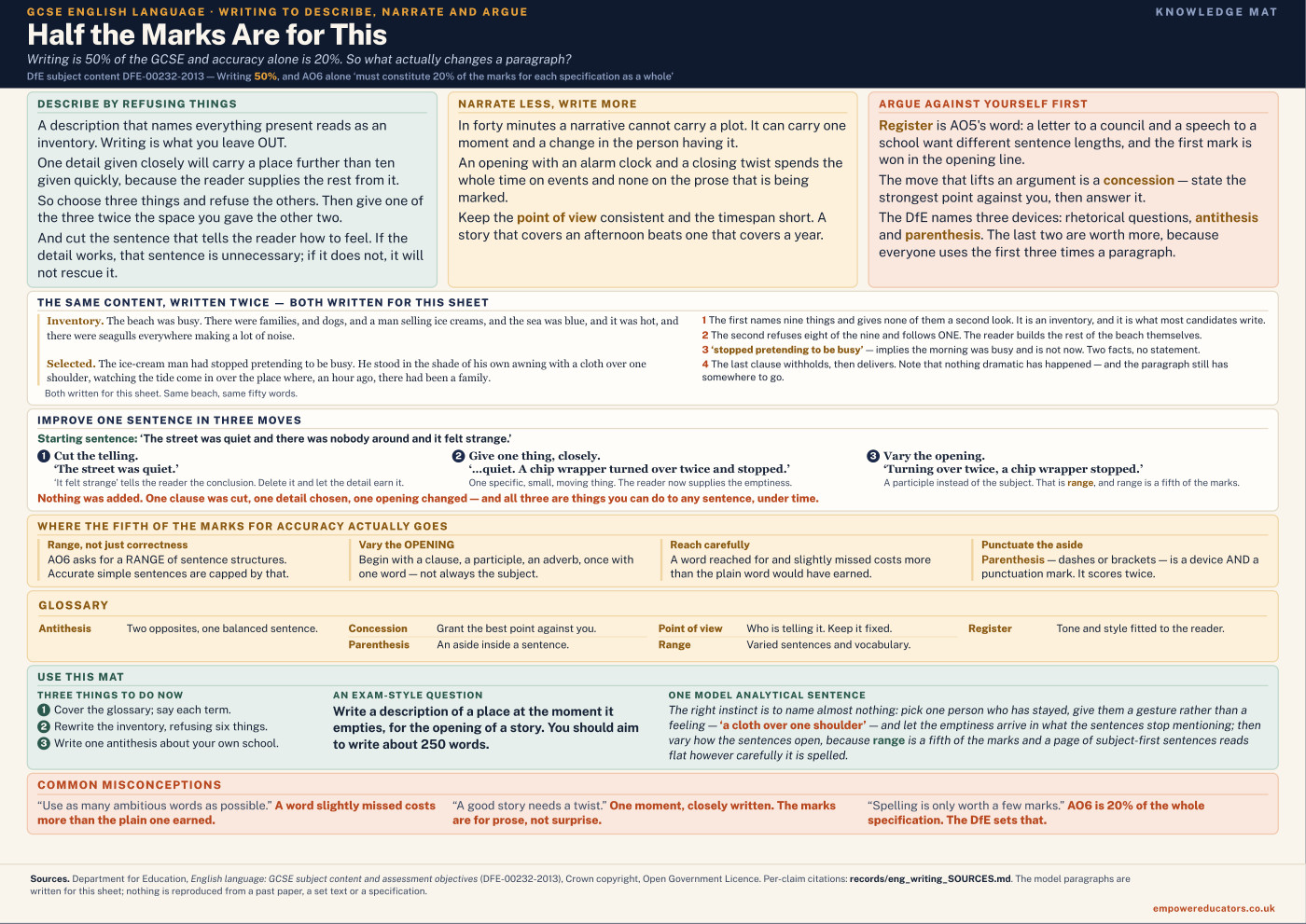
Cover of GCSE English — Classroom Posters
Cover of GCSE Mathematics — Classroom Posters
Cover of GCSE Art & Design — Classroom Posters
Cover of GCSE Art & Design — Sketchbook Reference

07 CPD and INSET 5 sessions

A whole-staff hour, ready to deliver rather than ready to adapt.

For whoever runs the training

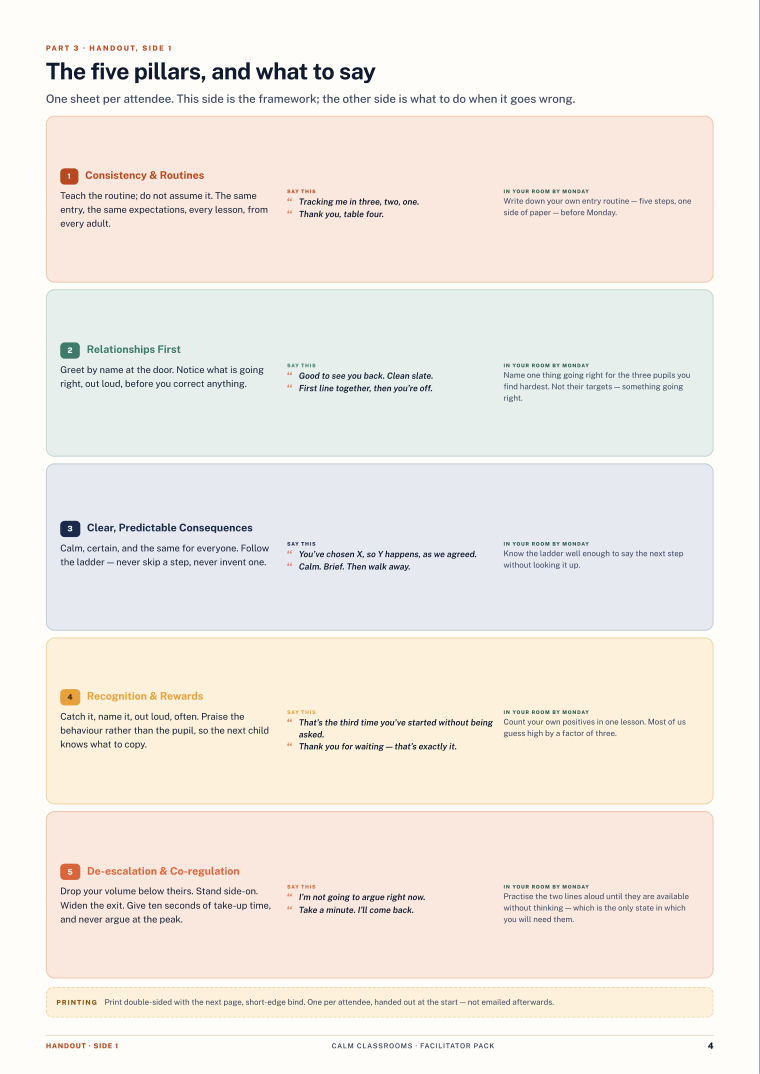
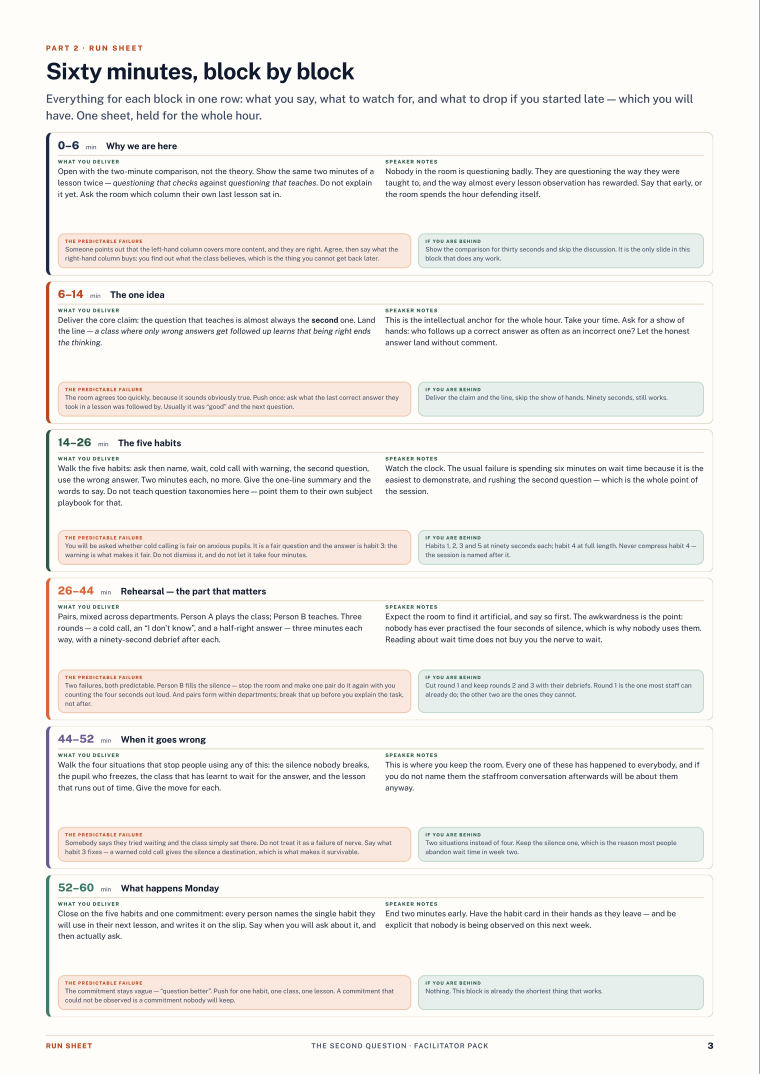
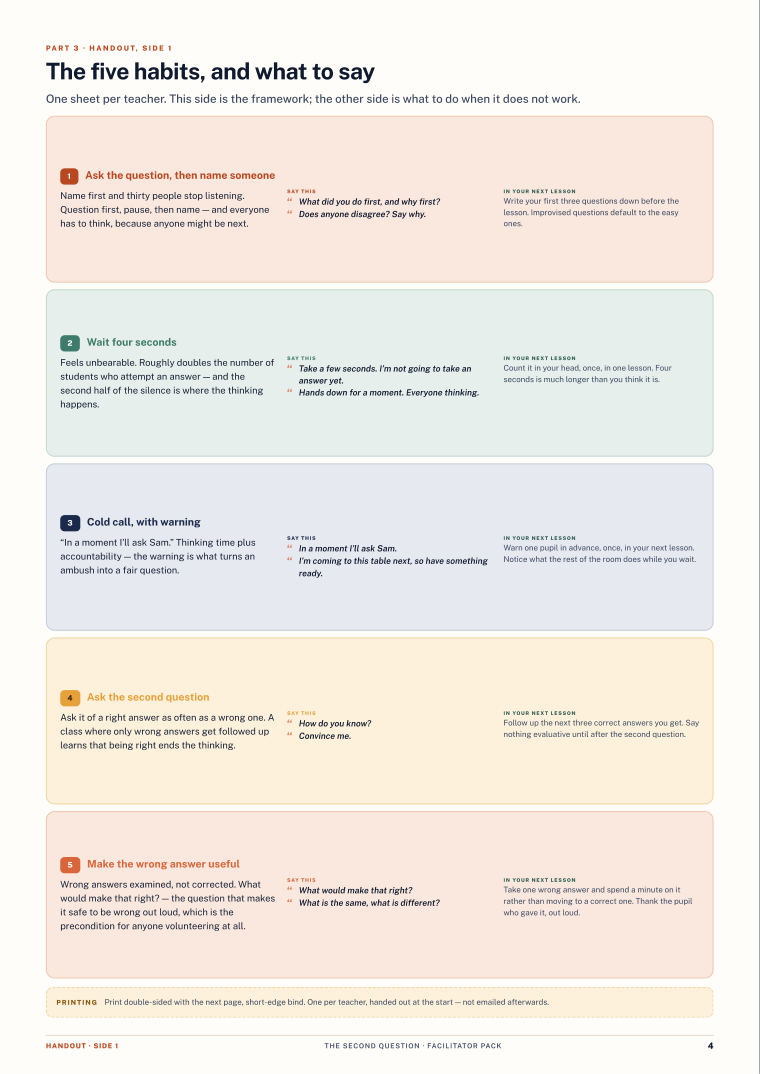
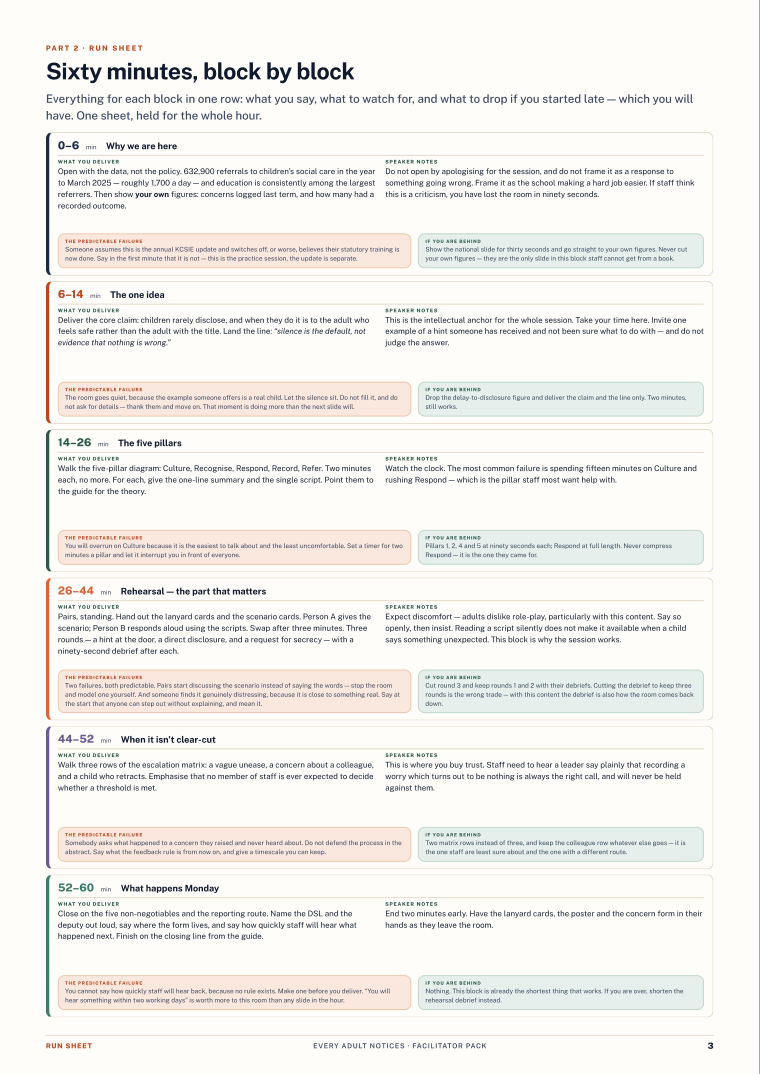
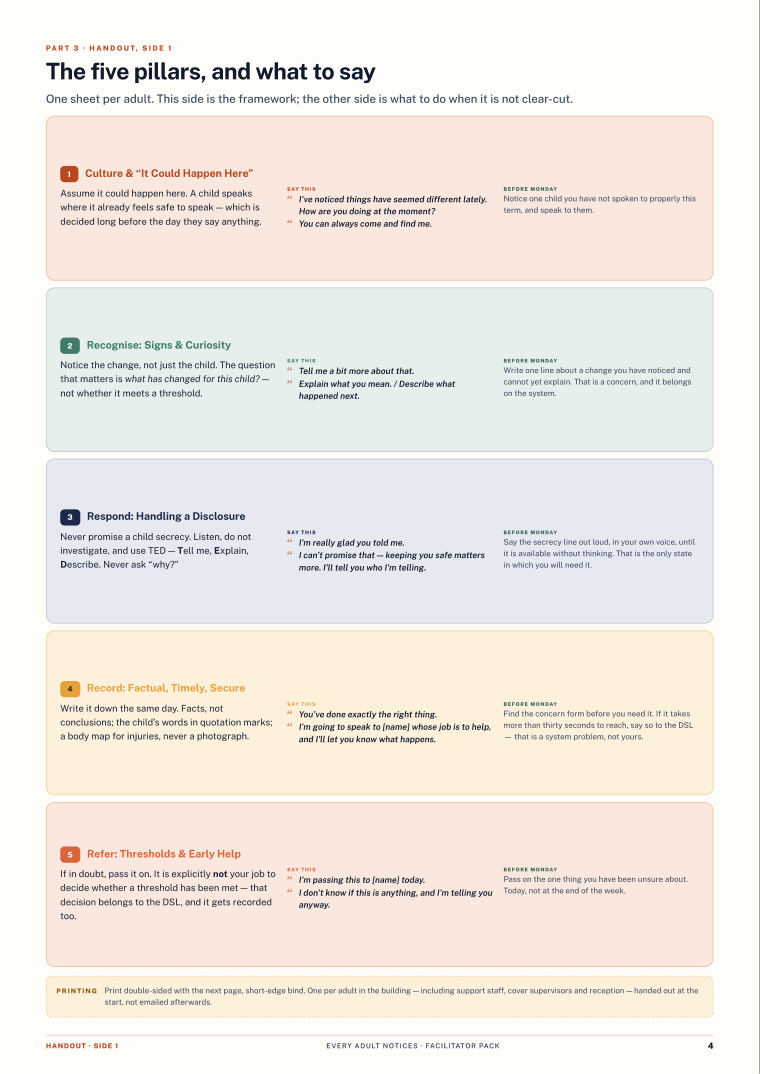
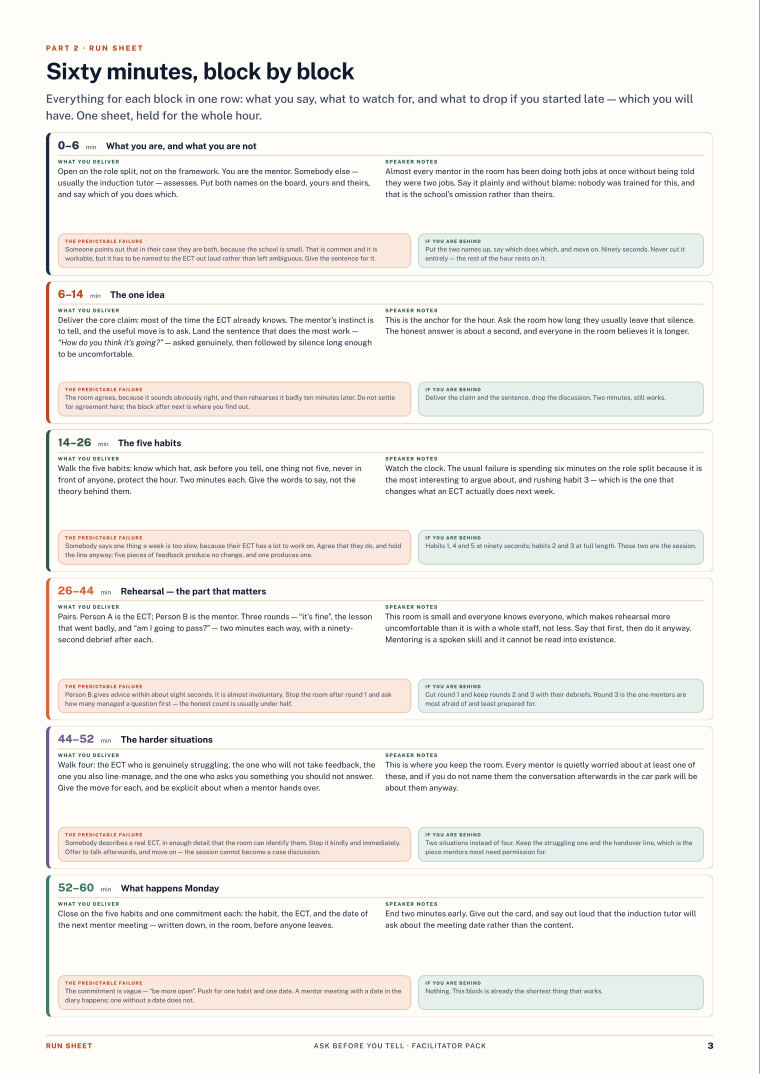
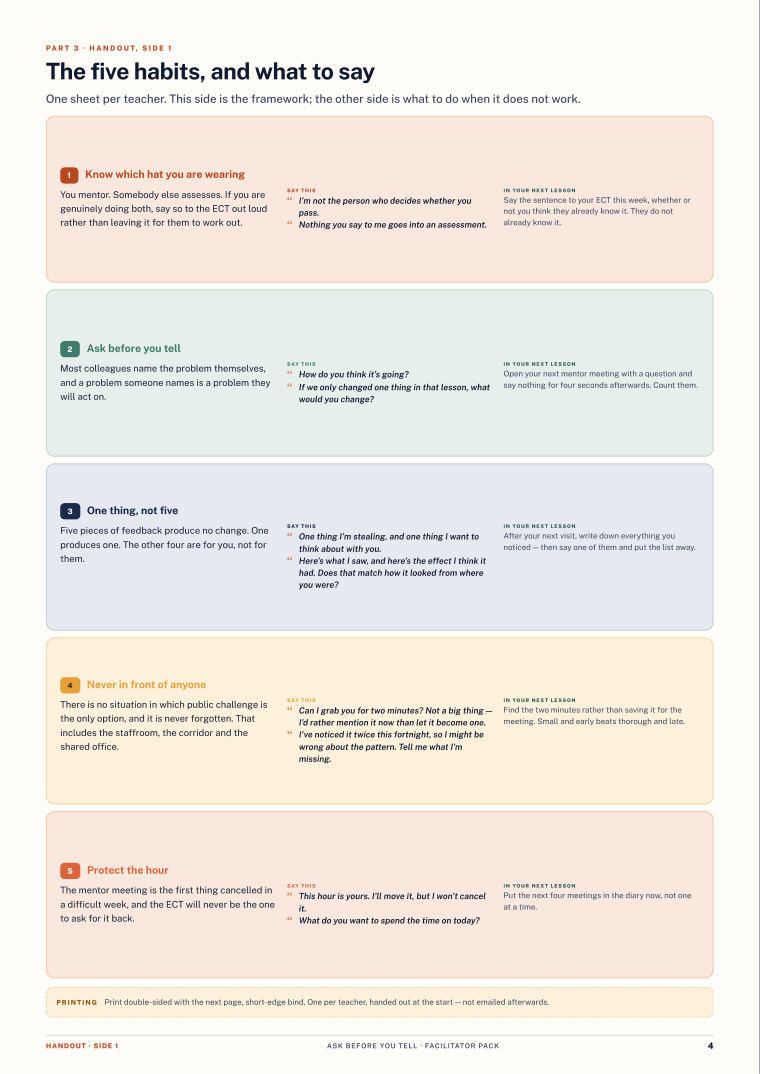
Calm Classrooms · The Second Question · Every Adult Notices · Ask Before You Tell · Becoming an Outstanding Classroom Practitioner

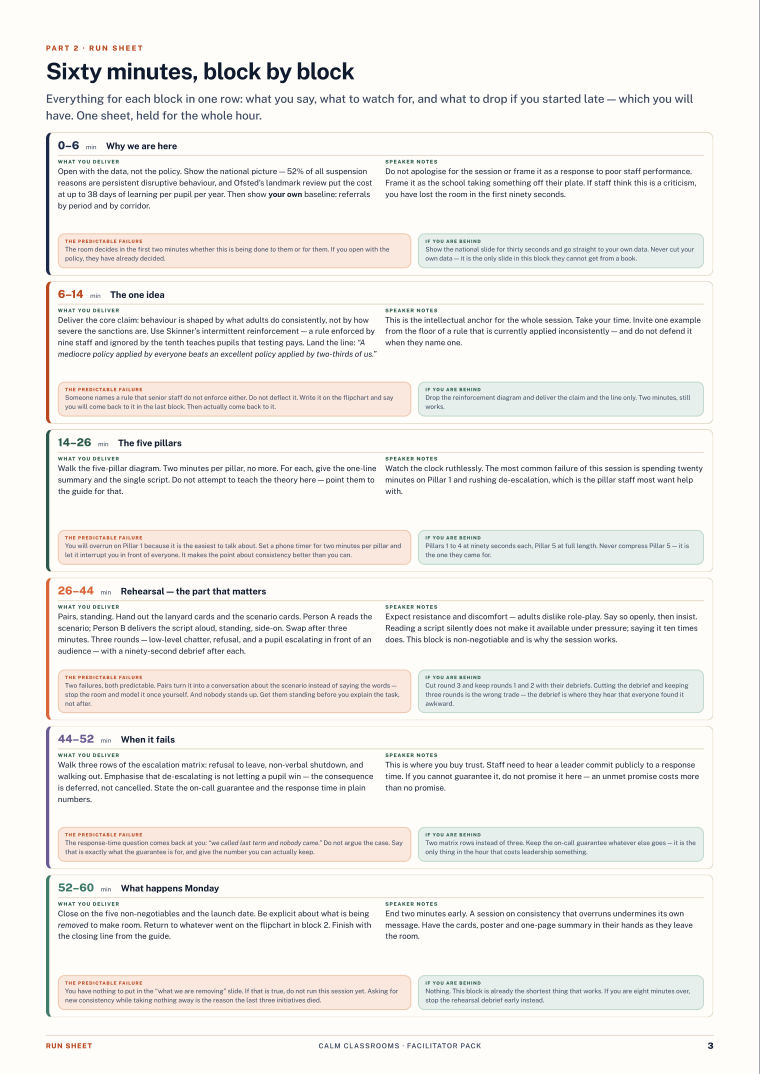
Sixty minutes, timed to the minute. Each session is two files: the slide deck the room watches, and the facilitator pack the person at the front holds — run sheet, handout, the cards staff work from, an evaluation slip and the three-week follow-up. Nothing to make.

Works from eight staff to a hundred and twenty. Roughly a third of every hour is spent rehearsing out loud, which is the part that annual training never has room for.

Browse A4 PDF · Deck and pack · Instant download

Showing 4 of 5 First 5 pages of each, free

Cover of Calm Classrooms — Facilitator pack
Cover of The Second Question — Facilitator pack
Cover of Every Adult Notices — Facilitator pack
Cover of Ask Before You Tell — Facilitator pack

Written for the Monday morning, not the policy folder

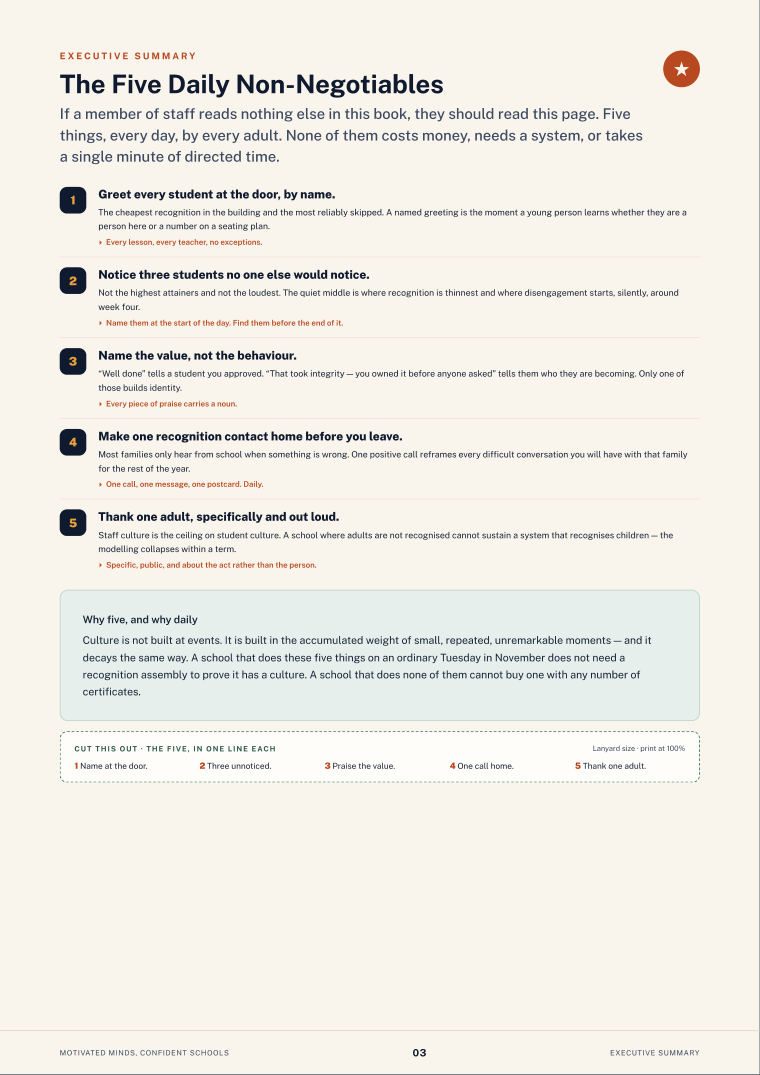
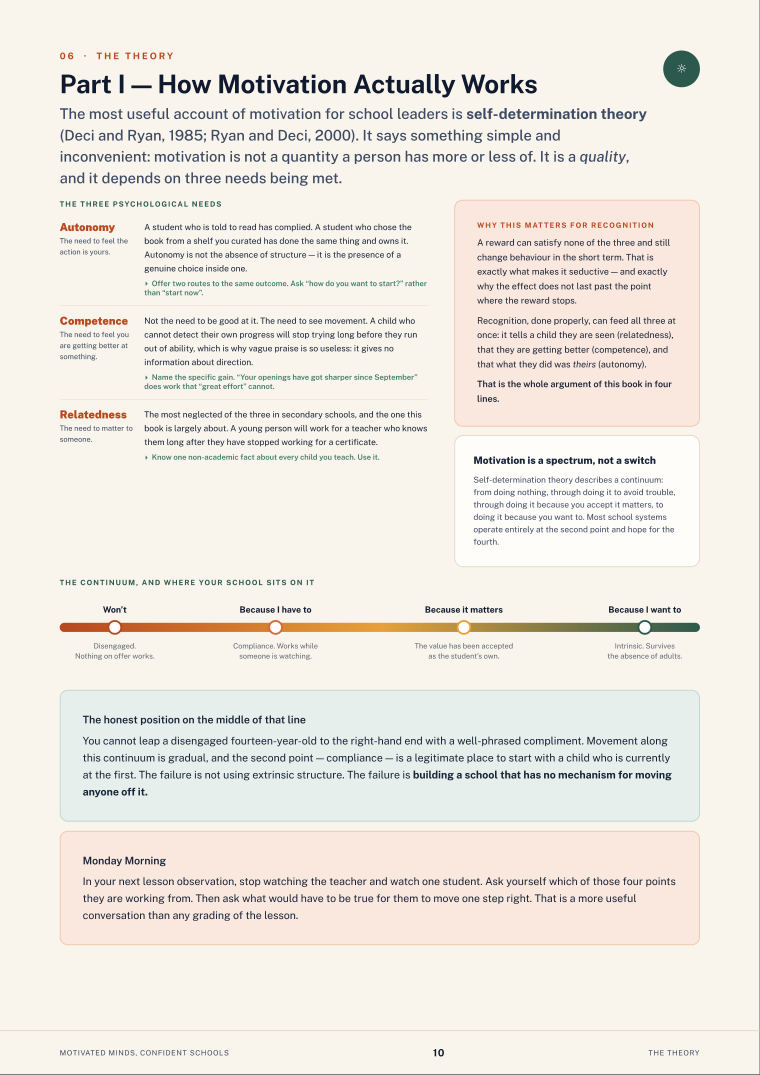
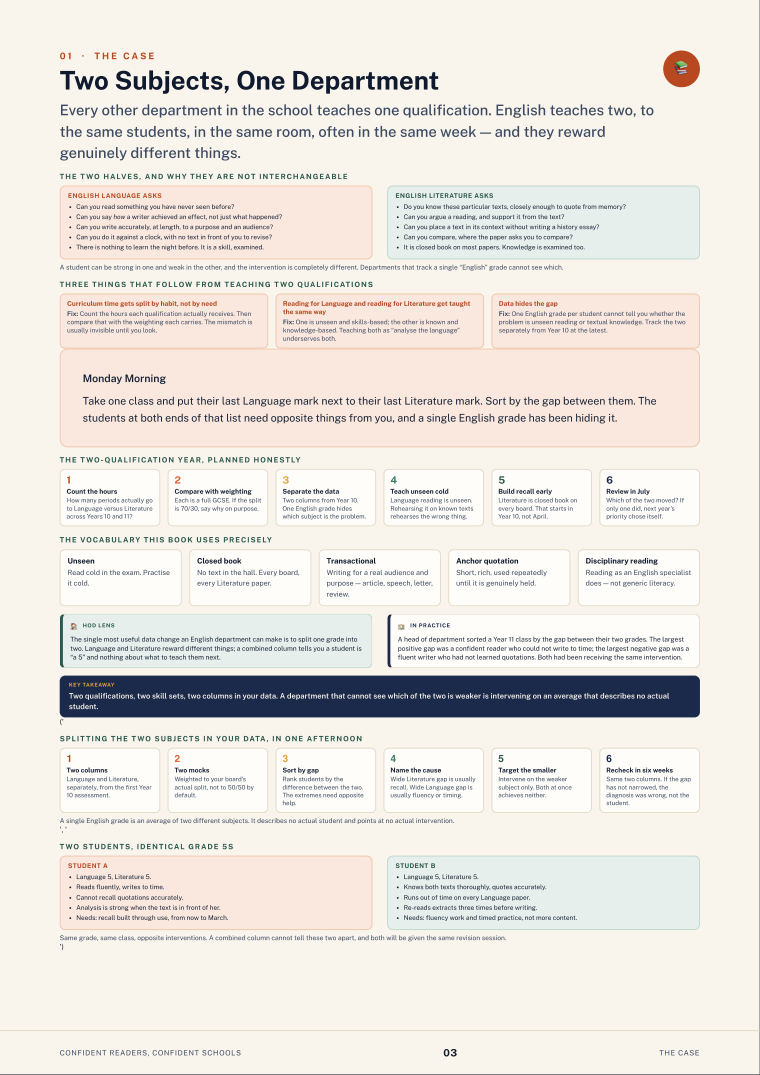
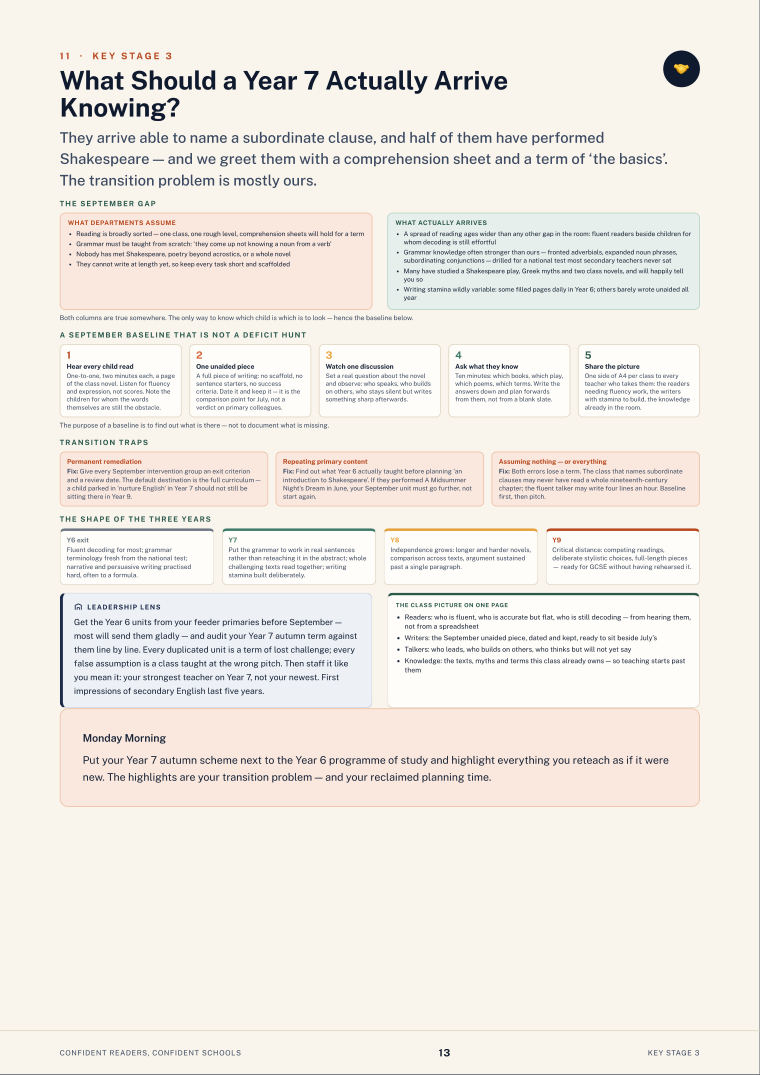
One shared spine across everything published here: the same architecture, the same sourcing discipline, and print-and-use material in every resource — playbooks, schemes of work and examination playbooks now, classroom material and INSET as they land.

03·The evidence base

Every number, and where it comes from

Nothing published here is estimated. Every figure is referenced to an official source — the Department for Education’s accredited statistics, the National Behaviour Survey, each inspectorate’s published framework, and for anything subject-specific the exam board’s own specification. One from each playbook is set out below; the same rule governs everything else as it lands.

Behaviour & Classroom Culture

Suspension gap

Disadvantaged pupils are suspended at nearly five times the rate of their peers.

DfE, Suspensions and permanent exclusions 2024/25

Attendance & Persistent Absence

18.14%

Persistently absent

Missing a tenth of school or more in 2024/25 — down from 19.95%, still well above the 10.86% of 2018/19.

DfE, Pupil absence in schools in England 2024/25

Safeguarding & Child Protection

632,900

Referrals in a year

Referrals to children’s social care in the year ending March 2025 — roughly 1,700 a day.

DfE, Children’s social care activity, year ending March 2025

Culture, Recognition & Belonging

31%

Did not belong

Secondary pupils who did not feel they belonged at school on most days, May 2025.

DfE, National Behaviour Survey 2024/25

SEND & Inclusion

20.8%

One pupil in five

On SEN support (14.8%) or holding an EHC plan (6.0%) — and plans have more than doubled since 2016.

DfE, Special educational needs in England 2025/26

Behaviour & Classroom Culture

52%

Persistent disruption

Of all reasons given for suspension are persistent disruptive behaviour — by far the largest category.

DfE, Suspensions and permanent exclusions 2024/25

Attendance & Persistent Absence

2.39%

Severely absent

Missing half of school or more — nearly three times the 0.85% of 2018/19, and rising.

DfE, Pupil absence in schools in England 2024/25

Safeguarding & Child Protection

58%

Abuse or neglect

Of children in need, assessed with abuse or neglect as the primary need.

DfE, Children’s social care activity, year ending March 2025

Culture, Recognition & Belonging

70%

Still motivated

Pupils motivated to learn — a statistically significant fall from 75% a year earlier.

DfE, National Behaviour Survey 2024/25

SEND & Inclusion

538,500

Pupils with an EHC plan

Up 11.6% in a single year, and more than double the number in 2016.

DfE, Special educational needs in England 2025/26

Middle Leadership & Team Development

57.7%

Still teaching at ten years

Of qualified teachers remain in service ten years after qualifying — more than four in ten have gone.

DfE, School workforce in England, November 2025 census

Evidence, Self-Evaluation & Inspection Readiness

8

Bodies, one evidence base

Ofsted, ISI, SIAMS and BSO; KHDA, ADEK, SPEA and the Ministry of Education.

Each body’s published framework

English · KS3 to A Level

18

Specifications read in full

Language and Literature, GCSE and A Level, across all four boards — read rather than summarised.

AQA, Pearson Edexcel, Cambridge OCR and Eduqas published specifications

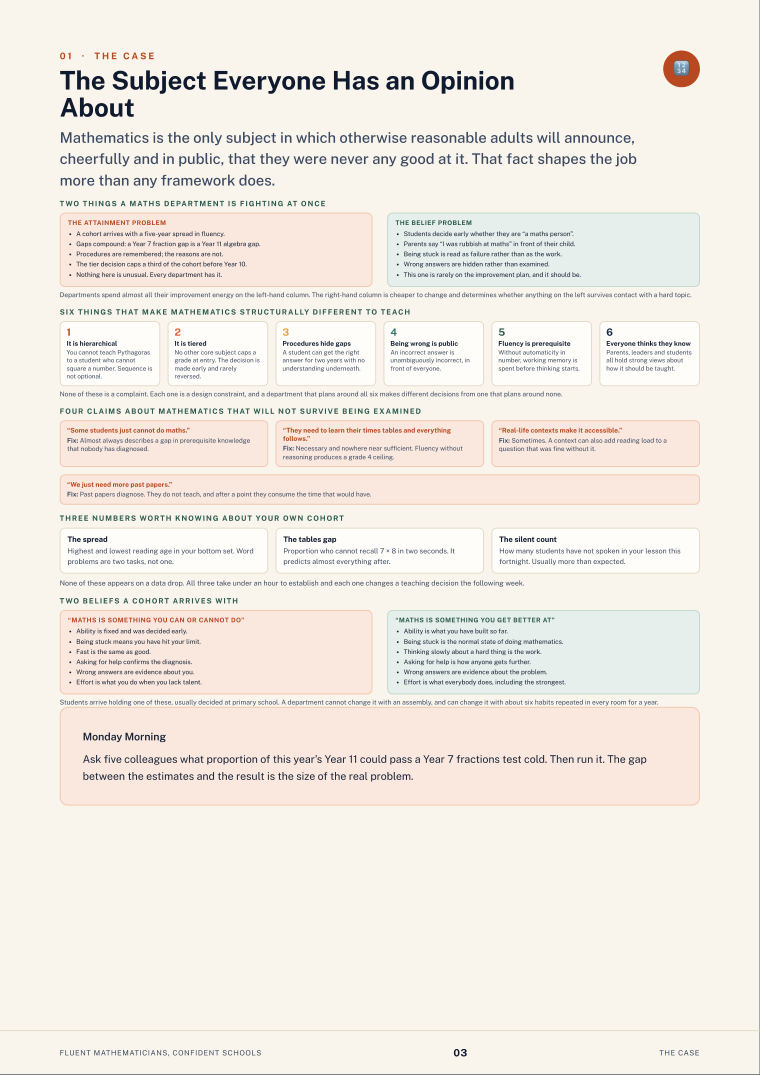
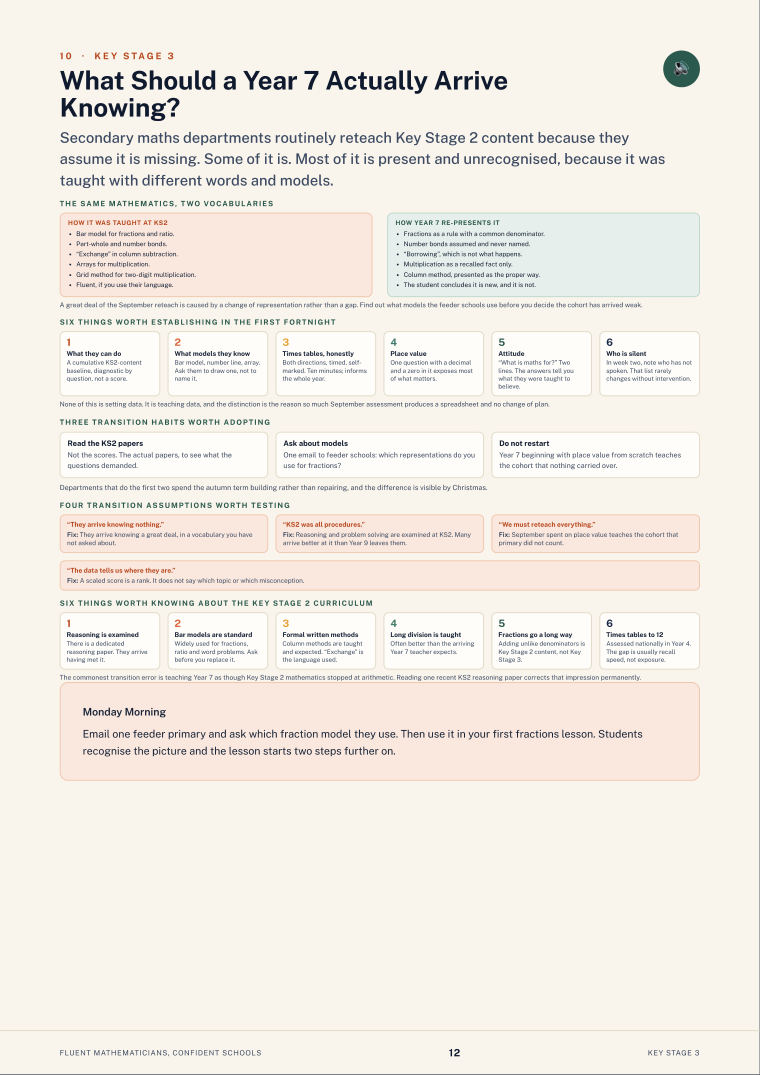
Mathematics · KS3 to A Level

2 tiers

Decided too early

Every student sits Foundation or Higher, and the decision is routinely made long before it needs to be.

The current GCSE mathematics specifications

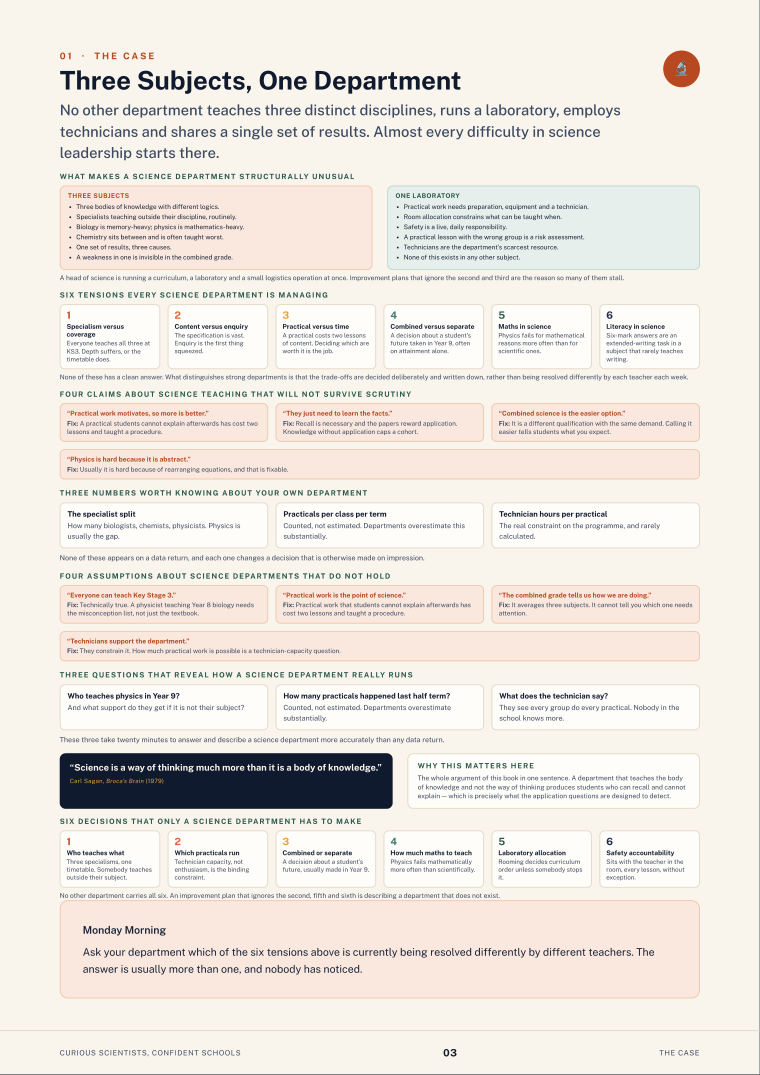
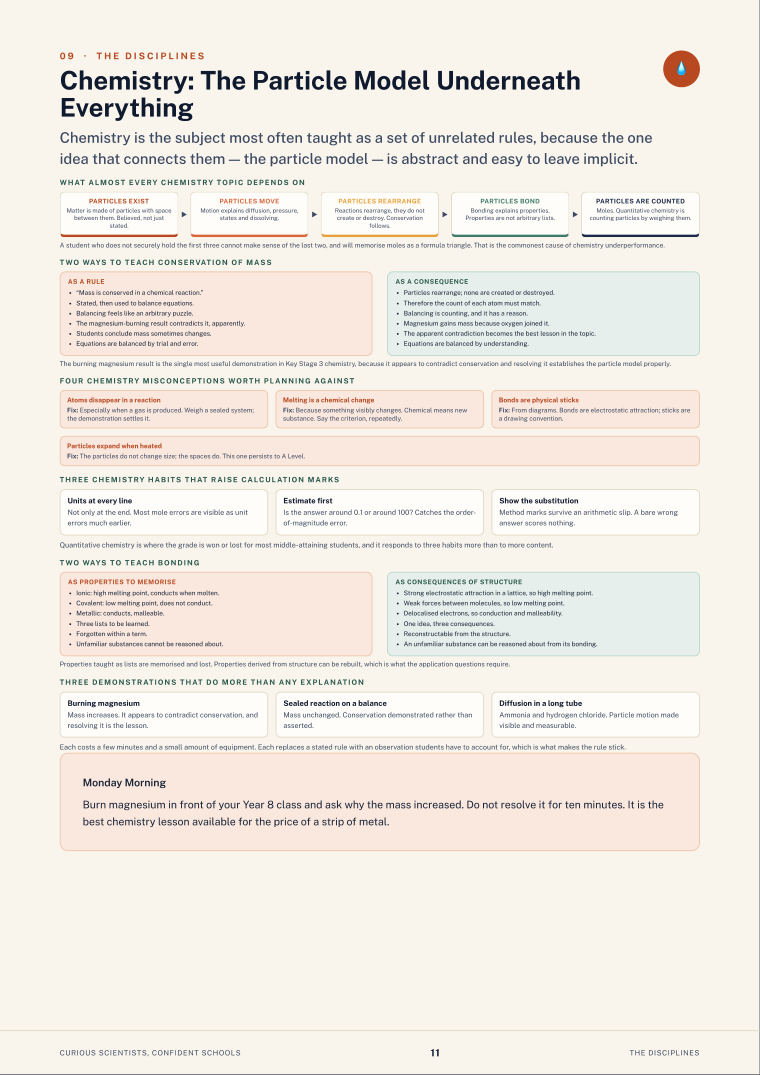
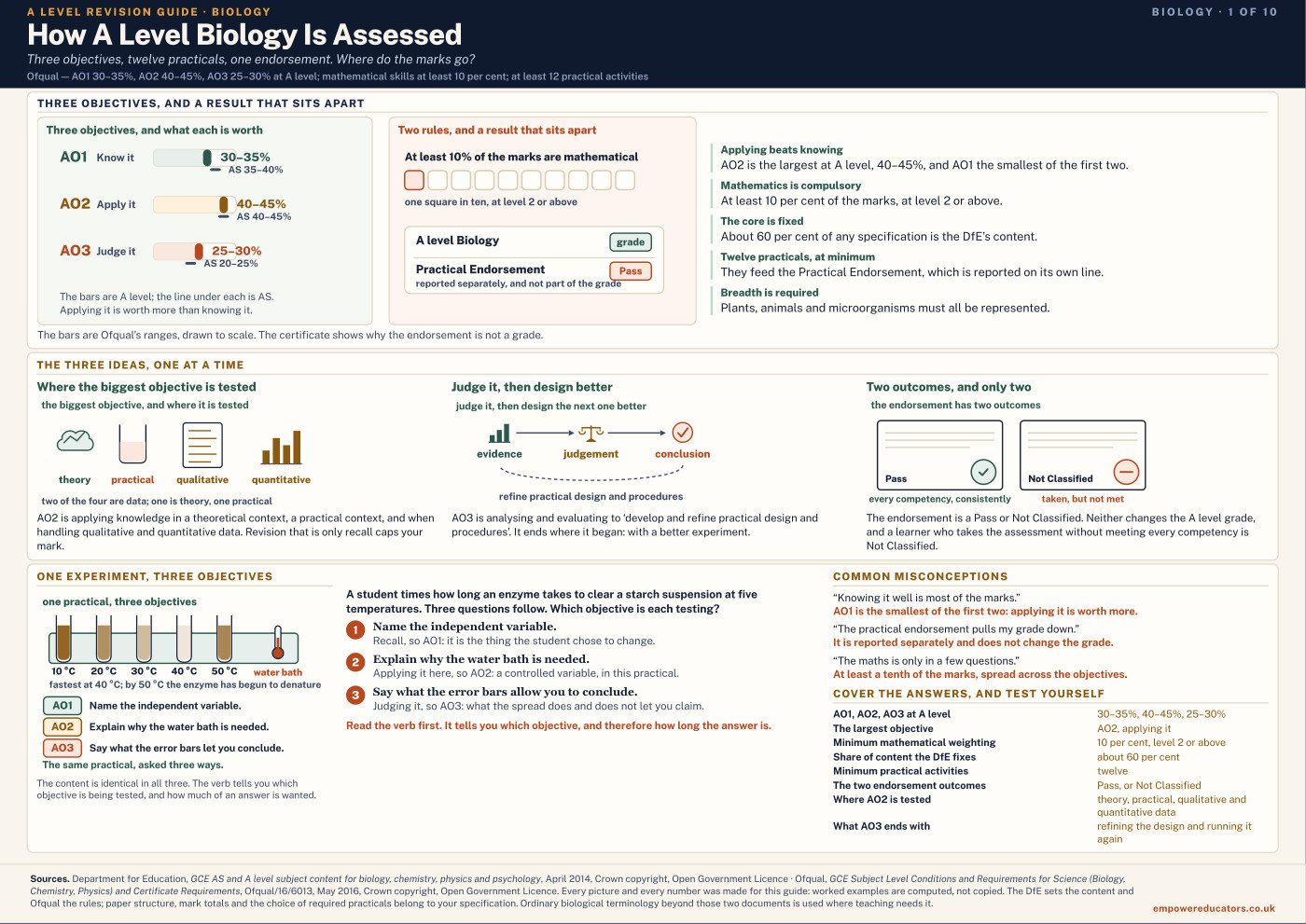
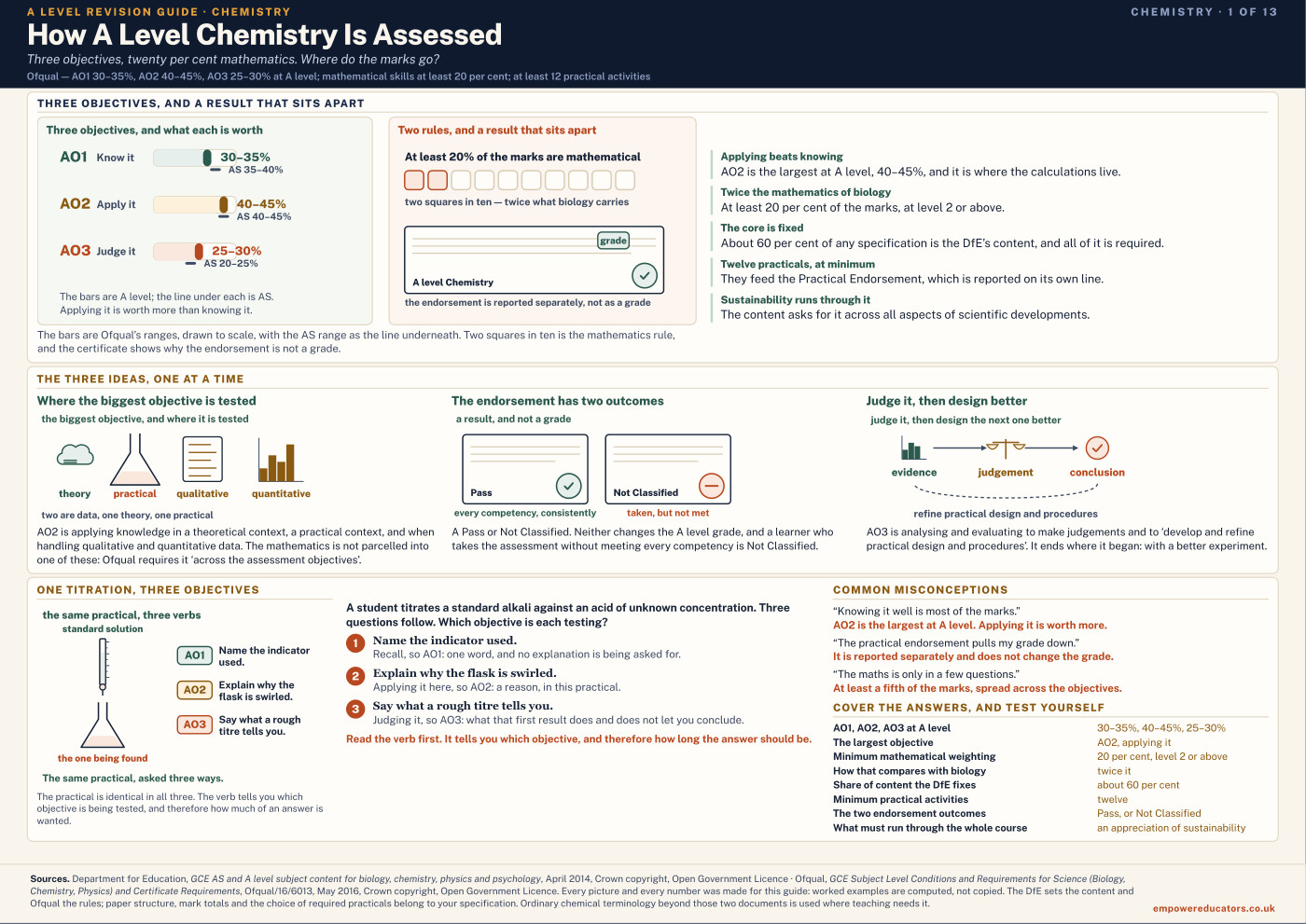
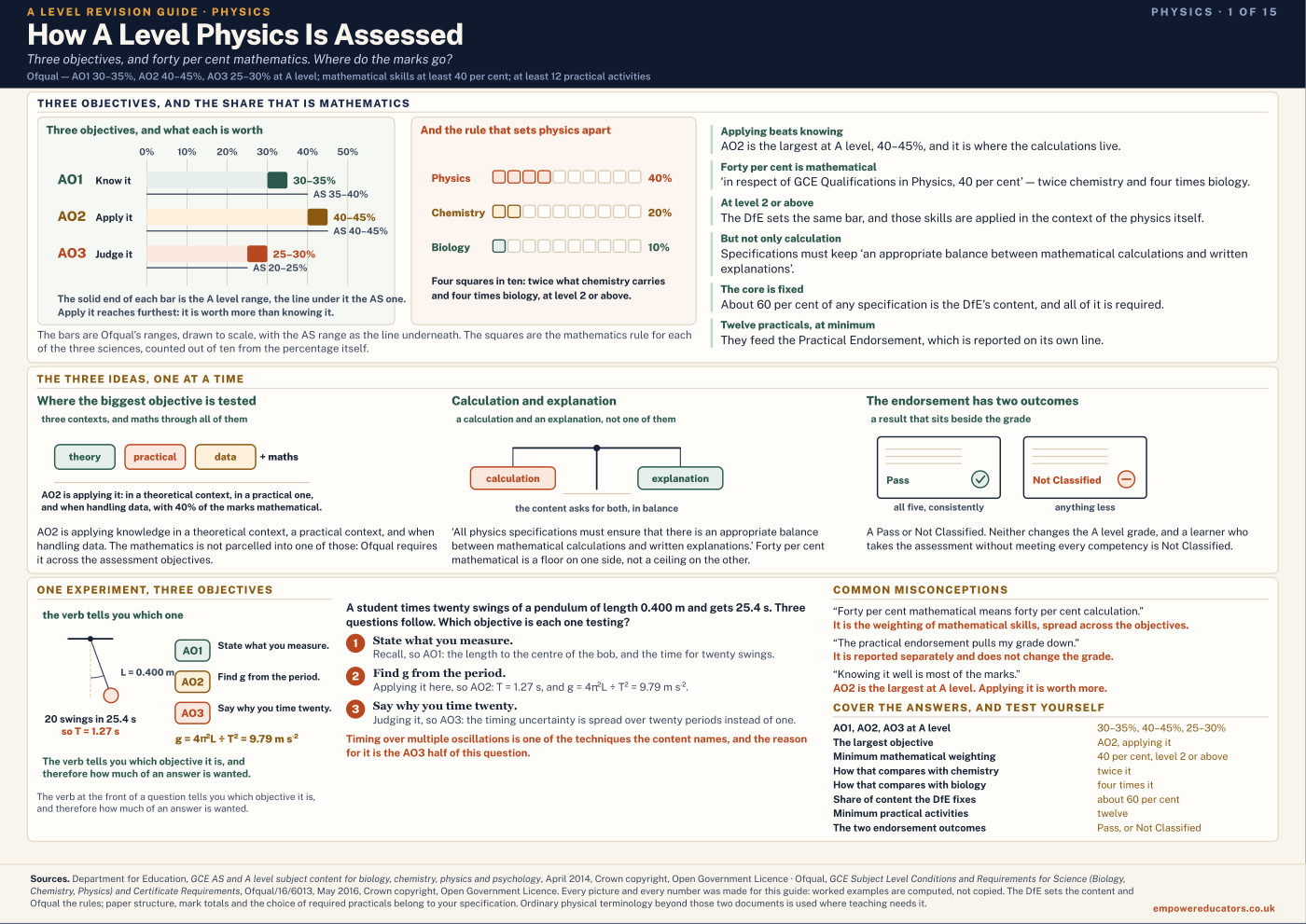
Biology · Chemistry · Physics · KS3 to A Level

16.7%

What one paper is worth

Combined Science is six papers, each carrying a sixth of the qualification and awarding two GCSE grades.

AQA Combined Science: Trilogy 8464 specification

Middle Leadership & Team Development

38,600

Left in a single year

Full-time-equivalent teachers left the profession that year — 8.3% of a 466,400 workforce.

DfE, School workforce in England, November 2025 census

Evidence, Self-Evaluation & Inspection Readiness

2 of 4

Do not grade at all

ISI and SIAMS report standards met or a narrative judgement, not a grade.

ISI and SIAMS frameworks

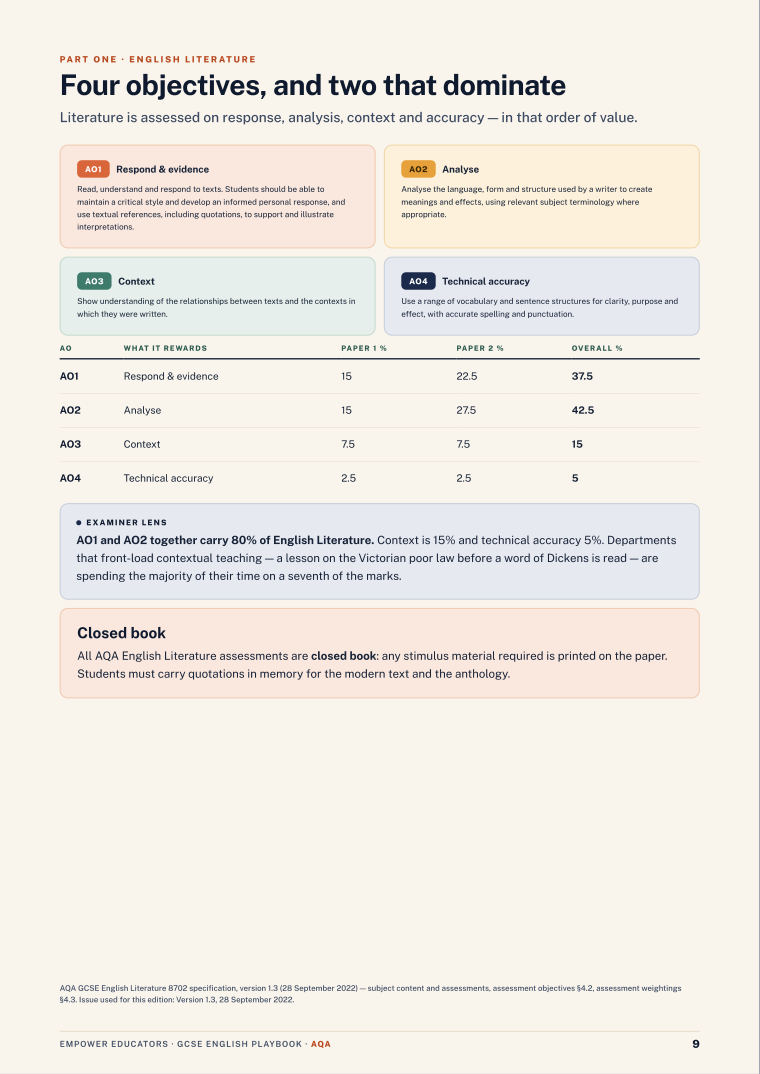
English · KS3 to A Level

Closed book

How every board examines Literature

Which makes recall a curriculum decision for Year 10, not a revision strategy for April.

The four boards' own Literature specifications

Mathematics · KS3 to A Level

70%

Same score, different problem

Two students can score identically — one procedurally secure, one who cannot say why the method works.

Fluent Mathematicians, Confident Schools

Biology · Chemistry · Physics · KS3 to A Level

15%

Practical recall

Roughly this share of the marks turns on method, variables and hazards — and it is almost never retrieved.

Curious Scientists, Confident Schools

Art & Design · KS3 to A Level

1,040

Specialists lost

Fewer art and design teachers in secondary schools between 2010 and 2020 — a fall of about 8%.

Ofsted, Research review series: art and design, 2023

Physical Education · KS3 to A Level

60%

How much of GCSE PE is written

Fixed across every English board — and students choose the course expecting to play sport.

The four boards' own GCSE Physical Education specifications

Geography · KS3 to A Level

30%

The paper prepared for least

Paper 3 — issue evaluation, fieldwork and geographical skills — carries almost a third of the GCSE.

AQA GCSE Geography 8035 specification

History · KS3 to A Level

1

Compulsory topic at Key Stage 3

The Holocaust is the only topic named as compulsory. Everything else sits under “Examples (non-statutory)” — including the Tudors and the Normans.

National curriculum in England: history programmes of study, key stage 3

Business · KS3 to A Level

30%

Analysis and evaluation

AO3 carries almost a third of the GCSE, and more of the top grades — yet is usually taught last.

AQA GCSE Business 8132 specification

Art & Design · KS3 to A Level

77%

Reached the standard

Of schools inspected under the renewed framework met the expected standard for curriculum and teaching.

Ofsted, State-funded schools inspections and outcomes as at 31 March 2026

Physical Education · KS3 to A Level

0 marks

What missing footage costs

An off-site activity that cannot be replicated live at moderation scores zero without audiovisual evidence.

AQA GCSE Physical Education 8582 specification

Geography · KS3 to A Level

2

Fieldwork enquiries required

Both outside the school grounds, and both examined in the written papers on unseen data.

The current GCSE geography specifications

History · KS3 to A Level

15%

Sources, at every board

AO3 is fixed nationally by Ofqual, so no GCSE specification is lighter on source work than another. The difference is where each board puts it.

Ofqual, GCSE Subject Level Conditions and Requirements for History

Business · KS3 to A Level

35%

Application

AO2 is worth as much as knowledge itself. Two thirds of the qualification is not recall.

AQA GCSE Business 8132 specification

“No single practitioner can have a full picture of a child’s needs and circumstances. Safeguarding children is everyone’s responsibility.”

Working Together to Safeguard Children (2023)

04·Articles

Read properly, then written up

Statutory guidance and the week’s education news, read in full and turned into something a department can act on. Free to read, sourced the same way as the books, and every reference linked rather than summarised.

05·How it is written

Sourced, not asserted

All of it came out of the same gap: between what statutory guidance requires and what a busy department can actually put into practice on a Monday morning. The rules below are the house rules, and they apply to everything on this site — the playbooks, the schemes of work, the examination playbooks, the classroom sets and the INSET sessions alike.

Every statistic is traced to a named government publication and referenced in Harvard style. Scenarios are composites written to illustrate practice — no figures should be quoted from them.

The whole-school titles close with a standalone international chapter built from the Gulf regulators' own documents outward, never as a substitution table on the UK material. Anything subject-specific — the subject playbooks, the examination playbooks and the schemes of work — is built on the exam boards' own specifications and the statutory programmes of study, read in full rather than summarised.

·From the source

What the DfE, Ofsted and Ofqual published this week

The same publications these resources are written from, as they land. Every title below links to GOV.UK, not to a summary of it.

GOV.UK feed Updated 27 August GOV.UK Search API · Open Government Licence v3.0
  1. 25 Aug Guidance Every child achieving and thriving and SEND consultation supporting information A series of documents setting out the key information and proposed reforms in the schools white paper and SEND consultation document for parents and those working in the sector. DfE
  2. 20 Aug Guidance Latest updates from Ofqual Recent news and key messages from Ofqual on regulated qualifications, examinations and assessments. Ofqual
  3. 20 Aug Guidance The National Reference Test: teachers’ and headteachers’ guide Information for teachers, headteachers and senior leaders about the National Reference Test. Ofqual
  4. 19 Aug Guidance High needs funding arrangements: 2026 to 2027 Information for local authorities, schools and colleges about high needs funding arrangements for the 2026 to 2027 financial and academic year. DfE
  5. 19 Aug Guidance Communicating with parents about school attendance Information and resources to help schools communicate well with parents and carers to support improved attendance. DfE
  6. 12 Aug Statistics State-funded schools inspections and outcomes as at 31 March 2026 Provisional data for the renewed education inspection framework for the period 10 November 2025 to 31 March 2026. This release also contains revised data for the period September 2024 to… Ofsted
  7. 16 Jul Statistics Area SEND inspections and outcomes in England as at 31 December 2025 Statistics from Ofsted on inspections of local area services for children and young people with special educational needs and/or disabilities (SEND). Ofsted
  8. 10 Jul Guidance IDSR: news and updates News and information about updates for each inspection data summary report (IDSR) release, including any new functionality, features and bug fixes. Ofsted

Contains public sector information licensed under the Open Government Licence v3.0.

06·From the staffroom

What educators are saying

From educators who read the playbooks and used them in their own schools.

  • Most things aimed at school leaders are either too vague to act on or too long to read. These manage neither. I’ve been through the Safeguarding & Child Protection and SEND & Inclusion playbooks and both are detailed where it matters and blunt everywhere else. The structure is what struck me first — you can find what you need in seconds, which sounds trivial until you’ve tried it at 8am. The templates alone have given me several things I’m taking to my team this term. Genuinely impressive work.

    Phil Rhodes Assistant Headteacher Independent Specialist School On the Safeguarding and SEND playbooks
  • The range of artists in the Art & Design playbook is the best I’ve seen in one place — and crucially it tells you how to actually teach them, not just who they were. There’s practical guidance on what an outstanding lesson looks like, and the sketchbook and annotation material is genuinely useful for showing students the difference between weak work and strong work. Everything is clear enough to pick up and use, but there’s real depth underneath it. Plenty here to develop your own teaching from, not just resources to hand out. My team will get a lot from this one.

    Luke Walsh Head of Art High Close School On the Art & Design playbook
  • I work in a PRU, so I’m fairly sceptical of behaviour guidance written for mainstream classrooms — most of it assumes a compliance baseline we simply don’t have. Calm Classrooms, Confident Schools doesn’t. The emphasis on relationships, consistency and understanding what sits behind a behaviour is exactly right for our setting, and the strategies are realistic rather than aspirational. I’d recommend it to anyone working in alternative provision or a challenging school.

    Jacquie Nnochiri Head of Business and Careers Ealing Alternative Provision On the Behaviour playbook
  • What sold me on Taught to Move was the coverage. Curriculum planning, lesson design, participation, inclusion, assessment, physical competence — and it threads KS3 through to GCSE and A Level rather than treating them as separate jobs. The sections on feedback and practice design are strong. Most usefully, the templates mean it’s something you hand round a department rather than something that sits on a shelf. Good for experienced staff and for anyone leading PE.

    Gary Saunt PE Teacher Edge Grove School, Independent School On the Physical Education playbook

Stay in touch

New resources, when there are new resources

About once a month: what has been published, what changed in the statutory guidance behind it, and the occasional thing worth reading. No sequence, no drip, no selling to you every Tuesday. One click unsubscribes.

Your address is used for this list and nothing else, and is never passed on. Not ready? Calm Classrooms, Confident Schools is free without joining anything. How your details are handled.

Your basket

Nothing in it yet.

Total £0.00

Checkout